HIPAA compliant texting: What you can send patients & how to communicate securely
HIPAA compliant texting is possible when a text holds no protected health inform...

Last Updated: Oct 16, 2026

A discharge planning worksheet is a structured assessment tool that helps care teams identify a patient’s needs, medications, follow-up appointments, and community services before they leave the hospital.
Poor discharge planning is a leading cause of preventable hospital readmissions. CMS requires every Medicare-eligible inpatient to receive formal discharge planning under 42 CFR 482.43.
Every discharge planning worksheet should cover patient information, medication reconciliation, follow-up coordination, and patient education, with mental health discharges adding safety planning and crisis protocols on top.
Practice management software like Pabau can help teams complete, store, and share discharge planning worksheets, plus send automated post-discharge reminders that support follow-up adherence and lower readmissions.
A 4-day, printable discharge-teaching checklist for nursing teams. It covers the initial patient assessment, a pre-discharge meeting checklist, medication reconciliation, patient and family education with teach-back confirmation, and a follow-up appointment log.
Download templateA patient walks out with a stack of discharge paperwork, a follow-up date they’ll probably forget, and no clear sense of what to do if something feels wrong. That stretch between the hospital bed and the first outpatient visit is where a lot of avoidable readmissions start.
A discharge planning worksheet fixes that by giving nurses, case managers, and physicians one shared checklist to work from, so nothing gets missed on a busy shift. Here is what that checklist should cover, and how it changes for a mental health discharge.
A discharge planning worksheet is a structured checklist that helps care teams prepare inpatients for a safe, coordinated exit from the hospital. It captures the patient’s condition, tracks medication changes, locks in follow-up appointments, and confirms the patient and family understand what comes next. For patient care coordination, it works as one shared reference point instead of scattered notes.
CMS requires discharge planning for Medicare inpatients under 42 CFR 482.43. AHRQ’s IDEAL framework builds on that requirement: include the patient and family, discuss the key areas of care, educate on medications and warning signs, assess understanding, and listen to concerns. A HIPAA-compliant discharge worksheet keeps that information private while still easy for the next clinician to find.
The most effective discharge planning starts at admission, not on the way out the door. A structured five-step approach keeps every task visible, so the patient leaves with instructions they can actually follow.
Discharge planning worksheets serve multiple healthcare professions and settings:
Across CMS, AHRQ, and hospital discharge-planning guidance, the same core sections come up again and again. Whatever format a practice uses, paper, an EHR module, or a printable worksheet, these are the components worth building in:
The free template above focuses on the day-by-day nursing side of this list: patient assessment, the discharge-meeting checklist, medication reconciliation, and follow-up scheduling. For discharge diagnosis coding, insurance details, or a dedicated mental health safety plan, most practices add a supplementary form or lean on their existing EHR fields.
Discharge paperwork often has a billing side too. Where a self-pay balance is settled before the patient leaves, a printable receipt template gives them proof of payment to take home.
Mental health discharge planning calls for sections a general medical worksheet does not have. Psychiatric inpatients face acute safety risks, including suicidal ideation, substance withdrawal, and medication non-adherence, that call for explicit crisis planning and closer community support coordination.
A dedicated mental health discharge worksheet typically covers:
This safety-planning layer lives in its own dedicated form, separate from the general worksheet above, because a psychiatric discharge carries different risks from a surgical one. For mental health discharge planning, a standardized worksheet means one missed therapy referral or misunderstood safety plan is far less likely to slip through.
Involve the patient and family in completing the worksheet, not just clinical staff. Ask the patient to repeat back medication names and follow-up dates (teach-back method) to confirm understanding before they leave. Patients who can explain their own care have dramatically lower readmission rates.
Software can take over a lot of this coordination automatically. Pabau’s automated workflows can trigger follow-up reminders and file a completed discharge worksheet straight into the patient record, without anyone having to chase it manually.
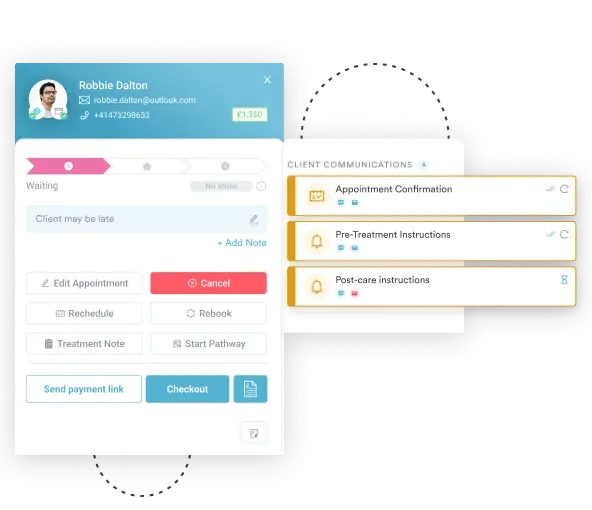
Practice management software can turn discharge planning from a paper-heavy, siloed process into a coordinated, tracked workflow. Pabau lets clinical teams store completed discharge planning worksheets in the patient’s digital record and send automated appointment reminders to flag who is due for follow-up.
Practices that collect intake information digitally can attach digital discharge forms straight to the patient file instead of scanning paper.
For practices with more than one location, that same record travels with the patient, so a follow-up booked at a different branch still shows the full discharge history. The result is faster documentation, fewer missed follow-ups, and lower readmission rates.
Poor discharge planning drives preventable readmissions, medication errors, and missed follow-up care. It’s a patient safety issue for every hospital and practice that manages transitions of care. A standardized worksheet keeps every team member working from the same checklist: patient information, medication reconciliation, follow-up scheduling, education, and referral to post-discharge services, with extra safety planning for mental health discharges.
Pabau can help keep that whole process visible and consistent across every location a practice runs. Book a demo to see how it fits your discharge planning workflow.

Setting up compliance paperwork for a surgical practice? Administrative requirements for surgery form It offers a free template covering intake, consent, pre-operative assessment, and post-operative care requirements.
Conducting a new patient intake assessment? Intake assessment and evaluation template It offers a free document covering history, mental status, substance use, and diagnostic impression for intake.
Reporting an adverse reaction at the point of care? Adverse reaction form It offers a free, printable form covering reaction details, causality assessment, and outcome for the patient record.
A good discharge planning worksheet covers patient details, discharge diagnosis, a reconciled medication list, follow-up appointments with dates and provider names, referrals for services like home health or therapy, and proof the patient and family understood the instructions, usually through the teach-back method.
At admission, not on the day the patient leaves. Starting early gives the team time to assess needs, line up post-acute services, and confirm follow-up appointments. Hospitals that plan from day one see fewer readmissions than those that leave it until the last day.
IDEAL is an AHRQ framework: include the patient and family, discuss the key parts of the plan, educate using teach-back, assess how well the patient understood, and listen to any remaining concerns. It puts patient understanding at the center of discharge, not just the paperwork.
It adds a safety plan on top of the usual worksheet: warning signs to watch for, coping strategies, people to call, and when to go to the emergency department. Crisis line numbers, including the 988 Suicide & Crisis Lifeline, and a scheduled outpatient appointment are standard parts of that plan.
The discharge plan is the process behind the scenes: assessing needs, coordinating services, reconciling medications, and scheduling follow-up. Discharge instructions are what actually gets handed to the patient, the specific guidance on medication, diet, activity, and warning signs that comes out of that plan.