Scapular assistance test: Procedure, interpretation and free template
The scapular assistance test is a manual examination in which the clinician supp...

2
Last Updated: Oct 19, 2026

A CVICU report sheet keeps one shift’s worth of patient data in a single place, so nothing critical gets passed along from memory.
The template below is a three-page critical care handoff sheet with 13 sections, plus a nurse signature line.
Its cardiac content is a single monitoring block for rhythm, pacing and ejection fraction, plus a Swan-Ganz line under IV access.
There are no numeric hemodynamic fields, no sedation or neuro scores, and no chest tube or pacing wire fields to fill in.
Practice management software like Pabau lets you rebuild the same sheet as a digital form, so every clinician documents the same fields.
A three-page critical care handoff sheet with 13 sections, from patient and medical details through to shift goals and handoff notes. Fields cover vital signs, cardiac rhythm and pacing, respiratory support, lines, medications, fluids, labs and nursing care.
Download templateCVICU nurses carry some of the most fragile patients in the hospital. The unit might hold a day-two CABG, a decompensated heart failure admission, and a patient in cardiogenic shock. Each one comes with drips running, lines in place, and labs still pending.
A report sheet is how that picture survives a shift change. This guide walks through the free CVICU report sheet you can download above, section by section. It says plainly what the sheet includes and what it leaves out, so you know what to add by hand before you print a stack.
A CVICU report sheet is a bedside working document that holds one patient’s current picture in a fixed order. Nurses fill it in at the start of a shift, update it as results and orders land, and read from it at handoff. The layout matters more than the paper. Putting the same fields in the same place every time means the receiving nurse always knows where to look.
Standardized handoff is also a regulatory expectation. The Joint Commission’s National Performance Goals require a defined handoff process. A printed report sheet is the usual way a unit meets it.
The downloadable sheet runs three A4 pages and holds 13 sections plus a signature block. Every field is a blank line or a checkbox, so it works with a pen on a clipboard. Here is what you get, in the order it appears.
One practical note before you print. The file is a print-and-write PDF with no fillable fields, and the date lines are set out in day, month, year order.
The sheet works as a general critical care handoff form with one cardiac monitoring block. It does not carry the cardiac-surgery detail a fresh post-op patient generates. If your unit needs any of the fields below, write them into the notes box or add a second sheet.
Work the sheet in the order it is printed, and use the notes boxes for anything it has no field for. Structured medical forms earn their keep this way, because the sequence itself stops you skipping a step.
Search results for CVICU brain sheets promise cardiac-specific layouts. This one reads closer to a general critical care sheet with a few cardiac labels applied. That has trade-offs worth knowing before you print a stack of copies.
| What you are recording | On this sheet | What a dedicated cardiac flowsheet adds |
|---|---|---|
| Rhythm | One rhythm line | Space for a 12-lead reading and a dysrhythmia note |
| Hemodynamics | Swan-Ganz presence only | Numeric MAP, CVP, CO, CI, SVR, and wedge pressure |
| Pacing | One pacing line | Mode, rate, output, and capture threshold |
| Post-op cardiac | No fields | Chest tube output by drain, dressing status, sternal precautions |
| Neuro and sedation | Pain score only | RASS, CPOT, GCS, and pupil checks |
| Vasoactive drips | Drug with dose or rate | Titration target and hourly rate changes |
| Respiratory | Therapy type, settings, blood gases | PEEP, tidal volume, mode, and weaning trial results |
| Intake and output | IV fluid rate | Hourly urine output and a running fluid balance |
For a stable post-cath or step-down cardiac patient, the sheet is enough on its own. For a fresh sternotomy on pressors with a pacing wire, treat it as page one and pair it with your unit’s post-op flowsheet. Thinking about patient care documentation is worth the ten minutes before you photocopy anything.
The PDF has no fillable fields, so customizing means annotating a printed copy or rebuilding the layout digitally. Going paperless makes the second route easier to keep in step across a team. Either way, five changes cover most of the sheet’s soft spots.
A completed report sheet is a small pile of protected health information, known as PHI, sitting on a clipboard. Name, medical record number, diagnoses, drug doses, and lab values all sit on one page. That makes a mislaid sheet a reportable breach.
Three habits cover most of the risk. Keep the sheet on your person or in a locked drawer, never face-up on a counter. Shred or incinerate it at the end of the shift instead of dropping it in a bin. Never carry an identifiable sheet off the unit, even to study from.
A digital version removes the disposal problem altogether. HIPAA compliance then comes down to access controls and an audit log, which show who opened a record and when.
A hospital critical care unit runs on the hospital’s own electronic record, so this part is for a different reader. If you work in a physical therapy practice or an IV therapy practice, the same paper problem shows up on a smaller scale. Forms get printed, filled in, scanned, and then filed twice.
Practice management software like Pabau handles that with digital forms. You build the sections you need once, and every practitioner fills in the same fields on a tablet or phone. Completed forms save straight into the patient record, so there is no scan step and nothing to shred.
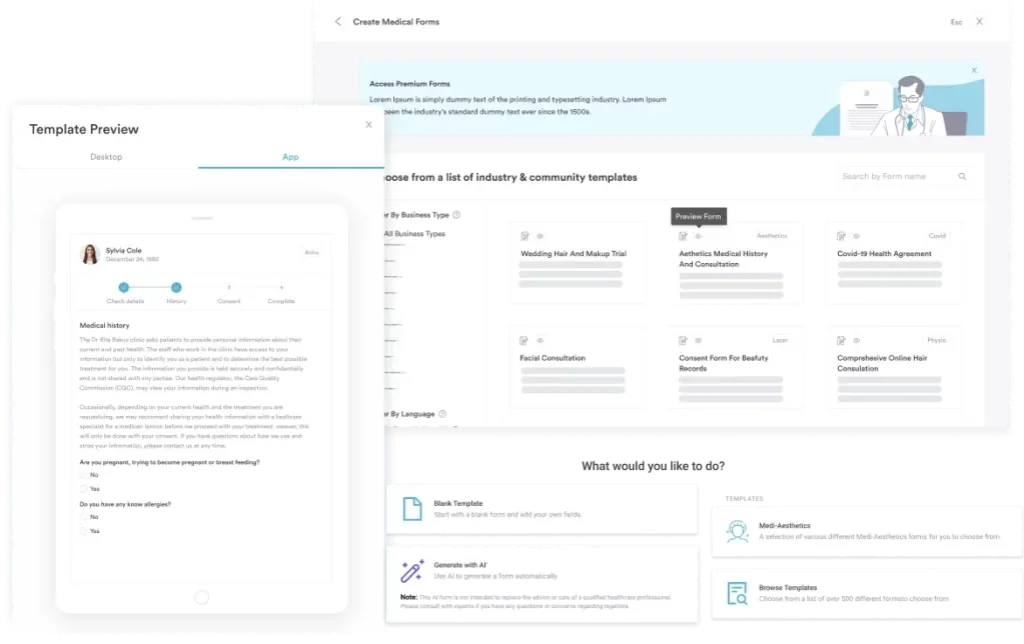
That also fixes the version problem. When a protocol changes, you edit the form once and the whole team sees the new version on their next patient. No one is working from a photocopy of a photocopy, and every subscription includes the full forms builder.

Pabau’s digital forms let your team fill in structured clinical templates on any device, with every answer saved straight to the patient record. That removes the printing, the scanning, and the locked drawer.

Download the sheet, then decide what job it does on your unit. As a handoff frame for a stable cardiac patient it works well, and the fixed order is what makes it worth using.
For a fresh sternotomy on three pressors, add the hemodynamics row and the pacing detail before you print a stack. A sheet that sends a nurse hunting for a field it does not have costs more time than it saves.
If your practice still runs handoffs and clinical notes on paper, the same order works digitally. Your team can fill the form in on a tablet instead. Book a demo to see how Pabau’s digital forms keep every clinical record in one place.

Administering cytarabine on an oncology unit? Cytarabine administration note template It offers a free template covering route-specific prep, dosage checks, and post-infusion monitoring.
Need a quick-reference card for a medication? Drug card template It offers a free PDF covering dosing, contraindications, side effects, and nursing considerations for a drug.
Moving a patient off the unit? The discharge summary template carries the same detail through to the next team.
Admitting a resident to long-term care? Healthcare practitioner form It offers a free resident assessment template covering medical history, fall risk, and medications for admissions.
Teaching a new nurse how the sheet fits together? Nursing concept maps link each problem to its interventions on one page.
It is a bedside working sheet that holds one patient’s current picture in a fixed order. That lets a nurse hand over without relying on memory. Sections cover patient details, vital signs, cardiac rhythm, lines, medications, labs, nursing care and shift goals.
The sheet carries 13 sections plus a signature block. They run from hospital and unit details, patient information and medical information through to vital signs, cardiac monitoring and respiratory support. The rest cover IV access and lines, medications, fluids and nutrition, lab results, nursing care, shift goals and handoff notes.
No. The IV access section has a Swan-Ganz catheter line, which records that a catheter is in place. There are no numeric fields for MAP, CVP, cardiac output, cardiac index, SVR or wedge pressure, so add them yourself if your unit needs them.
Yes, though not inside the PDF itself. Most units annotate a printed copy, adding a hemodynamics row under cardiac monitoring and pacing detail beside the pacing line. Rebuilding the layout as a digital form is the cleaner route if you want everyone on the same version.
A filled sheet holds protected health information, so how you handle it decides compliance. Keep it on your person or in a locked drawer during the shift, then shred or incinerate it before you leave. Never carry an identifiable sheet off the unit.