Anja Dodevska

Nurse conversion chart
What a nurse conversion chart covers A nurse conversion chart groups the unit co...

1
Last Updated: Nov 4, 2026
Free PDF 2 pages, print-ready Clinician-reviewed
The MELD score (Model for End-Stage Liver Disease) grades the severity of chronic liver disease on a scale of 6 to 40. It estimates a patient's risk of death within 90 days, and higher scores mean earlier priority for a donor liver. The original 2002 equation uses bilirubin, INR and creatinine. MELD 3.0, which US liver allocation has used since July 13, 2023, adds sodium, albumin and sex. The free worksheet takes your team through the MELD 3.0 bounds, equation and result, step by step.
A two-page MELD 3.0 worksheet that opens with the input bounds and a dated field for each of five lab values. The equation follows, split into terms. It closes with the rounded score, the next recertification date and space for clinical context.
Start from scratch, or upload this PDF or any form you already use, and Pabau's AI Form rebuilds it with tick boxes, text fields and a signature. Attach it to the treatment once, and every patient gets it on time.
AI Form rebuilds the consent, history and aftercare forms you already use. You review each one, then publish.
Patients complete forms on their phone before they arrive, so the front desk stops retyping paper.
Every signed form is versioned and attached to the treatment record, ready when you need it.
Set how long a consent stays valid. Returning patients skip forms they have already signed.
Supports HIPAA and GDPR compliance AES-256 encryption 4.8 on G2 4.7 on Capterra Trusted by 4,000+ practices worldwide

The MELD score grades chronic liver disease from 6 to 40, and a higher score means a higher 90-day mortality risk.
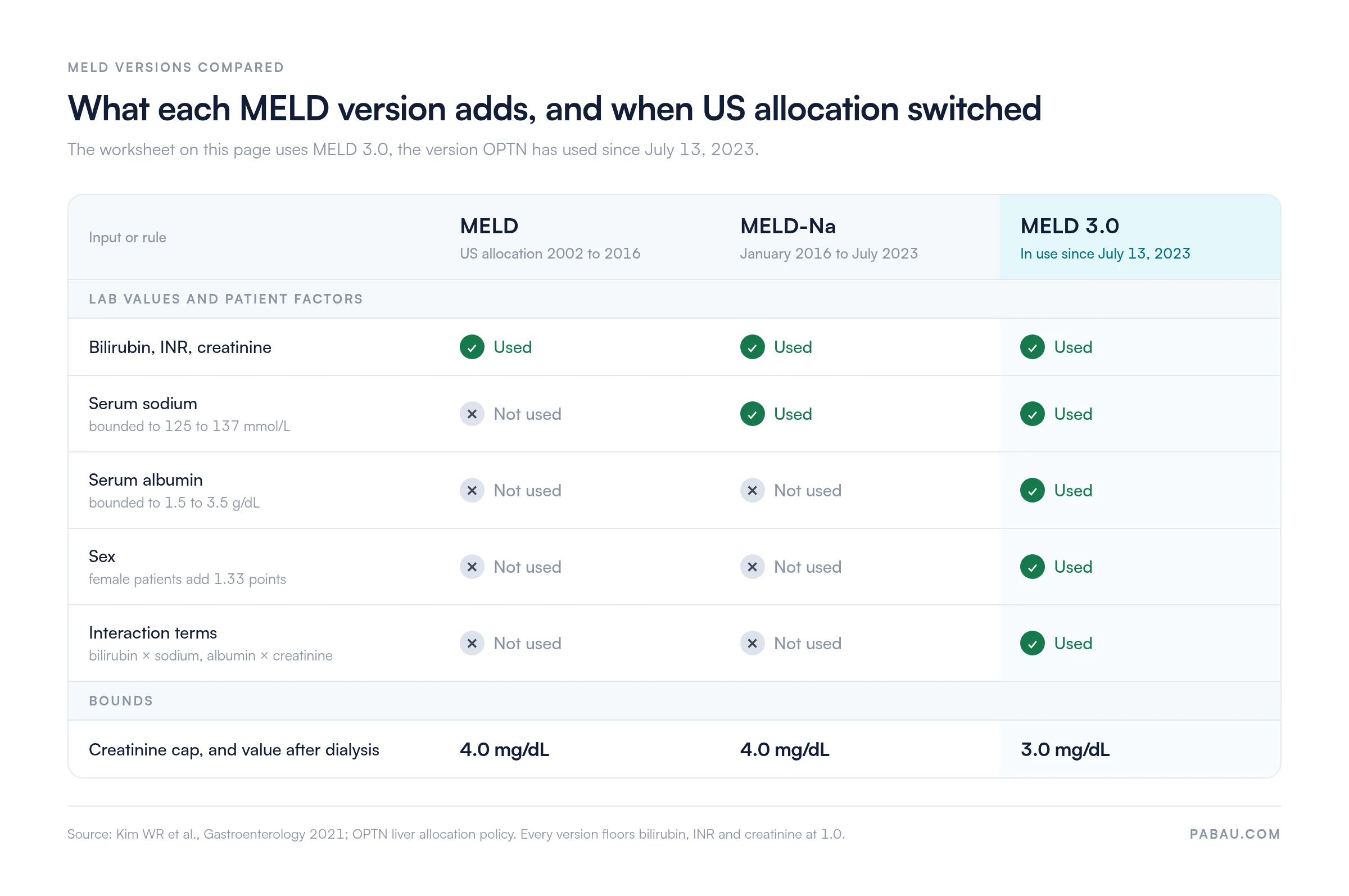
MELD 3.0 replaced MELD-Na in US liver allocation on July 13, 2023.
MELD 3.0 adds sodium, albumin and sex to bilirubin, INR and creatinine, and caps creatinine at 3.0 mg/dL.
Two interaction terms and the final constant of 6 are the parts of the MELD 3.0 equation most often left out.
Record every lab value with its draw date, so another clinician can reproduce the score.
The MELD score (Model for End-Stage Liver Disease) is a number from 6 to 40 that grades how severe chronic liver disease is. It estimates the risk of death within 90 days, and US transplant programs use it to rank candidates for a donor liver.
The original MELD equation was adopted for US liver allocation in 2002. It combines the natural logarithms of serum bilirubin (mg/dL), INR and serum creatinine (mg/dL).
MELD = 3.78 × ln[bilirubin] + 11.2 × ln[INR] + 9.57 × ln[creatinine] + 6.43
The result is rounded to a whole number. Scores below 6 are rounded up to 6, and scores above 40 are capped at 40.
Two later versions build on the original equation, and each one changed US allocation when it went live. The comparison below shows which inputs and bounds each version uses.
Confirm which version your program uses before you calculate. Not every country has adopted MELD 3.0, so US practice may not apply where you work.
MELD 3.0 uses five lab values and the patient’s sex. Bound each value first, then work through the equation one term at a time.
The equation adds nine terms, listed here in the order the worksheet works through them.
The two subtracted terms are the interactions. The albumin and creatinine term makes albumin count for less as creatinine rises. Leaving out either interaction, or the final 6, gives the wrong score.
Round the total to a whole number and hold it between 6 and 40. Some candidates were listed before age 18 and are now 12 or older. For them, drop the sex term and use a constant of 7.33 in place of 6. Children under 12 are scored with PELD-Cr.
The worksheet gives every calculation the same structure. That keeps records comparable across clinicians.
Teams that draft notes with AI should still check every value against the source labs before the note is signed.
Higher scores indicate more severe liver disease and a higher short-term risk of death. Use the bands below as a reading aid, not as a prognosis.
Mortality figures for each band vary by study, population and MELD version. Cite the specific validation study whenever you quote a percentage.
Listing thresholds vary by transplant program. A score of 15 is often cited as a reference point, but confirm current OPTN policy before acting on any threshold.
In the United States, the Organ Procurement and Transplantation Network (OPTN) uses MELD 3.0 to rank liver candidates aged 12 and older. Candidates are recertified on a schedule that tightens as the score rises, which is why the worksheet records the next due date.
The OPTN allocation policy sets the rules, and those rules change over time. Check the current criteria directly.
The UK works differently. NHS Blood and Transplant uses the UKELD score to judge eligibility for the liver waiting list, and a separate Transplant Benefit Score to allocate livers.
The MELD score is a useful estimate, but it has blind spots that affect how you read it.
A complete record lets another clinician reproduce the score. Store each element with its date and source.
The narrative around the score follows the same rules as any clinical note, covered in our guide to safer clinical note writing.
In the US, HHS HIPAA guidance governs how these records are stored and shared.
Ask a second team member to recalculate the score from the recorded lab values before the note is signed. A second pass catches common errors, such as a sodium value entered in the creatinine field or a missed dialysis flag. Keep the worksheet with the note so the calculation can be reproduced at review. This takes only a few minutes and protects both the patient and the clinician.
Many hepatology teams calculate MELD in a web calculator and type the result into the note. The bounded inputs, the version used and the draw dates rarely travel with it.
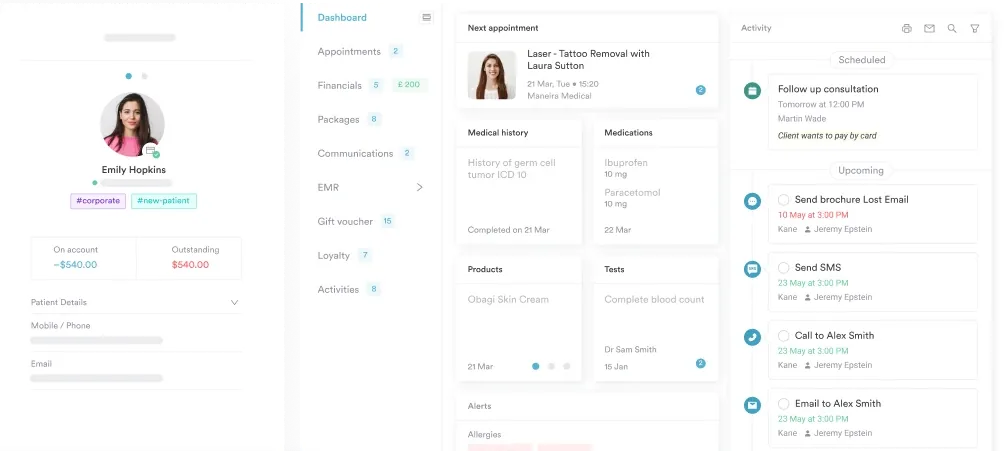
Pabau is the practice management platform we build, used as software for private GPs and by specialist practices. Its medical records software stores the worksheet fields as a form in the patient file, so each lab value, bound and score keeps its date.
Pabau Scribe, our AI scribe, drafts the clinical note from the consultation. A clinician still checks every lab value against the source results before signing.
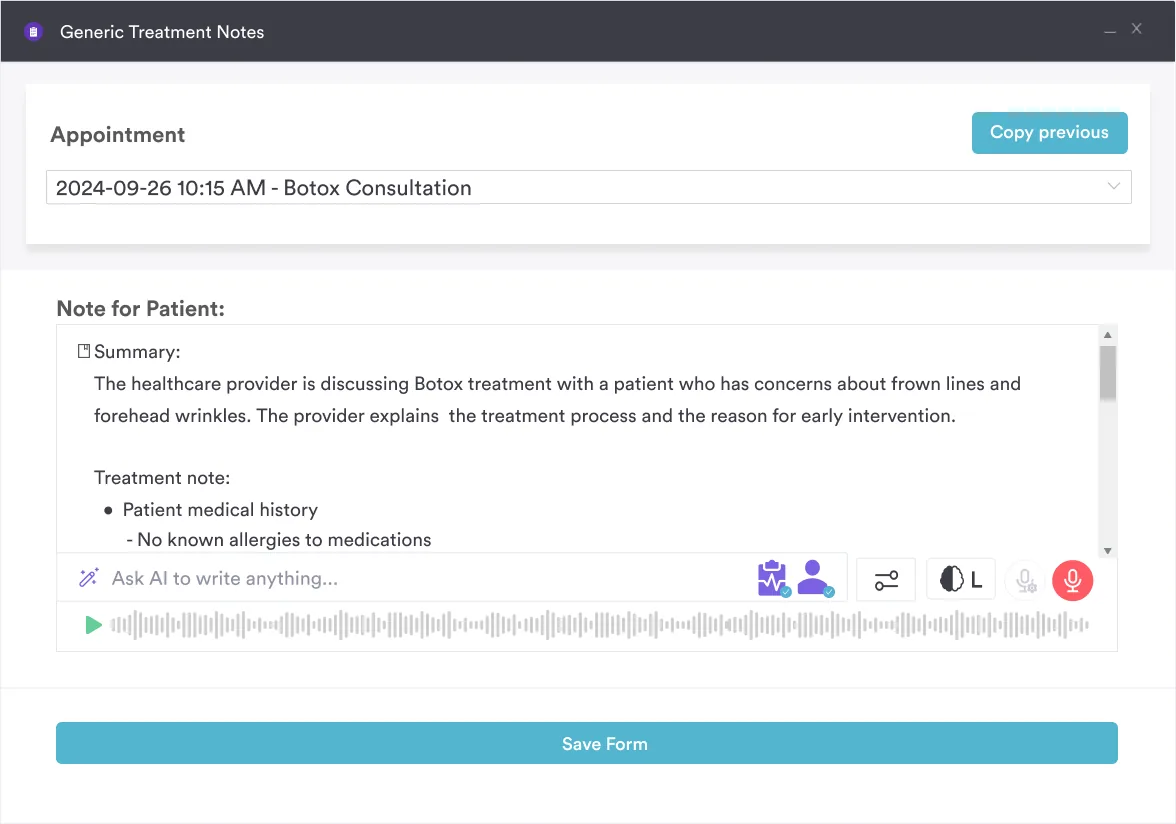
At the next recertification, the previous score and its inputs are already in the patient file. The trend is visible without searching through old lab reports.

Pabau stores MELD worksheets, dated lab values and clinical notes in one patient file. Book a demo to see how it supports hepatology documentation.

Use MELD 3.0 for any US allocation calculation made since July 13, 2023, and record the version beside the score. A result built on the old 4.0 mg/dL creatinine cap, or without the interaction terms, will not match the one your transplant center reports.
The arithmetic is the easy part. What protects the patient is a record another clinician can rebuild from the bounded inputs and their dates. Book a demo to see how Pabau keeps each MELD worksheet, lab value and note together in the patient file.

Assessing the right upper quadrant? Gallbladder physical exam covers the bedside signs, technique and documentation for gallbladder disease.
Documenting the abdominal exam? Abdominal exam documentation gives you a free template with worked examples.
Planning care for biliary disease? Cholecystitis nursing care plan sets out nursing diagnoses, goals and interventions in one form.
No single value is normal, because the scale runs from 6 (least severe) to 40 (most severe). Interpret each result against the patient’s prior scores and clinical picture.
MELD-Na adds serum sodium to the original calculation, because low sodium predicts poorer outcomes in cirrhosis. It was the primary US allocation score from January 2016 until MELD 3.0 replaced it in July 2023.
No single cut-off applies everywhere. Listing criteria are set by transplant programs and OPTN policy, so check the current rules for your program and region.
No. OPTN implemented MELD 3.0 in US liver allocation in 2023, but not every country has followed. Confirm which version your local program uses.
Creatinine runs lower in women at the same level of kidney function, so earlier versions understated how sick they were. The 1.33-point sex term in MELD 3.0 was designed partly to correct that bias.
No. The worksheet supports calculation and documentation only. It does not replace clinical judgment or local protocols, and a qualified clinician must review every score.