Pabau GO app

The new Pabau GO is heredownload on the App Store

Download on the App Store
Book a demo Book a demo
Coaching

Coaching plan template: Free download and step-by-step guide

Key Takeaways

Key Takeaways

A coaching plan is a structured blueprint that guides both coach and client toward agreed development goals.

Effective coaching plans include clear goals, action steps, timelines, progress reviews, and accountability measures.

Unlike performance improvement plans, coaching plans are developmental and collaborative, not corrective.

Practice management software like Pabau helps coaches track progress notes, schedule sessions, and monitor goal achievement in one place.

Download your free coaching plan template

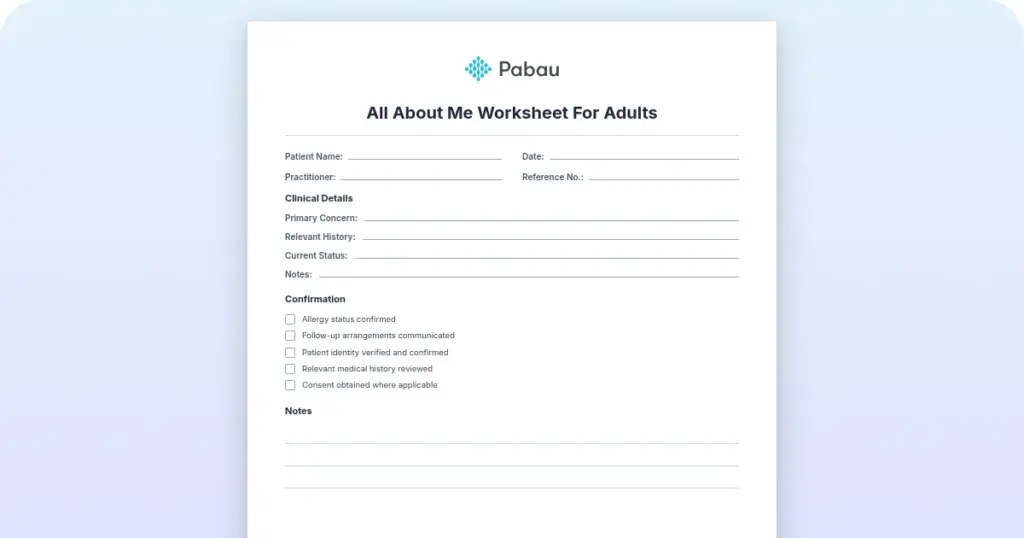
A ready-to-use template for documenting client progress, tracking goal milestones, identifying emerging patterns, and adjusting coaching approaches based on session outcomes.

Download template

Most coaching conversations start with good intentions and end with nothing written down. A coaching plan fixes that. It turns a vague goal like “get better at leadership” into dated actions and check-ins both sides can point to.

Skip the plan, and coaching turns into a string of pleasant chats nobody can measure. Get the structure right, and it becomes the throughline connecting a goal-setting conversation this month to a promotion conversation next year.

What is a coaching plan?

A coaching plan is a structured roadmap for the coaching relationship, whether the coach is a manager, an HR professional, or an outside expert. It lays out the development goals, the methods for reaching them, and the timeline that keeps both sides accountable. Unlike a one-off training session, a coaching plan is a living document. It adapts as the person progresses and circumstances change.

Managers and HR professionals use a coaching plan to structure development conversations that would otherwise stay informal. Dedicated coaching client management tools make it easier to track outcomes and keep clients motivated between sessions.

Why coaching plans matter

Coaching without a plan often turns into ad-hoc advice instead of real development. With a plan in place, both sides know what success looks like. They also know when progress gets reviewed, and what might get in the way.

  • Clarifies expectations and roles between coach and coachee
  • Creates accountability on both sides
  • Provides measurable milestones to celebrate progress
  • Reduces time wasted on unfocused conversations
  • Enables data-driven adjustments as circumstances change

Coaching plan vs. performance improvement plan: What’s the difference?

Coaching plans and performance improvement plans, or PIPs, can look similar on paper, but they serve opposite purposes. Getting the distinction right matters for HR and management teams alike.

Aspect Coaching plan Performance improvement plan
Purpose Developmental, focused on growing skills and knowledge Corrective, addressing documented performance gaps
Tone Collaborative and positive Formal and often adversarial
Timing Ongoing, part of career growth Triggered by a documented performance failure
Legal risk Low, no disciplinary implication High, may precede termination
Client outcome if unsuccessful Reassess goals and try a different approach Potential disciplinary action or dismissal

That difference shapes how you write and frame a coaching plan. The tone, the language, and the consequences of missing a goal are all different from a PIP.

Key elements of an effective coaching plan

Every well-structured coaching plan contains the same building blocks. Leave one out, and the whole framework gets weaker.

  • Current state assessment: A clear picture of where the coachee stands now, including skills, knowledge gaps, behavioral patterns, and performance baseline.
  • Clear goals: Specific, measurable development objectives, typically SMART goals (specific, measurable, achievable, relevant, time-bound).
  • Action steps: Concrete, sequential actions the coachee takes between sessions, such as reading, practice, observation, or applying a new skill.
  • Timeline and milestones: When the plan starts and ends, plus checkpoints along the way to track progress.
  • Progress review schedule: How often you check in, weekly, biweekly, or monthly, to evaluate progress and adjust tactics.
  • Feedback mechanism: How and when the coach gives feedback, whether that’s during sessions, by email, or through shared progress notes.
  • Accountability measures: What happens if milestones get missed, and how both coach and coachee commit to the plan.
  • Success metrics: How the coachee and coach will know the plan worked, through behavior change, skill mastery, or measurable performance gains.

How to create a coaching plan in 6 steps

Building a coaching plan from scratch is a collaborative process. Follow these six steps to create one that actually sticks.

  1. Conduct a needs assessment. Meet with the coachee to understand their current role, challenges, and aspirations. Use conversation, 360-degree feedback, or a skills assessment to identify development gaps, then document the findings as your baseline.
  2. Set SMART goals. Agree together on two to four development objectives. Vague goals like “become a better leader” fail; specific ones like “improve delegation by assigning three projects a month without hovering over decisions” succeed. Write these into the plan clearly.
  3. Define action steps. Break each goal into concrete actions: a course to complete, a behavior to practice, a peer to learn from, a book to read. A simple prioritization tool like the Eisenhower matrix can help sequence which action comes first. Each step should be achievable between sessions.
  4. Establish a timeline. Decide how long the plan runs, typically three to 12 months, and schedule recurring sessions, weekly, biweekly, or monthly. Mark milestone dates and review windows.
  5. Plan progress reviews. Schedule formal check-ins to assess progress against milestones. Use a progress template, like the free one above, to document observations, wins, and obstacles.
  6. Agree on accountability. Make clear who’s responsible for what. The coachee commits to completing action steps; the coach commits to showing up prepared and giving honest feedback. Put this in writing.

Coaching plan examples by role and context

A coaching plan for an executive looks different from one for a frontline employee. Here are two realistic examples.

Employee coaching plan example

Scenario: Sarah, a junior marketing manager, struggles with public speaking and avoids presenting to stakeholders.

  • Goal: Confidently present quarterly results to more than 20 stakeholders in four months.
  • Baseline: Sarah has never led a room; she freezes when speaking to senior leaders.
  • Action steps: (1) enroll in a public speaking course (two weeks), (2) practice a 10-minute talk weekly with her manager, (3) present to a small team first (week 6), (4) present to the full quarterly review (week 16).
  • Review schedule: Biweekly 30-minute check-ins; mid-point review after eight weeks.
  • Success metric: Stakeholders rate her presentation as “clear and engaging” on feedback forms.

Executive coaching plan example

Scenario: James, a newly promoted VP, needs to move from hands-on operator to strategic leader and learn to delegate.

  • Goal: Build a high-performing leadership team that operates with minimal direct oversight, and establish a quarterly business review cadence within six months.
  • Baseline: James micromanages, makes most decisions himself, and is stretched thin.
  • Action steps: (1) read “Radical Candor” and “The Effective Executive,” (2) complete an emotional intelligence worksheet to identify blind spots, (3) shadow two peer executives known for strong delegation, (4) hold one-on-one coaching sessions with each direct report, (5) implement a delegation framework and review it weekly.
  • Review schedule: Monthly 60-minute sessions with an external executive coach; 360-degree feedback at the three-month mark.
  • Success metric: Team autonomy survey shows improvement, staff report clearer decision rights, and James works fewer than 50 hours a week.

How Pabau supports coaching workflows for health and wellness practices

Health coaches, therapists, and wellness practitioners who run a coaching plan can operationalize the entire framework inside Pabau’s client management system. There’s no need to piece it together across separate tools.

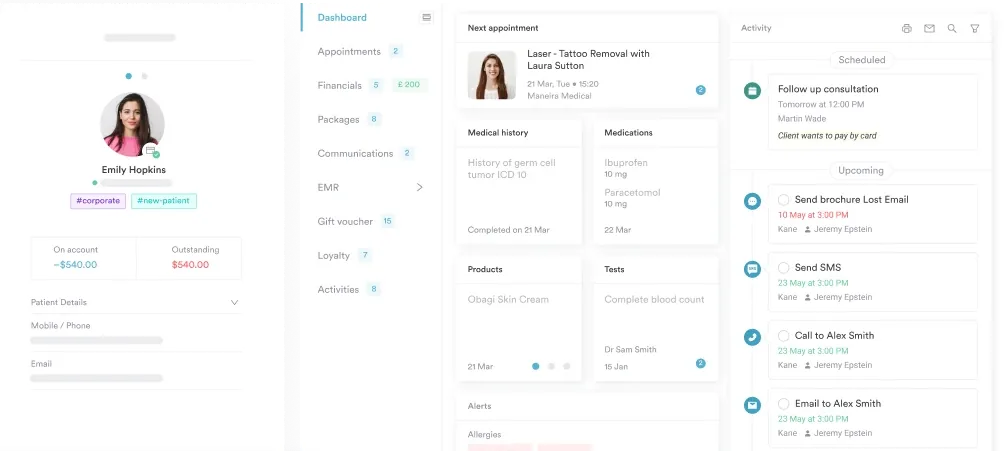
Client records keep assessment data, session history, and progress notes together in one file. Sessions can be scheduled to repeat automatically, instead of arranged one email at a time.
Digital forms capture progress reviews between sessions, so a coachee can log an update before you ever sit down together.

Detailed client records in Pabau

The client portal turns a coaching plan into a shared workspace. Coachees can log action steps and view progress notes themselves, while automated check-in reminders keep them on track between sessions.

Team management tools help managers oversee several employee coaching plans at once, without losing track of who’s on schedule and who needs a nudge.

Tips for making your coaching plan actually work

A coaching plan is only as good as the commitment behind it. These five practices separate coaching that sticks from coaching that fades after a few weeks.

  • Keep it written. An unwritten plan is easy to abandon. Document the goals, action steps, review dates, and outcomes, and share it with the coachee so both of you work from the same reference point.
  • Schedule sessions non-negotiably. Coaching works when it’s consistent. Book recurring sessions at the same time each week or month, and keep the commitment. Cancellations signal that coaching isn’t a priority.
  • Balance challenge and support. A good plan stretches the coachee without overwhelming them. Check in on whether the pace feels right, and adjust if it doesn’t.
  • Celebrate small wins. Acknowledge progress at every milestone. This builds momentum and reinforces the coachee’s confidence in the process.
  • Review and adapt. If a tactic isn’t working after two or three weeks, change it. Some coachees find it helps to keep a self-reflection journal between sessions, so the next review starts with real notes instead of guesswork. A coaching plan isn’t fixed forever; it evolves as the coachee learns and grows.

Conclusion

A structured coaching plan is the difference between intentional development and wishful thinking. Whether you’re a manager building employee talent, an HR professional scaling leadership, or an independent coach guiding clients, the approach is the same.

A proven template plus systematic tracking will accelerate outcomes and build trust. Start with the free template above, customize it to your context, and revisit it every four weeks. That discipline alone will transform the coaching relationship.

If you’re running coaching plans inside a health or wellness practice, Pabau keeps every plan, session note, and progress update in one place. Nothing gets scattered across email and spreadsheets.

Keep every coaching plan on track with Pabau

Pabau's client management tools keep session notes, schedules, and progress reviews in one record, so coaches and managers spend less time chasing updates and more time coaching.

Pabau practice management dashboard
Continue your research

Continue your research

Coaching a whole team at once? Team management tools track every employee’s plan without losing the thread.

Want the coaching history in one file? Client records keep assessment notes and progress reviews together.

Should coachees log their own progress? The client portal lets them upload action steps between sessions.

Frequently asked questions about coaching plans

What’s the difference between a coaching plan and a coaching session plan?

A coaching plan covers the full engagement, often weeks or months, including goals, milestones, and success metrics. A session plan covers one meeting: the topics, questions, and activities for that day. Think of the coaching plan as the map and each session plan as one leg of the journey.

Who should write the coaching plan, the coach or the employee?

Both. The coach usually drafts the structure and prompts the goal-setting conversation, but the coachee should help set the actual goals and action steps. A plan written entirely by the coach and handed over rarely gets the buy-in it needs to stick.

Is a coaching plan confidential?

In executive or therapeutic coaching, yes, the coach and coachee agree on confidentiality boundaries upfront. In manager-led employee coaching, the plan is usually shared with HR but not with peers, to protect the employee’s privacy.

Can a coaching plan work for remote or hybrid teams?

Yes. Video check-ins replace in-person sessions, and a shared digital record keeps both sides aligned between meetings instead of relying on memory. Remote coaching plans lean more on written action steps, since there’s less spontaneous follow-up.
×