Fair fighting rules worksheet
A fair fighting rules worksheet is a therapy handout that sets out ground rules ...

2
Last Updated: Oct 21, 2026

Abandonment therapy worksheets are structured exercises that help clients identify fear-of-abandonment triggers and build healthier relationship patterns.
CBT, DBT, schema therapy, and inner child healing each use specific worksheet approaches to process abandonment wounds.
Worksheets used alongside therapy cut session prep time, speed up emotional processing, and improve homework compliance.
Pabau’s digital forms let clinicians share fillable worksheets directly with clients and reduce manual documentation.
A ready-to-use collection of evidence-based worksheets covering abandonment fears, triggers, coping strategies, and healing exercises. Includes CBT, DBT, schema therapy, and inner child healing formats.
Download templateAbandonment therapy worksheets are structured, clinician-designed exercises that guide clients through self-directed processing of abandonment fears and relationship wounds. They help clients examine where their fear of abandonment began, identify triggers, map emotional patterns, and practice new coping responses.
The most effective worksheets combine introspection with psychoeducation about attachment theory, the abandonment schema, and evidence-based healing techniques. Each type serves a distinct purpose: awareness exercises help clients recognize abandonment patterns, processing worksheets guide emotional work, and skill-building worksheets teach distress tolerance and emotion regulation.
Used within a structured treatment plan, these tools speed up therapeutic progress and reduce the load on both therapist and client during sessions. The worksheets come as a printable format for in-session use and a fillable digital version clients complete between sessions, which suits settings from office-based therapy to teletherapy where digital submission is essential.
Integrating these worksheets into a treatment plan requires clear sequencing. Start with awareness exercises, progress to processing work, and finish with skill-building. This phased arc mirrors trauma-informed therapy and keeps clients from deep emotional work before they have grounding skills in place.
These worksheets work best for clients presenting with anxious attachment, fear of abandonment, relationship anxiety, and reassurance-seeking. Clinicians in occupational therapy practices, psychology practices, social work agencies, and therapy practice management settings meet these presentations often.
Specific populations who benefit include:
Therapists using therapy practice management software can send resources like this to clients between sessions.
Speeds up therapeutic progress. Structured worksheets cut the time therapists spend explaining concepts and redirect it toward emotional processing. Clients arrive having already completed reflection work, which deepens the clinical conversation.
Improves session efficiency. Worksheets act as a reference point during sessions, so clinicians build fewer ad-hoc exercises on the fly. This matters most in high-volume settings where prep time is limited.
Strengthens homework compliance. Clients complete structured worksheets more readily than vague “think about this” assignments. The step-by-step format removes ambiguity about what to do between sessions.
Supports therapist self-care and burnout prevention. Worksheets give clinicians evidence-based frameworks instead of requiring them to generate a new approach each session.
Enables multi-modality treatment. Worksheets let therapists combine CBT, DBT, schema therapy, and inner child healing in one plan without extensive extra training in each modality.
Creates measurable documentation. Completed worksheets track client progress, support supervision notes, and provide evidence of clinical reasoning if an audit is required.
Track which worksheet types your clients report finding most helpful. Over time you’ll see that some respond better to CBT-style thought records while others prefer schema therapy exercises. Use that data to personalize your approach and improve outcomes.
Each modality offers a distinct worksheet approach. Understanding the theory behind each helps you match the exercise to a client’s readiness and learning style. When a client cannot name the fear directly, a personification worksheet lets them describe it as a character first.
Structured worksheets have a solid evidence base in mental health treatment. The cognitive and behavioral therapies promoted by the American Psychological Association (APA) pair psychoeducation with skill-building, an approach that tends to improve outcomes over insight alone. Worksheets put that principle to work, so clients actively engage with concepts and practice skills rather than passively absorbing them.
For abandonment specifically, worksheets address a core challenge. Clients with abandonment fear often struggle to access rational thinking during high emotional intensity. A worksheet they have already reviewed becomes a grounding anchor during distress, reminding them of the skills they learned and why.
Trauma-informed care, as framed by the Substance Abuse and Mental Health Services Administration (SAMHSA), emphasizes predictability and choice. Offering clients a menu of worksheets rather than assigning a single one respects their autonomy and increases engagement. Worksheets also mark a clear boundary between therapeutic work and everyday life, which keeps abandonment anxiety from spilling into every conversation.
Clinicians in fast-paced settings benefit from group therapy consent protocols that explicitly mention worksheet-based exercises. This sets clear expectations and secures informed consent for the modality.
Practice management software like Pabau lets you deliver these worksheets through secure digital forms, so intake. Abandonment therapy worksheets fit that workflow when clients complete them digitally rather than on paper.
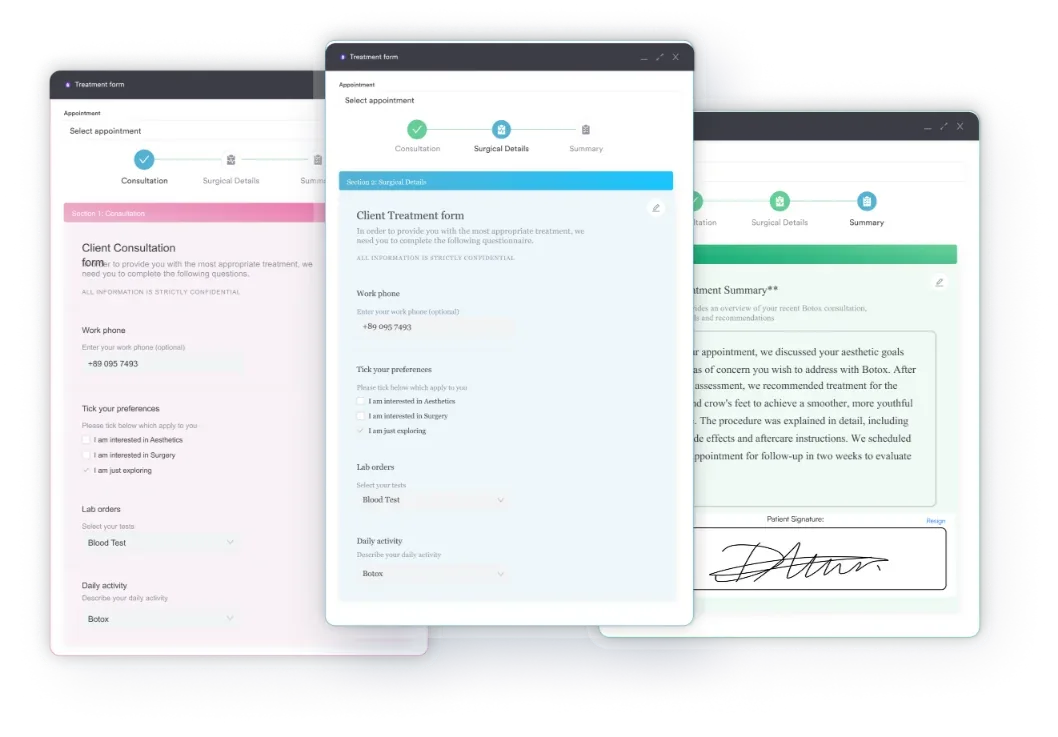
Clients complete worksheets between sessions on a phone or computer, with responses saved automatically for the clinician. This removes paper clutter, prevents lost worksheets, and lets you review responses before the next session to tailor your approach.
Digital delivery also supports teletherapy: clients in remote locations access worksheets instantly without mailed handouts, and clinicians can reference completed worksheets on screen during video sessions.

Digital forms, secure client records, and worksheet management all in one platform. Help your clients heal while saving time on admin.

Abandonment therapy worksheets are a practical, evidence-based tool for one of the most challenging presentations in clinical practice. Their structured frameworks for exploring fear of abandonment speed up healing while reducing the burden on clinicians.
The free worksheets above cover the full spectrum of approaches, from cognitive restructuring to schema work to inner child healing. Adding them to your practice takes no retraining, only the choice to offer clients a resource today. Book a demo with Pabau to see how digital forms and therapy practice management software support worksheet-based treatment.

Managing acute abandonment anxiety in session? Crisis intervention strategies for clinicians provides frameworks for stabilizing clients during a crisis.
Assessing attachment style at intake? Adult attachment scale (AAS) measures the attachment patterns that underpin abandonment fear.
Building distress tolerance skills? DBT distress tolerance skills teach clients to sit with intense emotion without impulsive reactions.
Helping clients set limits? Healthy boundaries worksheet guides clients to define and hold boundaries in relationships.
Exploring gender role identity in session? Bem Sex Role Inventory is a free downloadable tool for measuring gender role orientation and psychological androgyny.
Abandonment therapy worksheets are structured clinical exercises that help clients identify fear-of-abandonment triggers, explore relationship patterns, and develop healthier coping mechanisms. They are grounded in evidence-based modalities like CBT, DBT, schema therapy, and inner child healing.
Typically one to two worksheets per week during active treatment, decreasing as emotion regulation improves. Frequency depends on presentation: clients in acute crisis may benefit from weekly worksheets, while those in maintenance therapy might use them monthly.
Yes. Group settings let clients with similar abandonment fears process worksheets together, normalize their experience, and learn from peers. Group-based worksheet work is particularly effective for building community and reducing shame.
No single modality works for every client. CBT excels at cognitive restructuring, DBT teaches emotion regulation, schema therapy addresses deep-rooted beliefs, and inner child healing builds self-compassion. The most effective treatment combines several modalities using worksheets from each.
The worksheet collection on this page is free to download as a PDF, with fillable versions you can share with adult clients. It covers CBT, DBT, schema therapy, and inner child exercises for processing fear of abandonment.
Yes, with age-appropriate language and shorter exercises. Adolescents often respond well to worksheet-based therapy because the structured format reduces anxiety and provides concrete tools they can reference on their own.