Mood Disorders Questionnaire Scoring
Mood disorders questionnaire scoring checks three answers on the Mood Disorder Q...

2
Last Updated: Oct 19, 2026

Equanimity (upekkha) is the fourth brahmavihara — a quality of mental calmness and non-reactive awareness cultivated through meditation.
Equanimity differs fundamentally from indifference; it is engaged, compassionate stability rather than emotional detachment or cold distance.
Equanimity meditation scripts support emotional regulation, reduce rumination, and are integrated into DBT, ACT, and MBSR clinical frameworks.
Pabau’s digital forms and client portal allow therapists to offer guided equanimity meditation scripts directly within client care workflows and online portals.
A ready-to-use guided meditation script for facilitating equanimity practice — covering breath anchoring, brahmavihara phrases, body awareness integration, and mindful closure. Includes full-length and 5-minute condensed versions for clinical and group settings.
Download templateEquanimity meditation script practices help practitioners and their clients develop emotional resilience and mental steadiness. This guide provides everything you need to offer guided equanimity meditation in your practice — whether you work in therapy, coaching, wellness, or group mindfulness settings.
Equanimity — known as upekkha (Pali) or upeksha (Sanskrit) — is a state of mental calmness, balance, and composure in the face of life’s ups and downs. Unlike indifference or emotional numbness, equanimity is a warm, engaged presence grounded in the recognition that all things change.
In clinical and therapeutic contexts, equanimity develops the capacity to observe difficult thoughts and emotions without being swept away by them. It is neither suppression nor avoidance — it is clear, stable awareness.
Equanimity sits as the fourth of the four brahmaviharas (divine abodes or immeasurables) in Buddhist psychology. These four qualities — loving-kindness, compassion, sympathetic joy, and equanimity — form a complete emotional training.
Equanimity serves as the stabilizing force. Without it, loving-kindness can become exhausting caretaking. Without equanimity, compassion risks becoming overwhelmed by others’ pain. An equanimity meditation script integrates these elements: offering warmth (metta) and responsiveness (karuna) while maintaining the grounded presence (upekkha) needed for sustainable, healthy helping relationships.
Research in mindfulness-based stress reduction (MBSR) and secular clinical psychology demonstrates consistent benefits from equanimity-focused practice:
In therapy and counseling settings, equanimity meditation scripts appear in Dialectical Behaviour Therapy (DBT) mindfulness modules and Acceptance and Commitment Therapy (ACT) frameworks. Group therapy programs use them too.
Filing completed forms in patient management software keeps documentation consistent across your whole team.
This equanimity meditation script is structured for both individual and group use. Follow these five practical steps to facilitate it effectively:
Pacing note: Speak slowly — approximately one sentence every 10-15 seconds — allowing silence for processing. A full equanimity meditation script typically runs 15-25 minutes. The condensed 5-minute version cuts the middle sections and body scan.
These ready-to-use phrases can be woven into your equanimity meditation script. Adapt language to match your voice and client population:
These phrases can also be offered as homework mantras — clients can repeat one during moments of stress throughout the day to reconnect with equanimity practice.
The complete equanimity meditation script PDF (linked above) includes the full word-for-word text. Read it aloud, print it for clients. The script structure is:
For time-limited clinical sessions or brief group mindfulness breaks, the condensed 5-minute equanimity script keeps four core elements:
This shorter format is particularly useful in DBT skills training or therapy sessions where full-length meditation isn’t feasible.
Some patients run the five-minute version themselves on arrival, in a waiting room shared with strangers or a corridor outside the door. When the check-in conversation is the harder part, a Social Interaction Anxiety Scale score tells you what they were steadying themselves for.
Therapists, counselors, and wellness practitioners integrate equanimity meditation scripts into structured clinical protocols:
Clinical tip: When introducing equanimity meditation to clients, normalize the experience of a busy mind. Equanimity isn’t about achieving blankness. It’s about noticing thoughts and letting them pass without judgment. This reframe reduces performance anxiety and increases engagement.
In practice, therapists often teach both practices sequentially: metta builds the warmth foundation, then equanimity adds the stability needed to sustain compassion without burnout.
Offer clients a choice: try equanimity when rumination or anxiety peaks, and metta when self-criticism or shame arises. Over weeks of practice, they develop intuition about which practice serves them in each moment.
Many therapists still hand out equanimity meditation scripts as printed sheets or emailed PDFs. There’s no record of whether a client used them between sessions. Practice management software like Pabau closes that loop by keeping the script, the client’s notes, and their progress in one file.
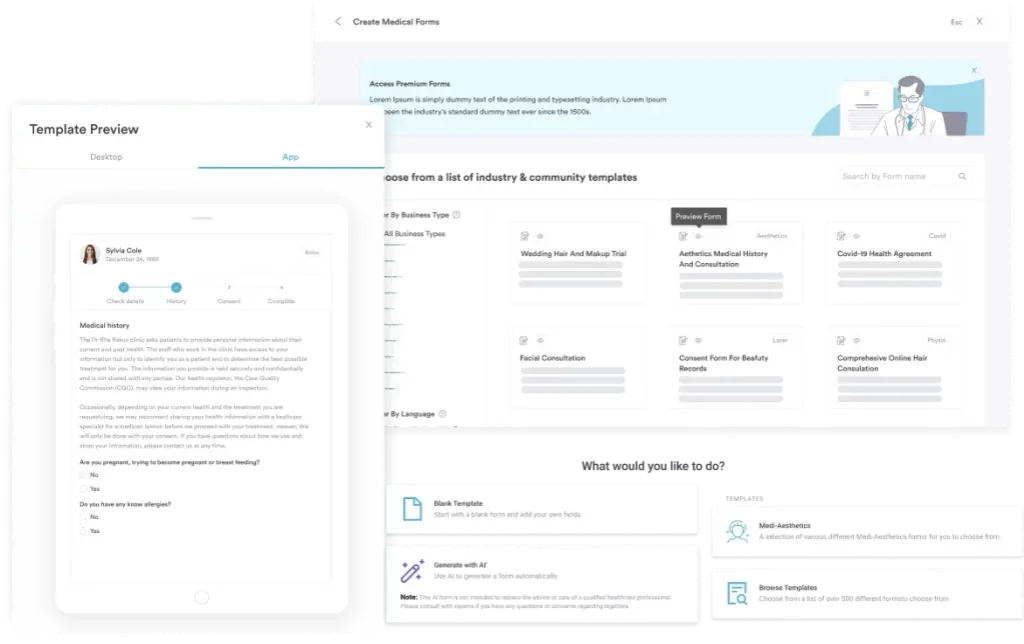
With Pabau’s digital forms, you can turn this equanimity meditation script into a homework template. It lands in the client’s portal, ready to revisit whenever they need it. The client portal also lets clients confirm they’ve reviewed the script, so you know it landed instead of guessing.
Session notes, assigned mantras, and completed forms all sit against the same client record. That gives you a clear history of which equanimity techniques a client has tried and how their emotional regulation has progressed. You won’t need to hunt through separate folders or an old inbox thread to find what you sent last month.

Pabau’s digital forms and client portal let therapists send this equanimity meditation script as homework. Every session note and completed form logs against the same client file, so nothing gets lost between visits.

Equanimity meditation script practice offers a concrete, accessible path for building emotional resilience and mental stability. It works whether you’re a therapist deepening client work, a coach supporting personal growth, or an individual building your own mindfulness practice. The structure gives you a repeatable way to cultivate lasting change instead of a one-off calming exercise.
Download the PDF above and begin with the full-length script. Pay attention to pacing, tone, and the natural pauses between phrases. As you become familiar with the script, you’ll develop your own rhythm and feel for when to expand or condense sections based on client needs. Many practitioners find that offering equanimity meditation regularly becomes a foundational tool for supporting wellbeing and resilience. That holds whether you use it in individual sessions, group settings, or as a personal practice. Book a demo to see how Pabau’s therapy practice management tools help you organize and deliver guided meditation scripts within your clinical workflow.

Want another guided script to pair with equanimity practice? Body scan meditation script offers a somatic complement therapists can rotate in alongside equanimity work.
Looking for a movement-based mindfulness option? Mindfulness walk worksheet gives clients a way to practice non-reactive awareness outside the therapy room.
Need consent covered before introducing meditation in group sessions? Group therapy informed consent covers confidentiality limits, rules, and boundaries before you introduce meditation to a group.
Want to document meditation practice within session notes? Progress notes for psychotherapy shows a structured format for logging client response over time.
An equanimity meditation script is a word-for-word guided meditation that leads practitioners through structured mindfulness practice. It cultivates equanimity — a state of calm, balanced awareness amid changing circumstances. The script typically includes breath anchoring, equanimity phrases, and body awareness integration.
Full-length equanimity scripts typically run 15-25 minutes. Condensed versions for clinical or group settings can be as brief as 5 minutes. The duration depends on your setting and client population. Therapists in structured sessions may use the shorter version, while wellness practitioners often offer the full experience.
No. Equanimity is actively engaged, warm awareness paired with non-attachment. Indifference is cold detachment or avoidance. A practitioner with equanimity cares deeply, responds skillfully, but is not destabilized by outcomes — quite different from someone who simply doesn’t care.
Yes. Equanimity meditation scripts are integrated into DBT mindfulness modules, ACT frameworks, MBSR programs, and group therapy to help clients develop distress tolerance and emotional regulation. Many therapists offer a 5-10 minute equanimity script at the opening or close of sessions.
Common equanimity phrases include “May I meet this moment with open awareness” and “Things arise and pass away.” Others are “I cannot control what happens, only how I respond” and “All experiences are temporary.” These phrases anchor the practice and can be adapted to fit your client population and clinical approach.
The four brahmaviharas are loving-kindness (metta), compassion (karuna), sympathetic joy (mudita), and equanimity (upekkha). Equanimity serves as the stabilizing force that prevents compassion fatigue and caretaker burnout, allowing practitioners to maintain warmth and care while remaining balanced and grounded.