Treatment summary
A treatment summary is a written record of what care was delivered during an epi...

Last Updated: Oct 16, 2026

The life satisfaction scale (SWLS) is a 5-item assessment tool measuring global cognitive judgments of wellbeing using a 7-point Likert scale (1-7 rating anchors).
SWLS scores range from 5-35, with higher scores indicating greater life satisfaction. Internal consistency (Cronbach’s alpha) is around 0.87, with test-retest reliability near 0.82.
SWLS scores fall into seven bands: 31-35 is extremely satisfied, 26-30 is satisfied, and 21-25 is slightly satisfied. A score of 20 is neutral, 15-19 is slightly dissatisfied, 10-14 is dissatisfied, and 5-9 is extremely dissatisfied.
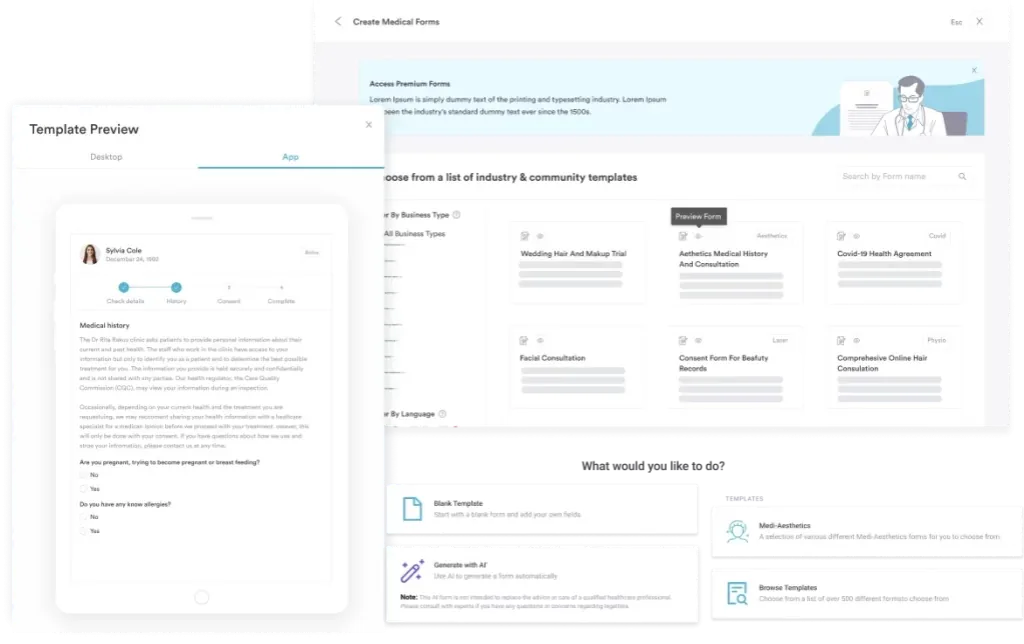
Pabau digital forms let practitioners administer the SWLS before appointments, track scores across sessions, and log results directly in patient records.
A ready-to-use template covering all five SWLS items and the 7-point response scale, ready to hand to patients in your practice.
Download templateThe life satisfaction scale (SWLS) is a brief five-item questionnaire that measures an individual’s global cognitive judgment of satisfaction with their life. Developed by Ed Diener and colleagues in 1985, this widely adopted assessment tool captures subjective wellbeing. It reflects how content a person feels with the way their life is unfolding across work, relationships, health, and personal growth.
The SWLS uses a 7-point Likert scale, from 1 (strongly disagree) to 7 (strongly agree), for each item. Respondents rate five statements about their life satisfaction. Because it measures global cognitive judgments rather than momentary emotional states, the SWLS captures stable patterns in how people evaluate their overall life. This makes it well suited to tracking wellbeing changes over time in mental health practice.
Administering validated assessment tools like the SWLS supports clinical documentation quality and demonstrates evidence-based care. This matters most for practitioners subject to compliance requirements around patient record-keeping and outcome monitoring.
All five SWLS statements are presented below with the standard 7-point response anchors. Respondents rate their agreement with each statement independently:
Each response uses the same 1-7 scale:
This consistent anchor format makes administration straightforward for both self-administered and clinician-administered contexts.
Scoring the life satisfaction scale is simple: add the respondent’s rating for all five items together. The total score ranges from a minimum of 5 (all items rated 1) to a maximum of 35 (all items rated 7).
Scoring steps:
No reverse-scored items exist on the SWLS; all items are straightforward. A higher total always indicates greater life satisfaction. Digital form administration through Pabau automatically calculates and logs the total, eliminating manual arithmetic and ensuring scoring accuracy across follow-up assessments.
The standard interpretation framework for the life satisfaction scale divides the 5-35 range into seven satisfaction bands. Use this table to contextualize each respondent’s total score:
Scores of 19 or below fall in the dissatisfied bands and suggest a patient may benefit from targeted clinical interventions. These can include psychotherapy, counseling support, or lifestyle-focused wellness planning. The SWLS is a screening and monitoring tool, not a diagnostic instrument. A low score alone does not diagnose depression or any clinical condition, but it signals the need for deeper clinical assessment.
The life satisfaction scale has been validated across multiple population groups. Normative scores help practitioners contextualize individual results against published benchmarks:
General adult populations typically average around 23-24, placing them in the “satisfied” range. Clinical and rehabilitation populations, by contrast, tend to score lower, in the 16-20 range. This reflects the increased life dissatisfaction often associated with mental health conditions or physical health challenges. Knowing these normative benchmarks helps practitioners assess whether a patient’s score represents a typical response or a significant departure warranting clinical focus.
The life satisfaction scale has strong psychometric support across multiple validation studies. Key reliability and validity metrics establish its credibility for clinical use:
These psychometric properties make the SWLS suitable for both clinical outcome monitoring and research applications. Its brevity and strong measurement properties support wide adoption across mental health practice, wellness centers, and rehabilitation settings. It takes about 2 minutes to complete.
The life satisfaction scale is appropriate for a broad range of healthcare and wellness practitioners:
The SWLS is validated for both clinical and non-clinical adult populations, making it a transdiagnostic tool suitable across diverse practice settings. Its simplicity means it can be self-administered, clinician-administered, or delivered remotely, fitting into both traditional and digital care workflows.
The traditional workflow for the life satisfaction scale means printing the PDF, having patients complete it on paper, and scoring it by hand. Practitioners then file the paper form in the patient record. This introduces delays, scoring errors, and makes longitudinal tracking labor-intensive.
Pabau, practice management software for health and wellness providers, transforms this workflow. Instead of static PDFs, practitioners can create digital SWLS assessment forms and distribute them through the client portal before appointments or during intake. Responses populate automatically into the patient record. The system can be configured to calculate the total score instantly and flag concerning results (scores ≤15) for immediate clinician review.
Pabau’s patient record system then lets practitioners repeat the SWLS at follow-up visits and visualize score trends over time. A patient’s SWLS progression, whether steadily improving, stable, or declining, becomes visible at a glance. This supports data-driven treatment adjustments and helps practitioners and patients track progress. It marks the shift from a one-time snapshot assessment to a longitudinal outcome monitoring system.
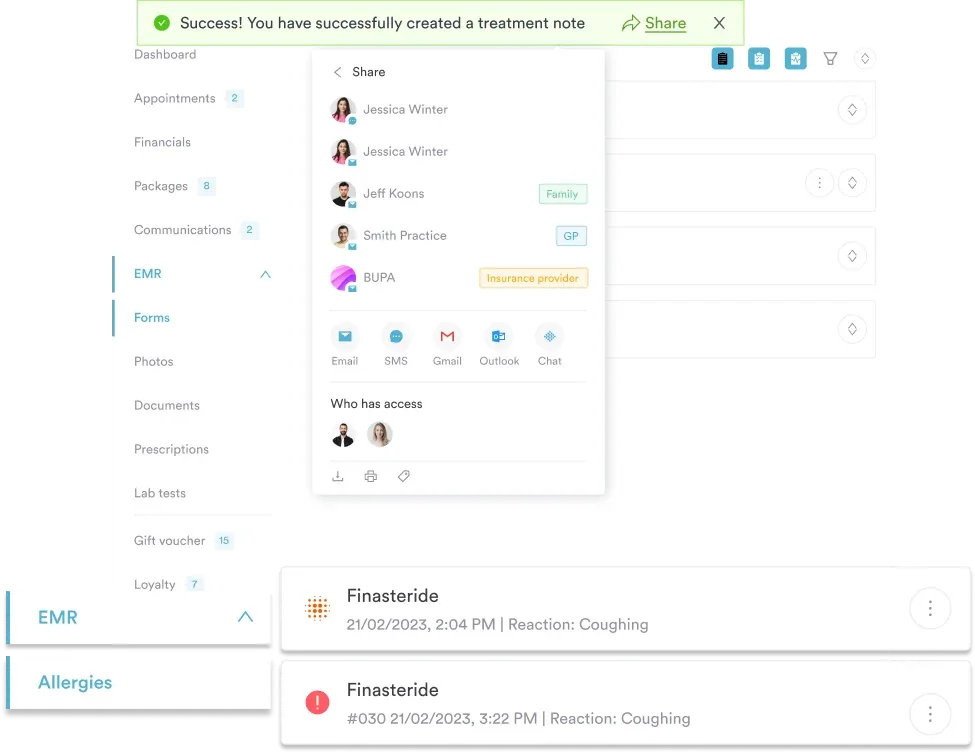

Pabau’s digital forms calculate SWLS totals automatically and log results to the patient record, so practitioners can track trends across sessions without manual scoring.

Despite its widespread use, the life satisfaction scale has recognized limitations:
Understanding these limitations helps practitioners use the SWLS appropriately, as part of a comprehensive assessment, not as a standalone diagnostic tool.
A single SWLS score tells a practitioner little beyond a rough read on a patient’s mood that day. Its value comes from repetition: give it at intake and again at follow-up, and five short items become a trend line worth acting on.
That trend line matters more than any single cutoff. A score of 19 and a score of 9 both signal dissatisfaction, but only the pattern over time shows whether an intervention is working.
Treat the SWLS as a screening tool, not a diagnosis, and pair it with a fuller assessment when a score raises concern. Book a demo to see how Pabau’s digital forms score the SWLS automatically and track results across every follow-up visit.

Looking for other validated wellbeing assessment tools? Psychiatric evaluation templates provide structured frameworks for comprehensive mental health assessment.
Need to track patient engagement alongside wellbeing? Pabau’s client portal enables patients to complete assessments independently and review their own progress over time.
Want to automate assessment distribution? Automated workflow triggers can send the SWLS at key intervals, such as session start, treatment milestone, or discharge, without manual scheduling.
The SWLS is a 5-item assessment measuring global cognitive judgments of life satisfaction on a 7-point Likert scale. Ed Diener developed it to capture subjective wellbeing across life domains.
Respondents typically complete the life satisfaction scale in 2-3 minutes, making it efficient for busy clinical settings.
Yes. Ed Diener and colleagues made the SWLS freely available for research, clinical, and educational use in non-commercial contexts.
Yes. The SWLS is designed for repeated administration to track changes in life satisfaction over time, making it ideal for outcome monitoring across multiple therapy sessions.
SWLS scores of 15 or below suggest significant life dissatisfaction warranting clinical attention. Low scores alone do not diagnose depression or other conditions, but they signal the need for further assessment.
Yes. Pabau’s digital form system allows practitioners to administer the SWLS digitally, automatically score responses, and track patient satisfaction trends longitudinally within patient records.