Trauma response test: Free template for clinicians
A trauma response test is a structured screening questionnaire that helps clinic...

7
Last Updated: Oct 15, 2026

A brain dump journal is an unfiltered writing tool that clears mental clutter, lowers anxiety, and improves focus by externalizing racing thoughts.
Brain dumping typically takes 15 minutes and works best as a daily or weekly practice for managing rumination and cognitive overload.
The free downloadable template structures the process with prompts for presenting concerns, symptom assessment, and progress tracking.
Practitioners use it with clients to support mental health work, document therapeutic progress, and help neurodivergent clients manage executive function.
A five-part worksheet built for session use. It captures presenting concerns, rates symptom severity, names one priority, records current coping strategies, and leaves space to score progress again at the follow-up.
Download templateA brain dump journal is a fast, unfiltered writing tool for clearing mental clutter.
Where traditional journaling follows a narrative, a brain dump values speed and honesty over grammar and order. The client writes down whatever is taking up space, from worries and tasks to feelings and half-formed ideas.
Most brain dump printables are planner pages. This one is built for a session. It rates severity, names one priority, records what the client already tries, and gets scored again at the review. The guide below covers the method, the five steps, the prompts that unstick a blank page, and adaptations for anxiety, ADHD, and bullet journals.
A brain dump journal is expressive writing with no structure, judgment, or editing. The client writes down the thoughts, worries, tasks, and feelings taking up mental space. The goal is speed and completeness, not prose quality. A template adds structure through defined sections covering what is on the client’s mind, how serious it feels, and what is improving.
A traditional journal involves narrative reflection or daily documentation. A brain dump is raw and permission-giving instead. There are no rules. Messy handwriting is fine, and so are bullet points and crossed-out sentences. The relief comes from moving internal noise onto paper, where it can be looked at. Mental health practice software now supports this directly, letting practitioners capture these sessions on structured intake and assessment forms.
Research into expressive writing, pioneered by psychologist James Pennebaker, links writing about stressful events and emotions with lower anxiety and improved mood. A brain dump applies that principle in a time-efficient way. The benefits run across mental health, productivity, and emotional regulation.
Clients who arrive carrying unprocessed stress often spend the first half of a session unloading it. A completed brain dump does that work before the appointment starts, so session time goes to the concern that matters most.
The template breaks the process into five steps, each timed so it fits inside an appointment. Introduce it early in a therapeutic relationship, so the client has a repeatable tool for between-session work.
The timings matter more than they look, because they are what keeps the exercise inside a real appointment rather than swallowing it.
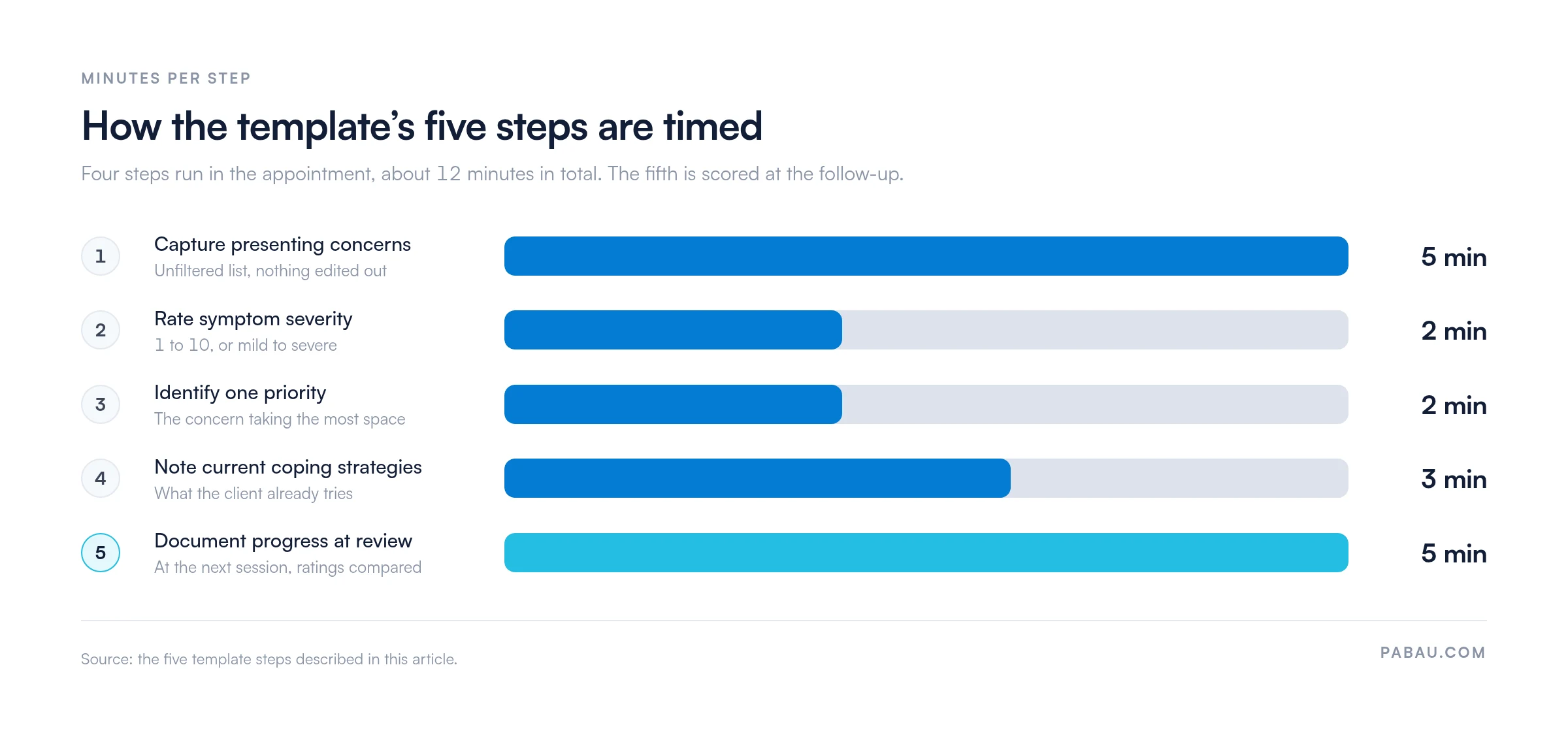
Introduce the template in session and complete the first brain dump together, so the client sees how loose the writing is allowed to be. Then assign it before the next appointment, or during moments of high stress. Clinical notes should summarize the themes rather than copy the list, which keeps patterns visible over months.
Some clients freeze at the open-ended instruction to write down whatever comes. Targeted prompts give them a starting line. Print them alongside the template, or read two or three aloud in session.
A client stuck at a blank page usually needs permission more than instruction. Say that fragments, lists, and crossed-out lines all count, then let them start mid-thought.
For people with ADHD, executive function challenges scatter tasks and worries across the day. That creates constant mental switching and decision fatigue. A brain dump suits ADHD well because it pulls that scattered load into one reference point. The adapted version adds sections for task capture, time-blocking, and priority filtering, which acknowledge neurodivergent working memory.
Adapt the standard sheet by adding three sections:
Many practitioners find weekly brain dumps more practical than daily ones for ADHD clients, since a weekly reset survives an off week. Practitioners carrying a heavy caseload should watch their own load too. The early signs of therapist burnout tend to show up in slipping documentation first.
Bullet journal users can run the method inside the system they already keep. Build a brain dump spread using the usual conventions: rapid-log bullets, a severity column, and a weekly reflection block. That keeps the practice next to their goals and habit tracking, where they will see it.
Tools that fit a client’s existing habits get used. If they already bullet journal, a spread beats a separate printout they have to remember to bring.
Anxiety feeds on ambiguity and internal cycling. A brain dump interrupts the cycle by making the fear concrete and external. For clients who overthink, the sheet doubles as a grounding tool and an evidence trail. One client can look back and say they wrote down 12 worries and have already resolved three of them.
Customize the template for anxiety with two additions. A thinking traps section prompts the client to name the distortion, such as catastrophizing or black-and-white thinking. A counterevidence column asks them to answer the worry with facts. Clients who need more structure than a column can move on to a dysfunctional thought record, which walks the same challenge through fixed prompts.
The worksheet suits any practitioner supporting mental health, emotional regulation, or cognitive overload. That includes therapists, counselors, psychologists, psychiatrists, occupational therapists, wellness coaches, and primary care practitioners seeing stress-related presentations. It is most valuable for clients with anxiety disorders, ADHD, complex trauma, bipolar disorder, or chronic stress, and for anyone juggling competing demands.
A structured sheet removes the blank-page paralysis that stops people from starting. It also creates consistency, because the client knows what happens each time they sit down. Consistency pays off at the practice level too. Software for therapy practices lets you run the same worksheet across clinicians, compare baseline against review, and evidence the intervention in supervision or audit.
Digital intake forms let you send the worksheet ahead of the appointment and pull the answers straight into the client record. The client fills it in when the thoughts are loud, rather than reconstructing them in the waiting room.
A paper worksheet makes the practice do the admin twice. It comes back at the next appointment, gets scanned or retyped into the note, and the severity ratings stay locked on the page. Comparing week four against week one then means digging through the file.
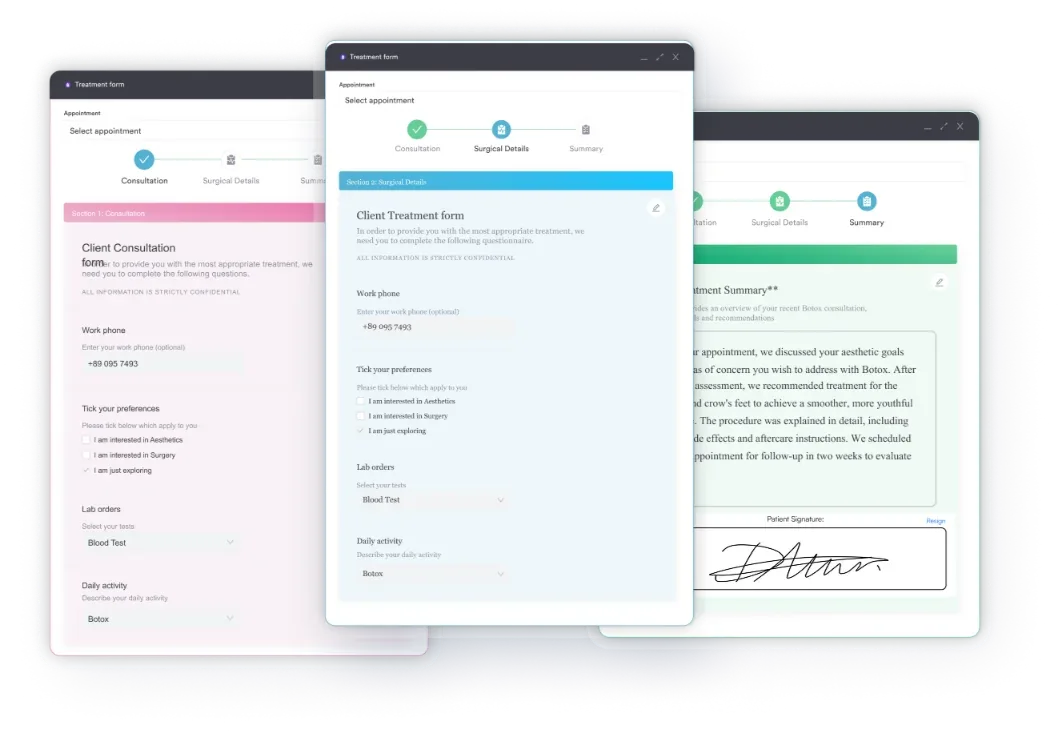
Practice management software like Pabau handles that differently. You build the worksheet once as a digital form and send it with the appointment reminder, so the client completes it before they arrive. The completed form sits in their record next to the previous one, which makes the two sets of ratings easy to read side by side.
The outcome is documented progress without the extra handling. Clients get one place to complete the worksheet between sessions, and you walk into the review already knowing what changed.

Pabau’s digital forms send worksheets before the session, file the answers in the client record, and keep severity ratings easy to compare over time.

What makes a brain dump clinical is what happens to the page afterward. A rated, prioritized list becomes a baseline, and a baseline is something you can measure against at the review.
Print the template, run it once in session, and book the date you will score it again. Clients who watch their own severity ratings fall tend to keep the practice going. That record is also what turns a loose exercise into evidence you can bring to supervision or an audit.
Book a demo to see how Pabau turns worksheets like this one into forms your clients complete before the session starts.

Want a journaling tool with more reflection built in? Self-reflection journal gives clients structured prompts for the slower processing work a brain dump deliberately skips.
Working with anticipatory worry? Anticipatory anxiety worksheet takes the feared event apart step by step, which pairs well with a counterevidence column.
Need a baseline for executive function? Executive function assessment measures the planning and working memory difficulties that make brain dumping useful in the first place.
Running DBT alongside this? DBT journal tracks emotions, urges, and skills use between sessions in a format clients can keep up.
Supporting a caseload of neurodivergent clients? ADHD clinic software keeps assessments, worksheets, and progress notes together across the whole client list.
A brain dump journal is an unstructured writing practice where the client lists what is on their mind, without editing or organizing. The template version adds sections for severity rating, priority, and progress tracking, which makes it usable in therapeutic work.
Most people benefit from a daily or weekly brain dump, depending on their stress level and working memory load. A daily 15 minutes suits high-stress periods or ADHD, while weekly suits ongoing maintenance. Start weekly and adjust to the client’s response.
Yes. Moving worried thoughts onto paper interrupts rumination and creates psychological distance from the worry. Adding a counterevidence section helps clients answer anxious thoughts with facts, which turns the journal into an active coping tool.
Yes. ADHD involves scattered attention and working memory challenges. A brain dump moves that load onto paper and frees mental resources. Adapt the template with a tasks section and time estimates to suit neurodivergent executive function patterns.
Worries, tasks, feelings, ideas, relationships, physical sensations, questions, resentments, and hopes all belong on the page. There are no wrong answers. The goal is completeness and speed, not perfection.
No. Traditional journaling involves reflection, narrative, and structure. A brain dump is unfiltered, fast, and rule-free. Both are therapeutic, but they serve different purposes. A brain dump clears mental clutter, while journaling explores experience.