CPT code 83986: pH of body fluid billing guide
CPT code 83986: Official descriptor and clinical definition CPT code 83986 is de...

Last Updated: Nov 20, 2026
Q4118 is the HCPCS Level II code for MatriStem micromatrix, 1 mg, a particulate wound matrix made by ACell, now part of Integra LifeSciences. You bill one unit for each milligram applied to the wound.
The code sits in the Q4101 to Q4440 skin substitutes and biologicals range. Since January 1, 2026, Medicare pays it as an incident-to supply in the physician office. Contractors price non-sheet products like this one, and the JW and JZ modifiers no longer apply.
Let Pabau's smart automation suggest the right codes, reduce claim denials, and keep your practice compliant—effortlessly.
Automate repetitive tasks and focus on what matters most—your patients.
Reduce coding errors and ensure compliance with the latest regulations.
Clean claims, fewer denials, and faster reimbursements.
Powerful insights and reporting to help your practice thrive.
HIPAA compliant SOC 2 certified GDPR-compliant Trusted by 4,000+ clinics worldwide

HCPCS code Q4118 is MatriStem micromatrix, 1 mg, a particulate wound matrix from ACell, now Integra LifeSciences, billed one unit per milligram.
Sheet grafts billed per square centimeter have codes of their own, so they never go on a Q4118 line.
Since January 1, 2026, Medicare pays skin substitutes in the physician office as incident-to supplies, and JW and JZ no longer apply.
First Coast prices non-sheet products on the documented wound area, so every Q4118 note needs a measured wound in square centimeters.
First Coast also expects a non-sheet application code, G0681 to G0684, on the same claim as the Q4118 product line.
HCPCS code Q4118 is the Level II code for MatriStem micromatrix, 1 mg, a particulate wound matrix made by ACell, now part of Integra LifeSciences. AAPC Codify’s Q4118 entry carries that descriptor and files the code under skin substitutes and biologicals, Q4101 to Q4440. One unit equals one milligram applied.
The code was added on January 1, 2011, and it is still valid for 2026. Don’t confuse it with DermACELL, a sheet product billed per square centimeter under HCPCS code Q4122.
The descriptor sets the unit at 1 mg, so the product line carries the milligrams that went into the wound. The wound itself is measured in square centimeters. You need both numbers, because the code counts one and some contractors pay on the other.
Here’s an illustrative visit. A podiatrist debrides a diabetic foot ulcer that measures 3 cm by 4 cm, so the wound area is 12 sq cm. She applies 50 mg of MatriStem micromatrix and discards what’s left in the container.
The classic error runs the other way. A biller who learned skin substitutes on sheet grafts enters 12 units, one per square centimeter. That understates the product line and contradicts the descriptor.
The CY 2026 Physician Fee Schedule changed the payment model under Q4118. CMS’s 2026 fee schedule fact sheet confirms skin substitutes are now paid as incident-to supplies. That applies in the physician office.
The hospital outpatient department follows its own OPPS rules for non-sheet products. The claim below follows First Coast, the Medicare contractor that has published the most detailed non-sheet guidance.
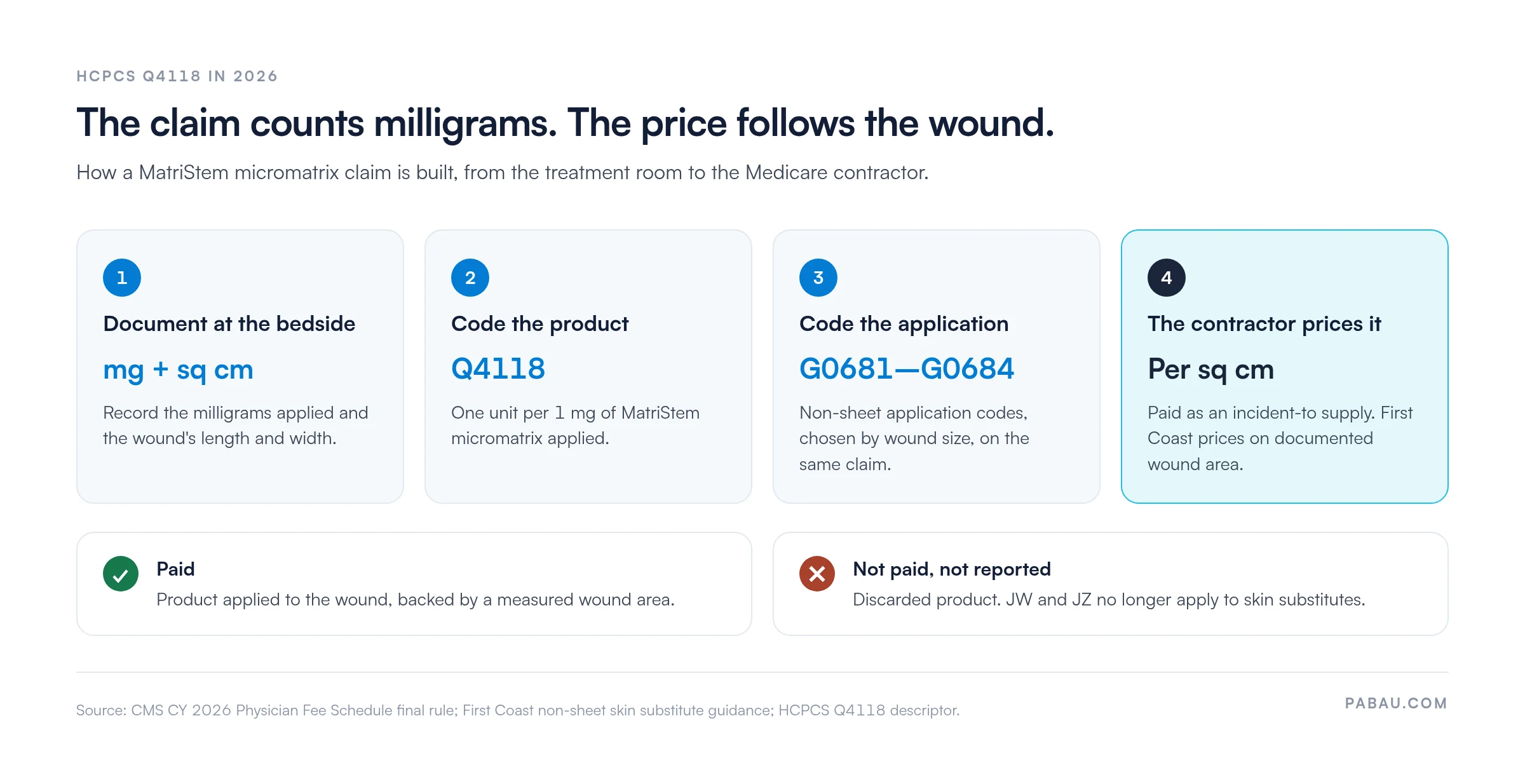
Sheet grafts report their application through the series that starts at CPT 15271. For a non-sheet product like Q4118, check which application code your own contractor expects before you submit.
Skin substitute codes look alike, but their units don’t. Matching the unit to the product’s form catches most wrong-code claims before they leave the office.
Q4100 is a fallback for a product with no code of its own. MatriStem micromatrix has one, so Q4100 isn’t the right choice for it.
Q4118 claims usually fail on the unit count or a leftover modifier, so check those two first. The full list runs to six.
When a claim does come back, read the adjustment reason before you resubmit. A denial code reference for billers maps each code to its cause. A CO-109, for instance, means this payer or contractor doesn’t cover the claim, and it should go to the one that does.
Payment rules tell you how Q4118 is priced, while coverage rules decide whether it’s paid at all. Those come from the patient’s Medicare contractor or plan. Commercial and Medicaid plans set their own criteria.
One example is Humana’s Michigan Medicaid skin substitute policy, which lists Q4118. It covers skin substitutes for diabetic foot ulcers and venous leg ulcers older than four weeks. Standard care has to run alongside, from offloading or compression to treating any infection.
Strong records satisfy most payers at once. Good medical billing compliance habits, such as dated measurements and a clear treatment history, carry from one policy to the next.
A claim that clears this list meets the basics of a clean claim. That means fewer rounds of corrections after it leaves.
Wound care practices often keep measurements in one place, photos in another and the claim in a third. When a contractor prices on wound area, that split is where claims go wrong.
Pabau, a practice management and EHR platform, keeps wound notes, measurements and photos on the patient record. Its claims software for practices submits the claim from that same record and tracks its status. The measurements your billers check sit right beside the claim they send.
When a claim is denied, the status shows up in Pabau, so you can work it the same day. Teams using a structured denial management routine get the most from that view.

Pabau keeps wound measurements, photos and notes on the patient record, then submits and tracks the claim from it. Your team checks units against the wound before submission.

Q4118 is easy to code and easy to get wrong. The descriptor asks for milligrams, while the 2026 payment model leans on square centimeters. Treat both numbers as required on every visit, and the most common denials stop before they start.
The bigger shift is the move to supply payment. Habits built on drug billing, from JW lines to wastage units, now cost you claims. Retrain the billers who learned the old way first.
Book a demo to see how Pabau links each wound measurement to the claim it supports.

Looking up a neighboring wound code? HCPCS codes indexes every Level II code page in the library.
Want to see where supply claims fit in the bigger picture? What is revenue cycle management follows a claim from scheduling to final payment.
New to the billing side of wound care? What is medical billing covers the basics of codes, claims and payers.
In six states, for some lower-extremity wound applications billed to Original Medicare. The WISeR model, which began in 2026, runs in Arizona, New Jersey, Ohio, Oklahoma, Texas and Washington. Medicare Advantage and commercial plans set their own rules.
Under traditional Medicare, the product falls under Part B. The patient owes the Part B deductible, then 20% coinsurance on the allowed amount. A Medicare Advantage or supplemental plan may change that share.
Auxiliary staff can apply it in the office under the billing practitioner’s direct supervision. The note should name the supervising clinician.
Not for 2026. CMS set a single national rate for sheet products but left non-sheet pricing to each Medicare contractor. Check your contractor’s fee guidance before you quote a patient.