CCSD Code S5535: Description, tariff, medical aid and claim requirements
CCSD Code S5535: Official description and procedure scope CCSD Code S5535 is a b...

Last Updated: Nov 20, 2026
T8950 is the CCSD code for repair of perilymph fistula.
Let Pabau's smart automation suggest the right codes, reduce claim denials, and keep your practice compliant—effortlessly.
Automate repetitive tasks and focus on what matters most—your patients.
Reduce coding errors and ensure compliance with the latest regulations.
Clean claims, fewer denials, and faster reimbursements.
Powerful insights and reporting to help your practice thrive.
HIPAA compliant SOC 2 certified GDPR-compliant Trusted by 4,000+ clinics worldwide

CCSD Code T8950 covers repair of a perilymph fistula via exploratory tympanotomy – it does not cover a simple diagnostic tympanotomy or other otological procedures.
H83.2 (Labyrinthine dysfunction) is the primary ICD-10 diagnosis code paired with T8950; laterality extensions apply and must match the operative side.
Most South African medical aids require documented evidence of failed conservative management before granting pre-authorisation for T8950.
Missing pre-authorisation and incorrect ICD-10 pairing are the two most common reasons T8950 claims are denied.
Pabau’s claims management software helps ENT practices track pre-auth status, attach operative documentation, and reduce preventable T8950 claim rejections.
CCSD Code T8950 is the tariff code maintained by the CCSD coding schedule for the surgical repair of a perilymph fistula (PLF). The official descriptor is “Repair of perilymph fistula.” The code sits within the T-series of CCSD otological procedure codes and is billed by registered ENT surgeons or otologists operating under the Health Professions Council of South Africa (HPCSA) scope of practice for the specialty.
A perilymph fistula is an abnormal communication between the fluid-filled inner ear and the air-filled middle ear, most commonly at the round window membrane or oval window. Perilymph leaks into the middle ear space, disrupting the pressure differential the cochlea and vestibular system depend on. The condition presents with a characteristic cluster: Fluctuating sensorineural hearing loss, intractable vertigo or balance disturbance, tinnitus, and aural fullness – often worsened by straining, coughing, or Valsalva-type exertion.
The surgical procedure covered by T8950 is an exploratory tympanotomy with fistula repair. The ENT surgeon elevates the tympanic membrane flap and enters the middle ear to inspect the round window membrane, oval window, and surrounding structures for evidence of perilymph leak. Identifying the site is often the most technically demanding part: The fistula may be small, intermittent, or obscured by mucosal folds.
Once identified, the fistula is patched using an autologous graft material. Fat (harvested from the earlobe or abdomen), fascia, perichondrium, or areolar connective tissue are the most commonly used materials. The graft is placed over the fistula site and held with a small piece of absorbable gelatin sponge. The tympanic membrane flap is then returned to position and the ear canal packed. The operative report must name the fistula site (round window, oval window, or other), the graft material used, and the approach taken.
Medical aids in South Africa typically require documented evidence that conservative management has been attempted and has failed before they will grant pre-authorisation for T8950. Standard conservative protocols include strict bed rest with head elevation, activity restriction (no straining, lifting, or nose-blowing), and stool softeners to prevent Valsalva-type pressure spikes. The documented period is usually two to four weeks, though this varies by scheme.
The clinical record should explicitly note the start and end date of the conservative management period, the interventions used, and the audiological or vestibular findings at the end of that period. Vague entries such as “conservative management tried” without dates or audiogram results are a common cause of pre-auth delay or denial.
Document the conservative management period as a dated timeline in the clinical notes, not as a single retrospective sentence. Include the audiogram result at the end of the period with a clear statement that hearing did not stabilise. This format maps directly onto what scheme case managers look for during pre-auth review and significantly reduces back-and-forth requests.
South Africa uses a localised edition of ICD-10. The primary diagnosis code for a perilymph fistula repair claim is H83.2 (Labyrinthine dysfunction). Note that laterality extensions (indicating left ear, right ear, or bilateral) must be applied where the South African ICD-10 edition supports them and must match the operative side recorded in the operative report. Using the wrong laterality, or omitting it where required, is a verifiable mismatch that triggers denial.
Confirm all ICD-10 code extensions against the South African edition published for the current billing year. The South African ICD-10 edition may differ from the international WHO ICD-10 and from ICD-10-CM used in the United States. When in doubt, verify against the scheme’s current benefit-year code list or contact the Board of Healthcare Funders (BHF) for guidance.

Pabau helps South African ENT and specialist practices attach operative notes, track pre-authorisation status, and submit T8950 claims with the correct ICD-10 codes – all from one platform. Fewer rejections, less back-and-forth with medical aids.

Several CCSD T-series codes cover otological procedures that share clinical territory with T8950. Selecting the correct code depends on what was actually performed and confirmed in the operative report. Using an adjacent code when T8950 applies – or billing T8950 when only an exploratory tympanotomy without fistula repair was performed – constitutes a coding error and exposes the practice to audit. See also the Bupa CCSD procedure codes guide for broader context on the T-series structure used by UK private insurers that also operate in some South African networks.
*Neighbouring code numbers are illustrative placeholders – verify exact CCSD T-series codes against the current published CCSD tariff schedule. The critical point is that T8950 requires both identification of a fistula and its surgical repair. An exploratory procedure where no fistula is confirmed or repaired is coded differently.
Pre-authorisation for T8950 is required by most South African medical aid schemes before the procedure is performed. Discovery Health, Bonitas, Momentum Health, and Medshield each have their own case-management criteria, which are updated annually and must be verified against the current benefit-year guide for each scheme. The list below reflects the documentation that is typically required across major funders, but practitioners must confirm scheme-specific requirements before submitting a pre-auth request.
Schemes may also require vestibular function test results (such as videonystagmography or caloric testing) where vertigo is the dominant presentation. If the fistula is traumatic in origin (barotrauma, head injury, significant exertion), include a brief clinical history noting the precipitating event and onset date.
T8950 is performed under general anaesthesia. The anaesthesiologist bills a separate CCSD anaesthetic code on their own account; the surgeon does not include the anaesthetic code on the T8950 claim line. Confirm the applicable anaesthetic code with the anaesthesiologist’s billing practice, as CCSD anaesthetic codes are time-based and calculated separately from the surgical tariff.
Bilateral perilymph fistula repair – where both ears are operated on in the same surgical session – may require a bilateral modifier on the T8950 line item. CCSD bilateral modifier rules are complex and must be verified against the current CCSD technical guide before billing. Applying a bilateral modifier incorrectly, or failing to apply it when required, is a common audit trigger. Confirm the applicable modifier value and percentage reduction with the CCSD coding schedule or your scheme liaison before submitting.
A complete T8950 claim requires a specific set of supporting documents. Medical aids have the right to request any of these at the point of claim adjudication or during a post-payment audit. Using claims management software that keeps operative reports, pre-auth approvals, and clinical notes linked to each claim line significantly reduces the turnaround time when a scheme requests supporting documentation.
Store all documents in a format that allows immediate retrieval. Digital intake forms and structured clinical notes linked to the patient file reduce the risk of a document being missing when a scheme calls for it at audit.
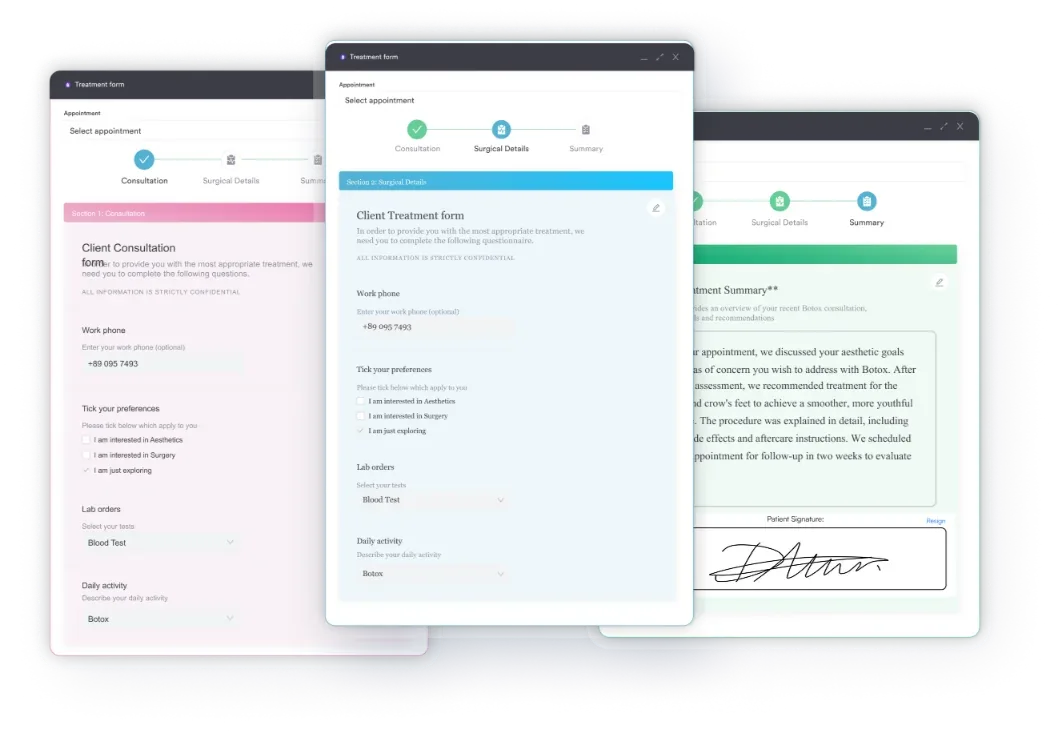
T8950 claims are denied most often for administrative and documentation reasons rather than clinical ones. Understanding the typical denial triggers before submission reduces rework and protects the practice’s cash flow.
When a T8950 claim is denied, the first step is to identify the denial reason code on the scheme’s remittance advice. South African medical aids are required by the Medical Schemes Act 131 of 1998 to provide a reason for each denial. Each scheme has a formal dispute resolution process, and the Council for Medical Schemes (CMS) sets the timelines within which a practice may lodge a complaint if internal resolution fails.
Always request the denial reason code in writing from the scheme, not just verbally. A written denial triggers the scheme’s formal dispute resolution clock and gives you a clear paper trail if the case is later escalated to the Council for Medical Schemes (CMS). Verbal communication is not binding and cannot be attached to an appeal file.
Getting a T8950 claim right depends on the same three things every time: The operative report names the fistula site and graft material, the ICD-10 code matches that site and the operative ear, and pre-authorisation was obtained before the procedure. When all three align, most South African medical aids settle without further query.
Pabau’s claims management tools help ENT and specialist practices in South Africa attach documents to individual claim lines, track pre-auth approval numbers, and flag incomplete claim submissions before they reach the scheme. To see how Pabau handles CCSD billing workflows, book a demo.

Billing other CCSD procedures for UK insurers too? Bupa CCSD procedure codes covers the full T-series structure as recognised by Bupa and other UK private healthcare funders.
Need a broader CCSD billing overview for your practice? Bupa procedure codes fee schedule explains how CCSD tariffs map to insurer fee schedules and what documentation each insurer expects.
Looking to streamline how your practice handles specialist billing? Best clinic software for South Africa compares practice management platforms suited to South African specialist billing workflows.
CCSD Code T8950 covers the surgical repair of a perilymph fistula, performed via exploratory tympanotomy with graft patching at the round window or oval window. It does not cover a purely diagnostic tympanotomy where no fistula is identified or repaired, or other otological procedures such as stapedectomy or labyrinthectomy.
H83.2 (Labyrinthine dysfunction) is the primary ICD-10 diagnosis code paired with T8950 for perilymph fistula repair. Laterality extensions indicating the operative ear must be applied where the South African ICD-10 edition supports them and must match the side documented in the operative report.
Yes, pre-authorisation is required by most South African medical aids before T8950 is performed. Submitting a claim without an authorisation number results in automatic rejection. Pre-auth requirements, including the documentation package and timeframe, vary by scheme and are updated annually – verify against the current benefit-year guide for each scheme.
Bilateral perilymph fistula repair may require a CCSD bilateral modifier on the T8950 line item. The applicable modifier code and the percentage reduction applied to the second procedure must be verified against the current CCSD technical guide. Billing two units of T8950 without the correct modifier is treated as a duplicate claim and results in denial of the second unit.
A valid T8950 claim requires the operative report (naming the fistula site, graft material, and confirmation of repair), a pre-operative audiogram, dated records of the conservative management period, the scheme’s pre-authorisation approval number, and a specialist motivation letter. Missing any of these documents is a common cause of denial or delayed settlement.
Most schemes require documented bed rest with head elevation, activity restriction to prevent Valsalva-type pressure, and stool softeners, typically over a two-to-four-week period. The clinical notes must include the start and end dates of the conservative phase, the interventions used, and an audiological assessment showing failure to stabilise or improve.