



CCSD code G5100: Bypass of duodenum billing guide
CCSD code G5100 bills a bypass that leaves the duodenum in place CCSD code G5100...

Last Updated: Oct 16, 2026

CPT code 22802 covers posterior arthrodesis for spinal deformity across 7 to 12 vertebral segments.
Segment count decides the code: 22800 covers up to 6 segments, 22802 covers 7 to 12, and 22804 covers 13 or more.
Count only the levels actually fused, because instrumented levels that are not fused do not change the code.
The operative note has to state the exact number of levels fused, or the claim will not survive review.
Practice management software like Pabau helps spine practices check code accuracy and documentation before a claim goes out.
CPT code 22802 is the procedure code for posterior arthrodesis performed to correct a spinal deformity, when 7 to 12 vertebral segments are fused. The official descriptor reads “Arthrodesis, posterior, for spinal deformity, with or without cast; 7 to 12 vertebral segments.” It sits in the Arthrodesis Procedures on the Spine subsection of the AMA CPT code set, indexed in the AAPC code reference. Auditors read the note before the code, so the documentation level has to support what was submitted. The 1500 claim form and its electronic equivalent ask for the same data in a different layout.
The surgeon works from the back of the spine, exposes the posterior elements, and fuses the targeted levels with bone graft. Spinal instrumentation usually supports that fusion. Scoliosis and kyphosis are the deformities most often treated this way. The “with or without cast” wording confirms that external immobilization is not needed for the code to apply.
The 22800 family is separated by one variable, and that is the number of vertebral segments fused. Getting it wrong is the most common coding error in posterior deformity billing. Use the table below to settle the code before the claim goes out.
Key rule: count only the vertebral levels actually fused, not the levels instrumented. Instrumentation that spans more levels than the fusion does not change the segment count for coding purposes.
RVU values for 22802 reflect the complexity of a multi-level posterior fusion. The figures below come from the FastRVU 2026 lookup, which draws on current Medicare Physician Fee Schedule (MPFS) data. CMS revises RVU values every year, so check the current final rule before you use these for budgeting or contracting.
Spinal deformity fusion codes sit among the highest work RVU values in the CPT code set, which reflects the operative time involved. The facility rate is the figure that matters for hospital-based spine surgery. Non-facility rates only apply where the practice carries the overhead itself, which is rare for a case of this size.
Medicare payment for 22802 varies by geography. The CMS fee schedule lookup returns current national and locality-adjusted rates. As a reference point, the national facility payment for the surgeon’s component usually lands between $1,800 and $2,400. Rates move with every MPFS final rule and geographic adjustment, so query the tool for your own MAC locality before billing.
A clean claim process catches missing locality data or an unsupported diagnosis code before submission. That is what cuts the volume of preventable Medicare denials.
Modifier errors are among the most common causes of rejection on 22802 claims. The table below covers the modifiers that apply and the conditions attached to each. Payer policies vary, so confirm with your MAC or commercial payer before you submit.
Note on modifier 50: CPT 22802 describes a bilateral procedure by definition, because a posterior fusion spans the midline. Modifier 50 is generally not applicable. Confirm with your payer before appending it.
The diagnosis code has to reflect both the deformity type and the site. A general code such as M41.9 is billable, but a site-specific subcode strengthens the claim and lowers audit risk. Check the covered codes against your MAC’s current LCD before you submit.
Report the most specific subcode the documentation supports. If the fusion later fails to unite, M96.0 is the diagnosis that carries the revision claim.
CPT 22802 is rarely billed alone. Deformity correction usually involves instrumentation, bone grafting, and sometimes intraoperative navigation. The codes below are the ones most often reported with it, with the CCI bundling position noted for each.
One thing this family does not have is an add-on code for extra segments. Once the fusion passes 12 segments you move up to 22804, rather than stack an add-on onto 22802. Add-on codes for a single extra interspace, such as 22614, belong to base codes like 22600.
A combined anterior and posterior procedure needs a separate code for each approach, so only the posterior work drives the 22802 decision. If an open vertebral body biopsy such as 20250 happens in the same session, check the CCI pair before reporting it separately.
Vague operative documentation is the leading reason 22802 claims are denied or pulled for audit. CMS expects the record to support both the number of segments fused and the necessity of surgery. Work through this checklist before the claim leaves the practice.
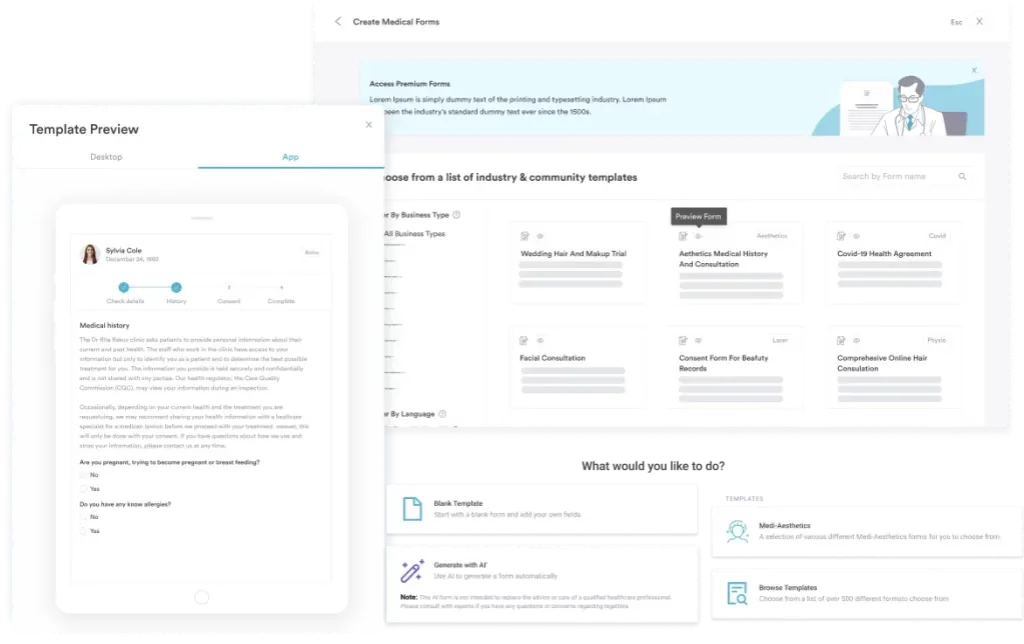
Practices that use digital documentation forms can build an operative checklist that prompts for every required data point before the note is signed. That removes most of the back-and-forth between coder and surgeon that holds claims up.
Run a documentation audit on every 22802 claim before it leaves the practice. Pull the operative note and count the fused segments against the billed code. Confirm the ICD-10-CM code matches the stated diagnosis. Then check that the implant list supports each instrumentation add-on code. Catching a mismatch at this stage is far faster than appealing a denial 30 days later.
The Correct Coding Initiative (CCI) defines which code pairs cannot be billed together, and which need a modifier to unbundle. CMS updates the 22802 edits quarterly. The principles below reflect standard bundling logic, so verify them against the current edit tables before you submit.
When a bundling edit does fire, the remittance advice returns a reason code that names the problem. Reading those denial codes correctly tells you whether to appeal or to rebill with a modifier.
Segment-count mismatches, CCI edit violations and thin operative notes all produce denials that eat staff time and delay payment. Most of it starts upstream. The coder gets an incomplete note, the claim goes out without an add-on code, and nobody checks the segment count against the operative report.
Practice management software like Pabau puts that sequence in one place. Pabau’s claims management software shows claim status, denial reasons and resubmission work on a single screen. Pabau Scribe, our AI scribe, turns the dictated account of the case into a structured clinical note.
That documentation feeds billing directly, so fewer handoff errors reach the claim. Spine work also rarely sits on its own. Pabau runs as sports medicine software for the orthopedic side and as a physical therapy EMR for post-fusion rehab, on one patient record.

Pabau brings clinical notes, coding and claim status into one record. Spine teams can check documentation before a claim goes out, then chase any denial in the same place.

Accuracy on 22802 comes down to a habit rather than a rule book. Someone has to read the operative note and count the fused levels before the claim is coded. Practices that make this a standing step stop arguing with payers about segment counts.
The trade-off is a few minutes per case against a denial that takes weeks to overturn. That math almost always favors the review. Book a demo to see how Pabau keeps operative documentation and claim status in one place for spine practices.

Billing external fixation hardware? CPT code 20690 covers uniplane external fixation, with the RVU values and modifier rules that apply to it.
Coding a chest wall procedure? CPT code 21602 walks through chest wall tumor excision billing and the documentation it needs.
Coding a thyroid diagnosis on the same claim? Hypothyroidism diagnosis coding guide covers how the ICD-11 5A00 code replaces the earlier ICD-10 approach for hypothyroidism.
Billing a patient outside insurance? Superbill template shows what an itemized receipt has to include.
Comparing RVUs across orthopedic codes? CPT code 23462 sets out reimbursement, RVUs and modifier use for a shoulder repair.
CPT code 22802 bills posterior arthrodesis performed to correct a spinal deformity, such as scoliosis or kyphosis, across 7 to 12 vertebral segments. Segment count is what separates it from 22800, which covers up to 6 segments, and 22804, which covers 13 or more.
All three describe the same posterior arthrodesis for spinal deformity and differ only by the number of vertebral segments fused. 22800 covers up to 6 segments, 22802 covers 7 to 12, and 22804 covers 13 or more. Pick the code that matches the segment count recorded in the operative note.
The modifiers that come up most are 51 for multiple procedures and 62 for two surgeons of different specialties. Modifier 80 covers a physician assistant surgeon, and AS covers a non-physician practitioner assisting. Modifier 22 applies where the case takes significantly more time or effort. Check payer policy before appending any of them.
The operative note must state the exact number of vertebral segments fused and confirm the posterior approach. It also has to name the specific deformity, cite the supporting imaging, and list every implant and graft material. A medical necessity narrative completes the record. CMS expects this level of detail to support both the CPT code and the diagnosis code.
Yes. Medicare covers CPT code 22802 where medical necessity is established through supported ICD-10-CM diagnosis codes and adequate operative documentation. Coverage criteria and covered diagnosis codes vary by MAC region. Check your Local Coverage Determination and the Medicare Physician Fee Schedule for current rates before you submit.
Posterior arthrodesis for spinal deformity is billed with 22800, 22802 or 22804, depending on how many vertebral segments are fused. All three share the same approach and indication, so only the segment count decides. 22802 is correct when 7 to 12 segments are fused in one operative session.



