CPT code 51797: Intra-abdominal voiding pressure add-on
What CPT code 51797 covers CPT code 51797 is the add-on code for intra-abdominal...

Last Updated: Oct 19, 2026
J2407 is the HCPCS Level II code for injection, oritavancin (orbactiv), 10 mg.
Let Pabau's smart automation suggest the right codes, reduce claim denials, and keep your practice compliant—effortlessly.
Automate repetitive tasks and focus on what matters most—your patients.
Reduce coding errors and ensure compliance with the latest regulations.
Clean claims, fewer denials, and faster reimbursements.
Powerful insights and reporting to help your practice thrive.
HIPAA compliant SOC 2 certified GDPR-compliant Trusted by 4,000+ clinics worldwide

HCPCS code J2407 covers injection of oritavancin (Orbactiv) in 10 mg increments, billed under Medicare Part B in outpatient settings.
The FDA-approved dose is a single 1,200 mg infusion, which bills as 120 units of J2407.
The drug code does not pay for the infusion, so the administration codes belong on the same claim.
Medicare pays J2407 under ASP plus 6%, and most commercial payers want prior authorization before the infusion date.
Practice management software like Pabau links the infusion record to the claim, so billed units match the dose given.
J2407 is the HCPCS Level II code assigned to injection of oritavancin, sold as Orbactiv, in increments of 10 mg. It sits in the J-code series, which CMS uses to classify injectable drugs given in outpatient settings. Because oritavancin is dosed by milligram, the units you bill follow the milligrams administered.
The table below sets out the core code attributes coders need before touching a claim form.
Oritavancin is FDA-approved to treat acute bacterial skin and skin structure infections, known as ABSSSI, caused by gram-positive organisms. That includes methicillin-resistant Staphylococcus aureus (MRSA), Streptococcus pyogenes, and related pathogens. Billing J2407 for a non-approved indication invites both denial and compliance exposure. An itemized superbill keeps the required fields in one place: dates, codes, charges and provider identifiers.
What makes the drug distinctive for billing teams is its single-dose administration. Most antibiotics for serious skin infections need multi-day inpatient courses. Oritavancin delivers the full course in one 3-hour infusion. That is why it lands in outpatient infusion centers and physician offices.
Any practice already running IV therapy software will recognize the workflow. Drug preparation, line setup, infusion monitoring, and documentation all happen inside one visit. That outpatient model is also why Medicare Part B covers J2407, while Part A does not. The drug is never bundled into an inpatient DRG payment.
The FDA-approved dose of oritavancin is 1,200 mg, given as a single IV infusion. Since J2407 is billed per 10 mg, a full course bills as 120 units. Practices with disciplined IV therapy EMR records rarely get this wrong, but it remains the most common J2407 error.
Unit calculation formula: Total mg administered divided by 10 mg per unit.
Only the 1,200 mg regimen appears on the Orbactiv label. The 800 mg and 600 mg rows show how the arithmetic works, not an approved regimen. If a prescriber orders anything other than 1,200 mg, bill the milligrams actually given.
Billing 120 units when 800 mg was given is a compliance problem. Record the administered dose in the infusion note and carry that number straight onto the claim. The same per-milligram arithmetic governs other injectable J-codes, including including J2323.
J2407 pays for the drug only. The infusion itself is a separate administration service with its own codes. A 3-hour Orbactiv infusion is normally reported as CPT code 96365 for the first hour, plus two units of 96366 for the additional hours.
Leaving the administration codes off the claim gives away payment for three hours of chair time and nursing. Coders who submit the J-code alone see the drug reimbursed and the visit unpaid.
Wastage modifiers are the other question that comes up. Orbactiv ships as three 400 mg vials that are fully administered, so nothing is discarded. According to Orbactiv’s reimbursement guide, CMS does not list J2407 among the codes tied to single-dose containers.
That means the JW and JZ modifiers generally do not apply here. Confirm it with your Medicare Administrative Contractor before you standardize the rule, because local guidance varies.
Medicare pays J2407 under the Part B drug methodology, average sales price (ASP) plus 6%. The per-unit rate changes every quarter as CMS republishes the ASP pricing files. Check the current quarter’s amount in the Physician Fee Schedule lookup before the claim goes out.
Hard-coding a fixed dollar amount per unit is how practices end up under-collecting for a whole quarter without noticing.
ASP plus 6% applies when oritavancin is given incident-to in a physician office. In a hospital outpatient department the rate follows the Outpatient Prospective Payment System (OPPS) instead. Check which payment system governs the encounter before you price the claim.
For programmatic checks, the Clinical Table Search API confirms that J2407 is active and billable for a given claim date.
The place-of-service (POS) code on a J2407 claim drives both the payment rate and the coverage pathway. Oritavancin is not an inpatient Part A drug, so it is only billable in an outpatient or office setting.
Anyone opening an infusion practice needs the POS code settled before the first claim. The table below lists the eligible settings.
If the patient is admitted while receiving oritavancin, the drug cost folds into the inpatient DRG payment. J2407 cannot then be billed separately under Part B. Hospital-based infusion departments hit this more often than freestanding centers do.
Verify the patient’s admission status before billing J2407. An observation patient is outpatient and qualifies for Part B drug billing. An admitted inpatient does not. Request the admission status from the facility or the ordering team before the claim drops.
Traditional Medicare Part B does not require prior authorization for J2407. Most Medicare Advantage plans and commercial payers do. The per-infusion cost makes oritavancin a standing target for medical-necessity review, so treat prior authorization as the commercial default.
What payers usually ask for before they approve:
A ready-made prior authorization form saves the front desk rebuilding the same packet for every payer. Requirements shift by plan year, so confirm status before the infusion date rather than after it.
Submitting without an authorization number when the payer requires one produces a denial. Appeals on high-cost injectables are slow, and timely filing limits keep running while you gather paperwork.
Documentation for a J2407 claim has to support medical necessity, confirm the administered dose, and tie the drug to a diagnosis. Holding drug administration records to HIPAA-compliant standards also protects the practice in an audit.
What a complete J2407 record contains:
Digital intake forms that capture infusion details at the point of care beat reconstructing them a week later. The infusion record is the most-requested document in a J2407 audit, and a clean claim depends on it.

Every J2407 claim needs an ICD-10-CM diagnosis code that establishes medical necessity. The codes below map to ABSSSI, the approved indication for Orbactiv, and come from the CDC’s ICD-10-CM tool. Verify them against the current fiscal year’s release, since codes are added and deleted annually.
Code to the site the record documents. Practices using dermatology EMR software see the L03 and L02 ranges most often. Picking an abdominal wall code for a documented leg infection is the mismatch auditors pull first.
Watch the sepsis pair too. A41.01 covers MSSA sepsis and A41.02 covers MRSA sepsis, so the two are not interchangeable on a claim.
Oritavancin is marketed as Orbactiv and as Kimyrsa. Both carry the same active molecule, but each product has its own NDC and its own HCPCS code. Billing the wrong one for the administered product is a coding error a payer can treat as a false claim.
Drug administration tracking that records the NDC at the point of care flags a code mismatch before the claim leaves the building. The comparison below sets the two codes side by side.
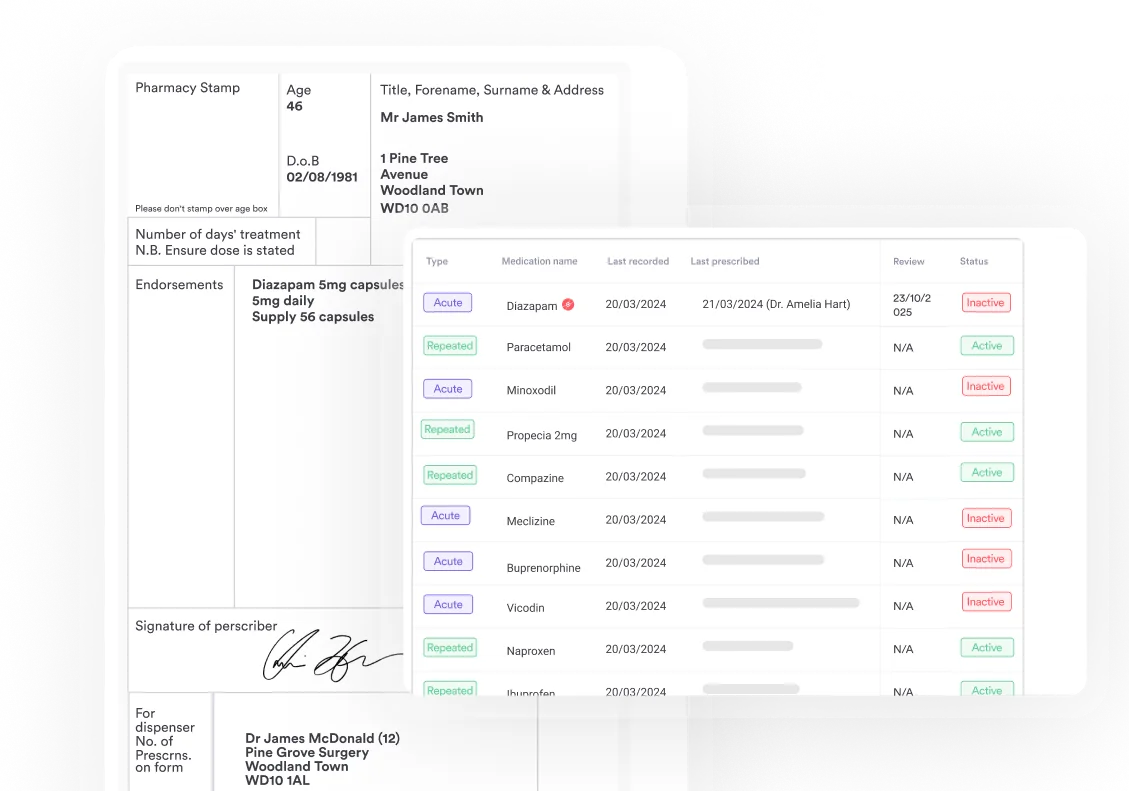
The NDC on the claim must match the packaging of the product administered. If pharmacy supply switches from Orbactiv to Kimyrsa, the billing code switches from J2407 to J2406.
Four errors account for most J2407 rejections, and each has a checkpoint that catches it.
Reading the remittance advice matters as much as preventing the error. Learning the denial codes your payers use tells you which of the four went wrong on any given claim.
Medicare’s ASP plus 6% is the steadiest benchmark for J2407, but commercial rates move around it. Some plans pay a percentage of average wholesale price. Others use a negotiated contract rate above or below the Medicare figure. State Medicaid rates are often lower than Medicare for high-cost injectables.
No lookup tool replaces the contract. For a commercial claim, pull the plan’s fee schedule or ask provider relations to confirm the J2407 rate before the infusion. Practices tracking this properly fold it into revenue cycle management rather than checking claim by claim.
Most infusion practices keep the dose in one place and the claim in another. A nurse writes 1,200 mg in the infusion note, then a biller reads it off a printout and types units into the billing system. Every hand-off is a chance for 120 to become 12.
Practice management software like Pabau keeps both in the same record. The infusion note, the prescriber order, the NDC, and the diagnosis code sit on the file the claim is built from. Pabau’s claims management software then carries those details onto the claim line.
So there are fewer trips back to the chart when a payer asks what was given and why. Esteem Life Medical Group uses Pabau to keep its records and compliance in one place.

Pabau helps infusion and IV therapy practices document administered doses, link diagnosis codes, and submit clean J2407 claims the first time.

The arithmetic on J2407 is the easy part. What sinks these claims is everything around the number, which is why the four checkpoints earn their place.
If you bill oritavancin more than a few times a month, fix the source rather than the habit. Pull the administered dose straight from the infusion record instead of a transcription, and the unit error stops being possible.
The trade-off worth remembering is timing. Prior authorization and admission status can only be settled before the infusion. Once the drug is in, an appeal is the only route left, and it is a slow one.
Book a demo to see how Pabau ties infusion records to J2407 claims.

Not sure what your clearinghouse actually sends to the payer? What is an 837 file? walks through the electronic claim format your J2407 line ends up inside.
Coding an abnormal pregnancy outcome? ICD-10 code O02.9 guide covers this code for an abnormal product of conception when documentation does not support a more specific subtype.
Still waiting on payer approval to bill at all? How to get credentialed with insurance companies covers the paperwork and the timelines for each payer.
Billing other HCPCS items in the same visit? HCPCS code G0269 shows how a procedure-based HCPCS code differs from a per-milligram drug code.
Coding a post-abortion complication? ICD-10 code O03.7 guide covers embolism following a complete or unspecified spontaneous abortion, and how it differs from O03.2.
HCPCS code J2407 is the Level II billing code for injection of oritavancin, sold as Orbactiv, billed per 10 mg administered. It bills Medicare Part B and commercial payers for single-dose IV antibiotic therapy. The approved indication is acute bacterial skin and skin structure infections (ABSSSI) treated in outpatient settings.
The FDA-approved dose is a single 1,200 mg infusion, which bills as 120 units of J2407. The arithmetic is 1,200 divided by 10 mg per unit. The Orbactiv label carries no reduced-dose regimen, so if a prescriber orders a different amount, bill the milligrams actually administered.
Yes. J2407 pays for the drug only, and the infusion is a separate administration service. A 3-hour Orbactiv infusion is normally reported as CPT 96365 for the first hour, plus two units of 96366 for the additional hours. Leaving those codes off means the visit goes unpaid.
Yes. Medicare Part B covers J2407 when oritavancin is administered in an outpatient setting. That includes a physician office, an ambulatory infusion center, or a hospital outpatient department. The drug is reimbursed under the ASP plus 6% methodology. It is not separately billable under Part A for inpatient admissions.
J2407 is assigned to Orbactiv and J2406 is assigned to Kimyrsa. Both products contain oritavancin, but each has its own NDC and its own HCPCS code. Billing the wrong code for the administered product is a compliance error. Match the code to the brand on the pharmacy label and infusion record.
Medical necessity for J2407 is supported by ICD-10-CM codes for ABSSSI. That means cellulitis codes in the L03 range, cutaneous abscess codes in the L02 range, and MRSA-specific codes such as B95.62. The diagnosis code must match the clinical documentation, including the infection site and the pathogen.
Traditional Medicare Part B does not universally require prior authorization for J2407, but most Medicare Advantage plans and commercial payers do. Requirements vary by plan and change annually. Confirm prior authorization status with the payer before scheduling the infusion, because post-service appeals on high-cost injectables are slow.