HCPCS Code G0163: Skilled nursing observation and assessment
What is HCPCS Code G0163? HCPCS Code G0163 is a deleted Level II code for skille...

Last Updated: Oct 15, 2026
J1230 is the HCPCS Level II code for injection, methadone hcl, up to 10 mg.
HCPCS Code J1230 belongs to physician office and hospital outpatient billing, where injectable methadone treats pain or bridges a patient off inpatient therapy.
It is not the code Medicare pays an opioid treatment program for methadone, and that distinction trips up more claims than any coding nuance. Building the scope rule into your medical billing workflows stops a whole class of rejections before it starts.
Let Pabau's smart automation suggest the right codes, reduce claim denials, and keep your practice compliant—effortlessly.
Automate repetitive tasks and focus on what matters most—your patients.
Reduce coding errors and ensure compliance with the latest regulations.
Clean claims, fewer denials, and faster reimbursements.
Powerful insights and reporting to help your practice thrive.
HIPAA compliant SOC 2 certified GDPR-compliant Trusted by 4,000+ clinics worldwide

J1230 describes one injection of methadone hydrochloride up to 10 mg, a CMS-maintained HCPCS Level II drug code active for 2026
Medicare Part B pays J1230 in physician offices and hospital outpatient departments, mostly for analgesic use and short-term transition dosing
Medicare pays opioid treatment programs for methadone through the bundled codes G2067 and G2078, never through J1230
Federal rules require methadone for opioid use disorder to be dispensed orally, which rules out the injectable form for routine OTP dosing
NDC reporting is required on all Medicare Part B J1230 claims, and modifier JW or JZ must report drug wastage from single-dose vials
Pabau’s claims management software captures J-codes, NDC numbers, and modifiers in one workflow, reducing dual-entry errors on injectable drug claims
HCPCS Code J1230 is the Level II drug administration code for one injection of methadone hydrochloride (methadone HCl) up to 10 mg.
CMS maintains J1230 under the HCPCS Level II code set alongside other injectable drug J-codes in the J0000-J9999 range.
Methadone HCl injection is a DEA Schedule II controlled substance, so administering it requires current DEA Schedule II registration. The injectable form also sits outside opioid use disorder (OUD) maintenance treatment.
Federal rules at 42 CFR 8.12(h)(3)(i) say methadone “shall be administered or dispensed only in oral form.” A certified opioid treatment program therefore never doses patients with the injectable drug J1230 describes.
Verify current code status using the CMS HCPCS overview before every billing cycle.
Any Medicare-enrolled provider with DEA Schedule II authority can bill J1230 for injectable methadone given in an office or a hospital outpatient department.
SAMHSA opioid treatment program certification is not part of that requirement, because J1230 does not describe OUD maintenance dosing. Eligibility turns on prescribing authority and place of service instead of program certification.
Medicare Part B reimburses J1230 based on the Average Sales Price (ASP) methodology maintained by CMS.
ASP-based rates are updated quarterly, so published dollar figures from prior quarters may not match current payment amounts. Always verify against the current CMS ASP drug pricing file before claim submission.
Use the CMS Physician Fee Schedule lookup or the quarterly ASP file to pull the current national payment limit for J1230. Unlike a fee schedule service, a Part B drug payment limit is not adjusted for geographic locality.
The national figure is the one to build into your billing workflow. The administration code billed alongside it is locality-adjusted, so check that separately.
J1230 covers injectable methadone given for pain and for short-term transition dosing, both of them outside the opioid treatment program system.
The setting determines which regulatory requirements apply and which payer rules govern coverage.
Practices treating chronic pain alongside behavioral health conditions often benefit from integrated software. Connecting mental health EMR workflows to drug administration billing cuts the documentation burden across care settings.
Medicare pays an opioid treatment program through bundled weekly HCPCS G-codes and nothing else. Chapter 39 of the Medicare Claims Processing Manual and the CMS OTP billing booklet both say it plainly.
An OTP must use only the codes describing bundled payments. It may not use other codes, including those paid under the Physician Fee Schedule. J1230 sits on the wrong side of that line, so an OTP that reports it to Medicare gets a rejection rather than a payment.
The methadone bundle folds a drug component and a non-drug component into one weekly payment. That is why an OTP claim carries no separate drug line and no NDC.
CMS resets the OTP rates each year, so pull the current figures from the CMS OTP payment rates file rather than a static reference sheet. G2078 rides on top of the weekly bundle in units of up to three, covering as much as a one-month take-home supply.
The clinical rule points the same way. Methadone for opioid use disorder has to be dispensed orally, and the FDA label for the injectable product excludes outpatient treatment of opioid dependence.
So a code describing an injection was never going to fit routine OTP maintenance dosing.
State Medicaid programs are a separate question. Some pay OTP-dispensed methadone through H0020 or a state-specific bundle, and a few allow J-code or H-code reporting on drug-specific lines.
Check the state plan instead of assuming the Medicare rule carries over.
Billing J1230 correctly requires attention to unit reporting, NDC capture, modifier selection, and claim structure. Errors in any one of these areas are enough to trigger a denial or a reduced payment.
Sound revenue cycle management for injectable drug claims starts with understanding each requirement individually.
J1230 is billed per administration of up to 10 mg. If a patient receives 20 mg in a single encounter, report two units of J1230 on the claim.
Never bill a single unit and inflate the dose in the description field. Payer systems cross-reference billed units against the submitted NDC quantity, and mismatches trigger automatic denials.
CMS requires modifiers JW and JZ on single-dose vial claims to document drug wastage.
Misapplying or omitting these modifiers is a cited OIG audit risk. Apply the correct modifier based on vial presentation and actual drug used.
Medicare Part B requires NDC reporting on all drug claims, including J1230. NDC numbers appear in a dedicated loop on the 837P electronic claim and in the shaded area of the paper CMS-1500.
The NDC has to describe the exact package administered, so a change of manufacturer or vial size changes what belongs on the claim.
Practices building a superbill for injectable drug administration should put NDC capture fields next to J-code selection.
Keeping both in one place at the point of documentation beats entering them separately during claim preparation.
Run a pre-submission NDC audit every quarter. Pull all J1230 claims from the prior three months and cross-check each reported NDC against the current CMS crosswalk file. Drug manufacturers update packaging more often than billing staff expect. A stale NDC is one of the cleanest denial patterns to fix before it turns into a volume problem.
A J1230 line needs a diagnosis that explains why injectable methadone was given, and for most claims that means a pain code.
The table below covers the diagnoses that turn up most often on J1230 claims in office and hospital outpatient settings.
Sequencing follows the ICD-10-CM official guidelines for category G89. When the encounter is for pain management rather than treatment of the underlying condition, the G89 pain code leads. The site or condition code follows it.
When the underlying condition is what you are treating, the definitive diagnosis goes first. A J1230 line with no pain diagnosis and no palliative context is the easiest denial a payer can issue.
Payers require specific clinical documentation to support medical necessity on J1230 claims. A chart note that mentions the drug but omits the clinical indication or the prescriber’s rationale is insufficient for most MACs.
Medical billing compliance for Schedule II injectable drugs requires documentation to be available before the claim is submitted, not reconstructed after a denial.
Maintaining HIPAA compliance across these documentation elements matters most when the chart also holds substance use disorder records.
Those records carry extra federal confidentiality protections under 42 CFR Part 2 on top of standard HIPAA requirements.
Coverage for J1230 is not uniform across payers. Medicare Part B is the most consistently documented source, but Medicaid programs and commercial plans each apply their own rules.
Assuming blanket coverage based on Medicare policy is one of the most common causes of preventable J1230 denials. Good denial management starts with verifying coverage before the appointment, not after the claim is submitted.
For Medicare claims, check the applicable Local Coverage Determination (LCD) from your MAC before submitting.
Some MACs have issued LCDs specific to injectable drugs or OTP billing that add documentation requirements beyond the national CMS guidance.
The AAPC HCPCS code reference provides a consolidated view of code descriptions, while MAC-specific LCDs are the binding authority for coverage conditions.
Six patterns account for most J1230 denials, and code selection is not one of them. Each has a fix you can build into the claim workflow instead of catching it on appeal.
J1230 does not operate in isolation. Coders billing methadone administration commonly encounter adjacent codes for administration services, unclassified drug reporting, and oral methadone dispensing.
Understanding where J1230 ends and these related codes begin prevents unbundling errors and missed charges.
When an opioid treatment program dispenses methadone orally, no J-code applies. Medicare pays that dispensing through G2067 and G2078.
State Medicaid programs generally use H0020 or their own bundle. J1230 applies specifically to the injectable form, and confusing the two pathways is a documented source of HCPCS claim errors.
Use the PGM Billing HCPCS lookup to confirm code descriptions before substituting codes. For broader context on clean claim submission, every related code you add to a claim should have its own medical necessity linkage and modifier review.
Check your payer contract before billing CPT 96372 alongside J1230. Some Medicare Advantage plans and commercial payers bundle the injection administration service into the drug code reimbursement, making a separate 96372 line an automatic denial. A quick lookup against the payer’s bundling edits saves a rework cycle.
Injectable drug billing like J1230 is where manual processes break down fastest.
The claim needs an accurate J-code, the correct unit count, and an NDC in 11-digit format with the right qualifier. It also needs at least one modifier and a linked ICD-10 diagnosis code, all before it leaves the practice. Each element entered separately, in separate systems, is an opportunity for a mismatch.
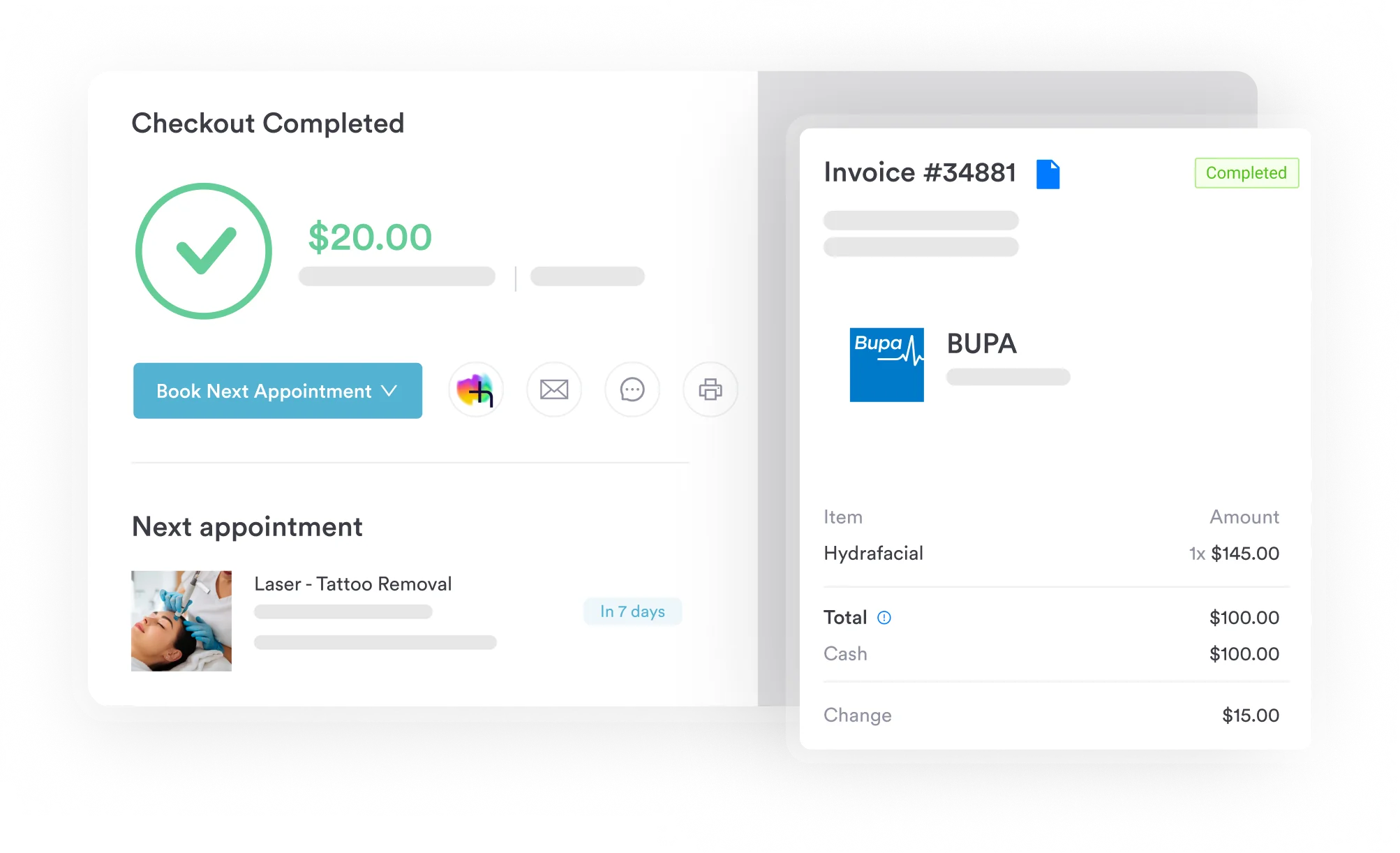
Pabau’s claims management software brings J-code capture, NDC entry, modifier entry, and diagnosis linkage into a single workflow. The claim form pre-fills from the encounter record, and required-field validation holds the claim until the mandatory fields are complete.
Clinical and administrative staff work where the encounter is already documented. Nobody pulls code reference data from one tool and retypes it into a billing system. That continuity reduces dual-entry errors, the main cause of NDC mismatches and modifier omissions on injectable drug claims.
Practices managing several injectable drug codes across a multi-provider setting get more out of EHR integration. Connecting clinical documentation straight to the claim removes the overhead of maintaining separate code reference workflows.
The best medical billing software for injectable drug practices closes the gap between code lookup and claim submission in a single step.

Pabau helps pain management and outpatient practices capture J-codes, NDC numbers, and modifiers in one workflow. See how our claims management tools reduce injectable drug billing errors.

J1230 claims rarely fail on code selection. Missing NDC data, the wrong modifier, thin medical necessity documentation, and the code reported in the wrong setting cause most denials.
Pabau’s claims management software connects J-code capture, NDC entry, modifier entry, and clearinghouse submission in a single workflow built for practices billing injectable drugs.
To see how it handles J1230 and similar HCPCS codes in practice, book a demo with the team.

Need a framework for reducing medical billing denials? Denial management in healthcare covers common denial patterns and workflow fixes for billing teams.
Want to understand how clearinghouse claims processing works? Clean claim submission explains what payers require before a claim reaches adjudication.
Looking for billing compliance guidance for injectable drug practices? Medical billing compliance outlines the documentation and audit readiness requirements that apply to Schedule II drug billing.
J1230 bills one injection of methadone hydrochloride up to 10 mg in an office or hospital outpatient setting. It is used mainly for analgesia and for short-term transition dosing, not for opioid use disorder maintenance.
Medicare Part B pays J1230 at Average Sales Price plus 6%. ASP rates change quarterly, so pull the current figure from the CMS Physician Fee Schedule lookup or the ASP drug pricing file.
Modifier JW reports drug discarded from a single-dose vial on a separate claim line. JZ reports zero waste. Some MACs also require KX to attest that medical necessity documentation is on file.
Keep a medical necessity note, the linked ICD-10-CM diagnosis, and the prescriber DEA Schedule II registration. Add an administration record showing dose, route, lot, and NDC, plus a wastage note whenever JW is billed.
Report the 11-digit NDC in Loop 2410 of the 837P with the N4 qualifier, or in the shaded part of field 24 on the CMS-1500. The quantity must match the amount dispensed.
No. Methadone for opioid use disorder must be dispensed orally by a SAMHSA-certified opioid treatment program under 42 CFR 8.12. J1230 describes the injectable form, which that rule excludes.
G2067, the weekly methadone bundle, plus G2078 for a take-home supply of up to seven extra days. CMS limits OTPs to these bundled codes, so no J-code or NDC line applies.