

HCPCS code E0198: Water pressure pad billing guide
HCPCS code E0198 is a water pad for a standard mattress HCPCS code E0198 is the ...

Last Updated: Oct 13, 2026
E0165 is the HCPCS Level II code for commode chair, mobile or stationary, with detachable arms.
The coverage test turns on the home, not the diagnosis. L33736 asks where the toilet is and whether the patient can get to it. A patient confined to one room, or to a floor with no bathroom, qualifies.
Let Pabau's smart automation suggest the right codes, reduce claim denials, and keep your practice compliant—effortlessly.
Automate repetitive tasks and focus on what matters most—your patients.
Reduce coding errors and ensure compliance with the latest regulations.
Clean claims, fewer denials, and faster reimbursements.
Powerful insights and reporting to help your practice thrive.
HIPAA compliant SOC 2 certified GDPR-compliant Trusted by 4,000+ clinics worldwide

HCPCS code E0165 covers a commode chair, mobile or stationary, with detachable arms, billed under the Medicare Part B durable medical equipment benefit.
LCD L33736 covers a commode only when the patient cannot use a regular toilet at home, judged by the home layout rather than the diagnosis.
E0165 also needs the detachable arms to be necessary for transfers, or the patient’s body configuration to require the extra width.
Certificates of Medical Necessity ended for dates of service from January 1, 2023. A standard written order and the medical record replace them.
Commodes are inexpensive or routinely purchased equipment, so only NU, UE, and RR apply. The capped-rental modifiers KH, KI, and KJ do not.
HCPCS code E0165 sits in the E0100-E0199 range. The Centers for Medicare and Medicaid Services, or CMS, maintains that range for canes, crutches, walkers, and other daily living aids. All of them are durable medical equipment (DME).
The detachable arm is what separates this code from its neighbor. A chair with fixed arms bills under E0163. The descriptor for E0167 says replacement only, so the pail supplied with a new chair is not separately billable.
Coverage runs through Local Coverage Determination L33736. Medicare covers a commode chair when the patient is physically incapable of using regular toilet facilities. The LCD then defines that phrase in three situations, and the record has to match one of them.
E0165 adds a second test on top of that. The detachable arms must be needed to transfer the patient, or the patient’s body configuration must require the extra width. If neither is documented, Medicare denies the claim as not reasonable and necessary.
The chair also has to meet Medicare’s definition of DME. It withstands repeated use, serves a medical purpose, would not be useful to someone without an illness or injury, and suits use in the home. CMS sets out the same expectations in its compliance guidance on toileting aids.
Convenience use is not covered, and neither is a patient who can safely reach an accessible toilet. Rehabilitation clinicians. Keeping that account in your clinical documentation is what defends the claim on review.
The diagnosis on the claim has to be consistent with the record, but no diagnosis on its own establishes coverage. The codes below are the ones that usually appear on commode claims. Pair them with a note about the home.
Always code to the highest available specificity, and use the subcode wherever the parent is not billable. Fracture cases carry their own detail. A thoracic fracture with nonunion codes to S22.049K, never to the unspecified parent. Check your MAC policy article for the diagnosis list that applies in your jurisdiction. Denial codes in medical billing group the reasons a payer refuses, and the group decides the fix.
With software for managing patients, DME prescriptions stay linked to the assessments that justified them.
E0165 has no relative value units and no Physician Fee Schedule rate. It is priced on the DMEPOS fee schedule and paid by the DME MACs. The allowed amount depends on the state where the patient lives.
Commodes sit in the inexpensive or routinely purchased category, so a purchase is the usual claim. Rental covers a short-term need, and cumulative rental payments cannot exceed the purchase allowance. A physical therapy practice that dispenses equipment itself has to be an enrolled DMEPOS supplier to bill either one.
Check the DMEPOS fee schedule every quarter, not once a year. CMS updates it quarterly, and rural and non-contiguous areas are paid on blended rates that differ from the national amounts. Put a recurring reminder in the billing calendar so a stale rate never reaches a claim.
Only three payment modifiers belong on an E0165 claim. They tell Medicare whether the chair was bought new, bought used, or rented. Reaching for a capped-rental modifier instead is the error that shows up most often on commode claims.
KH, KI, and KJ are capped-rental modifiers. They belong on items in the capped-rental category, such as hospital beds and power wheelchairs. A commode chair is an inexpensive or routinely purchased item, so those three never apply to E0165.
Two more rules apply to most claims. The place of service is the patient’s home, place of service code 12. And the standard written order must be in the supplier’s file before the claim is submitted, which is not the same as before delivery.
Commodes are not on the CMS list of items that need a written order prior to delivery. That list covers power mobility and certain complex braces. A supplier can deliver the chair and obtain the signed order afterward, as long as it lands before billing.
Post-payment review is where commode claims come apart. Reviewers ask for the order, the clinical notes, and the delivery paperwork, then read the notes for a description of the home. The same file has to satisfy your compliance documentation rules, so keep it where retention and access are controlled.
Certificates of Medical Necessity no longer belong on that list. CMS discontinued CMNs and DME Information Forms for dates of service from January 1, 2023, in MLN Matters SE22002. A claim submitted with one is rejected.
Home health nursing interventions often produce the clearest account of a toileting task, so pull those notes into the file. Capturing them through digital intake forms keeps the whole package on the patient record rather than in three inboxes.
Audit 10 to 15 paid E0165 claims each quarter, before your MAC does. Check that every file holds a signed order dated ahead of the claim. The note should name the room or level the patient is confined to, and the file needs a signed proof of delivery. Fix the pattern you find before a records request arrives.
Arm type, width, and a built-in seat lift separate the codes in this family. Billing E0165 for a fixed-arm chair is upcoding. Billing E0163 for a detachable-arm chair leaves money on the table.
The seat-lift codes deserve a warning. E0170 and E0171 are covered only where the patient meets the commode criteria and the seat-lift criteria. A seat lift helps a patient who can walk after standing, and a patient who can walk rarely meets the commode criteria at all.
Extra width has its own code.
Continence and ostomy supplies follow their own policies. A supplier billing A4433 alongside a commode is working under a different LCD, with its own quantity limits.
The arm configuration is the whole difference. E0165 covers detachable arms, which allow a side transfer for patients under hip precautions, with hemiplegia, or with severe leg weakness.
When the written order calls for detachable arms and the chair delivered has them, bill E0165. When the chair has fixed arms, bill E0163, whatever the order says. Record the arm configuration on the delivery receipt so the audit trail matches the code.
Practices using automated billing workflows can put that check into the DME intake step, so a mismatch surfaces before the claim goes out.
Commode claims fail for reasons that have nothing to do with clinical care. The order arrives after the claim, or the note never mentions the home, or the diagnosis billed is not in the record. Those are workflow problems, and they cost money on every rejection.
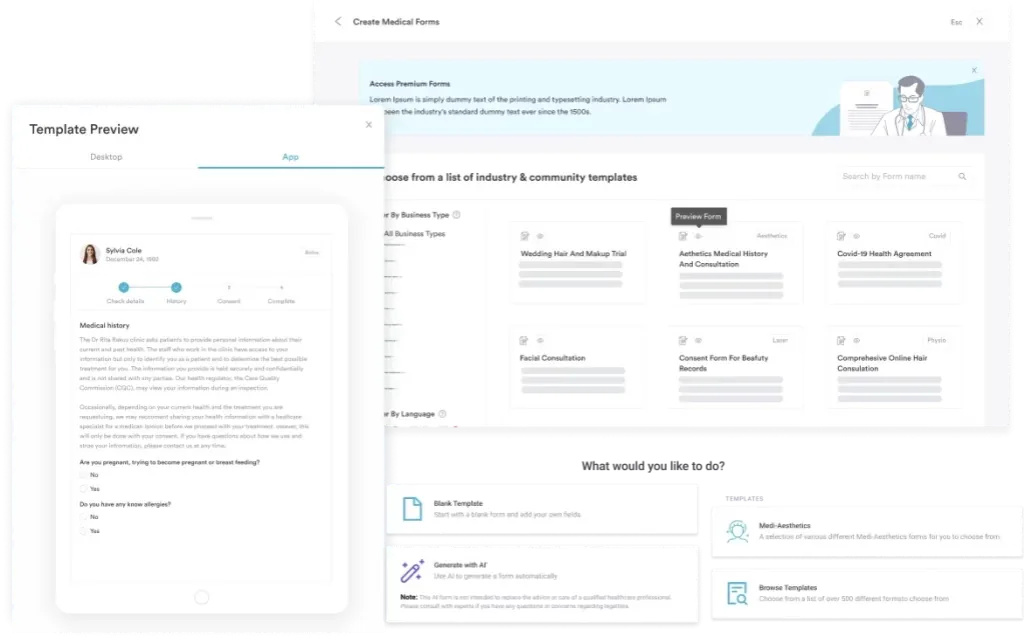
Practice management software like Pabau keeps the clinical record and the claim in one system. The visit note, the signed order, the diagnosis your clinician recorded, and the delivery paperwork all sit on the same patient record.
For practices billing across several service lines, centralizing billing and clinical records removes the handoffs where paperwork goes missing.
Retention is part of the same job. Practices tightening their compliance processes can apply access and retention rules to the same records. An audit request and a privacy request then land in the same place.
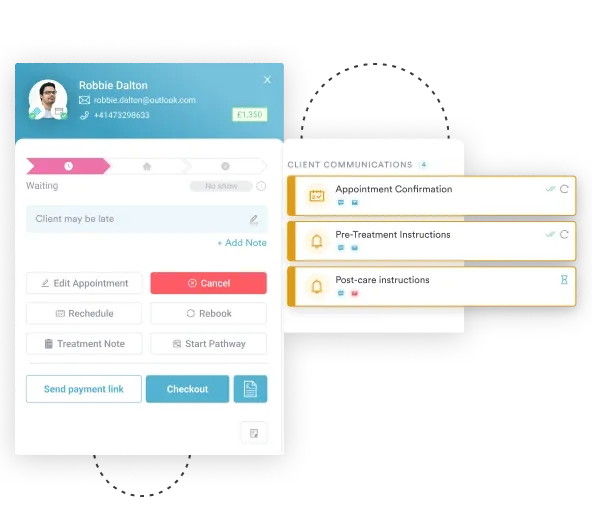

Pabau stores the written order, the clinical notes, and the proof of delivery on one patient record. Claims go out from the same system, and you can track where each one stands.

E0165 is a small payment with a demanding record behind it. The chair is inexpensive, so the work worth doing is the work that stops the claim coming back.
If your commode denials cluster, the fix usually sits upstream of billing. Ask the ordering clinician for one line about the home and one about why the arms come off. Those two lines are what a reviewer reads.
Then keep them somewhere you can find them a year later. Book a demo to see how Pabau holds the order, the clinical note, and the proof of delivery on one patient record.

Billing a capped-rental item next? E0304 covers the bariatric hospital bed rules, where the modifiers E0165 never uses do apply.
Coding a detachable armrest rather than a chair? K0015 covers the wheelchair armrest code and the accessory billing rules around it.
Billing an initial psychiatric evaluation? CPT code 90791 covers billing the initial psychiatric diagnostic evaluation, from history-taking through the treatment plan.
Billing a hearing screening test? CPT code 92551 covers the pass or fail hearing screen that differs from full diagnostic audiometry.
Billing skilled nursing in the home? G0299 covers the direct skilled nursing code and the documentation that supports it.
HCPCS code E0165 covers a commode chair, mobile or stationary, with detachable arms, supplied as durable medical equipment under the Medicare Part B benefit. The detachable arm is the defining feature. A chair with fixed arms bills under E0163 instead. Bill E0165 when the written order calls for detachable arms and the chair delivered has them. That is common for patients under hip precautions or with one-sided weakness.
Yes, Medicare Part B covers E0165 when the criteria in LCD L33736 are met. The patient has to be physically incapable of using regular toilet facilities. The LCD reads that as three situations. The patient is confined to a single room, or to one level with no toilet, or to a home with no toilet at all. E0165 also needs the detachable arms to be necessary for transfers, or a body configuration that requires the extra width.
Three modifiers apply to E0165. NU covers the purchase of new equipment and is the most common choice. UE covers used equipment, paid at 75% of the new purchase amount. RR covers a rental. The capped-rental modifiers KH, KI, and KJ do not apply to E0165. A commode chair is an inexpensive or routinely purchased item, not a capped-rental one.
No. CMS discontinued Certificates of Medical Necessity and DME Information Forms for dates of service from January 1, 2023. A claim submitted with one is rejected. In its place, keep the standard written order and the medical-record documentation showing that the LCD L33736 criteria are met. The order has to be in the supplier file before the claim is submitted.



