

CCSD code G5100: Bypass of duodenum billing guide
CCSD code G5100 bills a bypass that leaves the duodenum in place CCSD code G5100...

Last Updated: Oct 16, 2026
A4490 is the HCPCS Level II code for surgical stockings above knee length, each.
One detail changes how the whole claim is handled. Medicare treats A4490 as statutorily non-covered, which moves the work away from the coverage-criteria checklist used for payable DME.
Let Pabau's smart automation suggest the right codes, reduce claim denials, and keep your practice compliant—effortlessly.
Automate repetitive tasks and focus on what matters most—your patients.
Reduce coding errors and ensure compliance with the latest regulations.
Clean claims, fewer denials, and faster reimbursements.
Powerful insights and reporting to help your practice thrive.
HIPAA compliant SOC 2 certified GDPR-compliant Trusted by 4,000+ clinics worldwide

HCPCS code A4490 bills one above-knee surgical stocking, and each stocking counts as a single unit of service.
Medicare does not cover A4490. CMS lists surgical stockings as non-covered under the surgical dressing benefit.
Report the GY modifier to produce the formal Medicare denial that a secondary payer needs before it pays.
A4490 covers above-knee length only. Thigh-length stockings bill under A4495, and mixing the two triggers denials.
Practice management software like Pabau keeps the order, the delivery receipt, and the claim in one patient record.
A4490 belongs to the A-series of the HCPCS Level II code set. The Centers for Medicare and Medicaid Services (CMS) maintains that set for supplies and durable medical equipment, or DME.
The “each” descriptor decides your unit count. One stocking equals one unit. Billing a pair on one line without raising the unit count is a routine error, and DME MAC edits catch it. Claims management software can hold quantity rules that flag it before submission.
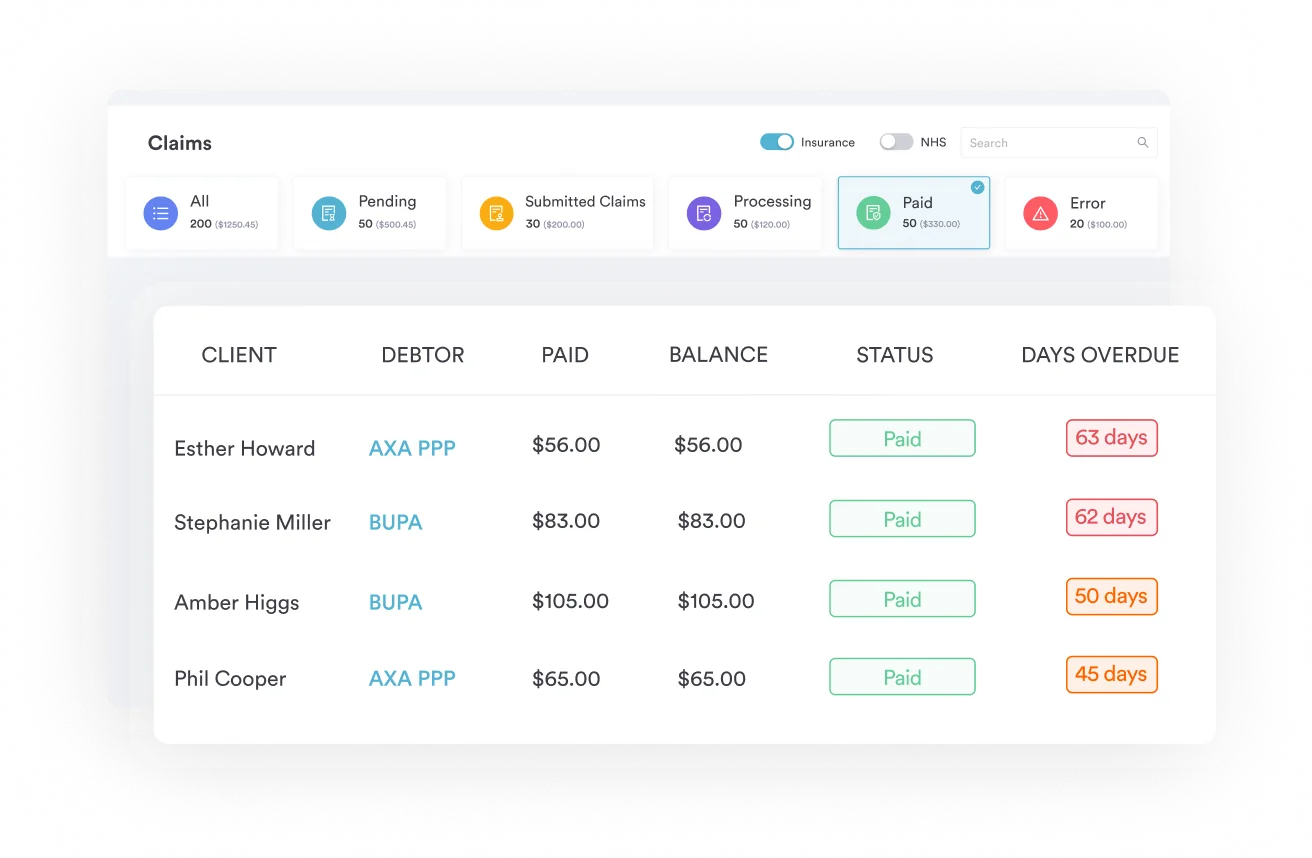
Medicare does not pay for A4490. The CMS Surgical Dressings policy article lists surgical stockings A4490 through A4510 as non-covered under the surgical dressing benefit. Claims are denied as statutorily non-covered, with no benefit category. Common claim denial codes repeat by specialty, so the pattern is worth reading before reworking.
That verdict does not depend on the patient’s diagnosis or the strength of the order. Here is what it changes in practice.
Payment rules for supplies live in Medicare’s own fee schedule, not the physician fee schedule that covers CPT services. Check the DMEPOS fee schedule or your DME MAC’s lookup tool to confirm what Medicare pays for any supply code.
Plan type is worth checking before you write the patient off as self-pay. Some Medicare Advantage plans add supplemental benefits that original Medicare does not offer, so Medicare billing rules can differ by plan. Medicaid and commercial coverage varies by state and contract.
Bill A4490 to Medicare only when the patient’s secondary payer needs a formal denial on file. Append GY, and add GX if you issued a voluntary ABN. Sending the claim without GY invites a different denial reason and a slower appeal.
Modifiers tell the payer the circumstances of the supply. On a statutorily excluded item they also tell Medicare that you expect the denial and why you filed anyway. Confirm current requirements with your DME MAC before appending anything.
GY does most of the work here. It produces a clean statutory denial, which is what a supplemental or commercial secondary plan wants to see before it pays. Add RT or LT on the same line so the payer can tell the two legs apart. Loop and segment rules in the EDI 837 format decide where a code and its modifiers are carried.
Correct coding is one step of several. Claim preparation, documentation, and unit reporting all decide whether the claim resolves on first submission. The steps below reflect standard DME supply practice, so confirm details with the payer you are billing.
Retention is the other half of the job. CMS and the DME MACs expect suppliers to keep documentation for at least seven years from the date of service. Practices that pair patient records with structured documentation workflows can produce a complete file quickly during a post-payment review.
That matters most for teams dispensing supplies alongside treatment. Practice management software that holds billing and documentation together cuts the manual work of staying audit-ready. Podiatry teams fitting stockings after nail or wound procedures get the same benefit from podiatry software.
Documentation still matters once Medicare is out of the picture. Commercial plans, Medicaid programs, and secondary payers all ask for the same core file. Below is what the patient record should hold before the claim goes out.
A medical necessity letter gives the prescriber a consistent format for the clinical rationale, which shortens the back-and-forth with commercial payers. Physical therapy teams managing post-surgical edema face the same paperwork, and physical therapy software keeps the order and the note in one chart.
Insufficient documentation is one of the most frequently cited causes of improper payments in Medicare’s Comprehensive Error Rate Testing program. Consistency across the patient record is the strongest audit defense available. Practices working from HIPAA-aligned documentation protocols hold that standard more easily.
Length and construction decide which code applies, and a mismatch is a routine denial. Surgical stockings sit in the A44xx range. Gradient compression stockings sit in the A65xx range and carry an mmHg class in the descriptor.
Under the surgical dressings policy, only A6531, A6532, and the A6545 wrap are payable, and only for an open venous stasis ulcer. Venous insufficiency without an ulcer, ulcer prevention, and lymphedema without ulcers are all listed as non-covered.
When A6531 or A6532 is billed for a qualifying ulcer, the claim needs the AW modifier plus RT or LT. That pairing is specific to those codes, and it never appears on an A4490 claim.
A4490 carries no compression class in its descriptor, so it cannot tell a payer how much pressure the garment applies. When the order specifies an mmHg range, the A65xx codes are usually the right family.
The A-series is full of per-unit supply codes that behave this way. A4426 and A4565 both and A4565 both bill by the item, and each depends on the descriptor matching the order.
Both codes describe surgical stockings for the lower extremity, which is why they get swapped. The difference is garment length, and it has to match the physician’s order exactly.
Billing A4495 when the order says above knee is upcoding, which carries compliance risk beyond a denial. The written order is the binding reference, and the billed code follows it. A length-verification step in the claim checklist is enough to stop most of these.
Cross-reference the physician order for garment length every time A4490 or A4495 appears on a claim. One field on the order prevents the most common stocking denial. Build the check into your claim checklist so it happens every time.
Supply billing breaks down at the handoffs. The physician order sits in one system, the delivery receipt in another, and the claim is built from whatever the biller can find. Practice management software like Pabau holds all three against the same patient record.
Pabau’s claims management software traces every supply claim back to its order and note, so billers stop hunting through folders. Because A4490 usually needs a Medicare denial before another payer pays, that trail matters more than usual.
Forms are the other half. Pabau’s digital forms capture consent, intake, and delivery sign-off at the point of care. The file stays complete for the day an auditor asks for it.
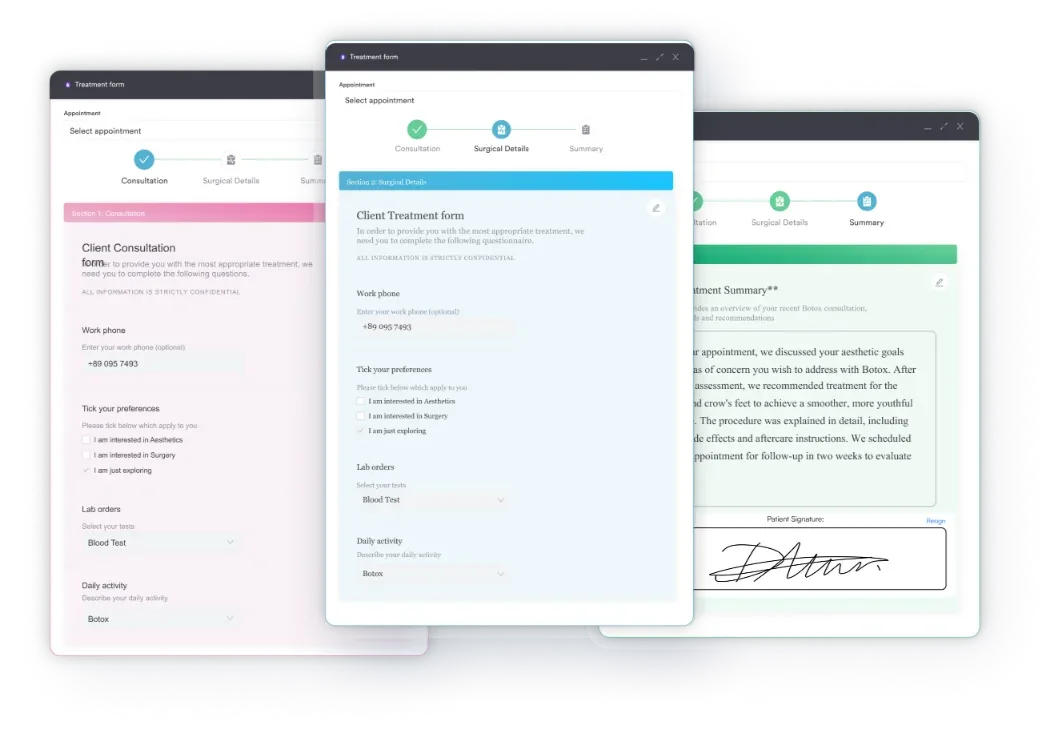

Pabau’s claims management and digital forms hold the physician order, the delivery receipt, and the claim in one patient record. Your billers can answer an audit request without hunting through folders.

The useful thing to know about A4490 is that Medicare will not pay it. Once you accept that, the workflow gets simpler. You bill it to produce a denial, or you bill the payer whose plan covers it.
Everything else is order discipline. Match the length code to the written order, count one unit per stocking, and keep the file for seven years. Practices that hold the order, the delivery receipt, and the claim in one system spend less time rebuilding claims later.
Book a demo to see how Pabau ties supply claims to the order and delivery record behind them.

Billing another A-series supply code? B4082 walks through the documentation that keeps nasogastric tubing claims from denying.
Need the patient’s Medicare consent on file? Medicare consent to release gives you a form patients can sign before you bill.
Working out which diagnosis supports the claim? S33.8XXS shows how sequencing choices and denial reasons interact on a follow-up encounter.
Billing therapy visits in the home? G0152 covers unit reporting and Medicare rules for occupational therapy delivered at home.
Coding wound debridement alongside compression care? 11043 sets out the depth documentation and unit rules that decide the claim.
A4490 is the HCPCS Level II code for one above-knee surgical stocking. Suppliers dispense it under a written physician order, often for venous insufficiency, post-surgical edema, or lymphedema. Thigh-length stockings bill under A4495 instead.
No. CMS lists surgical stockings A4490 through A4510 as non-covered under the surgical dressing benefit. Claims are denied as statutorily non-covered, with no benefit category. Bill Medicare only to obtain that denial for a secondary payer, using the GY modifier.
RT and LT identify the treated leg. GY reports that the item is statutorily excluded from Medicare benefits. GX reports a voluntary Advance Beneficiary Notice. KX does not apply, because a statutory exclusion has no coverage criteria to meet.
A4490 covers above-knee surgical stockings and A4495 covers thigh length. The physician’s written order sets the required length, and the billed code must match it. Billing A4495 against an above-knee order is upcoding, and the reverse denies as an incorrect code.
Bill two units of A4490 with RT and LT. Some payers want two claim lines, others accept two units on one line. Each stocking is one unit, so a pair billed as a single unit triggers automated edits.
Medicare does not pay A4490, so there is no Medicare rate to quote. For other payers, the amount is whatever your contract or cash-price schedule sets. Check supply pricing in the DMEPOS fee schedule or your DME MAC tool, not the physician fee schedule.



