

HCPCS code E0198: Water pressure pad billing guide
HCPCS code E0198 is a water pad for a standard mattress HCPCS code E0198 is the ...

Last Updated: Oct 13, 2026
A4565 is the HCPCS Level II code for slings.
It has been a split-jurisdiction code since 2001. Billed incident-to by a physician or therapy practice, it goes to the local Part B MAC. A retail DME supplier billing it directly sends the claim to the DME MAC.
Let Pabau's smart automation suggest the right codes, reduce claim denials, and keep your practice compliant—effortlessly.
Automate repetitive tasks and focus on what matters most—your patients.
Reduce coding errors and ensure compliance with the latest regulations.
Clean claims, fewer denials, and faster reimbursements.
Powerful insights and reporting to help your practice thrive.
HIPAA compliant SOC 2 certified GDPR-compliant Trusted by 4,000+ clinics worldwide

HCPCS Code A4565 is a Level II supply code (BETOS D1A) covering prefabricated slings for arm, shoulder, and wrist immobilization.
A4565 is a split-jurisdiction code: billed incident-to by a physician or therapy practice, it goes to the local Part B MAC; billed directly by a retail DME supplier, it goes to the DME MAC.
DMEPOS supplier enrollment is only required for the direct-to-DME-MAC pathway – not when billing incident-to through the local Part B MAC. Either way, a missing Standard Written Order (SWO) is a frequent denial trigger.
Pabau, practice management software with billing-documentation tools, helps practices keep the physician order, diagnosis, and delivery documentation organized and audit-ready.
CMS maintains A4565 as a medical/surgical supply, classified under Berenson-Eggers Type of Service (BETOS) category D1A. It is not a classic durable medical equipment item billed end-to-end through the DME benefit.
It is billed through Medicare Part B when the device is medically necessary and ordered by a treating physician. Practices focused on simplifying practice management workflows find that keeping a clean A4565 documentation trail from day one is far easier than chasing records after a denial.
A4565 is a supply code, not a procedure code. That distinction matters for billing. Suppliers bill it per sling unit supplied, not per service encounter. The code does not include custom-fabricated orthoses (those fall under L-codes) or slings that are integral to a cast or splint application.
A4565 has been a split-jurisdiction code since July 1, 2001, along with A4570 (splints) and A4580-A4590 (casting supplies). Where the claim goes depends on who is billing it, not on the code itself:
Confirm which pathway applies before billing. Any Local Coverage Determination (LCD) referenced later in this guide is the policy of whichever contractor – local Part B MAC or DME MAC – actually has jurisdiction over the claim.
A4565 applies to prefabricated slings supplied to patients for upper extremity support. Three product categories fall under this code:
The code does not cover three things. Custom-molded or custom-fabricated upper extremity orthoses fall under L-codes (such as the L3900-series). Slings provided during a hospital inpatient stay are excluded. So are devices billed as part of a cast application procedure.
Suppliers frequently trigger denials in two ways. One is billing A4565 for a device that qualifies as a custom orthosis. The other is billing it in an inpatient setting, where the DME benefit does not apply.
The sling must be prefabricated and off-the-shelf to qualify. If a practitioner modifies a prefabricated device significantly to fit a patient’s anatomy, coverage eligibility may shift to a custom code. Document the specific product supplied, including brand name and model number, to support the prefabricated claim.
Physical therapy practices and sports medicine practices that supply slings incident-to a physician’s or therapist’s service bill through the local Part B MAC and do not need DMEPOS enrollment. Only a practice billing as a direct retail DME supplier needs to verify DMEPOS enrollment before billing A4565.
Medicare Part B covers HCPCS Code A4565 as a medical/surgical supply. Coverage is not automatic, and the requirements differ slightly depending on which of the two billing pathways applies. Three conditions apply across both:
There is no National Coverage Determination (NCD) specifically for slings, which means the applicable contractor’s LCD sets the rules. Medicaid coverage for A4565 varies considerably by state, and most commercial payers follow Medicare’s framework but may add plan-specific prior authorization requirements. Verify coverage and authorization rules with each payer before supplying the device. A rejected electronic claim never reaches adjudication, so it does not appear in denial reporting.
Accurate patient records should document the ordering physician, diagnosis, delivery date, and billing pathway used. That audit trail protects the practice if a payer requests records to support the claim.
Billing supply codes accurately starts with inventory management software that knows what actually left the shelf.
Medicare reimbursement for A4565 is set by the annual DMEPOS fee schedule published by CMS. The same fee schedule file applies to both pathways. It does not matter whether the local Part B MAC or the DME MAC processes the claim. The pathway determines where the claim is submitted, not the price basis. Rates vary by jurisdiction (geographic pricing regions).
The 2026 figures below reflect published Medicare allowable amounts. Verify current rates against the official CMS DMEPOS fee schedule file for the applicable region before billing, not the Physician Fee Schedule (MPFS) lookup, which does not price this supply code.
CMS updates DMEPOS fee schedule amounts annually and publishes them in jurisdiction-specific files. Always source the exact dollar amount for the current year from the official CMS file, not from third-party reference sites. The AAPC HCPCS code lookup provides a quick cross-reference, but CMS.gov is the primary source for payment accuracy.
Check the CMS DMEPOS fee schedule file for the applicable jurisdiction each October when CMS releases the following year’s rates. Rate changes for supply codes like A4565 are not always publicized individually, so building an annual fee schedule review into your billing calendar prevents unexpected reimbursement shortfalls.
Insufficient documentation is the most common reason A4565 claims are denied or recouped on audit. Medicare requires a specific set of records before a sling claim is considered payable. Missing even one element creates a recovery exposure.
Required documentation for HCPCS Code A4565 billing:
Maintaining complete records from the point of order through delivery is not optional. Practices that handle digital medical forms for patient intake and documentation often find it easier to capture the required elements systematically.
Billing A4565 to Medicare follows one of two workflows depending on who is billing.
Practices with robust practice management software features that include structured digital records are better positioned to catch missing documentation before a claim is filed. Keep the physician order, diagnosis, and delivery record together in one digital intake and documentation workflow. That makes it easier to confirm every required field is on file before a claim goes out.
Routine audits of patient scheduling and supply workflows help catch missing documentation before it becomes a recoupment event.
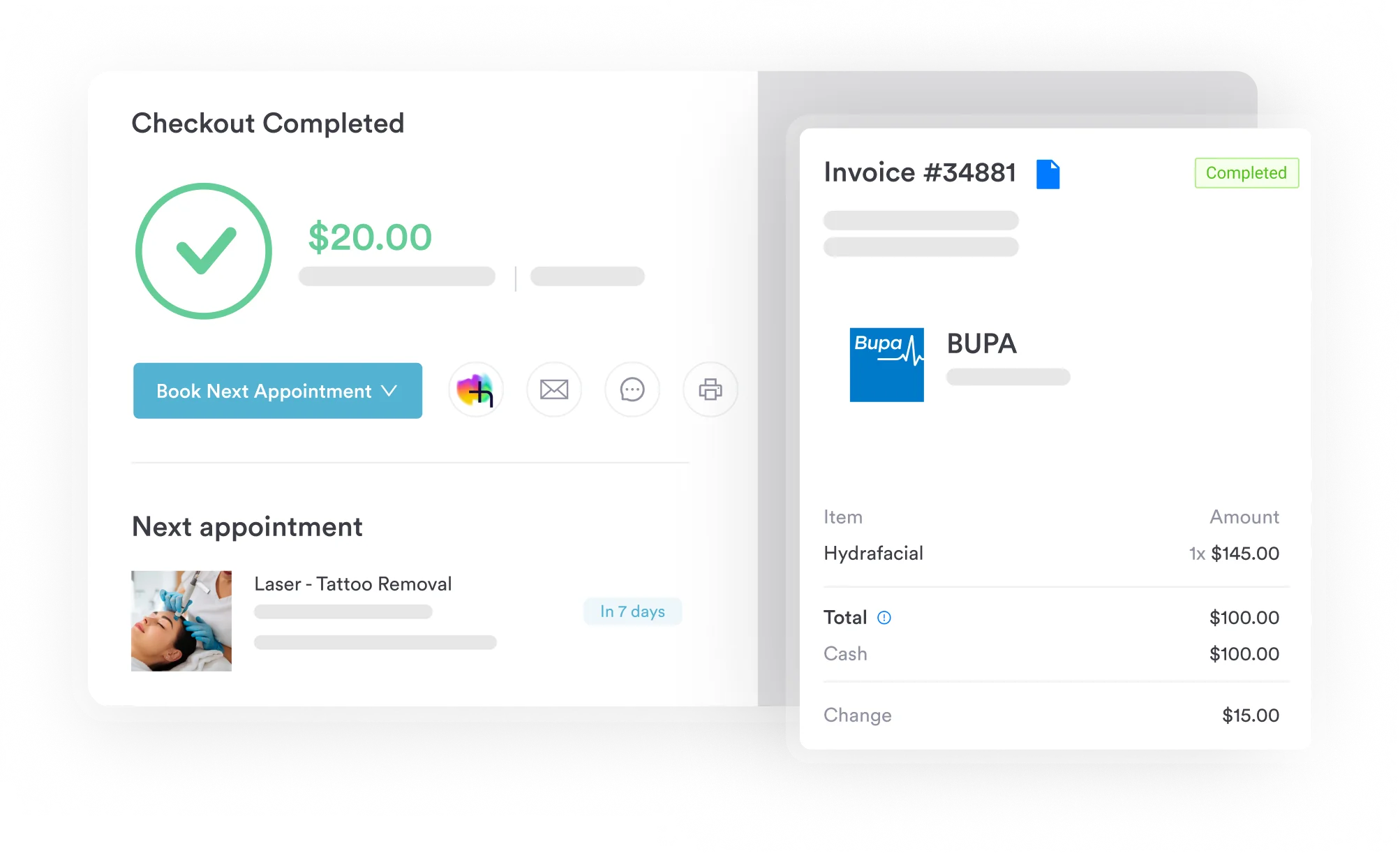

Pabau helps DME-adjacent practices manage patient records, digital forms, and billing documentation in one place. Fewer missing records means fewer denials.

The ICD-10-CM diagnosis code submitted with A4565 must support the medical necessity of the sling. Payers match the diagnosis code against the covered indications listed in the applicable LCD. A mismatch is a common denial trigger.
Always verify the specific diagnosis codes covered under your MAC’s LCD before submitting. The examples above represent common clinical pairings, but LCDs may specify which ICD-10-CM codes qualify for coverage in your jurisdiction.
Use the 7th character extension correctly for fracture and injury codes: “A” for initial encounter, “D” for subsequent encounter, “S” for sequela. Initial encounter codes are most commonly used when the sling is first supplied at the time of diagnosis or injury.
A4565 is often confused with L-code orthoses or other supply codes. Selecting the wrong code is a common billing error. This table shows the codes most frequently adjacent to A4565 and how to distinguish them:
The most important distinction is between A4565 and the L-code orthoses. Some L-codes (such as L3900) cover custom-fabricated or custom-fitted orthoses: if a practitioner fabricates or significantly modifies a device to fit an individual patient, the custom L-code applies.
Other L-codes (such as L3960 and L3980) cover prefabricated orthoses that include a fitting and adjustment component, which is billed and reimbursed differently from a simple off-the-shelf item.
A4565 applies only to standard off-the-shelf slings that require no fitting or customization beyond size selection. For a closely related upper-extremity orthosis code.
Suppliers billing multiple DME and supply lines in one encounter should confirm the documentation rules for adjacent codes too. Proof-of-delivery and order requirements can differ by code family. For examples.
No competitor billing reference covers A4565 denial patterns in depth. This section covers the specific situations where DMEPOS suppliers lose reimbursement on sling claims. It draws on the denial reasons most often cited in Medicare claim review and audit guidance.
A4565 denials cluster around a handful of recurring mistakes.
When a claim is denied, the path to appeal starts with the denial reason code on the Remittance Advice (RA). Medicare denials include a Claim Adjustment Reason Code (CARC) that identifies the specific reason.
The most common CARCs for A4565 denials are CO-97 (payment included in allowance for another service), CO-167 (diagnosis not covered), and CO-50 (non-covered service). Responding to each denial type requires different documentation.
Practices using compliance management workflows that flag missing documentation before submission are consistently better positioned than those that rely on reactive denial management. The NLM HCPCS API provides programmatic access to the full code set for practices integrating code validation into their billing workflows.
Run a quarterly self-audit on A4565 claims: pull all claims from the past 90 days and verify that each has a signed SWO, a matching proof of delivery, and a diagnosis code that appears on the covered list of whichever contractor’s LCD applies to that claim. Most A4565 recoupment actions stem from claims that passed submission but lacked one of these three elements in the supporting file.
HCPCS Code A4565 is a straightforward supply code, but it only pays correctly when it’s billed through the right pathway with complete documentation on file.
A missing SWO, an unsigned proof of delivery, billing the wrong contractor, or a diagnosis code that falls outside the applicable LCD’s covered list are all avoidable errors. Getting the pathway and documentation right before the sling leaves the shelf is the only reliable way to protect reimbursement.
Pabau’s structured patient records and digital intake and consent forms help practices keep the physician order, diagnosis, and delivery documentation organized and audit-ready in one place. To see how Pabau handles patient records and billing documentation, book a demo.

Also billing a same-day debridement alongside a supply claim? CPT Code 11006 covers the modifier and documentation rules billers need on file.
Supplying a posterior chamber intraocular lens instead of a sling? HCPCS Code V2632 covers the billing pathway for that DMEPOS code.
Billing a behavioral health assessment in the same practice? HCPCS Code H0001 covers its own billing and documentation requirements.
HCPCS Code A4565 is a Level II medical/surgical supply code for slings – prefabricated, off-the-shelf orthopedic slings used for arm, shoulder, and wrist immobilization. Depending on who bills it, the claim goes to either the local Part B MAC (physician or therapy practice billing incident-to) or the DME MAC (retail DME supplier billing directly).
Yes. Medicare Part B covers A4565 as a medical/surgical supply when there is a physician order, medical necessity documentation, and a signed proof of delivery. DMEPOS supplier enrollment is required only when a retail DME supplier bills the DME MAC directly – not for incident-to billing through the local Part B MAC.
First confirm the billing pathway: incident-to billing by a physician or therapy practice goes to the local Part B MAC, while a retail DME supplier bills the DME MAC directly (DMEPOS enrollment required). Bill A4565 on a CMS-1500 form with the treating ICD-10-CM diagnosis and billing NPI, obtain a Standard Written Order before submitting, and capture a signed proof of delivery at the time of supply.
You need a signed physician order, a Standard Written Order (SWO) listing the beneficiary’s name or MBI, order date, item description, and practitioner name/NPI and signature, plus medical necessity documentation and a signed proof of delivery. A retail DME supplier billing the DME MAC directly must also have active DMEPOS enrollment; incident-to billing through the Part B MAC does not.



