
HCPCS Code Q4185: Cellesta flowable amnion billing guide
HCPCS Code Q4185: definition and official descriptor HCPCS Code Q4185 is the Lev...

Last Updated: Nov 20, 2026
86300 is the CPT code for immunoassay for tumor antigen, quantitative; CA 15-3 (27.29). It reports one quantitative serum test for the MUC1 breast cancer marker, whether the lab runs the CA 15-3 or the CA 27.29 assay.
Medicare covers the test to monitor treatment response or check for recurrence in breast cancer, not to evaluate symptoms or screen. CA 19-9 bills separately as CPT 86301, so the antigen on the lab report decides the code.
Let Pabau's smart automation suggest the right codes, reduce claim denials, and keep your practice compliant—effortlessly.
Automate repetitive tasks and focus on what matters most—your patients.
Reduce coding errors and ensure compliance with the latest regulations.
Clean claims, fewer denials, and faster reimbursements.
Powerful insights and reporting to help your practice thrive.
HIPAA compliant SOC 2 certified GDPR-compliant Trusted by 4,000+ clinics worldwide

CPT code 86300 reports a quantitative immunoassay for CA 15-3 or CA 27.29, while CPT 86301 covers CA 19-9.
Medical necessity requires a confirmed or historical breast cancer diagnosis, and claims submitted with a screening indication are routinely denied.
Medicare pays 86300 under the Clinical Laboratory Fee Schedule, which CMS sets each year, so check the current CLFS files before billing.
Pabau’s claims management software records the lab order and ICD-10 code against the patient. It tracks each claim through Claim.MD, with eligibility checks and ERA remittances.
CPT code 86300 describes “Immunoassay for tumor antigen, quantitative; CA 15-3 (27.29),” a single serum test for the MUC1 breast cancer marker. Medicare’s national coverage determination for CA 15-3 and CA 27.29 covers it to help manage patients with breast cancer, not to evaluate symptoms. The descriptor is published in the AMA CPT code set, and the code captures one test run on a quantitative immunoassay platform.
The antigen itself goes by two names. CA 27.29 and CA 15-3 both detect the MUC1 mucin protein shed by breast cancer cells, but they use different monoclonal antibodies to do it. The 27.29 antibody pair was developed later and measures a slightly different epitope than the 15-3 pair.
For billing purposes, both assay variants fall under CPT 86300. A lab report reading “CA 15-3: 32 U/mL” and one reading “CA 27.29: 38 U/mL” are both billed as 86300. The Medicare coverage rule adds one condition: for serial monitoring, use either CA 15-3 or CA 27.29 consistently, not both.
The assay method matters for coding. CPT 86300 applies only when the method is immunoassay and the result is quantitative (a numeric concentration, typically in U/mL). A qualitative or semi-quantitative result, or a non-immunoassay method, would require a different code.
CPT 86300 is clinically appropriate in three situations. The first is monitoring treatment response in active breast cancer, and the second is surveillance for recurrence after completed treatment. The third is a baseline at the start of a new systemic therapy. Payers require that at least one of these indications is documented before the claim processes.
Supporting ICD-10-CM diagnosis codes link the test to medical necessity. Codes commonly accepted for 86300 include the following, though coders must check the current Medicare covered-code list and each plan’s policy before submitting.
For post-treatment surveillance, report Z08 first and add Z85.3 as the personal history code, which is the pairing the follow-up code calls for.
A physician order documenting the clinical indication must accompany the test requisition. The ordering provider name, the specific indication (treatment response or surveillance), and the relevant diagnosis code should all appear in the chart before the draw. On any lab claim, this documentation trail is what an auditor checks first.
The CA 27.29 test follows a standard serum immunoassay workflow: venipuncture, serum separation by centrifuge, and automated analysis. The analyzer uses the monoclonal antibody pair specific to the CA 27.29 or CA 15-3 epitope. Most clinical labs complete the analysis within 24 hours of specimen receipt.
Documentation for a clean claim submission must include four elements. Missing any one of them is enough to generate a denial or a request for additional information from the payer.
Practices using superbill documentation that pre-populates ICD-10 codes from the patient’s problem list reduce the risk of a mismatched diagnosis at billing. The lab order and the billing code should reference the same active diagnosis.
Run a documentation audit on your CA 15-3 and CA 27.29 orders quarterly. Pull the last 20 claims for CPT 86300. Check that each one has a physician name, a listed ICD-10-CM code, and a result with units. Fix any claim missing one of these three elements before the payer sees it.
CPT 86301 describes the quantitative immunoassay for CA 19-9, a tumor antigen associated primarily with pancreatic and gastrointestinal cancers rather than breast cancer. The two codes sit adjacent in the CPT code set, which is exactly why coders confuse them. A claim using 86301 for a breast cancer patient monitored on CA 27.29 will almost always deny. Payer coverage policies tie each code to specific cancer types, so the supporting diagnosis codes will not align.
When an oncologist orders both CA 27.29 and CA 19-9 on the same date, CPT 86300 and 86301 may both appear on the claim. Whether that is payable depends on the payer’s NCCI edits for that date, so check the current edit table before billing both codes together. A CEA ordered alongside them bills on its own line as 82378.
The decision path below shows which code a tumor marker order takes, and the one check that decides whether 86300 is payable at all.
CPT 86300 decision path
Which code a tumor marker order takes, and when 86300 is payable
Step 1
Does the chart document breast cancer, or a history of it?
✕ No: symptoms or screening only
Not covered. Medicare excludes tumor antigen tests that evaluate signs or symptoms of malignancy.
✓ Yes: Step 2, which antigen does the lab report?
CA 15-3 or CA 27.29
CPT 86300
CA 19-9
CPT 86301
CEA
CPT 82378
For serial monitoring, report one marker consistently: CA 15-3 or CA 27.29, not both.
The order of checks a coder runs before billing 86300. Source: CMS NCD 190.29 (tumor antigen by immunoassay, CA 15-3/CA 27.29) and the AMA CPT code set.
Medicare covers CPT 86300 under the Clinical Laboratory Fee Schedule (CLFS). CMS sets the payment amount for each lab code in its annual CLFS update, so the figure changes from year to year. Check the current rate in the CMS CLFS files page before quoting a patient their expected liability or projecting revenue.
Coverage under Part B applies when a physician or qualified non-physician practitioner orders the test for a covered indication. For 86300, Medicare sets those indications nationally in NCD 190.29: managing breast cancer, including treatment response and recurrence checks. Only the ICD-10 codes on that NCD’s covered-code list satisfy medical necessity for automatic payment. A test ordered outside the list may need an Advance Beneficiary Notice (ABN).
Commercial payer policies for CPT 86300 vary significantly. Prior authorization is not universally required, but some plans may require pre-authorization for serial tumor marker testing beyond a certain frequency. A policy from one payer never carries over to another, so check each plan’s current medical policy before billing.
Keep a payer-specific coverage matrix current, and review it whenever a plan updates its medical policies. These are the variables to track for each payer.
Most CPT 86300 denials fall into five categories. Each has a clear corrective action, and a problem caught before submission costs far less than one fixed through an appeal.
Structured denial management workflows that categorize denials by root cause show which of these five patterns drives the most volume. To match a remittance denial to its upstream cause, read the CARC and RARC codes on your ERAs against a denial code reference.
The most common co-billing question is whether 86300 can share a claim with 86301 (CA 19-9) on the same date of service. It can, but only when two distinct tests are ordered for two distinct clinical indications, such as breast cancer with concurrent pancreatic involvement. Payers that follow NCCI edit guidance may require a modifier showing that each test was medically necessary. Check the current NCCI edit table at CMS.gov before submitting, because bundling rules change quarterly.
Co-billing CPT 86300 with a CBC (85025) or a comprehensive metabolic panel (80053) on the same date is generally unproblematic. These are distinct panels measuring different analytes, but confirm against the current NCCI edit table. What counts is that each code maps to a separate service with its own medical necessity justification. Sharing a blood tube does not change that.
Check the NCCI edit table every quarter for codes 86300 and 86301. CMS updates the table four times per year. A combination that was payable in Q1 may need a modifier, or be fully bundled, by Q3. Set a calendar reminder for January, April, July, and October to pull the latest edit file from cms.gov.
Many oncology billing teams track a CA 15-3 order in one system and rebuild the claim in another. That retyping step is where a C50 diagnosis gets dropped or 86301 gets keyed in by mistake.
Pabau, the practice management platform we build, records the lab order and its ICD-10 code against the patient, so the claim starts from the chart. Its end-to-end claims management then tracks each claim through the Claim.MD clearinghouse, with eligibility checks and ERA remittances returned to the same record.
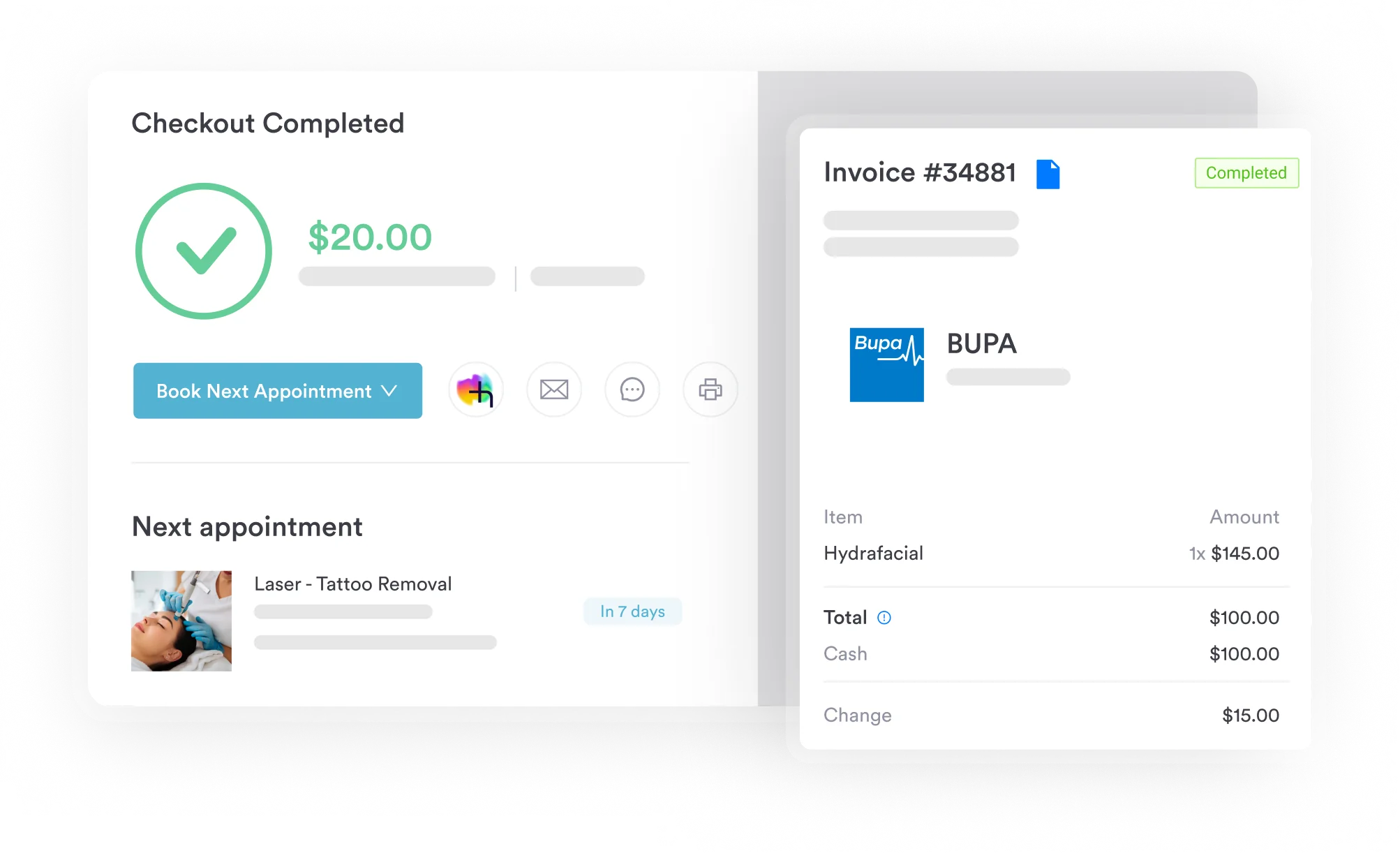
The result is one traceable path from order to payment. A denied ERA sits next to the order and the diagnosis, so the team can see which field caused it.

Pabau records lab orders and ICD-10 codes against the patient, then submits claims through Claim.MD with eligibility checks and ERA remittances. See how oncology practices use it to bill tumor marker tests.

Two fields decide a CPT 86300 claim: the antigen named on the lab report and the diagnosis on the order. Check both before the draw, and the claim avoids the two most preventable denials, a screening indication and the 86301 mix-up.
The trade-off is a few seconds per order at code entry against a full rework cycle for every denied tumor marker claim. Book a demo to see how Pabau carries the order, the diagnosis and the Claim.MD submission through one patient record.

Need to understand how clearinghouse validation works before a claim ships? Clean claim submission breaks down what payers check at adjudication and how to structure lab claims to pass those checks.
Seeing high denial volumes across multiple lab codes? Electronic remittance advice explains how to read ERA files and map CARC codes back to their upstream billing cause.
Building a revenue cycle process for an oncology or multi-specialty practice? Revenue cycle management fundamentals covers the end-to-end workflow from eligibility verification through payment posting.
CPT code 86300 is a quantitative immunoassay for tumor antigen CA 15-3 or CA 27.29. This serum marker is used to monitor breast cancer treatment response and detect recurrence. The official AMA descriptor reads: “Immunoassay for tumor antigen, quantitative; CA 15-3 (27.29).”
Yes. Both CA 15-3 and CA 27.29 detect the same MUC1-derived protein using different monoclonal antibody pairs. Both assay variants bill under CPT 86300, so a lab report labeled either “CA 15-3” or “CA 27.29” takes the same code.
CPT 86300 covers CA 15-3 and CA 27.29, the breast cancer markers. CPT 86301 covers CA 19-9, a marker associated with pancreatic and gastrointestinal cancers. Using 86301 on a breast cancer patient’s claim will produce a denial, because the supporting ICD-10 codes will not match that code’s coverage policy.
The most commonly accepted ICD-10-CM codes are C50.x for active breast cancer and Z85.3 for a personal history of it. Z08 covers a follow-up encounter after completed cancer treatment. Always check the current covered-code list for Medicare NCD 190.29, and each commercial plan’s own policy.
Yes, when two distinct tests are ordered for two distinct clinical indications, such as a patient with both breast and pancreatic involvement. Depending on the current NCCI edit table, a modifier may be required to indicate separate medical necessity. Check the current quarterly edit before submitting both codes on the same claim.
Medicare pays CPT 86300 under the Clinical Laboratory Fee Schedule, and CMS sets the amount each year in its annual CLFS update. Check the current year’s figure on the CMS CLFS files page before billing or quoting patient liability.
No. CPT 86300 is not covered by Medicare or most commercial payers for population screening in patients without a prior breast cancer diagnosis. Coverage applies only to monitoring and surveillance indications. Submitting a claim with a general screening diagnosis will produce a medical-necessity denial.