

CCSD Code D1010: Radical mastoidectomy including meatoplasty
CCSD Code D1010: Definition and clinical scope CCSD Code D1010 is the UK private...

Last Updated: Nov 25, 2026
76977 is the CPT code for ultrasound bone density measurement and interpretation, peripheral site(s), any method. It reports a quantitative ultrasound (QUS) study of the heel, tibia or finger bones, and it covers both the measurement and the physician's interpretation.
The code sits in the Diagnostic Ultrasound section of CPT, apart from the DXA codes 77080 and 77081. Medicare covers it as a screening bone mass measurement once at least 23 months have passed since the month of the last study.
Let Pabau's smart automation suggest the right codes, reduce claim denials, and keep your practice compliant—effortlessly.
Automate repetitive tasks and focus on what matters most—your patients.
Reduce coding errors and ensure compliance with the latest regulations.
Clean claims, fewer denials, and faster reimbursements.
Powerful insights and reporting to help your practice thrive.
HIPAA compliant SOC 2 certified GDPR-compliant Trusted by 4,000+ clinics worldwide

CPT code 76977 reports quantitative ultrasound bone density at peripheral sites such as the heel, tibia and phalanges, not axial DXA.
Medicare covers 76977 as a screening bone mass measurement once at least 23 months have passed since the month of the last study.
Medicare pays for monitoring osteoporosis drug therapy only on axial DXA, so a 76977 claim billed for monitoring is denied.
Bill 76977 globally when the practice owns the device, and split it with modifier 26 or TC when interpretation and equipment sit apart.
Pabau’s claims management software sends 76977 claims through Claim.MD and checks patient eligibility before the scan.
CPT code 76977 describes ultrasound bone density measurement and interpretation at one or more peripheral sites, by any method.
CMS’s Claims Processing Manual lists it among the Medicare bone mass measurement codes as the one bone sonometry code. In the AMA’s CPT code set, it sits under Diagnostic Ultrasound (76506-76999), in the Other Diagnostic Ultrasound Procedures range (76975-76999).
The official AMA descriptor reads: “Ultrasound bone density measurement and interpretation, peripheral site(s), any method.” The phrase “peripheral site(s)” is the key qualifier. 76977 applies only to appendicular skeleton sites, never to the spine or hip, which axial DXA code 77080 covers.
CPT 76977 measures bone density at peripheral skeletal sites using quantitative ultrasound (QUS). The device passes sound waves through bone and records both the speed of sound (SOS) and broadband ultrasound attenuation (BUA). Unlike DXA, QUS uses no ionizing radiation and runs on portable, office-based equipment.
The calcaneus (heel bone) is the most commonly measured peripheral site because its trabecular structure closely approximates that of the spine. Tibia and phalangeal measurements are less common but still covered under 76977. The result is typically expressed as a T-score or Z-score for clinical interpretation.
To support billing, the performing clinician’s report needs six elements:
A missing interpretation is a frequent documentation deficiency, and it leads to claim denial.
Always document the specific peripheral site measured in the procedure report. A report that states only ‘bone density ultrasound performed’ is insufficient for medical necessity review. Name the calcaneus, tibia or phalanges, or the claim may trigger a post-payment audit.
CPT 76977 covers peripheral ultrasound bone density. 77080 covers axial DXA at the spine and hip, and 77081 covers peripheral DXA at sites such as the wrist or heel. The device decides the code before the site does, as the chart below shows.
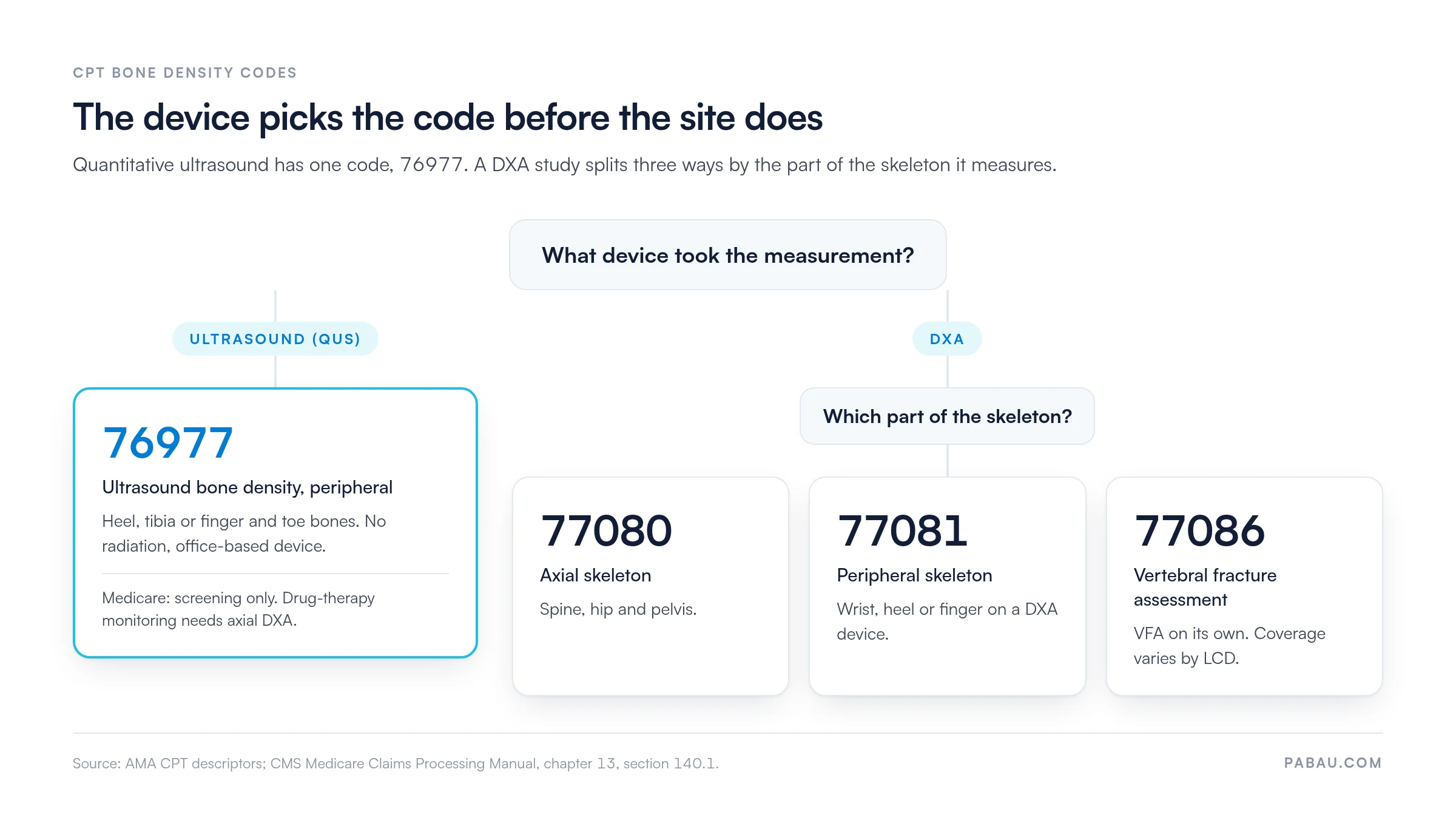
Billing 77080 for a QUS study is a wrong code assignment, whatever the clinical purpose. The table sets the four codes side by side.
Don’t bill 76977 and 77081 on the same date for the same patient. Both measure peripheral bone density, and NCCI edits may flag the pair. If the record justifies both studies, modifier 59 may apply, but check the current quarterly NCCI edit file before submitting.
A vertebral fracture assessment performed on its own is reported with 77086. That code and 77085 replaced the deleted 77082 in 2015.
Every CPT 76977 claim links to an ICD-10-CM diagnosis code that establishes medical necessity. A missing or unsupported diagnosis is one of the most common reasons these claims are denied. For a screening study, the usual pairing is Z13.820.
Established osteoporosis takes M81.0, and low bone mass without fracture takes M85.80. Medicare pays monitoring claims coded M81.0 only on axial DXA, so a monitoring study belongs on 77080 instead of 76977.
Local Coverage Determinations (LCDs) published by Medicare Administrative Contractors (MACs) list the ICD-10 codes each MAC accepts for bone density studies. The codes above are commonly accepted, but cross-reference your MAC’s current LCD before submitting. LCDs change, and a code one MAC accepts may be refused by another.
Medicare covers CPT code 76977 as a bone mass measurement for qualifying beneficiaries, and no deductible or coinsurance applies. Under 42 CFR 410.31, a new study is covered once at least 23 months have passed since the month of the last one. Medicare counts months, not exact dates.
The five Medicare-qualifying beneficiary categories for bone mass measurement are:
The fifth category does not extend to 76977. CMS requires monitoring and confirmatory baseline studies to use axial DXA, so contractors deny a 76977 claim billed for drug-therapy monitoring. In practice, the QUS scanner serves the screening categories, and monitoring goes to a DXA referral.
Medicare Advantage plans and commercial payers may apply different coverage criteria. Some Medicare Advantage plans require prior authorization for 76977 even when traditional Medicare does not. Verify the plan’s benefit before scheduling, particularly for Medicare Advantage enrollees.
Modifier selection for CPT code 76977 depends on who owns the ultrasound equipment and where the service is performed. A wrong choice here is a common billing error on radiology codes.
A common mistake is billing 76977 globally from a hospital outpatient setting. When a physician interprets a study run on hospital or imaging-center equipment, global billing overstates the professional claim. It is typically recouped on audit, and modifier 26 is the correct choice.
A complete CPT code 76977 claim needs accurate documentation, the right ICD-10 pairing, correct place-of-service (POS) coding, and a cleared frequency limit. Skipping any of these four checks before submission generates avoidable denials.
Use this pre-submission checklist:
A clean claim clears all seven checks on first submission, so the payer has no reason to send it back. Prior authorization for Medicare Advantage and commercial plans sits outside this list, because it has to be settled before the study.
Medicare Physician Fee Schedule payments for CPT code 76977 vary by geographic adjustment (GPCI) and by facility vs non-facility setting. The CMS Physician Fee Schedule Look-Up Tool is the authoritative source for current-year payment amounts. Check it before quoting reimbursement figures, since rates change with each annual final rule.
RVU values for 76977 are modest next to axial DXA codes, reflecting the lower resource cost of peripheral QUS devices. The table below shows the work RVU from CMS data. Confirm current figures in the FastRVU lookup tool or the CMS data file for the calendar year.
Commercial payers usually reimburse at a contracted percentage of the Medicare fee schedule. Global billing in a physician-owned setting generally pays more in total than billing the professional component alone with modifier 26.
Before quoting a patient’s out-of-pocket cost for CPT code 76977, run an eligibility check to confirm the plan covers peripheral ultrasound bone density studies. Some commercial plans cover only axial DXA (77080) for initial screening. On those plans, 76977 is a non-covered service unless medical necessity for QUS is documented.
NCCI (National Correct Coding Initiative) edits enforce bundling rules across the CPT code set. For CPT code 76977, the main NCCI consideration is same-day billing with other bone density codes. Billing 76977 and 77081 on the same date without a documented, clinically distinct reason may trigger an edit that denies one code.
Denials on 76977 claims usually trace back to one of these causes:
Each denial comes back with a claim adjustment reason code that names the problem. Our guide to medical billing denial codes explains each one and the fix it calls for.
Many 76977 denials come from checks a biller runs by hand. Someone counts months back to the last study, confirms the indication, and chases prior authorization on Medicare Advantage plans. Each check lives in a different place, so one slips.
Pabau’s claims management software keeps those checks next to the claim. It submits CMS-1500 claims through the Claim.MD clearinghouse and runs eligibility checks before the scan. Remittances post back against the patient record.
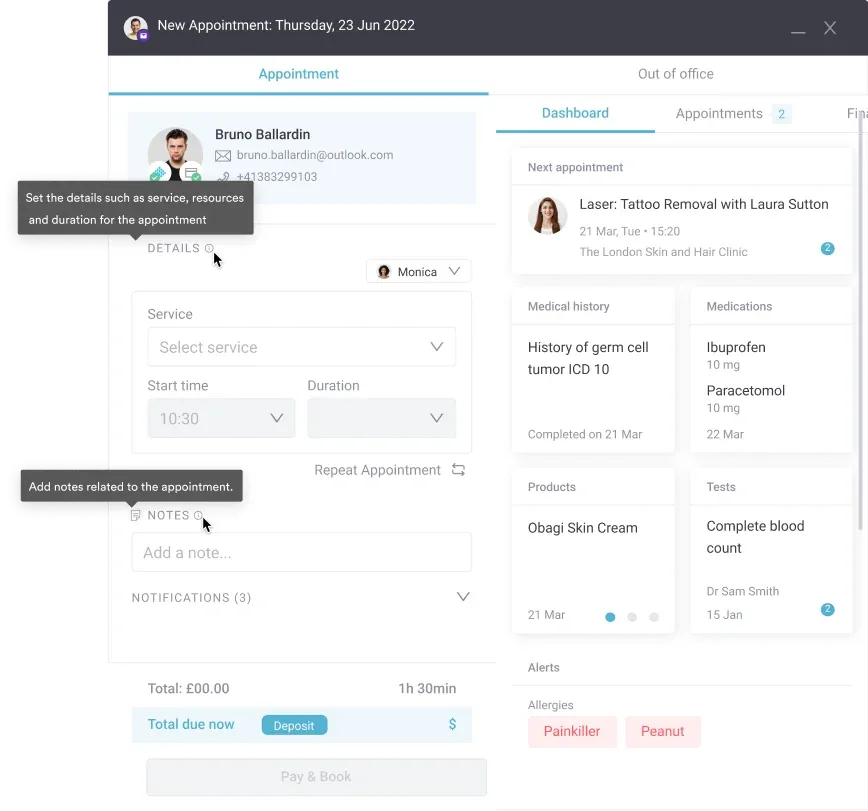
Prior authorization is tracked on the patient’s case, with its code, dates and sessions, and Pabau warns when one is missing. A Medicare Advantage patient who needs approval is flagged before the QUS study, not after the denial.
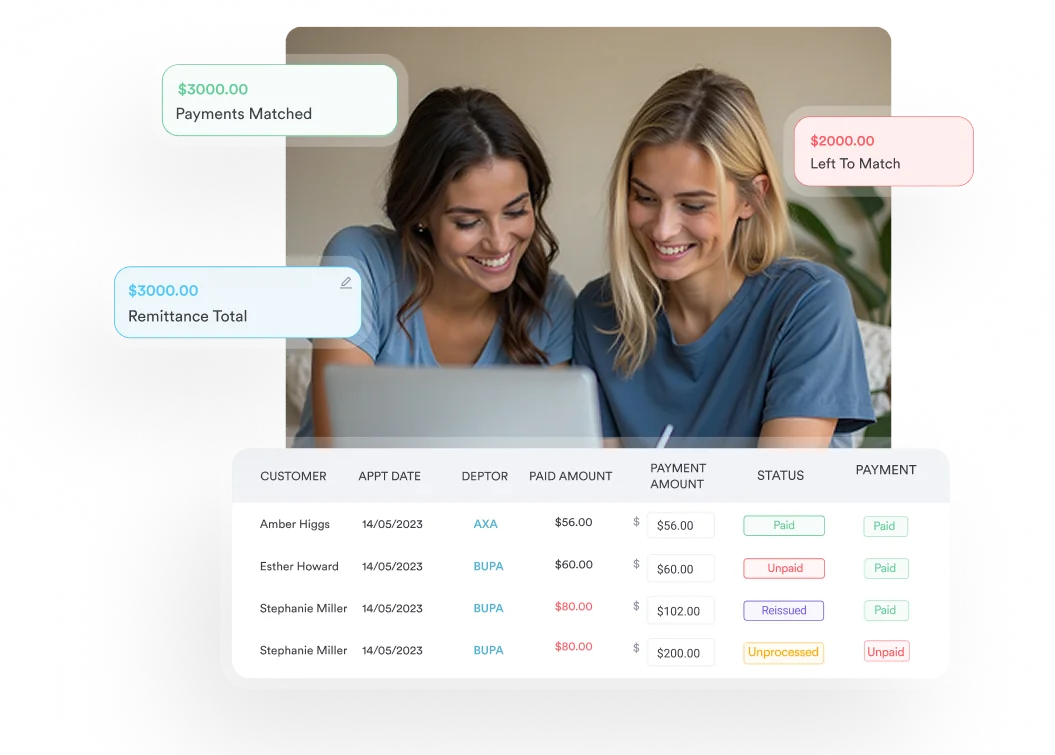

Pabau checks eligibility, tracks prior authorization and submits claims through Claim.MD, with remittances posted to the patient record. See how it handles CPT 76977 billing.

Code 76977 when the device was an ultrasound scanner and the site was peripheral. The harder call is whether Medicare will pay. A screening patient in a qualifying category is covered, but a patient on osteoporosis drugs needs an axial DXA instead.
Settle that question at the referral, not at billing. Matching the indication to the device before the study prevents most rework on these claims. Book a demo to see how Pabau tracks eligibility, authorization and claim status for every bone density study.

Need to understand how claims reach the payer? How the Claim.MD clearinghouse works explains the end-to-end claim validation and remittance workflow.
Billing multiple radiology codes on the same date? Medical billing denial codes reference lists the CARC and RARC codes returned when a claim is denied or adjusted.
Billing a peripheral study done with x-ray instead of ultrasound? HCPCS code G0130 covers single-energy x-ray absorptiometry of the peripheral skeleton.
Measuring axial bone density with CT? CPT code 77078 reports a computed tomography bone mineral density study of the axial skeleton.
Coding osteoporosis confined to one region? ICD-10 code M81.6 covers localized osteoporosis (Lequesne).
CPT code 76977 covers quantitative ultrasound (QUS) bone density measurement and interpretation at one or more peripheral skeletal sites. Those sites include the calcaneus (heel bone), tibia and phalanges. It does not cover DXA studies or axial sites such as the spine or hip, which are reported with 77080.
CPT 76977 uses quantitative ultrasound to measure peripheral bone density at the calcaneus, tibia or phalanges. 77080 uses dual-energy X-ray absorptiometry (DXA) to measure axial bone density at the spine and hip. The two codes differ in both imaging modality and anatomical site and are not interchangeable.
Yes. Medicare covers CPT code 76977 as a bone mass measurement for qualifying beneficiaries. A new study is covered once at least 23 months have passed since the month of the last one. Qualifying groups include estrogen-deficient women at clinical risk of osteoporosis, people on long-term glucocorticoid therapy, and people with primary hyperparathyroidism. Drug-therapy monitoring is covered only with axial DXA, not with 76977.
The main ICD-10-CM codes supporting 76977 are M81.0 (age-related osteoporosis without fracture) and M85.80 (other specified disorders of bone density). Z13.820 (screening for osteoporosis) and E21.0 (primary hyperparathyroidism) also qualify. Covered codes vary by jurisdiction, so cross-reference your MAC’s current LCD for the full accepted list.
Under Medicare, CPT 76977 is covered once at least 23 months have passed since the month of the last covered study. Medicare counts months, not exact dates or calendar years. Commercial payers may apply different frequency limits, so verify the plan’s benefit before scheduling a repeat study.
The top denial reasons for 76977 are a missing or non-covered diagnosis code and an unmet 23-month frequency limit. Others are missing prior authorization, the wrong modifier (global vs 26 or TC), and a monitoring claim that Medicare pays only on axial DXA. NCCI conflicts also arise when 77081 is billed the same day without modifier 59.




