

HCPCS code E0198: Water pressure pad billing guide
HCPCS code E0198 is a water pad for a standard mattress HCPCS code E0198 is the ...

Last Updated: Oct 13, 2026
62223 is the CPT code for creation of shunt, implanted; including burr hole(s).
Most neurosurgery coders get denied on this code not because they chose the wrong range, but because the operative note fails to confirm creation intent over revision, or because an add-on code triggers a Medicare bundle edit that the biller never anticipated.
Let Pabau's smart automation suggest the right codes, reduce claim denials, and keep your practice compliant—effortlessly.
Automate repetitive tasks and focus on what matters most—your patients.
Reduce coding errors and ensure compliance with the latest regulations.
Clean claims, fewer denials, and faster reimbursements.
Powerful insights and reporting to help your practice thrive.
HIPAA compliant SOC 2 certified GDPR-compliant Trusted by 4,000+ clinics worldwide

CPT code 62223 is the creation code for a CSF shunt system; revision and replacement use 62230 or 62225
The operative note must confirm creation intent, burr hole approach, and distal terminus location or the claim is vulnerable to denial
Medicare commonly denies CPT 69990 when billed alongside 62223; verify the applicable MAC LCD before appending
ICD-10 G91.x codes are the primary diagnosis pairing; T85.01x series applies when shunt malfunction drives a new creation
Pabau’s claims management software includes built-in CPT guidance and modifier logic that reduces 62223 denial rates for neurosurgery practices
CPT code 62223 describes the creation of a shunt, implanted in the brain or spinal canal, for drainage of cerebrospinal fluid, including burr hole(s). The American Medical Association publishes this descriptor within the neurosurgery surgery section of the CPT codebook, under cerebrospinal fluid shunting procedures (codes 62220 through 62258).
Three things the descriptor confirms: the shunt is being created for the first time (not revised), the access includes at least one burr hole, and the code covers the complete system placement as a single billable unit. Coders familiar with medical billing workflows for neurosurgery know the creation-versus-revision split is where most 62223 denials originate.
62223 bundles the proximal ventricular catheter, the shunt valve, and the distal catheter into a single code. You do not unbundle the valve separately. The code does not include programmable valve adjustment, which has its own code (62252), or endoscopic ventricular procedures performed at the same session.
A ventriculoperitoneal shunt creation under 62223 follows a consistent surgical sequence. Understanding that sequence helps coders recognize when documentation supports the code and when it does not.
All three shunt termination sites (peritoneal, atrial, pleural) are captured by 62223 when the procedure involves creation of the full system. The destination changes the complexity and anesthesia time but not the procedure code.
The shunt code range 62220 through 62230 trips up even experienced neurosurgery coders because the distinctions hinge on subtle operative intent. Creation versus revision is the primary axis; partial versus complete revision is the secondary one.
The decisive question: does the operative note describe a shunt being created for the first time, or a shunt that already exists being altered? If a shunt is already in place and the surgeon revises any portion of it, 62223 is wrong. Use 62225 for a proximal-only revision and 62230 for a complete system revision or replacement.
Every 62223 claim requires a supporting diagnosis code that confirms medical necessity for CSF diversion. The CDC ICD-10-CM tool lists the G91 series as the primary pairing for hydrocephalus-driven shunt creation.
Sequencing caution: when a malfunctioning shunt (T85.01x) leads to a new creation, the reason for admission governs principal diagnosis selection. If the patient is admitted for the hydrocephalus that resulted from the malfunction, G91.x leads. If the malfunction itself is the admission reason, T85.01xA leads. AHA Coding Clinic guidance on shunt ligation reinforces that ICD-10 sequencing follows UHDDS rules, not coder preference.
Two add-on codes appear regularly alongside 62223 claims, and both carry payer-specific payability risk that makes blanket billing dangerous.
CPT 69990 (microsurgical techniques requiring use of operating microscope) may be appended when the operating microscope is used for a procedure not already listed as using a microscope in the CPT descriptor. The critical problem for 62223 claims: Medicare’s National Correct Coding Initiative (NCCI) and many MAC Local Coverage Determinations treat 69990 as a bundled component of neurosurgical shunt procedures. The AAPC community forum reflects widespread coder experience of Medicare denying 69990 when billed with 62223. Private payers vary considerably. Never append 69990 to a 62223 claim for a Medicare patient without confirming the applicable MAC’s LCD first.
CPT 61782 (stereotactic computer-assisted volumetric navigation procedure, intracranial, extradural) is sometimes used during catheter placement to improve targeting accuracy. Payability alongside 62223 is payer-specific and uncertain. No Tier 1 or Tier 2 documentation confirmed routine payability at the time of research. Verify current NCCI edits and individual payer policies before billing 61782 with 62223, and document the medical necessity for navigation explicitly in the operative note.
Modifier selection for 62223 follows standard major surgery rules. The wrong modifier, or a missing one, can result in denial or duplicate claim flags.
For co-surgery claims under modifier -62, both surgeons must independently document their distinct intraoperative roles in separate operative notes. A single shared note referencing two attendings is not sufficient for most payers and is a frequent audit trigger.
An operative note that will survive a payer audit for 62223 must confirm six things. Missing any one of them leaves the claim vulnerable. Use this as a clean claim checklist before submission.
CPT code 62223 carries a 90-day global period under the CMS Medicare Physician Fee Schedule, confirmed by the major surgery global period indicator. All routine post-operative care within that 90-day window is bundled into the base payment; separately billable post-op services require modifier -24 or -79 as appropriate.
RVU values change annually. Retrieve current figures directly from the CMS MPFS lookup or use the FastRVU 2026 RVU lookup tool for current work, practice expense, and malpractice RVU components. Pabau practices submitting claims through electronic claims via Claim.MD can route 62223 claims to Claim.MD’s network of 4,000 US payers and receive electronic remittance advice that flags applied payment edits before manual reconciliation begins.
Prior authorization: Commercial payers frequently require prior authorization for elective shunt placements, particularly for idiopathic normal-pressure hydrocephalus (G91.2). Emergency placements generally bypass prior auth requirements, but the clinical urgency must be documented. Check individual payer policies before scheduling elective cases.

Pabau connects directly with Claim.MD to submit 62223 claims electronically, flag modifier conflicts before submission, and pull ERA data back into the patient record automatically.

62223 denial patterns are predictable. Most come from one of five root causes, and each has a concrete fix. Effective denial management in neurosurgery billing starts with identifying which of these patterns is driving your practice’s rejection volume.
Neurosurgery shunt billing involves a short but high-stakes code set where each selection decision carries significant reimbursement consequence. Practice management platforms with built-in CPT guidance and claim-scrubbing logic address the structural causes of 62223 denials rather than just flagging them after the fact.
Pabau’s claims management software integrates with Claim.MD to validate 62223 claims against payer-specific edits before submission. Modifier conflicts, missing prior auth flags, and ICD-10 mismatches surface at the claim-scrubbing stage rather than in a denial queue 30 days later.
The platform also supports revenue cycle management workflows that track 62223 denial reasons across payers, letting billing managers identify which root cause (revision miscoding, 69990 bundling, documentation gaps) is driving the most rework volume in their specific payer mix.
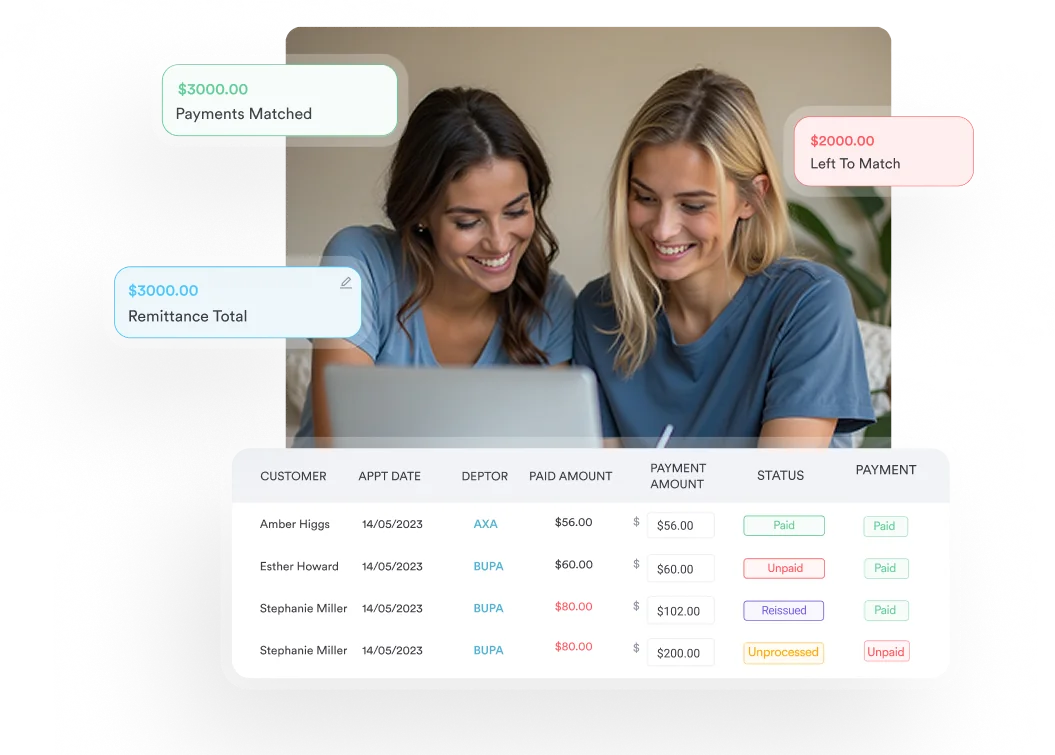
For neurosurgical practices managing both creation and revision shunt claims in the same billing cycle, the ability to separate 62223 and 62230 claims by payer rule set and track their respective denial rates independently is the difference between a billing problem that gets solved and one that just gets tolerated.
CPT code 62223 is a straightforward creation code with a surprisingly high denial rate, driven almost entirely by documentation gaps and code-range confusion with 62230 and 62225. The fix is not a new code selection strategy; it is an operative note template that confirms creation intent, approach, catheter placement, and valve specifics as a standard checklist.
Pabau’s claims management integration with Claim.MD catches modifier and edit conflicts for 62223 claims before they reach the payer, reducing the 30-day denial cycle that costs neurosurgery practices rework time on every shunt creation case.
To see how the workflow operates in practice, book a demo with the Pabau team.

Need to understand how medical billing workflows connect to CPT coding? What is medical billing explains the end-to-end revenue cycle process that every neurosurgery biller manages.
Want to reduce denial rework across your full CPT code set? Denial management in healthcare covers root-cause analysis frameworks for high-volume claim rejections.
Looking for guidance on clean claim submission standards? Clean claim requirements outlines the documentation and coding elements every claim needs to pass first-pass edits.
CPT code 62223 is the billable procedure code for creation of an implanted cerebrospinal fluid shunt, including burr hole creation, used to divert excess CSF in patients with hydrocephalus. It covers the full shunt system placement (ventricular catheter, valve, and distal catheter) in a single code. It is a creation code only; revision or replacement of an existing shunt uses CPT 62230 or 62225.
CPT 62223 is used for first-time shunt creation; CPT 62230 is used for revision or replacement of an existing, obstructed, or malfunctioning complete shunt system. The operative note must confirm whether no prior shunt was in place (62223) or an existing shunt is being altered (62230). Using 62223 on a revision claim is the most common denial trigger in this code range.
Medicare commonly denies CPT 69990 (operating microscope) when billed alongside 62223. CMS has no published National Coverage Determination confirming payability, and most MAC Local Coverage Determinations bundle the microscope into the base neurosurgical procedure. Private payers vary; always verify the applicable MAC LCD before appending 69990 to a Medicare 62223 claim.
CPT code 62223 carries a 90-day global period under the CMS Medicare Physician Fee Schedule major surgery designation. Routine post-operative care within 90 days of the shunt creation is bundled into the base payment. Return-to-OR procedures within the global period require modifier -78 (related complication) or -79 (unrelated procedure) to be separately billable.
The primary ICD-10 pairings for CPT 62223 are G91.0 (communicating hydrocephalus), G91.1 (obstructive hydrocephalus), G91.2 (idiopathic normal-pressure hydrocephalus), G91.8, and G91.9. When a malfunctioning shunt has caused the hydrocephalus requiring a new creation, the T85.01x series (breakdown of ventricular intracranial shunt) may sequence as principal depending on the admission reason and UHDDS guidelines.
The operative note must document: the hydrocephalus diagnosis and medical necessity for CSF diversion, explicit confirmation of first-time shunt creation (not revision), burr hole approach and location, intraoperative confirmation of ventricular catheter placement, the valve manufacturer and model with pressure settings, and the distal terminus location (peritoneal cavity, atrium, or pleural space). All six elements are required for audit-proof documentation.



