HCPCS Code V2629: Ocular prosthesis billing guide
HCPCS Code V2629: Definition, descriptor, and code attributes HCPCS Code V2629 i...

Last Updated: Nov 6, 2026
57155 is the CPT code for insertion of uterine tandem and/or vaginal ovoids for clinical brachytherapy. It covers placing the applicator only: a tandem through the cervix into the uterus, vaginal ovoids, or both.
The code sits in the Female Genital System section of CPT, under Vagina, Introduction (57150-57180). Dosimetry, treatment planning and source delivery are reported separately. A vaginal-only applicator such as a cylinder is reported with 57156.
Let Pabau's smart automation suggest the right codes, reduce claim denials, and keep your practice compliant—effortlessly.
Automate repetitive tasks and focus on what matters most—your patients.
Reduce coding errors and ensure compliance with the latest regulations.
Clean claims, fewer denials, and faster reimbursements.
Powerful insights and reporting to help your practice thrive.
HIPAA compliant SOC 2 certified GDPR-compliant Trusted by 4,000+ clinics worldwide

CPT 57155 covers inserting a uterine tandem, vaginal ovoids, or both for intracavitary brachytherapy. However, a vaginal-only applicator such as a cylinder is CPT 57156.
ICD-10 codes from the C53 (cervical) and C54 (uterine) families are the primary supporting diagnoses for medical necessity.
Brachytherapy management is reported within the 77750-77799 series, not with 77427, which is external-beam management per five fractions.
Medicare’s 2026 work RVU for 57155 is 5.02 in every setting, with 7.14 total RVUs in a facility and 11.90 in an office.
Pabau’s claims management software checks claims for missing or invalid details, tracks prior authorizations and submits through Claim.MD.
CPT code 57155 is the procedure code for inserting a uterine tandem, vaginal ovoids, or both to deliver intracavitary brachytherapy for gynecologic cancer. The American Medical Association (AMA) maintains the CPT code set. In addition, it places 57155 within the Female Genital System section, in the Vagina subsection under Introduction procedures (57150-57180).
The uterine tandem is a rigid or semi-rigid metal tube inserted through the cervical os into the uterine cavity. In short, it serves as the delivery path for radioactive sources placed for a short time during brachytherapy sessions. In fact, the tandem is almost always placed together with vaginal colpostats or ovoids to achieve the even dose spread needed for curative treatment. Ovoids can also be placed without a tandem, and that placement still reports with 57155.
First, applicator insertion takes place under anesthesia or procedural sedation, often in a hospital outpatient or inpatient setting. For a tandem, the radiation or gynecologic oncologist dilates the cervix, measures the uterine depth, and inserts the tandem to the planned position. Then, vaginal ovoids, when the plan calls for them, sit in the vaginal fornices against the cervix.
CPT 57155 applies to both high dose rate (HDR) and low dose rate (LDR) brachytherapy applications. For example, HDR brachytherapy uses an iridium-192 source that delivers the dose in minutes. In contrast, LDR uses cesium or iridium sources left in place for hours or days. In short, the code covers the physical act of placing the tandem, the ovoids or both, not the dose delivery or treatment planning that follows.
Primary indications include:
CPT 57155 covers placement of the applicator itself: the uterine tandem, the vaginal ovoids, or both. However, downstream services in the same brachytherapy episode are reported separately when NCCI edits and the applicable MAC’s local coverage determination allow it.
Always verify same-day billing combinations against the current quarter’s CMS National Correct Coding Initiative (NCCI) edits. Indeed, bundles change quarterly and payer-specific LCD policies can further restrict what is billable on the same date of service.
Three code groups sit closest to 57155 in a brachytherapy course: 57156, 77334 and the 77750-77799 series. In short, each covers a distinct phase of the workflow. Also, they often share a date of service, which creates bundling exposure.
In short, the distinction between 57155 and 57156 is the applicator. CPT 57155 covers a uterine tandem, vaginal ovoids, or both. CPT 57156 covers a vaginal-only afterloading apparatus, such as the cylinder used for vaginal cuff brachytherapy after hysterectomy. So pick the code from the applicator the procedure note documents.
Medical necessity requires a linked diagnosis code that shows a gynecologic cancer suited to intracavitary brachytherapy. Overall, the following ICD-10-CM codes are the primary supporting diagnoses. Also, always confirm the code is valid for the current fiscal year via the CDC/NCHS ICD-10-CM web tool.
First, code to the most detail the clinical notes allow. For example, submitting C53.9 when the operative note specifies endocervix is a specificity error that some payers treat as a denial trigger. Likewise, the same applies to uterine disease: code endometrial cancer to C54.1 when the note names the endometrium, not to C54.9.
Medicare pays differently depending on place of service. For example, facility settings (hospital inpatient, hospital outpatient, ASC) generate a lower physician fee schedule rate because the facility bills separately for overhead. In contrast, non-facility settings shift that overhead cost to the physician, producing a higher professional fee. However, radiation oncology tandem insertions mostly occur in facility settings, so the facility rate is the operative figure for most practices.
First, multiply the total RVUs by the 2026 Medicare conversion factor, then adjust for your locality’s GPCI. Next, verify current dollar amounts in the CMS Physician Fee Schedule lookup tool or an RVU calculator such as FastRVU. RVUs change each calendar year, so recheck them every January. The breakdown below shows why the setting matters, because the work RVU stays the same in both.
First, check the place-of-service code on every 57155 claim. For example, POS 21 (inpatient) and POS 22 (outpatient hospital) both pay the same facility rate. However, a wrong POS, such as 11 (office) for a hospital procedure, triggers the non-facility rate and invites denials.
Good records protect against late denials and audit clawbacks. In fact, the operative or procedure note must show that an applicator insertion took place, not only a simulation or planning session.
Reviewing medical billing compliance requirements for procedural notes before claim submission reduces the risk of post-payment audits. In short, required documentation elements for a 57155 claim include:
Medicare fee-for-service typically does not require prior authorization for surgical procedures like tandem insertion, but Medicare Advantage plans commonly do. Meanwhile, commercial payers vary significantly. So, conduct insurance eligibility verification for every patient before scheduling the brachytherapy suite to confirm authorization requirements and active coverage.
A missed authorization is hard to recover once the procedure is done, so obtain it before treatment.
Effective denial management in healthcare for brachytherapy codes starts with knowing the common triggers. In short, the table below lists five that recur on CPT 57155 claims, with the fix for each.
A denied 57155 claim comes back with a claim adjustment reason code on the remittance. Then, look that code up in our guide to denial codes before you correct and resubmit.
Modifiers signal unusual circumstances to payers and override NCCI edits where appropriate. In addition, the table below covers the modifiers most relevant to CPT 57155 claims, along with the specific scenarios where each applies.
The AAPC Codify CPT lookup tool includes modifier applicability guidance and NCCI edit pair data for each code. Then use it to check whether a modifier is enough to override a specific bundling edit.
When billing modifier -59 to separate 57155 and 57156 on the same date, ensure the operative note documents that each procedure was medically necessary independently. Otherwise, a combined note that describes one applicator setup may not justify two distinct codes even with the modifier attached.
In fact, gynecologic oncology billing stacks several moving parts onto one date of service. For example, same-day code combinations, payer-specific prior authorization rules and quarterly NCCI updates all land on the same claim. As a result, manual processes struggle to keep up in busy radiation oncology departments, where each brachytherapy fraction creates a new billing event.
Pabau, the practice management and billing platform we build, pre-fills claims from the patient record and scrubs each one for missing or invalid details. Its specialty practice claims software also tracks prior authorization cases across active patients. Therefore, submitting a clean claim the first time shortens the payment cycle for complex codes like 57155.
Then, Pabau uses Claim.MD to submit CMS-1500 claims to thousands of payers, with eligibility checked before the visit.
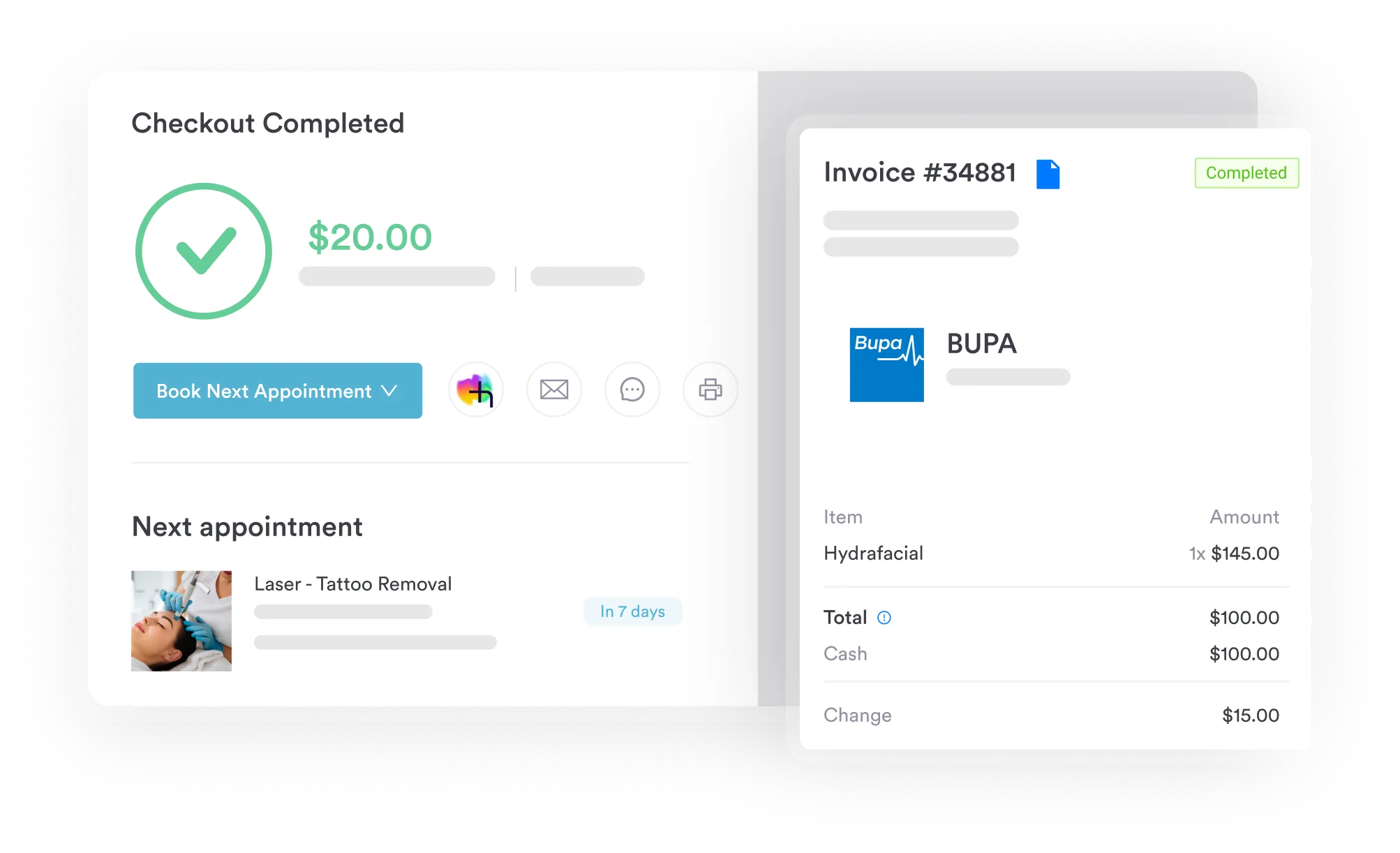
In fact, the payoff comes at claim creation. Fixing a missing or invalid detail before submission costs far less than working a denial or a payer appeal.

Pabau pre-fills claims from the patient record, checks them for missing or invalid details, and tracks prior authorizations. Claims then go to payers through Claim.MD.

Code 57155 from the applicator the procedure note documents, whether that is a tandem, ovoids or both. A vaginal-only cylinder belongs to 57156, and brachytherapy management sits inside the 77750-77799 series rather than 77427.
First, before the procedure, secure prior authorization for Medicare Advantage and commercial patients. Then match the place of service to where the insertion happened. Overall, those two checks protect the claim far better than any appeal can.
In addition, Pabau takes on the clerical side, flagging missing or invalid claim details before submission so your coders can focus on code selection. Book a demo to see how Pabau keeps brachytherapy claims moving for your practice.

Need to understand how clean claims reduce your oncology AR cycle? Clean claim submission guide covers the elements payers check before processing any surgical claim.
Want a deeper look at clearinghouse workflows for complex procedure codes? Medical claims clearinghouse overview explains how EDI 837P transmission works for specialty billing.
Looking to reduce denial rates across your oncology billing team? Denial codes in medical billing maps common CARC denial reasons to corrective action steps.
Planning the dosimetry that follows applicator placement? CPT code 77300 covers basic radiation dosimetry calculation and how it is reported.
Treating vaginal cancer with intracavitary brachytherapy? ICD-10 code C52 explains the diagnosis code for malignant neoplasm of the vagina.
CPT code 57155 covers inserting a uterine tandem, vaginal ovoids, or both for intracavitary brachytherapy in gynecologic cancer patients. It captures the applicator placement itself. Radiation delivery, dosimetry and treatment management are reported separately with other codes from the radiation oncology series.
Medicare pays CPT 57155 on its total RVUs multiplied by the annual conversion factor, adjusted by your locality’s geographic practice cost index (GPCI). For 2026 the total is 7.14 RVUs in a facility and 11.90 in an office, with a work RVU of 5.02 in both. Most brachytherapy happens in facilities, so the facility rate usually applies. Verify the current dollar amount in the CMS Physician Fee Schedule lookup tool.
CPT 57155 covers a uterine tandem, vaginal ovoids, or both. CPT 57156 covers a vaginal-only afterloading apparatus, such as the cylinder used for vaginal cuff brachytherapy after hysterectomy. Choose the code from the applicator the procedure note documents. If both are placed on the same date, check current NCCI edits and document each placement’s medical necessity before appending modifier -59.
CPT 77334, the complex treatment device design and construction code, may be separately reportable with 57155 when a complex device is built. Confirm it against current NCCI edits and your MAC’s policy. CPT 77427 is not a same-day companion. It covers external-beam management per five fractions, and brachytherapy management is reported within the 77750-77799 series.