



CCSD code G5100: Bypass of duodenum billing guide
CCSD code G5100 bills a bypass that leaves the duodenum in place CCSD code G5100...

Last Updated: Oct 16, 2026

CPT code 33362 describes transcatheter aortic valve replacement (TAVR) performed through an open surgical exposure of the femoral artery, used when a percutaneous approach isn’t feasible.
The access route is the differentiator across the family: CPT 33361 covers percutaneous femoral access, while CPT 33362 covers the same femoral vessel accessed through a surgical cutdown.
Medicare coverage under NCD 20.32 requires a certified TAVR facility, an FDA-approved prosthetic valve, and a documented Heart Team evaluation before the procedure.
Pabau’s claims management software helps cardiovascular billing teams capture required documentation, apply correct modifiers, and reduce denials on complex structural heart procedure claims.
CPT Code 33362 is the procedure code for transcatheter aortic valve replacement (TAVR/TAVI) performed through an open surgical exposure of the femoral artery. Surgeons use this approach when calcification, vessel size, or tortuosity rules out the standard percutaneous femoral route covered by CPT 33361.
This guide covers the full descriptor, how 33362 differs from the rest of the 33361-33366 family, applicable ICD-10 codes, modifiers, Medicare NCD 20.32 requirements, current RVU values, and the denial patterns that trip up cardiovascular billing teams.
According to the American Medical Association (AMA), CPT codes are the authoritative standard for reporting medical procedures in the United States. CPT Code 33362 falls under Surgery > Cardiovascular System > Heart and Pericardium > Cardiac Valves > Aortic Valve > Transcatheter Aortic Valve Replacement, a section that requires careful code selection based on surgical access route.
CPT Code 33362 describes a specific procedure. The official AMA descriptor reads: Transcatheter aortic valve replacement (TAVR/TAVI) with prosthetic valve; open femoral artery exposure. The descriptor limits this code to procedures where the surgeon performs a surgical cutdown to expose the femoral artery directly, rather than accessing it percutaneously through a needle puncture.
TAVR itself replaces a diseased aortic valve without open-heart surgery in the traditional sense. A prosthetic valve is delivered via catheter and expanded inside the existing valve. What distinguishes CPT Code 33362 from CPT 33361 is not the valve or the catheter but how the surgeon reaches the femoral artery: a surgical exposure versus a percutaneous puncture.
The most common coding error in the TAVR family is selecting 33361 when the case actually required an open surgical cutdown to the femoral artery. Both codes describe access through the same vessel; the differentiator is whether the surgeon punctured the artery percutaneously or exposed it surgically.
Selecting the wrong code means the billed procedure does not match the operative report, which triggers a denial or a post-payment audit. Both TAVR codes assume a transcatheter valve. An operative note describing a surgical valve replacement on cardiopulmonary bypass points to CPT 33405 instead.
When reviewing the operative report, look for explicit documentation of how the femoral artery was accessed. A percutaneous case describes needle puncture and closure-device deployment. An open case describes a groin incision, surgical dissection to expose the vessel, and a formal arteriotomy closure.
A case that starts percutaneous but converts to an open cutdown intraoperatively should be documented as such, since the final access technique determines the code. The same operative note wording decides codes outside the TAVR family. CPT Code 33990 covers a percutaneous ventricular assist device, so a surgical cutdown places the case outside it.
CPT Code 33362 belongs to a six-code TAVR family. Each code maps to a distinct access approach. Coders handling structural heart programs should keep this full reference table available, since the same patient may need a different access route across multiple procedures or revision encounters. See the AAPC CPT code lookup for the current descriptor text of each code in this family.
Verify the exact current descriptor for each code against the current AMA CPT codebook before billing, since access-approach terminology in this family is periodically refined. Many cardiovascular practices also handle other complex procedure coding families.
TAVR procedures are performed on patients with severe valvular disease. Aortic stenosis is the primary driver, but the ICD-10-CM codes that support medical necessity under NCD 20.32 include several valvular pathologies. Coders should document the primary diagnosis as the condition directly necessitating the valve replacement, with secondary codes capturing comorbidities relevant to the risk stratification that the Heart Team documented. Time-based and complexity-based selection can point at different codes, so the documented medical decision making decides. Accounts receivable aging shows which codes are slow to pay long before anyone calls it a denial problem.
Confirm current covered diagnoses against the active NCD 20.32 text at CMS.gov before billing. Coverage criteria can be updated, and using a diagnosis outside the currently covered list will result in a coverage denial regardless of whether the procedure was clinically appropriate. For ICD-10 crosswalk lookups, the AAPC crosswalk tool provides a useful reference for pairing procedure and diagnosis codes.
TAVR procedures typically involve a multidisciplinary surgical team. The modifier you apply depends on the physician’s role during the procedure and the payer’s specific rules. Medicare and commercial payers often differ on co-surgeon and assistant surgeon reimbursement for structural heart procedures, so verify modifier policy before submission.
Modifier -62 eligibility for CPT Code 33362 is payer-specific. Medicare permits co-surgeon billing when two distinct physician specialties are both required, but commercial payers may only allow one surgeon to bill. Always verify through the payer’s provider manual before submitting both claims.
TAVR procedures almost always involve imaging guidance and monitoring services that can be billed separately from the primary surgical code. The Society for Cardiovascular Angiography and Interventions (SCAI) coding guidelines identify several companion codes relevant to TAVR cases regardless of access approach. Bundling rules apply, so confirm current CMS edits before submitting add-on codes alongside CPT Code 33362.
Add-on code separability is one of the most audit-prone areas in TAVR billing. Practices handling complex cardiovascular procedure coding also benefit from understanding how similar multi-code families work across other specialties. Audiology shows the reverse problem, where CPT code 92550 already covers both component tests and reporting 92567 and 92568 separately triggers NCCI denials.
Before submitting CPT 93355 alongside CPT Code 33362, confirm the echocardiographer has a separate operative note documenting their distinct imaging interpretation. Without separate documentation, payers will bundle 93355 into the primary TAVR code and deny the add-on claim.
Medicare does not cover TAVR procedures performed outside a narrow set of requirements established under National Coverage Determination (NCD) 20.32. Claims for CPT Code 33362 that do not meet every NCD criterion will be denied, regardless of how clinically appropriate the procedure was. The NCD 20.32 policy on the Medicare Coverage Database governs what qualifies.
Three requirements are absolute under NCD 20.32. First, the procedure must be performed at a hospital that CMS has certified as a TAVR facility. Second, the prosthetic valve used must carry FDA approval for the specific indication. Third, a formal multidisciplinary Heart Team must evaluate the patient before the procedure and document that evaluation in the medical record.
A clean CPT Code 33362 claim rests on documentation that confirms access approach, medical necessity, facility eligibility, and Heart Team consensus. Missing any of these four elements invites a denial or a pre-payment review request.
Cardiovascular billing teams should build a documentation checklist for every TAVR case before the claim leaves the department. Using digital intake forms alongside a structured client information template streamlines the collection of required documentation across the care team.
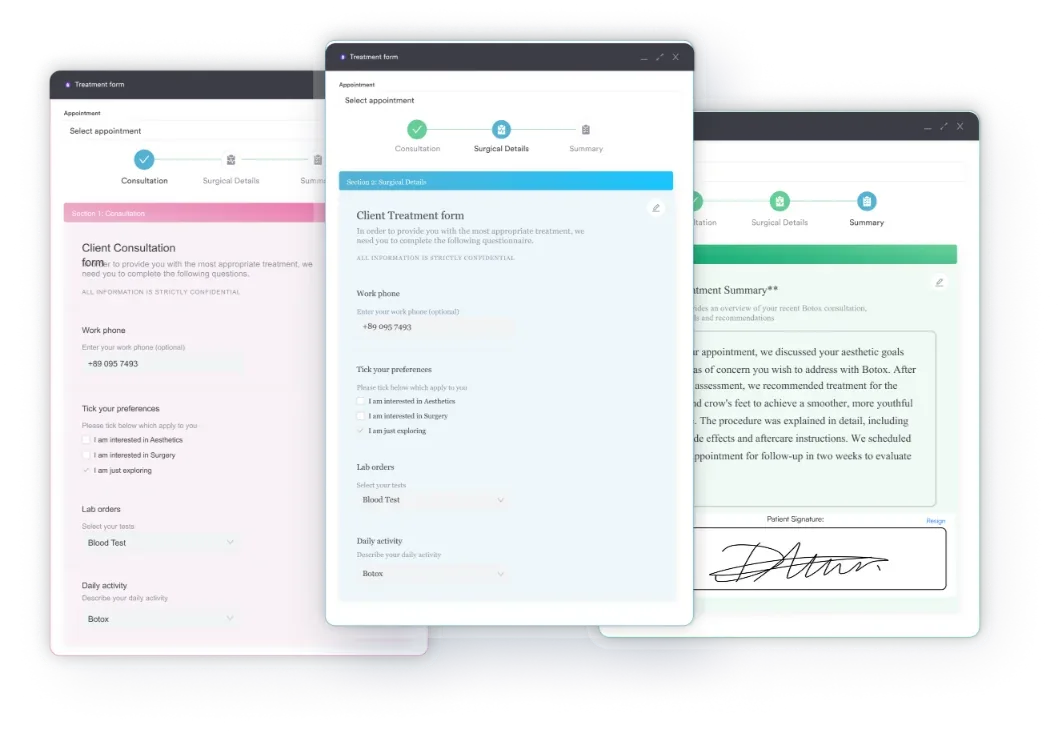
The Heart Team evaluation report is the single most commonly missing document when a CPT Code 33362 claim is denied. It is not enough for the evaluation to have occurred; the written report must be retrievable in the medical record at the time of claim submission.
For practices managing documentation across multiple care sites.

Pabau’s claims management software helps cardiovascular practices capture procedure documentation, apply correct modifiers, and submit clean claims for complex codes like CPT 33362. See how it works for your team.

CPT Code 33362 is a high-complexity surgical code carrying substantial relative value unit (RVU) weight. Under the CY2026 Medicare Physician Fee Schedule final rule (CMS-1832-F), the code carries a work RVU of 23.93 and a national facility payment of $1,176. These are unadjusted national averages; actual payment varies by geographic locality.
Use the CMS Physician Fee Schedule lookup tool to check the adjusted rate for a specific locality before posting an expected reimbursement figure.
CPT Code 33362 carries a 0-day global period, so there is no bundled post-operative window the way there is with 10-day or 90-day global codes. Post-operative visits beyond the day of the procedure are billed separately without needing modifier -24.
A significant, separately identifiable E/M service performed by the same physician on the same day as the procedure still needs modifier -25 to be paid separately. Co-surgeons billing with modifier -62 each receive approximately 62.5% of the total allowable, not the full amount independently.
TAVR claims are among the most scrutinized in cardiovascular billing. The combination of high dollar value, strict Medicare criteria, and multidisciplinary documentation requirements creates multiple points of failure. The five denial patterns below account for the majority of rejected CPT Code 33362 claims based on Novitas Solutions Medicare claim submission guidance.
Practices using structured automated billing workflows can embed documentation checkpoints directly into the claim preparation process, flagging incomplete records before submission rather than after denial. This approach is particularly effective for high-value codes like CPT Code 33362 where a single denied claim represents significant lost revenue.
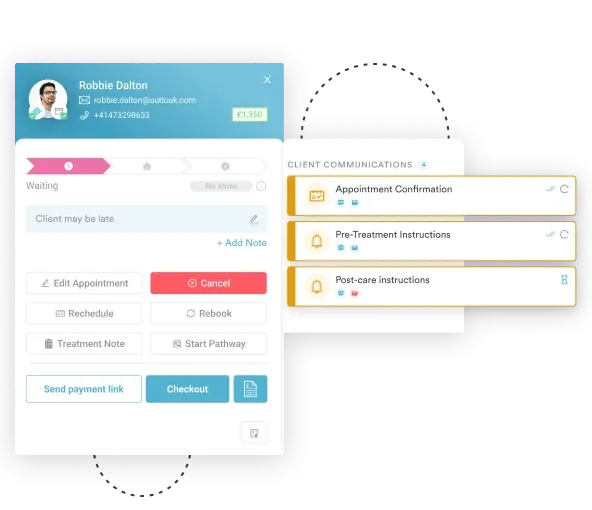
CPT Code 33362 is not a code that tolerates incomplete workflows. The NCD requirements, the multi-physician team structure, and the strict Medicare documentation rules all create dependencies that a manual billing process handles poorly at scale. Cardiovascular practices billing TAVR procedures regularly need systems that capture structured documentation, track modifier assignments, and surface claim errors before submission.
Pabau’s claims management software helps cardiovascular teams build procedure-specific documentation checklists, assign modifier rules to complex codes, and maintain the audit trail required for NCD 20.32 compliance.
For practices managing multi-physician teams on high-value surgical cases, the platform’s ability to capture discrete documentation fields from each provider reduces the manual reconciliation that typically precedes claim submission. Many practices exploring practice management software find that integrating claims management with scheduling and documentation in one system reduces the pre-submission review burden.
The referring physicians behind a TAVR workup range from primary care practices monitoring long-term cardiovascular risk to longevity clinics tracking preventive heart health markers, and all of them need documentation that hands off cleanly to the surgical team.
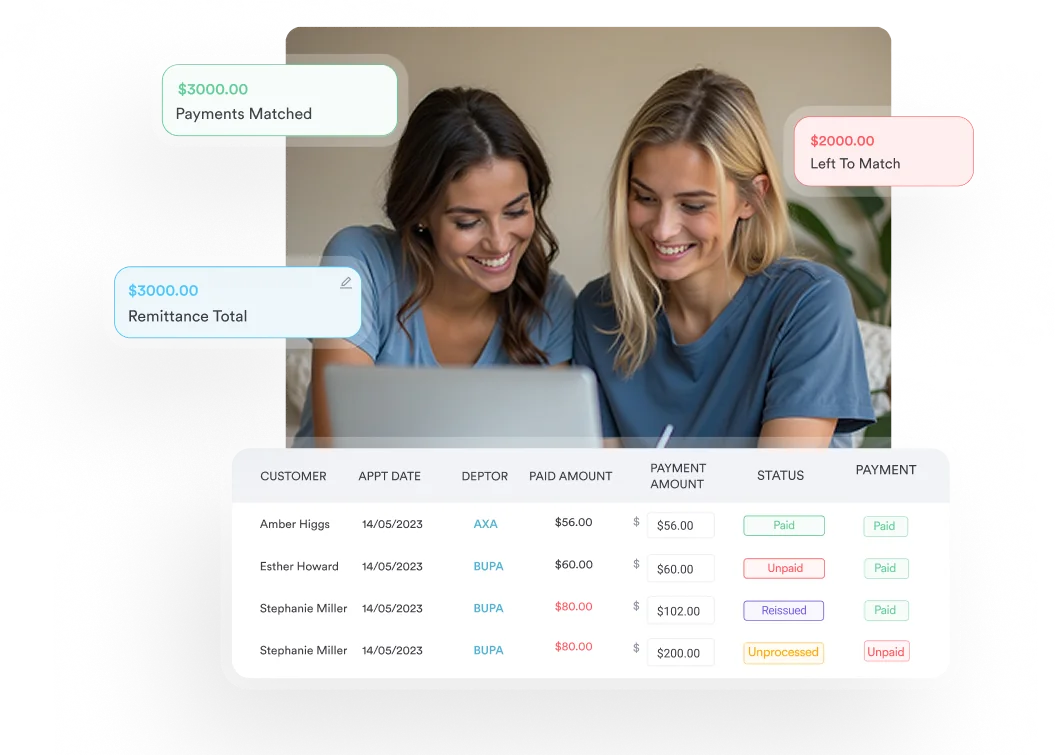
Practices also benefit from structured approaches to managing complex billing codes across specialties. The Bupa CCSD codes reference illustrates how multi-code families with payer-specific rules require the same documentation-first approach that TAVR billing demands.
Coding uncertainty isn’t unique to cardiology. The coaching CPT codes reference shows how other procedure-specific billing guides reduce ambiguity across service lines.
Run a pre-submission audit on every CPT Code 33362 claim before it leaves the department. Confirm: (1) access technique in the operative report matches the billed code, (2) Heart Team evaluation report is in the chart, (3) facility certification is current, (4) risk stratification score is documented, and (5) modifier -62 or -80 is applied only where the payer’s rules permit.
For practices managing HIPAA-compliant documentation workflows across a cardiovascular program. Effective billing starts with secure, structured documentation capture, and the same systems that protect patient data also support clean claim submission for high-value codes like CPT Code 33362.
CPT Code 33362 demands precision at every stage: confirming the femoral access technique before coding, verifying NCD 20.32 eligibility before billing, and securing the Heart Team evaluation report before submission. Most denials on this code are preventable with the right pre-submission checklist in place.
Pabau’s claims management software gives cardiovascular billing teams the structured documentation and workflow tools to submit cleaner claims on complex codes. To see how Pabau handles cardiovascular billing workflows, book a demo with the team.

Coding a different cardiac procedure? CCSD code K2310 guide covers billing for open excision of cardiac tumors, including cases needing cardiopulmonary bypass.
Billing a congenital cardiac procedure? CCSD code L0610 guide covers billing the atrio-pulmonary connection procedure to UK private insurers like Bupa and Aviva.
Coding a pulmonary artery repair instead? CCSD code L1080 guide covers billing for open repair of the pulmonary artery.
Coding accuracy issues aren’t unique to cardiology. M77.9 is a good example of how an unspecified diagnosis code creates the same kind of denial risk seen in complex CPT families.
Billing a coarctation repair procedure? CCSD code L2303 guide covers billing for aortic coarctation repair using a prosthetic graft.
CPT Code 33362 is the procedure code for transcatheter aortic valve replacement (TAVR/TAVI) performed through an open surgical exposure of the femoral artery. It applies when a surgeon exposes the femoral artery with a groin incision and cutdown rather than accessing it percutaneously, distinguishing it from the percutaneous femoral code, CPT 33361, in the 33361-33366 access-approach family.
CPT 33361 covers TAVR performed via percutaneous femoral access – a needle puncture and closure device, with no incision. CPT Code 33362 covers TAVR through the same femoral vessel, but accessed via a surgical cutdown when percutaneous access isn’t feasible. The access technique documented in the operative report determines which code applies.
The CY2026 Medicare Physician Fee Schedule (CMS-1832-F) sets a work RVU of 23.93 for CPT Code 33362 and a national facility payment of $1,176, effective January 1 through December 31, 2026. Actual payment varies by locality; use the CMS Physician Fee Schedule lookup tool to check the geographically adjusted rate.
Yes, Medicare covers CPT Code 33362 when the procedure meets all requirements under NCD 20.32: the facility must hold active CMS TAVR certification, the device must be FDA-approved for the specific indication, the patient must have a documented multidisciplinary Heart Team evaluation, and the patient’s risk classification must align with the covered indications in the current NCD text.
CPT Code 33362 carries a 0-day global surgery period under the Medicare Physician Fee Schedule, so no post-operative visits are bundled into the primary payment beyond the day of the procedure itself. A separately identifiable E/M service on the same day still needs modifier -25 to be paid apart from the procedure.
CPT 93355 (echocardiographic guidance for TAVR) is the primary add-on code reported with CPT Code 33362 when a separate physician provides and documents imaging guidance. CPT 93306 may apply for a separate complete echocardiography study performed outside the intraoperative setting. Confirm current CMS bundling edits before submitting, as CMS may bundle certain add-on codes into the primary TAVR code.



