



HCPCS code E0198: Water pressure pad billing guide
HCPCS code E0198 is a water pad for a standard mattress HCPCS code E0198 is the ...

Last Updated: Oct 13, 2026

CCSD code L0610 is an alphanumeric procedure code on the UK private healthcare billing schedule maintained by the Clinical Coding and Schedule Development (CCSD) group.
Major UK private medical insurers including Bupa, AXA Health, Aviva, and Vitality use CCSD codes as the standard for reimbursement claims.
Always verify L0610’s active status and applicable chapter on the official CCSD schedule at ccsd.org.uk before submitting any claim.
Practice management software like Pabau supports CCSD code billing for UK private practices, reducing manual errors and speeding up insurer submissions.
CCSD code L0610 is the code for “Formation of atrio-pulmonary connection,” a cardiothoracic and vascular procedure billed by cardiothoracic and congenital cardiac surgeons to UK private medical insurers, including Bupa, AXA Health, Aviva, and Vitality.
This guide covers what CCSD code L0610 is, how the CCSD system works, which insurers recognise it, how to submit it correctly, and where to find it on the official schedule. It also explains how practice management software can reduce the manual overhead of CCSD billing for UK private healthcare providers.
CCSD code L0610 is the code for “Formation of atrio-pulmonary connection,” a cardiothoracic and vascular surgical procedure.
It belongs to the family of Fontan-type operations used in the staged surgical management of complex congenital heart disease, where the right atrium is connected directly to the pulmonary artery to redirect systemic venous blood to the lungs when the right ventricle cannot perform that role.
It is billed by cardiothoracic and congenital cardiac surgeons submitting claims to UK private medical insurers for procedures relating to the heart and great vessels.
Like all CCSD codes, L0610 follows an alphanumeric format: a letter prefix indicating the procedure chapter, followed by four digits identifying the specific procedure within that chapter. L0610 sits in the L-range of the schedule alongside other cardiothoracic and vascular procedure codes, such as L1080 (Open Repair of the Pulmonary Artery).
The code’s precise clinical description and chapter assignment should be confirmed against the current live schedule at ccsd.org.uk before submission, as descriptions and active statuses are updated annually and the full chapter numbering sits behind CCSD’s member login.
A common billing mistake is submitting a code from memory rather than from the current schedule. Code descriptions can change between annual updates, and submitting a retired or amended code results in claim rejection. Checking the live schedule takes less than two minutes and prevents delays that can stretch across weeks.
Before submitting any CCSD code L0610 claim, verify the code against the current CCSD schedule at ccsd.org.uk. The CCSD group publishes annual updates each April, and code descriptions, chapter assignments, and active statuses can change between versions. A single out-of-date code can delay payment by several weeks.
CCSD stands for Clinical Coding and Schedule Development. The CCSD group is the body responsible for maintaining the procedure code schedule used across UK private healthcare billing. It operates independently from the NHS coding system and is recognised by the major UK private medical insurers (PMIs) as the standard reference for procedure identification and reimbursement.
For practitioners leaving the NHS, the CCSD system replaces the familiar OPCS-4 coding used in NHS settings. The two systems share some procedural logic but are not interchangeable: an OPCS-4 code submitted to a private insurer will be rejected, and vice versa.
The CCSD schedule organises procedures into chapters by clinical specialty, with each chapter identified by a letter prefix. The full, current chapter-to-specialty assignment sits behind the CCSD member login at ccsd.org.uk and is reviewed at each annual update, so it’s worth verifying rather than relying on a remembered legend.
What can be confirmed from the published codes themselves: L0610 sits in the L-range alongside other cardiothoracic and vascular procedure codes, such as L1080 (Open Repair of the Pulmonary Artery) — consistent with L0610 covering the formation of an atrio-pulmonary connection.
Understanding this structure helps practitioners locate the right chapter quickly rather than searching the entire schedule. For L0610, practitioners should look within the L-range (cardiothoracic and vascular procedures) of the schedule, confirming the exact chapter designation on ccsd.org.uk since specific chapter numbers aren’t published outside the member login.
The benefits of private practice include setting your own fee structures, but that freedom comes with the responsibility of understanding the billing system your insurers require.
Billing CCSD code L0610 follows the same workflow as any other CCSD procedure code. The key is accuracy at each stage: the wrong insurer reference number, a missing pre-authorisation, or an incorrect fee can trigger a rejection that adds weeks to the payment cycle.
The standard billing workflow for a private insurer claim using CCSD codes runs as follows:
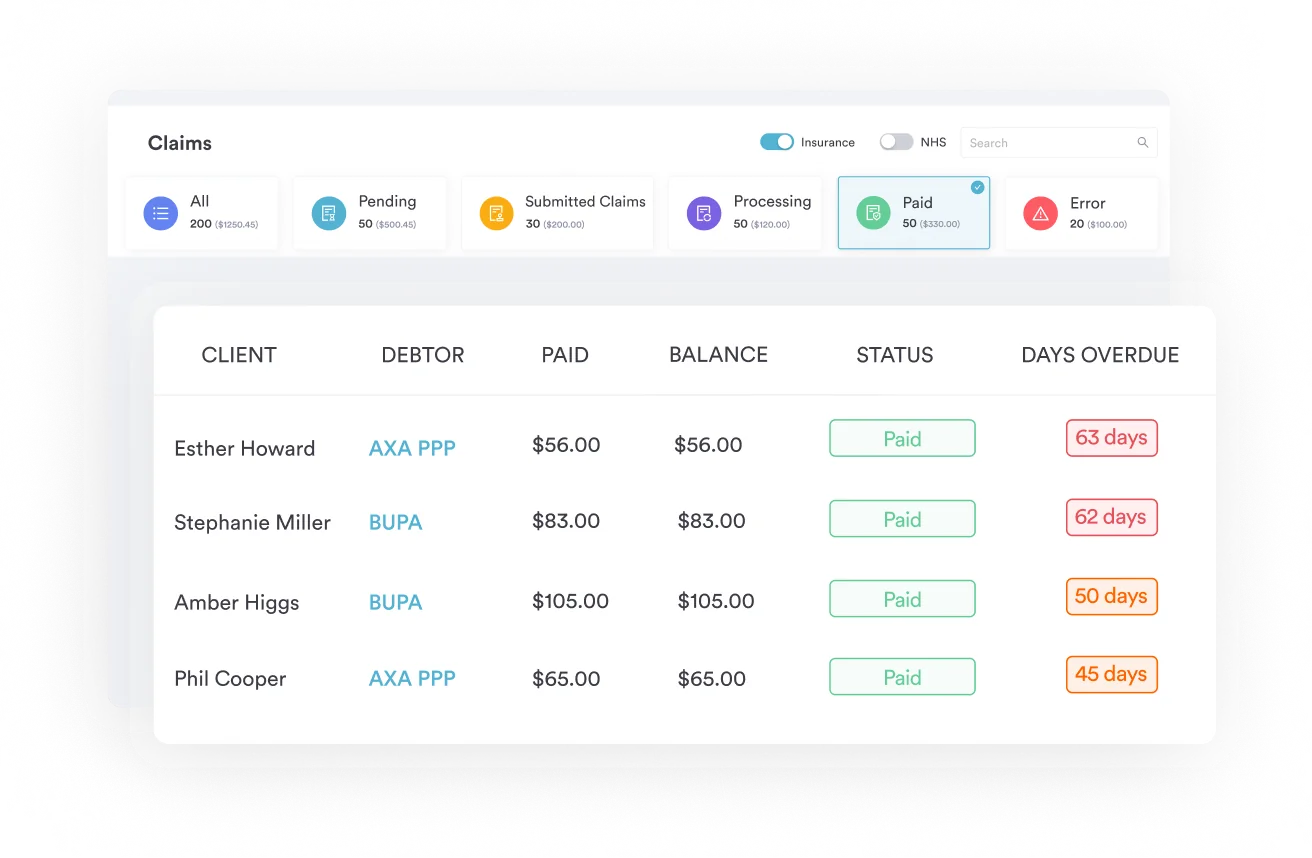
Practices billing multiple insurers regularly benefit most from claims management software that stores insurer-specific billing rules, pre-authorisation references, and claim status in one place. Manual tracking across spreadsheets is a common source of submission errors, particularly for multi-clinician practices.
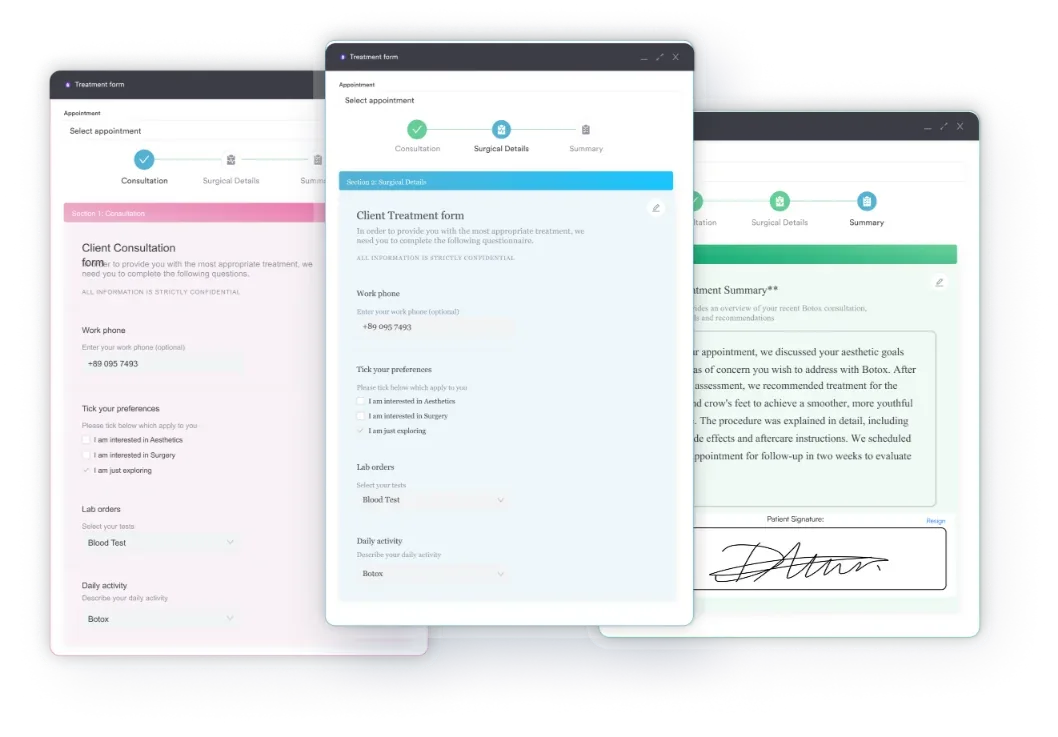
Using digital consent forms that capture the patient’s insurer membership number and authorisation reference at the point of booking removes one of the most common causes of invoice rejection: missing or incorrect patient details on the claim.

Pabau helps UK private healthcare practices manage CCSD code submissions, insurer claims, and patient records in one place. Reduce manual errors and get paid faster.

The four largest UK private medical insurers all use the CCSD schedule as their standard procedure coding system. This means CCSD code L0610, when verified as active and correctly applied, is recognised for billing purposes by each of them. However, insurer-specific rules around pre-authorisation, fee schedules, and documentation requirements differ.
Bupa is the largest UK private medical insurer. Practitioners can verify CCSD codes and associated fees via the Bupa code search portal. Bupa publishes its own recognised fee for each CCSD code, and practitioners should check whether their fee falls within Bupa’s schedule before assuming full reimbursement.
For a broader overview of CCSD codes recognised by Bupa.
AXA Health maintains its own procedure code portal at AXA Health specialist procedure codes. Practitioners should confirm their recognition status with AXA before submitting a claim, as only recognised specialists can bill directly.
Aviva publishes its fee schedule online. Practitioners can check the Aviva fee schedule to see the reimbursement rate associated with the relevant CCSD code and confirm submission requirements.
Vitality Health provides a Vitality fee finder tool where practitioners can look up CCSD codes and the associated fee. Pre-authorisation is required for most cardiac and cardiothoracic procedures under Vitality policies.
A few important caveats apply to all four insurers. Reimbursement rates for individual CCSD codes vary and change annually. Coverage for a specific procedure under a patient’s policy depends on their individual plan and any applicable exclusions.
Never advise a patient that a procedure will be covered: that determination rests with the insurer, based on the patient’s policy and the pre-authorisation outcome. For Bupa fee schedule details, Pabau maintains a reference guide for commonly billed codes.
Three routes lead to the CCSD code L0610 lookup: the official CCSD schedule website, your practice management system, and individual insurer portals. Each has practical advantages depending on what you need.
The authoritative source is ccsd.org.uk. The schedule is browsable by chapter (letter prefix) and searchable by keyword or code number. Search the L-range (cardiothoracic and vascular procedures) for L0610 to confirm its current description, active status, and any associated notes. This is the only source that guarantees you are working from the current version of the schedule.
Practice management software that includes a CCSD code library lets practitioners search for and apply codes directly within the billing workflow, without switching between tabs or consulting a separate document. When the code library is updated to reflect the current CCSD schedule, this method combines speed with accuracy.
The risk is using software whose code database has not been updated since the last annual CCSD revision. Confirm your software provider’s update cycle before relying on the in-system code list.
Pabau supports features that save time, including structured billing workflows that reduce the manual overhead of CCSD code lookups and claim generation. For practices billing multiple insurers regularly.
Bupa, AXA Health, Aviva, and Vitality each provide code search tools within their practitioner portals. These are useful for checking insurer-specific fee rates alongside the code verification.
However, insurer portals show only codes that the insurer recognises and reimburses: they are not a complete CCSD schedule and should not be used as the primary verification source for code existence or active status.
If you believe a procedure you are performing does not have an existing CCSD code, or that L0610 does not accurately describe the procedure in question, a code request can be submitted to the CCSD group. This process typically involves submitting a clinical description and supporting documentation for the CCSD committee to review.
New codes are assessed and, if approved, added to the next annual schedule update. Details of the request process are available on the official CCSD website.
Manual CCSD billing across multiple insurers is time-consuming and error-prone. For a practice billing Bupa, AXA Health, Aviva, and Vitality simultaneously, each with different pre-authorisation requirements, fee schedules, and submission portals, the administrative overhead adds up quickly. This is where private practice management software earns its place in the workflow.
Pabau’s practice management platform is built for UK private healthcare providers. The platform’s billing features address several of the friction points in the CCSD workflow:
For practices at the stage of evaluating private GP referral pathways and insurer management, Pabau offers a structured demo that walks through the CCSD billing workflow end to end. The platform also integrates with Healthcode, the primary UK private healthcare electronic claims platform.
Run a billing audit every quarter: pull all claims submitted in the period and check which were queried or rejected. Common CCSD rejection patterns include missing recognition numbers, expired pre-authorisations, and code description mismatches. Catching these patterns early prevents the same errors repeating across dozens of claims.
CCSD code L0610, “Formation of atrio-pulmonary connection,” sits within the L-range (cardiothoracic and vascular procedures) of the UK private healthcare billing schedule. Getting it right means confirming its active status before each submission, securing pre-authorisation from the patient’s insurer, and submitting through the correct portal with complete clinician and patient details. Payment posting from a remittance file is faster than manual entry and keeps the adjustment reasons attached.
Pabau’s claims management software helps UK private practices structure exactly this kind of billing workflow, reducing the manual overhead of multi-insurer CCSD submissions and cutting the claim rejection rate that costs practices time and revenue. To see how Pabau handles CCSD billing end to end, book a demo with the team.

Billing photodynamic therapy drugs? HCPCS Code J7308 covers billing aminolevulinic acid HCl (Levulan Kerastick) for photodynamic therapy in dermatology practices.
Billing a dexamethasone intravitreal implant? HCPCS Code J7312 covers the unit calculation and wastage modifier that most often cause Ozurdex claims to be denied.
Billing a different kind of CCSD procedure? CCSD code 0223O covers the insulin level test and walks through the pathology side of CCSD billing and Healthcode submission.
CCSD code L0610 is the code for “Formation of atrio-pulmonary connection,” a cardiothoracic and vascular procedure within the L-range of the UK private healthcare billing schedule, maintained by the Clinical Coding and Schedule Development group and used to bill cardiac/cardiothoracic procedures to UK private medical insurers.
Secure pre-authorisation, confirm the code is active at ccsd.org.uk, then submit an invoice with the code, clinician recognition number, and authorisation reference via the insurer’s portal or Healthcode.
Bupa, AXA Health, Aviva, and Vitality all use the CCSD schedule as their standard billing system. Individual coverage depends on the patient’s policy, so pre-authorisation is required before treatment.
Search the L-range (cardiothoracic and vascular procedures) at ccsd.org.uk. It can also be found via your practice management software’s code library or insurer portals such as codes.bupa.co.uk.
L0610 is the code for “Formation of atrio-pulmonary connection.” The “L” prefix places it in the L-range (cardiothoracic and vascular procedures) of the CCSD schedule; the four digits (0610) identify the specific procedure within that range.
They are alphanumeric codes from the CCSD schedule used by private practitioners to identify procedures and submit insurer claims. Unlike NHS OPCS-4 codes, they are maintained by the CCSD group and updated each April.
Yes. Submit a clinical description and supporting documentation to the CCSD group; approved codes are added at the next annual schedule update. Full details are at ccsd.org.uk.



