



CCSD code G5100: Bypass of duodenum billing guide
CCSD code G5100 bills a bypass that leaves the duodenum in place CCSD code G5100...

Last Updated: Oct 16, 2026

CPT code 24410 is a multiple osteotomy of the humeral shaft with realignment over an intramedullary rod, the Sofield type procedure.
Both elements are mandatory. A single cut, or a realignment without a rod, belongs to a different humerus code.
The code totals 29.25 RVUs in 2026, which is roughly $977 at the standard conversion factor of $33.4009.
24410 is facility-only and carries a 90-day global period. CMS sets no non-facility rate, so there is no higher office payment.
Osteogenesis imperfecta is the usual indication. Pair the claim with a Q78 diagnosis and supply laterality with an LT or RT modifier.
Practice management software like Pabau tracks the 90-day window against the appointment book, so routine post-op visits are never billed separately by mistake.
CPT code 24410 is the American Medical Association (AMA) descriptor for “Osteotomy, multiple, with realignment on intramedullary rod, humeral shaft (eg, Sofield type procedure).” It sits in the musculoskeletal section of the CPT manual, in the 24000 series for the humerus and elbow.
Two elements in that descriptor decide whether the code is billable. The surgeon has to make more than one cut in the humeral shaft. Those segments then have to be realigned over an intramedullary rod that runs through them.
The technique is named for Harold Sofield, who described segmental division and intramedullary rodding for children with osteogenesis imperfecta. Surgeons still call it the shish-kebab procedure, because the rod threads the cut segments like beads on a skewer.
The CPT subsection heading above this code names both the humerus and the elbow, so the word elbow is easy to borrow. That is where the miscoding starts. The descriptor itself says humeral shaft, and only humeral shaft. An elbow procedure does not belong on a 24410 claim.
Four other codes in the 24000 series sit close enough to 24410 to be confused with it. The dividing line is always the same: how many cuts were made, whether a rod holds them, and whether a fracture was being treated.
The 24516 mix-up is the expensive one. Both operations put a rod down the humeral shaft, so the indication is what separates them. A fracture repaired over a nail is 24516, even when the bone was already deformed. Multiple planned osteotomies realigned over a rod are 24410.
Payers deny 24410 when the note describes a single osteotomy, or no rod at all. Both elements have to appear in the record. CPT code 25492 raises the same documentation questions in the forearm.
Sofield-type rodding is a deformity operation for bone too weak or too bent to hold a straight line on its own. Osteogenesis imperfecta is the usual reason. Other skeletal dysplasias account for most of the remainder.
The patient’s age decides which payer you deal with. Most Sofield cases are children, so Medicaid and commercial plans adjudicate these claims far more often than Medicare does. The Medicare schedule still sets the benchmark those commercial contracts are priced against.
Relative value units (RVUs) are the building blocks of Medicare payment. For CPT code 24410, the CMS Physician Fee Schedule assigns three components. Multiply their total by the annual conversion factor and your local geographic practice cost index (GPCI) to get the payment.
Those values come from the 2026 National Physician Fee Schedule Relative Value File, January release. The non-facility indicator for 24410 reads NA, which means CMS has never established an office rate for this procedure. Download the source file from the CMS relative value files page and check it yourself.
Medicare pays a single rate for CPT code 24410, whatever the place of service. The code is facility-only. CMS did not develop non-facility practice expense RVUs for it, because a multiple humeral osteotomy is not performed in an office.
The facility bills its own payment separately, under the outpatient prospective payment system or the ASC schedule. Your claim covers the professional work alone. A POS 11 office code on a 24410 claim does not unlock a higher rate, and it usually stalls the claim instead.
Both 2026 figures start from the same 29.25 total RVUs. CMS finalized two conversion factors this year. Qualifying alternative payment model participants are paid at $33.5675, which puts 24410 at about $981.85. Everyone else is paid at $33.4009, or about $976.98.
GPCI adjustments then move that figure by region. High-cost localities such as Manhattan and San Francisco sit above the national average, while rural localities sit below it. Check the CMS lookup for your own locality before you quote a number to anyone.
Commercial rates for CPT code 24410 are contractual and confidential. Most private plans set their schedules as a percentage of Medicare, commonly between 110% and 160%. Ask each payer directly rather than assuming your contract follows that pattern.
Check the place of service code before a 24410 claim goes out. The code is facility-only, so POS 11 is almost always an error rather than a route to a higher payment. A mismatch between the claim and the operative record triggers a review and delays a four-figure payment.
Modifier choice on CPT code 24410 changes both the payment and the audit exposure. CMS publishes a payment policy indicator for each modifier family, and 24410 carries a specific value for every one of them. That removes most of the guesswork.
Modifier 51 is worth settling once and for all. The multiple procedure indicator for 24410 is 2, so the standard reduction applies and the code is not on the exempt list. Reported as the lower-valued procedure in a session, it drops to 50% of the fee schedule amount.
Team surgery is the one route CMS closes off. The team surgery indicator for 24410 is 0, so modifier 66 is not payable here. Bilateral rodding is usually staged across two operations anyway, which points to modifier 58 rather than modifier 50.
Laterality rules still differ between Medicare and commercial plans, so check each payer’s policy. Solid HIPAA-compliant record keeping at the point of care makes any modifier easy to defend months later.
Every CPT code 24410 claim needs an ICD-10-CM diagnosis that establishes medical necessity. Payers check it against their local coverage determination before they pay. Because 24410 is a dysplasia operation, the Q78 family carries most of these claims.
Laterality edits are where these claims stall. No Q78 code carries a side, so the diagnosis alone cannot tell a payer which arm was operated on. Supply the side with an LT or RT modifier, and add M21.821 or M21.822 as a secondary code where the payer expects one.
A shaft that never unites after repeated fractures needs a code of its own. S42.302K describes a left humeral shaft fracture at a subsequent encounter with nonunion. It records the history behind the deformity rather than replacing the Q78 diagnosis.
ICD-10-CM updates every October 1. The codes above come from the FY2026 CMS code descriptions file and should be re-checked each year against the CDC/NCHS ICD-10-CM web tool. Confirm the pairing against payer policy with the AAPC CPT-to-ICD-10 crosswalk before you submit.
CPT code 24410 is major surgery with serious audit exposure. CMS and commercial payers expect the record to support the code on its own. A thin operative note is the usual reason a post-payment review ends in a recoupment demand.
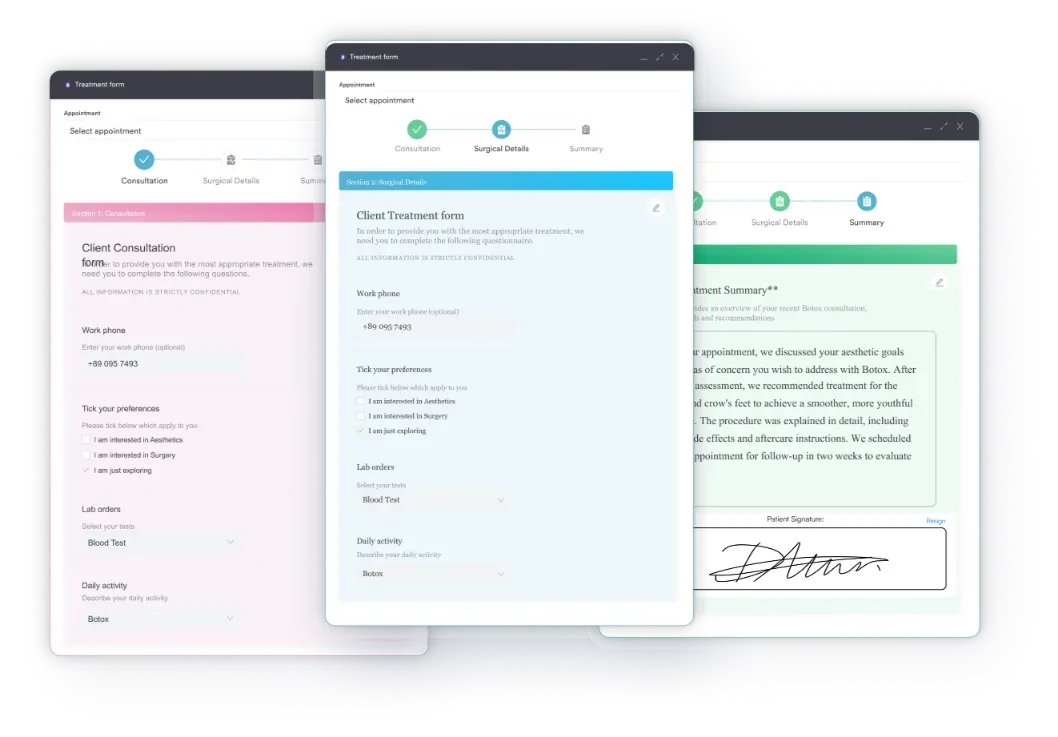
Strong structured clinical documentation at the point of care removes the need for later chart amendments, which auditors read as a warning sign. Practices that standardize pre-operative paperwork with digital intake forms catch a missing element before the case reaches the OR. Catching it there beats catching it when the denial lands in the billing queue.
CPT code 24410 carries a 90-day global surgical period, the standard window for major musculoskeletal surgery. Routine post-operative care is bundled into the surgical fee for those 90 days. A separate claim for a standard follow-up visit will be denied.
The global clock starts on the day of the procedure, with one pre-operative day included. Rehabilitation sits outside the surgeon’s package, so a physical therapy practice bills its own visits under its own NPI. Split care has its own modifiers. Surgical care only is 54, post-operative management only is 55, and pre-operative management only is 56.
CMS publishes those percentages rather than leaving them to negotiation. It assigns 24410 a 10% pre-operative share, 69% intra-operative and 21% post-operative. A surgeon who rods the humerus and hands follow-up back to a referring practice bills modifier 54 and collects 79% of the allowed amount.
Tracking global periods by hand across a surgical list is error-prone. A platform that flags an active global period against incoming appointment types stops the accidental separate claim. The same 90-day window governs other major musculoskeletal work, so a practice also billing CPT code 22600 is running several clocks at once.
Billing a code like 24410 usually breaks at the workflow level. Claims go out without the authorization number attached. The 90-day window is missed because scheduling and billing never talk to each other. Modifier decisions get made without the operative note open.
Pabau is practice management software that keeps those three systems in one place. Its claims management software links the clinical record, the appointment book and the billing workflow.
Log and code the procedure once. From there the platform surfaces the global period against future appointments, flags a missing authorization reference and follows the claim through adjudication. Orthopedic groups and sports medicine practices get the same tracking on every surgical code they bill.
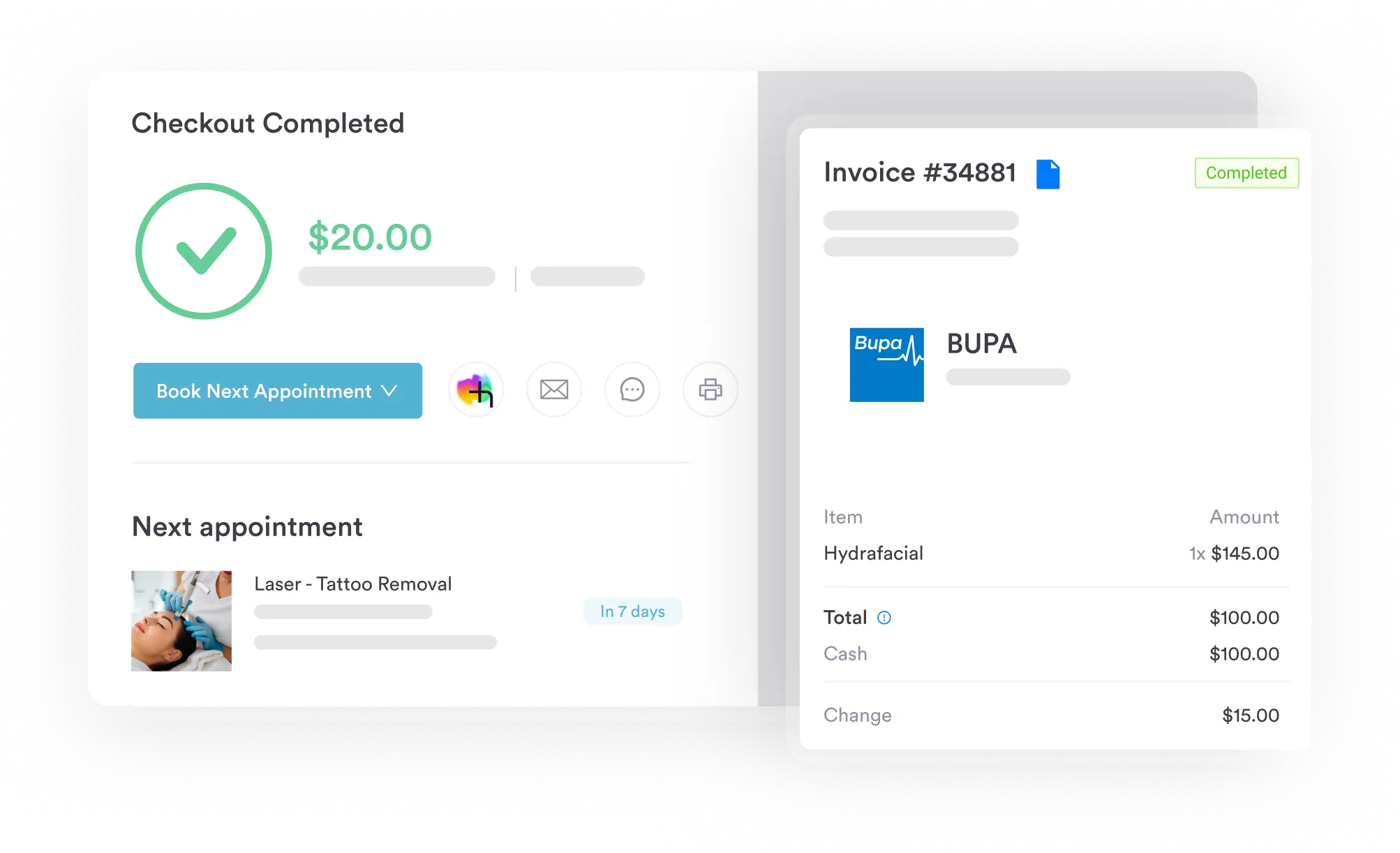
Practices moving to a paperless clinical workflow hold operative notes, consent forms and imaging reports in one record. That removes the retrieval delay that stretches the claims cycle whenever a payer asks for supporting documentation. The practice management software layer tying scheduling, documentation and billing together is where most revenue cycle gains show up. An eligibility check at booking and again at arrival catches mid-month plan changes. Downcoding is as common as upcoding, and both trace back to how the decision-making level was recorded.

Pabau links scheduling, clinical documentation and claims management, so orthopedic practices bill CPT code 24410 correctly the first time. See how global period tracking, prior authorization and denial management work in one place.

CPT code 24410 pays roughly $977 nationally and asks for two specific things in return. The note has to show multiple osteotomies of the humeral shaft, and it has to show the realignment held over an intramedullary rod. Miss either element and the case belongs to a different code.
The rest is workflow. Pair the claim with a Q78 diagnosis, carry the laterality on the modifier, treat the code as facility-only, and hold the 90-day global period. To see how Pabau handles surgical claim submission, global period tracking and documentation, book a demo with the team.

Coding another upper-limb procedure? CPT code 23650 covers closed treatment of a shoulder dislocation, including the anesthesia and modifier choices.
Working through a wrist case next? CPT code 25118 walks through synovectomy of the extensor tendon sheath and the documentation payers ask for.
Coding the forearm equivalent? CPT code 25492 covers prophylactic treatment of the radius and ulna, the analogue to a humeral rodding.
Billing a long-bone fracture at a later encounter? S72.455S covers a nondisplaced supracondylar femur fracture coded as a sequela.
Billing an iron regulatory gene panel? Iron regulatory gene panel billing guide explains how CCSD code 0043G bills the iron regulatory gene panel across major UK insurers.
CPT code 24410 reports multiple osteotomies of the humeral shaft realigned over an intramedullary rod, known as a Sofield type procedure. The surgeon divides a bowed or fragile shaft into segments and threads a rod through them to hold the correction. Osteogenesis imperfecta is the most common indication.
The 2026 national Medicare payment for CPT code 24410 is about $976.98. That figure is 29.25 total RVUs multiplied by the $33.4009 conversion factor. Qualifying alternative payment model participants are paid at $33.5675, or about $981.85. GPCI adjustments then move both figures by locality.
Both codes put a rod down the humeral shaft, but the indication differs. CPT 24516 treats a humeral shaft fracture with an intramedullary implant. CPT 24410 corrects a deformity through multiple planned osteotomies realigned over a rod. The operative note has to state which one the surgery was for.
CPT code 24410 is facility-only. CMS did not develop non-facility practice expense RVUs for it, so the fee schedule carries NA in the non-facility indicator field. There is no separate, higher office rate, and a POS 11 claim will not create one.
The 2026 values are 14.73 work RVUs, 11.39 facility practice expense RVUs and 3.13 malpractice RVUs. That gives a total of 29.25 RVUs. CMS publishes no non-facility practice expense RVU for this code. Multiply the total by the conversion factor and your GPCI to estimate payment.
The payment ones are 50 for a bilateral case, 51 for multiple procedures and 59 for a distinct service. Laterality takes LT or RT. Staffing takes 80 for an assistant surgeon or 62 for co-surgeons. Split care uses 54, 55 and 56, and modifier 66 for team surgery is not payable on this code.
CPT code 24410 carries a 90-day global surgical period. Routine post-operative visits are bundled into the surgical fee, as is office management of a complication. A planned staged procedure takes modifier 58, and an unplanned return to the operating room takes modifier 78.
The Q78 skeletal dysplasia family carries most 24410 claims. Q78.0 for osteogenesis imperfecta leads, with Q78.1, Q78.2, Q78.8 and Q78.9 also in use, and Q74.0 for other congenital upper limb malformation. No Q78 code carries a side, so laterality has to come from the LT or RT modifier.
The operative note must say how many osteotomies were made, where they were made, and that the segments were realigned over an intramedullary rod. Record the rod type and size as well. Add pre-operative imaging of the deformity, a medical necessity statement and the prior authorization reference.



