HCPCS code E0198: Water pressure pad billing guide
HCPCS code E0198 is a water pad for a standard mattress HCPCS code E0198 is the ...

Last Updated: Oct 13, 2026

CPT code 23146 covers excision or curettage of a bone cyst or benign tumor of the clavicle or scapula, with allograft
A lesion in the proximal humerus belongs to 23150, 23155, or 23156, so confirm the bone in the operative note before assigning 23146
The allograft brings no donor site to document, so the record carries the tissue bank identifier for the graft instead
Each RVU component is adjusted by its own geographic index before the three are summed and priced
Practice management software like Pabau helps orthopedic practices capture the right code, apply RT or LT, and hold the documentation each claim needs
CPT code 23146 describes excision or curettage of a bone cyst or benign tumor of the clavicle or scapula, with allograft. The American Medical Association (AMA) maintains the CPT code set. It places 23146 in the Excision Procedures on the Shoulder subsection of the Musculoskeletal System chapter.
Two details in that descriptor decide whether the claim survives review. The anatomy is the clavicle or the scapula, not the humerus. The graft is allograft, meaning bone from a tissue bank rather than bone harvested from the patient. Both facts have to appear in the operative report.
Most denials on these claims trace back to two mistakes. Coders pick the wrong bone inside the 23140 to 23156 range, or the operative note never names the graft type. CPT 23146 sits where both mistakes happen.
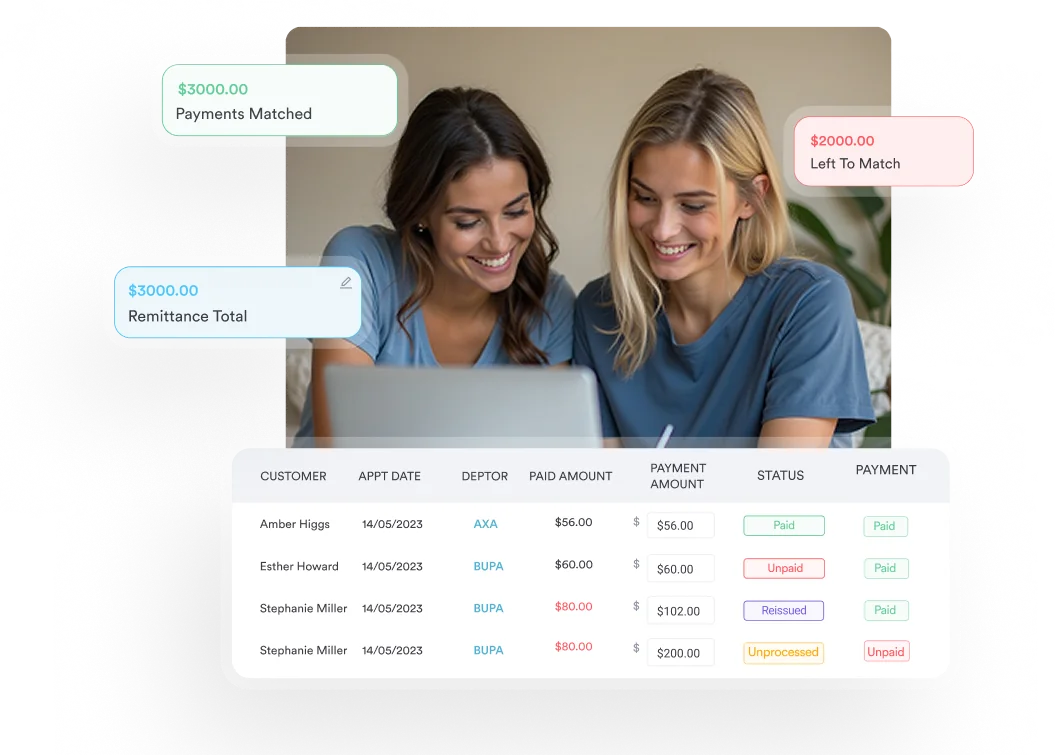
Code selection errors inside this range are the most common source of shoulder excision rejections. The range holds two separate families of three codes. One family covers the clavicle or scapula, the other covers the proximal humerus, and each runs from no graft to autograft to allograft.
Read the grid in that order and the choice stops being ambiguous. Name the bone first, because that picks the family. Then read the graft sentence in the operative note, because that picks the code inside the family. A note that says the shoulder was grafted answers neither question.
A resection sits outside that grid altogether. If the surgeon removes a segment of the clavicle instead of curetting a lesion, the claim belongs to CPT code 23120.
The graft question decides other musculoskeletal codes the same way. CPT code 22318 splits on whether the surgeon grafted, so the operative note carries the same weight there.
CPT code 23146 fits a benign bony lesion of the clavicle or scapula that needs surgical removal. The resulting defect is packed with donor bone. The lesions that most often lead here include:
The reason the surgeon chose allograft over autograft also belongs in the note, because it is what separates 23146 from 23145. Donor bone avoids a second surgical site and the pain that comes with harvesting, and it shortens operative time.
Surgeons also reach for it when the defect is large or the patient is a poor candidate for a harvest. For sports medicine practices, capturing that rationale at the point of care saves rework later. A form that asks for the bone, the graft type, and the graft identifier closes the note before the surgeon signs it.
Audit three lines of every shoulder excision note before the claim leaves your system. Which bone was operated on, the clavicle or the scapula. What kind of graft filled the defect, allograft or autograft. Which tissue bank supplied the graft, with its tracking identifier. If the note names the proximal humerus, the code is 23156 rather than 23146.
Every CPT 23146 claim needs an ICD-10-CM diagnosis code that establishes medical necessity and points at the same bone as the procedure. In the M85 series, the site value that covers the clavicle and the scapula is the shoulder. The humerus sits in its own subcategories, which is where the wrong-anatomy denials come from.
Both pathological fracture entries are non-billable without a 7th character. Pick it from A, D, G, K, P, or S, depending on the encounter and the healing status. A traumatic clavicle fracture is not an M84 code at all, and takes something like ICD-10 code S42.012P instead.
Two traps sit in that list. The first is the split inside D16, where a scapular tumor takes D16.01 or D16.02 while a clavicular tumor takes D16.7. The second follows from it. D16.7 has no right or left value, so on a clavicle case the diagnosis code cannot corroborate your laterality modifier.
That makes the operative report the only place the side is established on a clavicle case. Spell out right or left clavicle in the note, and keep it consistent with the RT or LT modifier on the claim line.
Everywhere else, choose the laterality-specific code over the unspecified variant. Unspecified codes are increasingly flagged in automated edit reviews. The CMS ICD-10 codes resource publishes the annual update files and the official coding guidelines behind these choices.
CPT code 23146 is a unilateral surgical procedure, so payers expect a laterality modifier on every claim. Leaving it off is one of the fastest paths to a technical denial. Three other modifiers cover complexity, distinct services, and multiple procedures in the same session.
Modifier 22 needs the most care. Payers treat it as a flag for manual review and usually ask for records before releasing extra payment. The note has to say why the case ran beyond a typical one, and phrases such as complex case are routinely rejected.
Laterality works the same way on the other unilateral shoulder procedures, including CPT code 23472. The NCCI policy manual governs which modifier combinations hold up when two procedures share a session.
RVUs drive Medicare payment through one formula, applied component by component. Each of the three components carries its own geographic practice cost index for the provider’s locality. The three adjusted components are then added together, and that sum is multiplied by the annual conversion factor.
No single geographic factor is applied to the Total RVU. Coders who shortcut the math that way land on a number the payer will not match.
RVU values change every year with the Medicare Physician Fee Schedule. Check any figure quoted in billing software or a payer contract against the current-year CMS Physician Fee Schedule before you rely on it.
Estimating reimbursement from last year’s values is a quiet source of revenue leakage in orthopedic practices. Integrated practice management software can flag when your fee schedule data is due for an update.
Medicare payment for CPT code 23146 turns on two variables no coder controls. One is the set of geographic practice cost indices for the provider’s locality. The other is the annual conversion factor set by CMS.
What the billing team does control is whether the claim arrives with the right code and the right modifiers. The records that support both have to be in the chart before submission.
The 90-day global period causes more billing errors on this code than the payment math does. Routine post-operative care inside that window is already paid for by the 23146 line.
A separate E/M visit inside that window needs modifier 24 for an unrelated condition, or 79 for an unrelated procedure. Without one, expect an automatic denial. Other major shoulder procedures carry the same 90-day window, including CPT code 23670.
Practices that already run compliance software can have the system compare each follow-up date against the global period end date. Third-party payment figures often lag the annual update, so pull the current year from the CMS lookup instead.
Check the global period before you schedule any follow-up for a patient who had CPT 23146. A separate E/M visit inside the 90-day window needs modifier 24 or 79, or it will be denied. Show the global period end date next to the surgical appointment so front-desk staff can warn the billing team before the visit happens.
National Correct Coding Initiative (NCCI) edits set out which code pairs cannot go on the same claim without a modifier. For CPT code 23146, the edits that matter most concern the graft itself, plus the imaging and pathology work around the excision.
The NCCI Policy Manual is the reference that settles which edits apply and which modifier exceptions exist. Practices with high orthopedic surgical volume gain more from catching a likely edit conflict before submission than from working denials afterwards.
The AAPC Codify CPT lookup shows bundling edit data next to the descriptor. A coder can check edit status while coding instead of relying on memory. Checking edits before submission moves the work upstream, where it is cheaper.
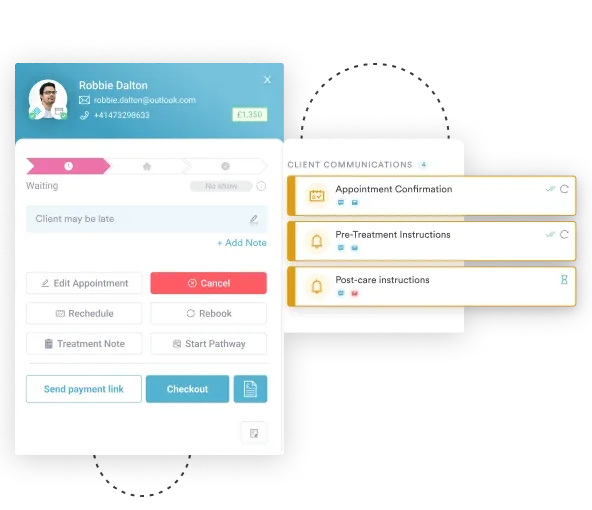
The operative report is the evidence behind a 23146 claim. It is the first thing a payer opens in a medical necessity review or a post-payment audit. A report that describes shoulder surgery without naming the bone and the graft will not hold up.
Required documentation elements include:
That last pair of items is where autograft habits cause trouble. Templates written around 23145 ask for a donor site. A surgeon who fills that field in on an allograft case leaves a note that contradicts the code.
Pabau’s structured clinical records let you template the graft section, so the form asks for a tissue bank identifier once allograft is selected. Tissue-handling documentation follows the same discipline in regenerative medicine practices, where donor material is routine. A complete record on the first pass costs less than chasing an addendum after a denial. Practices billing in Australia check the current MBS descriptor before submitting, because descriptors are revised on a schedule. Choosing a level means weighing problems addressed, data reviewed and risk, which is what MDM documentation covers.
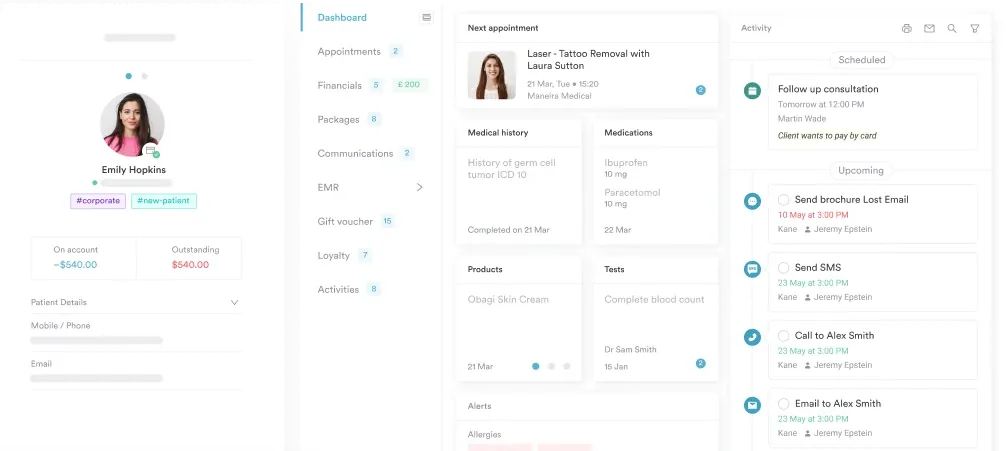
In most orthopedic practices, the facts that decide this code live in three different places. The bone and the graft sit in a dictated note. The tissue identifier is on a packing slip or in the operating room log. The 23140 to 23156 grid is in someone’s head.
Coders reconcile all of it after the fact, and the claim waits. Practice management software like Pabau closes that distance by keeping the record and the claim in one system.
Digital forms make the bone, the side, the graft type, and the graft identifier required fields. The note is complete before the surgeon signs it. Claims management then holds any line that is missing an RT or LT modifier.
Automated workflows track each patient’s 90-day global period against their follow-up dates. The outcome is fewer addendum requests, fewer denials to rework, and payment that lands on the first submission. Your coders spend their time on the cases that need judgment rather than on chasing a graft type through a dictation queue.

Pabau helps orthopedic practices capture the correct CPT code and apply modifiers accurately. You keep the documentation trail that supports complex surgical claims like CPT 23146.

Two questions decide every 23146 claim. Which bone, and which graft. A coder who cannot answer both from the operative note should not send the claim yet. The answer is cheaper to get before submission than after a denial.
Build both questions into the operative template rather than into a coder’s checklist. A surgeon answers them in seconds while the note is open. A coder chasing them afterwards spends days, and the claim ages while they do.
The trade-off worth remembering is that allograft simplifies the surgery and complicates the record. There is no donor site to describe, but there is a tissue bank identifier to capture. Book a demo to see how Pabau keeps that identifier and the claim in the same system.

Sourcing graft material on a spine case? CPT code 20939 explains why bone marrow aspiration is billable there and nowhere else.
Coding a graft outside the shoulder? CPT code 21267 covers orbital repositioning, where the graft sits inside the primary code.
Billing a bone excision elsewhere in the skeleton? CPT code 22102 shows how partial vertebral excision is documented and priced.
Working through lumbar spine surgical claims? CPT code 22224 sets out the modifiers and documentation an osteotomy claim needs.
Coding a bigger shoulder procedure? CPT code 23472 walks through total shoulder arthroplasty billing and its global period.
CPT code 23146 describes excision or curettage of a bone cyst or benign tumor of the clavicle or scapula, with allograft. The defect left by the excision is filled with donor bone from a tissue bank rather than bone harvested from the patient. The AMA places the code in the Excision Procedures on the Shoulder subsection of the Musculoskeletal System chapter.
Both codes cover the same bones, the clavicle and the scapula, and the same excision or curettage work. The difference is the graft. CPT 23145 uses autograft, meaning bone harvested from the patient, and that harvest is included in the code. CPT 23146 uses allograft, meaning donor bone from a tissue bank.
No. The proximal humerus has its own family of three codes. CPT 23150 covers excision or curettage with no graft, 23155 adds autograft, and 23156 adds allograft. Reporting 23146 for a humerus lesion is a wrong-anatomy error, and 23156 is the correct allograft equivalent.
No. CPT 20930 and 20931 are the allograft codes, and both are restricted to spine surgery, so neither applies to the clavicle or scapula. The surgeon’s payment for 23146 covers placing the graft. The cost of the tissue itself is carried on the facility claim.
RT or LT is required, because the procedure is unilateral. Modifier 22 applies when documented work substantially exceeds a typical case. Modifier 59 covers a genuinely distinct service at another site in the same session. Modifier 51 applies when 23146 is performed alongside other procedures.
Common pairings are M85.411 and M85.412 for solitary bone cyst of the right or left shoulder, and M85.511 and M85.512 for aneurysmal bone cyst. Benign tumors take D16.01 or D16.02 at the scapula, and D16.7 at the clavicle. D16.7 carries no laterality, so the operative report has to establish the side.
Each of the three RVU components is adjusted by its own geographic practice cost index for the provider’s locality. The adjusted work, practice expense, and malpractice values are then added together. That sum is multiplied by the annual conversion factor. No single geographic factor is applied to the Total RVU.
CPT 23146 carries a 90-day global period, which makes it a major surgical procedure under Medicare. Routine post-operative care in that window is already paid for by the surgical line. A separate E/M visit inside the window needs modifier 24 for an unrelated condition, or 79 for an unrelated procedure.
The operative report has to name the bone and the side, describe the lesion, and describe how it was removed. It also has to identify the allograft, including the supplying tissue bank and the graft’s tracking identifier. A short line on why donor bone was used instead of a harvest separates 23146 from 23145.