



HCPCS code E0198: Water pressure pad billing guide
HCPCS code E0198 is a water pad for a standard mattress HCPCS code E0198 is the ...

Last Updated: Oct 13, 2026

CPT code 21199 describes a segmental mandibular osteotomy with genioglossus advancement, used mainly to treat obstructive sleep apnea (OSA).
G47.33 is the primary ICD-10 pairing, and payers want polysomnography results plus documented CPAP failure before they approve the claim.
The 90-day global period bundles most post-operative care, so a separately identifiable service inside that window needs modifier -24 or -79.
Practice management software like Pabau tracks authorization status, attaches operative documentation, and helps surgical practices cut CPT 21199 denials.
CPT code 21199 is defined by the American Medical Association (AMA) as: Osteotomy, mandible, segmental; with genioglossus advancement. It sits in the Musculoskeletal System section of the CPT codebook, under the Head subsection.
The surgery repositions a segment of the mandible to pull the genioglossus muscle forward. That enlarges the upper airway and reduces soft-tissue collapse during sleep.
One line in the operative note decides the code. If it does not name the genioglossus advancement, the claim belongs to CPT 21198 instead. Payers also treat this surgery as a late-stage option. The sleep study and the CPAP compliance record carry as much weight as the operative report.
The genioglossus is the primary tongue muscle. In patients with obstructive sleep apnea, it collapses against the posterior pharyngeal wall during sleep and blocks airflow. Genioglossus advancement (GA) moves the muscle’s attachment point on the mandible forward, so the tongue base stays clear of the airway. Auditors read the note before the code, so the documentation level has to support what was submitted.
GA does not reposition the entire jaw. That larger movement belongs to a different orthognathic code.
An oral and maxillofacial surgeon (OMFS) performs the procedure under general anesthesia. Some centers run it jointly with an ENT specialist, and it is often combined with other OSA surgeries. That combination decides how the co-surgery modifiers below apply.
The usual companions are hyoid myotomy.
Practice management software like Pabau keeps pre-authorization tracking, operative note attachment.
Selecting the correct ICD-10 diagnosis code is critical for CPT code 21199 claims. Most payers deny the claim outright if the paired diagnosis misses their medical necessity definition for surgical OSA treatment.
When a jaw deformity contributes to the airway obstruction, co-coding an M26.xx code strengthens the medical necessity narrative.
Confirm the pairing your payer accepts before submission. Commercial policies are often stricter than Medicare Local Coverage Determinations, and the two rarely change in the same year.
Modifier selection for CPT code 21199 turns on the surgical context. Who operated, and what else happened in the same session, decides the answer. Incorrect modifier use is one of the top denial triggers for this code.
Modifier -62 requires both surgeons to dictate separate operative notes describing their distinct roles. Payers ask for those notes at audit, and a single shared note invites a recoupment request.
Practices treating athletic injuries manage these procedures inside sports medicine software, from initial assessment to return-to-play.
Medicare reimbursement for CPT code 21199 runs on the Resource-Based Relative Value Scale (RBRVS). Total payment is the sum of the Work RVU, the Practice Expense RVU, and the Malpractice RVU. Each one is multiplied by a Geographic Practice Cost Index (GPCI) and the 2026 Conversion Factor.
Pull the current figures from the CMS fee schedule lookup before you submit. Rates are updated annually, and the Conversion Factor moves every January.
The values above are approximate and drawn from the current CMS file. Your locality’s GPCI adjustments set the final dollar amount, so check them before billing. Commercial payer rates for CPT code 21199 typically run 110-150% of Medicare, depending on the contract.
Pull your 2026 Medicare allowed amount for CPT 21199 from the CMS Physician Fee Schedule look-up tool, using your own MAC locality. National averages can sit 15-25% away from local rates. Billing the wrong one either leaves money on the table or triggers an overpayment audit.
Most commercial payers and Medicare Advantage plans cover genioglossus advancement for OSA only after conservative treatment has failed. A claim submitted without evidence of failed CPAP therapy will almost certainly deny on first submission.
Standard medical necessity criteria across major payers include:
Several items on that list carry codes of their own. A diagnostic sleep study bills as CPT code 95810.
The device itself bills as HCPCS code E0601, and its compliance download is what the payer actually reads.
Some plans also ask whether an oral appliance was tried before surgery. That device bills as HCPCS code E0486, and its trial record belongs in the same authorization packet.
Virtually all commercial payers require prior authorization for CPT code 21199. Medicare fee-for-service does not require it for most surgical procedures, but Medicare Advantage plans frequently do.
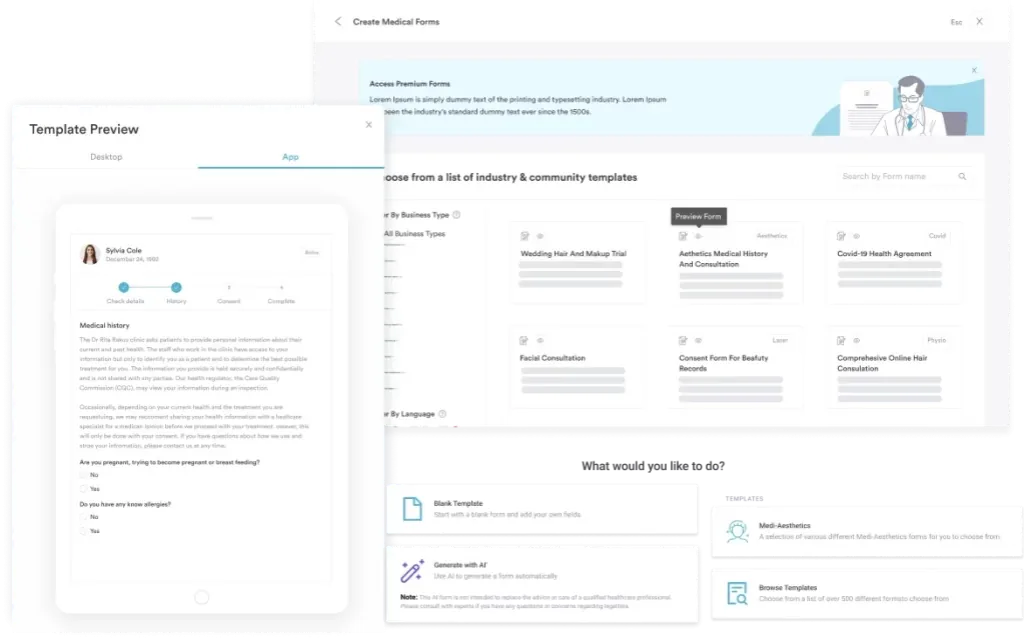
Tracking authorization status across several payers eats front-desk hours. Attaching the approval letter to the patient record through digital forms keeps the reference number where your biller will look for it.
Audit requests reach the same records that HIPAA compliance governs, so access logs and retention rules apply to every document in the packet.
Missing documentation is the second most common reason CPT 21199 claims deny. Payers reviewing surgical claims for OSA treatment expect a complete clinical picture, and the operative report alone will not carry it.
Gather these documents at scheduling, not at billing. A pre-submission checklist that your biller signs off prevents the most common clean-claim failures. Keep it beside the coding cheat sheet so the whole team works from one list.
CPT code 21199 is one of several codes in the mandibular osteotomy range. Choosing the wrong adjacent code is a common error, particularly between 21198 and 21199.
The one clinical distinction between 21198 and 21199 is the genioglossus advancement. If the operative report documents only a segmental mandibular osteotomy, bill CPT 21198. If it explicitly documents the GA component, the correct code is CPT 21199.
Using 21199 when only 21198 was performed is upcoding. Using 21198 when GA was performed is undercoding. It leaves money on the table and puts the note and the claim out of step at audit.
Two neighbors outside the osteotomy range turn up in the same operative sessions. Grafting bone to the mandible is CPT code 21215.
CPT code 21199 carries a 90-day global period under CMS policy. Routine post-operative care is bundled into the surgical payment for the 90 days after the procedure. Billing an E/M visit separately inside that window denies automatically unless a modifier is applied.
Routine follow-up appointments, wound checks, device adjustments, and post-op imaging tied to the advancement are all bundled. Do not bill them separately.
The global period starts on the day of surgery for a 90-day code. For major surgical procedures, the day before surgery sits inside the global package too.
High surgical volumes make those windows hard to police by hand.
Claims for CPT code 21199 deny more often than general surgical codes. OSA surgery draws medical necessity scrutiny, prior authorization requirements, and heavy documentation all at once. These are the most frequent denial triggers:
When a denial arrives, request the payer’s Explanation of Benefits (EOB) or remittance advice and read the denial code. Most first-submission denials for CPT 21199 are recoverable on appeal once the full medical record goes in.
Bring in a certified professional coder (CPC) before you appeal a complex orthognathic claim. The AAPC coding reference also carries billing guideline context for the musculoskeletal range that holds 21199.
Run a pre-submission checklist on every CPT 21199 claim. Confirm that the authorization reference number is on the claim and the polysomnography report is attached. Then check that the operative note names the genioglossus advancement, and that the diagnosis is G47.33 rather than G47.30. Five minutes here saves a 30-60 day denial cycle.
In most surgical practices this claim lives in three places at once. The sleep study arrives by fax from the referring physician, the authorization number sits in an email thread, and the operative note waits in transcription.
The claim then goes out when somebody remembers to chase all three. That is why so many 21199 denials are administrative rather than clinical.
Pabau keeps the whole set on one patient record. Intake forms collect the polysomnography report and the CPAP download before surgery day. The authorization reference attaches to the case, and the operative note lands in the same chart. Your biller submits from one screen.
The same record serves both ends of the referral. A plastic surgery practice and a weight management program record their work in the same format. So conservative therapy and surgery both sit in one history when a payer asks for it.

Pabau tracks prior authorization status, attaches operative documentation, and manages post-op billing through the 90-day global period. Surgical practices run all of it from one record instead of three systems.

CPT code 21199 fails more often than most surgical codes for one reason. It asks for a complete authorization package, a specific ICD-10 pairing, and an operative note that names the genioglossus advancement.
So treat the paperwork as part of scheduling rather than part of billing. Assemble the document set while the case is being booked, and by the time the claim goes out there is nothing left to chase.
Book a demo to see how Pabau keeps the authorization, the sleep study, and the operative note on one record for every 21199 case.

Need the code for enlarged lymph nodes? ICD-10 code R59.0 covers the code for cervical lymphadenopathy when the underlying cause isn’t yet identified.
Documenting an unclear developmental delay? ICD-10 code R62.50 covers unspecified developmental delay coding and the audit risk of coding too soon.
Coding a nonspecific symptom finding? ICD-10 code R68.89 covers the billable code for general symptoms that don’t fit a more precise diagnosis.
Coding another procedure in the maxillofacial range? CPT code 21255 walks through its ICD-10 pairings, modifiers, and documentation requirements.
Billing a facial fracture repair next? CPT code 21330 covers the medical necessity criteria and the denial triggers to watch for.
CPT code 21199 is the AMA procedure code for osteotomy, mandible, segmental, with genioglossus advancement. The surgeon repositions a segment of the mandible to advance the genioglossus muscle attachment. That enlarges the upper airway and treats obstructive sleep apnea. The code sits in the Musculoskeletal System, Head subsection of the CPT codebook.
Medicare builds the payment from the Work RVU of approximately 16.31, the Practice Expense RVU, and the Malpractice RVU. Each is multiplied by locality-adjusted GPCIs and the annual Conversion Factor. Check the 2026 dollar amount for your own MAC locality in the CMS Physician Fee Schedule lookup tool. National averages and local rates can differ by 15-25%.
Traditional Medicare generally covers CPT code 21199 on three conditions. Polysomnography must show an AHI of 15 or greater, compliance data must document CPAP failure, and a sleep medicine physician must recommend surgery. Medicare Advantage plans may add prior authorization and apply their own criteria, which can differ from Local Coverage Determinations (LCDs).
CPT 21198 describes a segmental mandibular osteotomy without genioglossus advancement. CPT 21199 adds the advancement to the same osteotomy. The choice rests entirely on whether the operative report documents that the genioglossus muscle was advanced. Billing 21199 when only 21198 was performed is upcoding.
CPT 21199 carries a 90-day global period under CMS policy. Routine post-operative care inside that window is bundled into the surgical payment. Billing an E/M visit separately needs modifier -24 for unrelated services. Modifier -78 covers an unplanned return to the operating room for a related complication.
Six documents make up the packet. You need the polysomnography report with AHI and oxygen saturation data, the CPAP compliance download, and the operative report naming the advancement technique. You also need pre-operative imaging, the prior authorization confirmation letter, and a referring sleep medicine physician note. Missing any one of them raises the denial risk sharply.



