



CCSD code G5100: Bypass of duodenum billing guide
CCSD code G5100 bills a bypass that leaves the duodenum in place CCSD code G5100...

Last Updated: Oct 16, 2026

CPT code 19081 covers the first breast lesion biopsied under stereotactic guidance, including the localization device and the specimen image.
Medicare paid about $470.97 in the office and $155.91 in a facility in 2025, before locality adjustment.
Add-on code 19082 covers every lesion after the first, including a lesion found in the opposite breast.
Modifier 50 does not apply here, and billing 19081 twice with LT and RT is also wrong.
Most denials trace back to unbundled guidance or a procedure note that never states the lesion count.
CPT code 19081 covers a percutaneous breast biopsy of the first lesion under stereotactic guidance. Almost everything that happens in that room is already inside the code. The guidance, any localization clip, and the image of the specimen are all bundled.
That bundling is where revenue quietly leaks. Report one piece of it on its own line and the line denies. Forget the second lesion and the whole session is under-coded. Both mistakes start in the procedure note, not in the billing office.
It pays for one lesion, biopsied percutaneously under stereotactic guidance, in one session. Stereotactic guidance means X-ray images taken from two angles, which triangulate the lesion in three dimensions.
That is why it suits microcalcifications and faint densities that nobody can feel.
The device used does not change the code. A needle core sample, a vacuum-assisted device, and a rotating biopsy device all report as 19081. The American Medical Association maintains the wording, and CPT prints it in two parts. Every code in the family shares one parent statement, then adds its own line. Most claim errors are structural rather than clinical, which is why scrubbing rules catch them. Where a practice bills both markets, mapping between code sets is manual, so MBS item numbers are checked separately.
The 2014 revision folded three separate services into one code. Each of these is paid for inside 19081:
Passes are not lesions. Six passes through one target still report as a single 19081. Only a second distinct lesion moves you onto the add-on code.
The 2025 national average was $470.97 in the office and $155.91 in a facility. Those figures come from the Medicare Physician Fee Schedule, multiplying the code’s relative value units by that year’s conversion factor of $32.3465.
The office rate is roughly three times the facility rate for one reason. In the office, the practice owns the room, the equipment, and the staff time. Move the same procedure into a hospital and that overhead belongs to the facility. The physician then bills only for the work and the interpretation.
Geographic practice cost index adjustments then move both numbers by locality. Treat the national average as a reference point rather than a quote. Your local coverage determination may also add limits that the fee schedule never mentions.
Say a patient has three separate lesions biopsied in one breast, in a freestanding imaging center. The correct claim is 19081 once, then 19082 twice. Medicare allows the full non-facility amount for the first lesion, then the add-on amount for each of the other two.
Bill three units of 19081 instead and two lines drop off as duplicates. The work was done, the note supports it, and the practice still gets paid for one lesion.
Check your locality-adjusted allowed amount in the CMS Physician Fee Schedule Look-Up Tool before you quote a patient or dispute an underpayment. Locality adjustment moves the number in both directions, and the conversion factor changes every year.
Report 19082 once for each additional distinct lesion biopsied under stereotactic guidance in the same session. It is not optional. A three-lesion session billed as a single 19081 leaves two lesions unpaid.
Three rules govern the add-on, and breaking any of them creates a denial or an audit flag:
Bilateral sessions follow the same logic. If a lesion in each breast is biopsied under stereotactic guidance, report 19081 for the first and 19082 for the contralateral lesion. Capturing lesion count and laterality on structured medical forms before sign-off prevents most add-on errors.
Four modifiers earn their place on a 19081 claim. One that coders reach for often does not belong anywhere near it, so start with the four that do.
Now the one to leave alone. Modifier 50 does not apply to 19081, because the code’s bilateral indicator excludes it. Doubling the code on two lines with LT and RT is wrong for the same reason.
CPT handles bilateral work through the add-on instead. One 19081 plus one 19082 describes a lesion in each breast, and that pairing holds for Medicare and commercial payers alike. Keeping HIPAA-compliant documentation of laterality protects the claim if a payer questions it later.
Every 19081 claim needs a diagnosis that explains why the biopsy happened. Payers match that code against the covered list in their local coverage determination. A code outside the list denies on medical necessity, whatever the note says.
R92.0 is the workhorse here, since microcalcifications are the classic reason to choose stereotactic guidance over ultrasound. When the mammogram shows something abnormal that is not a calcification, R92.8 is usually the closest fit.
Always code to the finding that prompted the biopsy, at the highest specificity the note supports. If the radiologist named the quadrant, an unspecified-quadrant code is a downgrade you chose. Cross-check pairings against the AAPC crosswalk before the claim goes out.
The guidance modality picks the code. That single question sorts the whole family, and getting it wrong reads as upcoding or downcoding depending on which way you slip.
A session can mix modalities. One lesion under stereotactic guidance and another under ultrasound gives you 19081 plus 19083, each standing on its own. Neither one becomes an add-on to the other.
Aspiration is a different service altogether. Draining a simple cyst with a needle is 19000, with 19001 for each additional cyst in the same visit. No tissue core, no 19081.
Tomosynthesis raises the trickiest question in the family. Where the radiologist acquires a true stereotactic pair of images, the biopsy is still 19081. The tomosynthesis add-on codes 77061 to 77063 are not separately payable with it. Guidance codes such as codes such as G0279 belong to mammography, not to the biopsy.
Where tomosynthesis is the only guidance used, 19081 no longer describes the work. The unlisted procedure code 19499 applies instead, and the claim needs a report attached. Your contractor’s guidance sits in CMS article A57848.
The procedure note has to support every element of the descriptor. Auditors read it looking for the guidance statement, the lesion count, and the device. Anything the note leaves out, the payer treats as work that never happened.
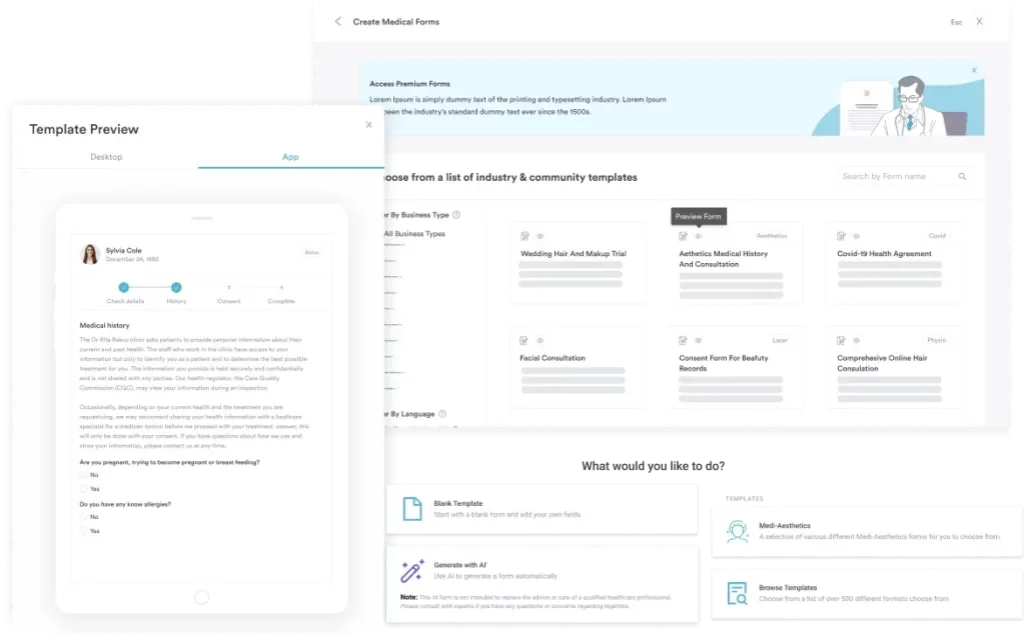
These elements belong in every 19081 procedure or operative note:
Both belong in the note and neither belongs on the claim. Clip placement is written into the descriptor, so a separate marker placement code triggers a bundling denial. National Correct Coding Initiative edits enforce the same result.
Specimen radiography works the same way. Imaging the core to confirm that the microcalcifications came out is part of 19081, however much time it takes. Adding a radiograph code for it is not separately billable, and it invites a refund request later.
Aftercare deserves the same discipline. A written patient discharge form records the pressure dressing, the bruising advice, and the plan for results, which closes the loop on the encounter.
Each 19081 claim passes through six hands before it turns into money. Knowing where each one can drop it tells you where to put your checks.
Most 19081 claims come out of breast imaging centers and radiology groups. OB-GYN practices with imaging on site bill a smaller share, and multi-specialty groups with a plastic surgery team often route everything through one billing office.
That shared billing office is where the stalls show up. One coder knows the breast family cold, the next one does not, and the denial pattern follows whoever was on shift.
Denials cluster. Fix the pattern once and you stop appealing the same claim every month.
Bundling edits change quarterly, so check the current pairs in the NCCI edit files rather than trusting last year’s cheat sheet.
Pull a monthly sample of your 19081 claims and read them against your contractor’s covered diagnosis list. Flag every unspecified-quadrant code where the procedure note actually named the quadrant, then fix the template that keeps producing it.
Almost every denial in this article starts as a documentation problem and only becomes a billing problem later. The note is written in one system, the claim is built in another, and somebody retypes the codes in between. That retyping is where lesion counts and laterality go missing.
Practice management software like Pabau closes that distance by holding both in one record. Structured note templates prompt for guidance modality, lesion count, and clip placement while the patient is still on the table. Nobody reconstructs the detail from memory at the end of the day.
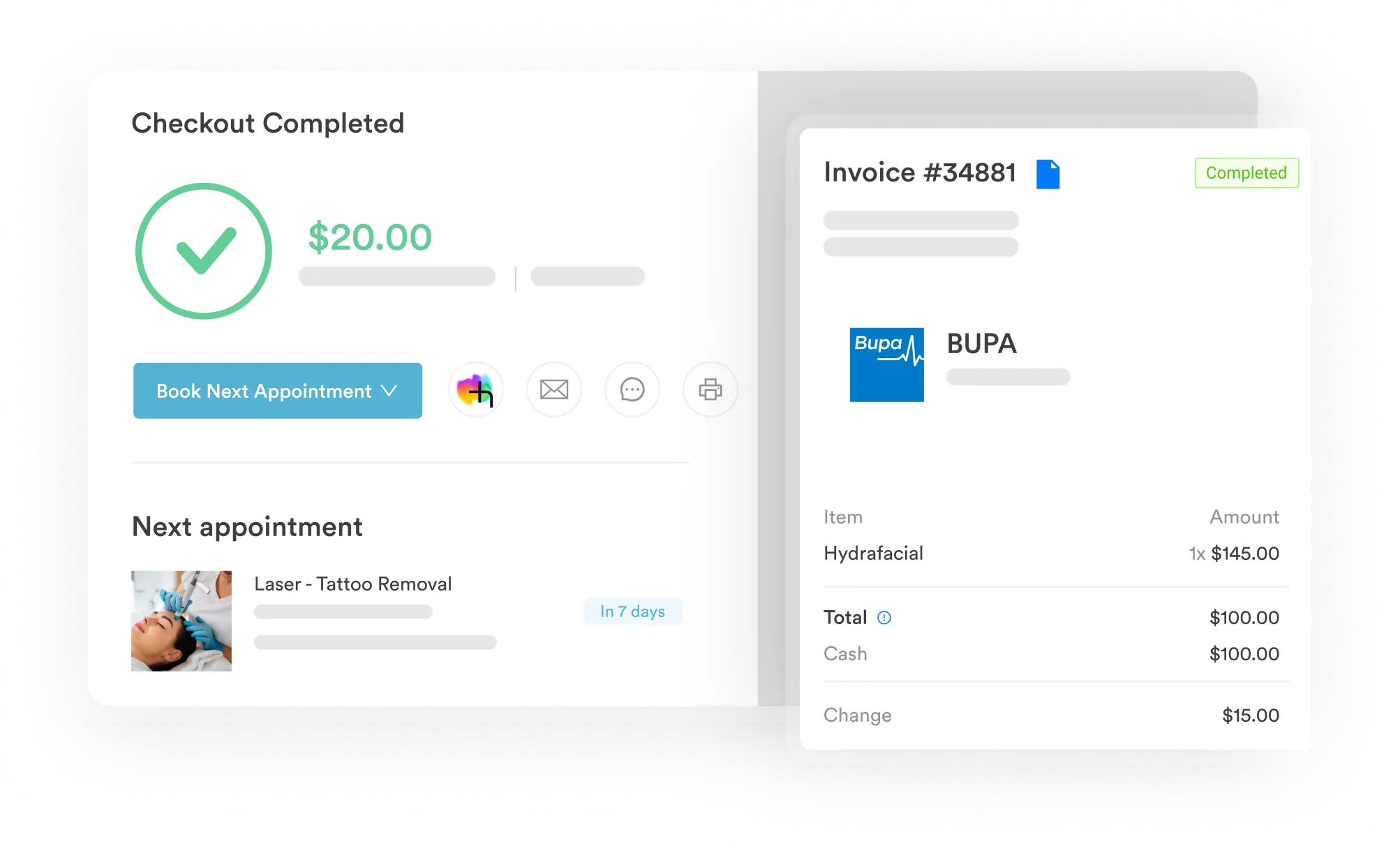
From there, Pabau’s claims management pre-fills claim data from the record and checks that the required fields are complete before submission. Membership numbers and authorization codes get caught while the claim is still yours to fix, rather than three weeks later on a remittance.
The code selection itself stays with your coder, which is where it belongs. What changes is that the note, the order, and the claim all sit in one client record. A post-payment review then takes an afternoon instead of two weeks.
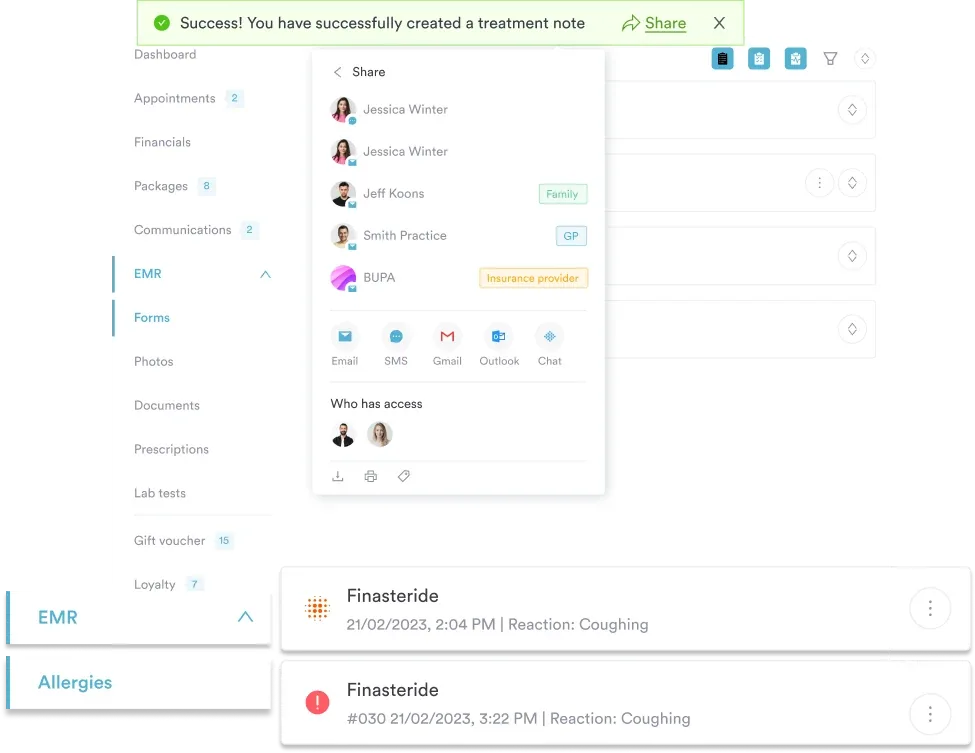

Pabau prompts for lesion count, guidance modality, and clip placement at the point of care, then pre-fills the claim from that same record. Your team stops retyping codes between systems.

19081 rewards practices that treat the procedure note as the claim’s first draft. Every figure a payer wants already exists in the room: the modality, the count, the clip, the specimen image. The only question is whether it reached the chart in words a coder can use.
Most of the leverage sits in the ten seconds it takes to write “stereotactic guidance, two lesions, clip deployed”. Practices that build that habit watch denials fall across the whole breast family, not just on this one code.
Want your notes and your claims to stop drifting apart? Book a demo and see how Pabau captures procedure detail once and carries it through to the claim.

Coding a perforated peptic ulcer? perforated peptic ulcer code covers an acute peptic ulcer with perforation when the site is unspecified.
Biopsying a second lesion under ultrasound instead? 19084 is the add-on that covers it, with its own primary code and bundling rules.
Billing the diagnostic mammogram that led to the biopsy? G0204 explains how the imaging side of the visit is reported.
Placing a localization device without taking tissue? 19285 walks through the device placement family and how guidance changes the code.
Comparing tools to run your claims through? Pabau vs Waystar sets out what each platform handles across the billing cycle.
A physician or a qualified non-physician practitioner working within state scope may perform it. In most practices the interpreting radiologist performs the biopsy and reports the code. The billing provider is the one who did the work and signed the note.
No. When a clip or wire goes in and no tissue is taken, the device placement family from 19281 to 19288 applies instead. The guidance modality then selects the exact code within that range.
Usually yes. A biopsy is diagnostic rather than preventive, so the deductible and coinsurance apply as they would for any diagnostic service. Screening mammography follows different rules, which surprises patients who expect the same coverage.
Original Medicare pays 19081 without prior authorization. Many commercial plans and Medicare Advantage plans require it, and each sets its own rule. Check the plan before the appointment, because a retroactive authorization is rarely granted.
Medicare gives you 12 months from the date of service. Commercial timely filing windows are often shorter, sometimes as tight as 90 days. A clean claim sent in the first week avoids the question entirely.



