CPT code 21011: Excision of soft tissue tumor of the face
CPT code 21011: Official descriptor and procedure overview CPT code 21011, as pu...

Last Updated: Oct 8, 2026

CPT Code 19285 covers percutaneous placement of a breast localization device in the first lesion, and ultrasound guidance is bundled into the code.
Never bill a separate imaging guidance code such as 76942 alongside 19285, because payers will deny the duplicate line.
Report 19286 for each additional lesion localized under ultrasound in the same session.
NCCI edits decide whether 19285 can be reported with an excision code like 19125, so check the current edit pair before filing.
Practice management software like Pabau helps billing teams pair codes accurately and submit cleaner claims.
CPT Code 19285 covers percutaneous placement of a breast localization device in the first lesion, with ultrasound guidance included in the code. The device can be a clip, a metallic pellet, a wire or needle, or a radioactive seed.
Because the guidance is already bundled, a separate imaging code on the same claim will be denied. Reporting 76942 alongside 19285 is the most common way this claim goes wrong.
This reference covers the AMA descriptor, the modifiers payers expect, NCCI bundling rules, Medicare payment, and the documentation that supports the claim. It is written for radiology and surgical oncology billing teams.
According to the American Medical Association (AMA), the official owner of the CPT code set, the full descriptor reads:
Placement of breast localization device(s) (eg, clip, metallic pellet, wire/needle, radioactive seeds), percutaneous; first lesion, including ultrasound guidance.
Several elements of that descriptor carry direct billing implications. The table below breaks each one down.
CPT Code 19285 sits in the Introduction Procedures on the Breast section of the CPT code set. Radiologists, breast surgeons, and surgical oncologists use it to localize non-palpable breast lesions before surgery or diagnosis.
The four codes in this family are separated by imaging modality and by whether the procedure covers the first lesion or an additional one. Picking the wrong code for the imaging used is a common denial trigger.
When several lesions are localized under ultrasound in one session, bill 19285 once for the first lesion. Report 19286 for every lesion after that. It is an add-on code, so it cannot be billed without 19285 as the primary.
Placement during a biopsy is billed differently. When the device goes in as part of an ultrasound-guided biopsy, 19083 and 19084 apply instead of the localization codes.
Procedures performed under a different imaging modality in the same session use their own primary codes. Mammographic guidance is 19281 and stereotactic guidance is 19283. Each modality is a distinct clinical setup and a distinct billable service.
Modifiers tell the payer about the clinical circumstances around the procedure. Three categories apply most often to CPT Code 19285.
Inappropriate modifier use is one of the top audit triggers for breast localization claims. Document the clinical scenario that justifies each modifier before you append it. The AAPC CPT code reference organizes further modifier guidance by procedure category.
Skin procedure documentation gets demanding fast, so plastic surgery EMR software with photo and consent tools helps.
The National Correct Coding Initiative (NCCI) governs whether CPT Code 19285 can appear on the same claim as an excision code. The question comes up most often when a radiologist performs the localization and a surgeon performs the excision.
CPT 19125 covers excision of a breast lesion identified by a preoperative radiological marker. It is the code most often paired with 19285 in breast-conserving surgery.
NCCI edits change with each quarterly update. Coders should check current edit pairs in the CMS Physician Fee Schedule and NCCI resources before finalizing claims. Incorrect unbundling creates overpayment exposure and audit risk.
When one ultrasound-guided session involves more than one lesion, report 19285 for the first lesion and CPT 19286 for each additional lesion. The claim must match the number of lesions documented in the imaging report.
Watch the modality when you reach for an add-on code. 19286 is the ultrasound add-on. 19287 is a primary code for a first lesion placed under MRI guidance, so it never pairs with 19285.
Check the imaging report before coding. If the radiologist documented two lesions but only one device placement, bill only 19285. Overcoding additional-lesion add-on codes without clear per-lesion documentation is a common audit trigger in breast oncology billing.
Hospital outpatient facilities bill under the Outpatient Prospective Payment System (OPPS), and that carries one extra requirement. A claim for 19285 must include a companion HCPCS device code. CMS applies this under its device-intensive procedure policy.
The specific HCPCS code depends on the device manufacturer and the product used. Common device categories include:
Device HCPCS codes are also revised and retired over time.
A missing companion device code is one of the main denial reasons for hospital outpatient breast localization claims. Physician office settings billing under the Medicare Physician Fee Schedule do not carry the requirement. Confirm the code with your device manufacturer’s reimbursement team before you submit. Risk of complications carries more weight than volume of notes when the visit level is questioned. Missing a provider identifier or a diagnosis code sends a reimbursement claim straight back, so a reimbursement receipt lists both.
Medicare payment for CPT Code 19285 is calculated using the Resource-Based Relative Value Scale (RBRVS). The allowed amount reflects three RVU components: work, practice expense, and malpractice. Each is multiplied by a geographic adjustment factor and the annual conversion factor.
Rates change every year and vary by locality, so the figures below are reference benchmarks. Verify current amounts in the CMS Physician Fee Schedule lookup tool, or in the FastRVU 2026 RVU lookup for your own locality.
CPT Code 19285 pays differently depending on where the procedure happens. Facility rates apply in a hospital outpatient department or an ambulatory surgical center. Non-facility rates apply in a physician office.
For 2026 national average dollar amounts, use the PCC free 2026 RVU calculator, which draws on CMS data files. Enter locality code 99 for the national average. Payment localities move the allowed amount a long way in high-cost regions such as California, New York, and Alaska.
Commercial payers negotiate rates independently of the Medicare Physician Fee Schedule. Contracted rates for CPT Code 19285 vary widely by payer and region.
Thin documentation is the second most common denial reason after bundling errors. The imaging report and the operative note together must establish medical necessity and confirm each element of the procedure.
Required documentation elements for CPT Code 19285 include:

These are the failure points behind most breast localization denials, with the check that prevents each one.
Run a quarterly audit of your 19285 claims. Pull every claim where 19285 appears with 19125. Check whether modifier 59 was justified, or whether two different physicians were billing. Find the pattern before a payer does.
CPT Code 19285 must be paired with an ICD-10-CM diagnosis code that establishes the clinical indication for localization. The diagnosis should reflect the confirmed or suspected condition that prompted the procedure.
Code to the highest specificity the chart supports. For a malignant finding that means naming the side and the quadrant. Falling back on a vague code when the documentation is specific is a common audit finding.
Breast localization billing has several moving parts, and every one of them is a place where a claim can slip:
Handled by hand, each handoff between the imaging suite and the billing desk is a chance for something to go missing.
Practice management software like Pabau puts all of it in one workflow. Pabau’s claims management software records the procedure, pairs the diagnosis code, and applies the right modifiers before the claim goes out.
A coder can then validate a 19285 claim without switching systems.
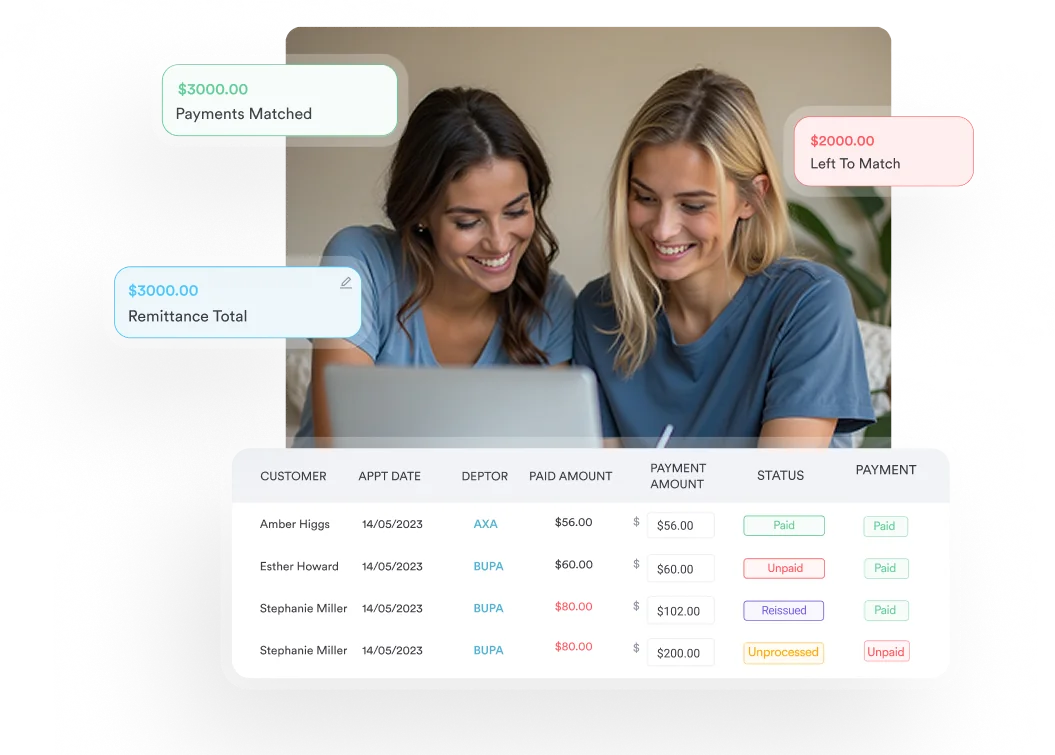
Breast localization also sits between specialties. A plastic surgery EMR keeps the reconstruction record in the same system as the billing. The claim is then built from one set of notes rather than three.

Pabau’s claims management tools help billing teams pair CPT codes accurately, flag missing modifiers, and submit cleaner claims for breast surgery and radiology procedures.

Breast localization coding rewards a habit more than a rulebook. Read the imaging report first, count the lesions, then choose the code that matches the modality actually used. Most of the work is done before anyone opens the claim.
The expensive denials are the quiet ones. A missing device code on a facility claim, or an NCCI pair nobody checked, will not announce itself until the remittance arrives. Both cost far less to catch in review than in appeal.
Pabau’s claims management software supports code pairing, structured documentation, and modifier validation for breast surgery and radiology billing teams. Book a demo to see how it fits into your claim review.

Coding a fibroadenoma treated without surgery? CPT code 19105 covers cryosurgical ablation under ultrasound guidance, including what the report has to show.
Billing the mammography side of the workup? HCPCS code G0279 explains how diagnostic tomosynthesis is reported alongside a screening study.
Moving on to reconstruction claims? CPT code 11970 walks through tissue expander replacement and the documentation payers expect.
Coding a nontraumatic bowel perforation? ICD-10 code K63.1 covers the billable code for disease-related perforations, excluding those caused by trauma.
Coding toxic liver disease with hepatitis? ICD-10 code K71.2 covers sequencing, T-code pairing, and common denial fixes for this billable code.
CPT Code 19285 covers percutaneous placement of a breast localization device in the first lesion. Ultrasound guidance is included in the descriptor. The device may be a clip, a metallic pellet, a wire or needle, or a radioactive seed. Radiologists and breast surgeons use it to mark non-palpable lesions before excision or biopsy.
Yes, in specific circumstances. When the radiologist who performs the localization and the surgeon who performs the excision are different physicians, both codes are usually separately reportable. When the same physician performs both procedures in one session, NCCI bundling rules generally apply. Check current NCCI edit pairs before filing both codes on a single-provider claim.
LT and RT identify laterality, and most payers require one of them. Modifier 59 applies when 19285 is reported alongside an excision code subject to NCCI edits. Modifier 50 covers the rare case where identical localization is performed on both breasts in one session.
19286 is the add-on code for each additional lesion localized under ultrasound guidance, so it is the one that pairs with 19285. 19287 is a primary code for a first lesion placed under MRI guidance, which is a different modality. Match the code to the guidance documented in the imaging report.
Medicare rates for CPT Code 19285 are calculated using RBRVS and vary by locality and setting. For current 2026 rates, use the CMS Physician Fee Schedule lookup tool at cms.gov or the FastRVU 2026 RVU calculator. National averages change every year with the CMS conversion factor update.
Hospital outpatient facilities billing under OPPS must include a companion HCPCS device code for the localization device used. The exact code depends on the manufacturer and the product. Consult the manufacturer’s reimbursement guide for the correct companion code. Missing it is a primary denial reason for facility claims.
CPT 19285 covers percutaneous breast localization device placement with ultrasound guidance. CPT 19281 covers the same procedure using mammographic guidance. Select the code that matches the imaging modality documented in the radiology report. Billing 19285 when the report documents mammographic guidance is a coding error.