



CCSD code G5100: Bypass of duodenum billing guide
CCSD code G5100 bills a bypass that leaves the duodenum in place CCSD code G5100...

Last Updated: Oct 16, 2026

CPT Code 13131 reports complex repair of wounds on the forehead, cheeks, chin, mouth, neck, axillae, genitalia, hands, and feet measuring 1.1 cm to 2.5 cm
Complex repair requires more than layered closure: scar revision, debridement, extensive undermining, stents, or retention sutures must be documented
A 10-day global period applies; add-on code 13133 bills each additional 5 cm or less beyond the base wound length
Practice management software like Pabau embeds CPT code selection, modifier validation, and claim scrubbing directly in the clinical workflow
CPT Code 13131 covers complex repair of wounds on the forehead, cheeks, chin, mouth, neck, axillae, genitalia, hands, and feet measuring 1.1 cm to 2.5 cm. Complex repair means the closure needed more than layered suturing — scar revision, debridement, extensive undermining, stents, or retention sutures must be performed and documented for the claim to qualify. An eligibility check at booking and again at arrival catches mid-month plan changes.
Billing errors on CPT Code 13131 cluster around three failure points:
Auditors flag this code at higher rates because its complexity threshold is subjective. What follows is a practical reference built for medical billers, coders, and practice managers who need accurate claims the first time.
CPT Code 13131 belongs to the Repair-Complex subsection of the Integumentary System chapter, maintained by the American Medical Association (AMA) as part of the annual CPT code set. The official code description reads:
13131: Repair, complex, forehead, cheeks, chin, mouth, neck, axillae, genitalia, hands and/or feet; 1.1 cm to 2.5 cm
The 13100-13160 family covers all complex repair codes. Within this family, codes are organized by anatomical site group and wound length. CPT Code 13131 sits in the third of four site groups.
The key distinction between code groups: 13131 and its siblings (13132, 13133) cover cosmetically and functionally sensitive sites where complex closure demands the most precise technique. Selecting the wrong site group is one of the most common coding errors for this family.
The defining criterion for CPT Code 13131 is complexity beyond layered closure. Simple layered suturing does not qualify, even on the specified sites.
Complex repair requires at least one of the following to be performed and documented:
Intermediate repair (CPT 12031-12057) covers one or two layers of closure in contaminated wounds. Complex repair goes further. If the operative note only describes a layered closure without any of the criteria above, the claim should be reported as intermediate, not complex.
When the total complex repair wound length at 13131 sites exceeds 2.5 cm, add-on code 13133 is reported for each additional 5 cm or less. Once a wound at these sites reaches 2.6 cm on its own, it moves into CPT 13132 territory as a primary code rather than an add-on.
13133 is an add-on code and cannot be billed without the primary 13131. It does not carry a separate global period and is not subject to multiple procedure reductions under modifier 51 when reported with its parent code.
Note: 13133 is the correct add-on for the 13131 site group. Do not confuse it with 13102 (add-on for 13100-13101 trunk/arms/legs group) or 13122 (add-on for 13120-13121 scalp group). Using the wrong add-on for the site group is a common NCCI edit violation.
Our roundup of software for plastic surgery practices shows how documentation, photos, and billing fit together.
Modifier selection for CPT Code 13131 depends on the clinical circumstances and payer requirements. The following modifiers apply most commonly.
Modifier 25 is critical when the treating provider performs both an E&M service and the complex wound repair on the same date.
Without modifier 25 on the E&M code, the E&M may be bundled into the procedure and denied. Verify current National Correct Coding Initiative (NCCI) edits before billing any modifier combination, as bundling rules update annually.
The same modifier 59 logic applies when an unrelated same-day procedure.
Medicare reimbursement for CPT Code 13131 varies by Medicare Administrative Contractor (MAC) locality and changes annually with the Medicare Physician Fee Schedule (MPFS). Published dollar figures go stale quickly; use the CMS fee schedule tool to retrieve the current year’s rate for your specific locality.
Two distinct payment rates apply to CPT Code 13131 depending on where the service is performed.
For current RVU values and geographic adjustment factors, the FastRVU 2026 lookup tool provides work RVU, practice expense RVU, and malpractice RVU values with locality multipliers. Work RVU for 13131 has historically fallen in the 3.0-4.5 range, though this should always be confirmed against the current year’s MPFS data.
CPT Code 13131 carries a 10-day global period. This means post-operative care provided within 10 days of the procedure is bundled into the surgical payment and cannot be billed separately, with limited exceptions.
The same 10-day bundling rule applies to sibling codes such as CPT 13121, so follow-up workflows need to track the global period consistently across the whole 13100-13160 family.
Services bundled into the 10-day global payment:
Services that may still be billed separately during the global period:
Document the original procedure date in every follow-up note within the global period. When a subsequent visit is genuinely unrelated to the complex repair, note the specific unrelated diagnosis in the record and append modifier 24 or 79 before submitting. This documentation habit prevents automatic denials and supports any payer audit.
Payers require a valid ICD-10 diagnosis code to establish medical necessity. For CPT Code 13131, wound codes from the S-chapter injury series are the most commonly paired diagnoses. Payer LCD/NCD policies may restrict or expand the accepted code list; verify with your specific MAC before submission.
Always capture the most specific ICD-10 code available. “Open wound, unspecified” codes are frequently flagged by payer systems as lacking specificity. Pair the wound site code with a laterality designation (A, D, S for encounter type) appropriate for the visit type.
The same specificity standard applies across all injury and repair claims. A useful cross-reference tool is the AAPC CPT-to-ICD-10 crosswalk, which maps CPT codes to commonly accepted diagnosis codes.
Inadequate documentation is the leading cause of denials and downcodes for CPT Code 13131. The operative or procedure note must capture all of the following to support complex repair billing.
Practices using digital clinical documentation can embed structured fields for each required element, cutting down on missed fields at the point of care. Maintaining HIPAA-compliant billing records is equally essential for audit readiness.
For coders auditing notes after the fact: if the documentation does not explicitly state what made the repair complex, the claim cannot be coded as 13131. Contact the treating provider for an addendum before submission, not after a denial.
Repair notes are written during and after the procedure, but some code families require their paperwork first. Most payers deny HCPCS code V5140 without a prior authorization number secured before the fitting appointment, plus an audiogram dated inside their window.
The same complexity documentation standard applies to the trunk group.
Claims for CPT Code 13131 carry above-average denial risk because the complexity threshold invites scrutiny. Practices that rely on manual code selection without documentation checklists. The errors below account for the majority of complex repair claim failures.
Complex wound repair codes like CPT Code 13131 have a narrow documentation threshold and a long global period. Both create recurring billing workflow problems that standalone code lookup tools cannot solve.
Pabau’s claims management software integrates CPT code selection, modifier validation, and claim scrubbing within the clinical workflow.
When a provider documents a wound repair, the billing team sees the structured note data directly — wound site, measured length, and complexity criteria — without switching between a lookup tool and a separate billing system. This keeps documentation and billing in the same workflow, where most 13131 claim errors originate.
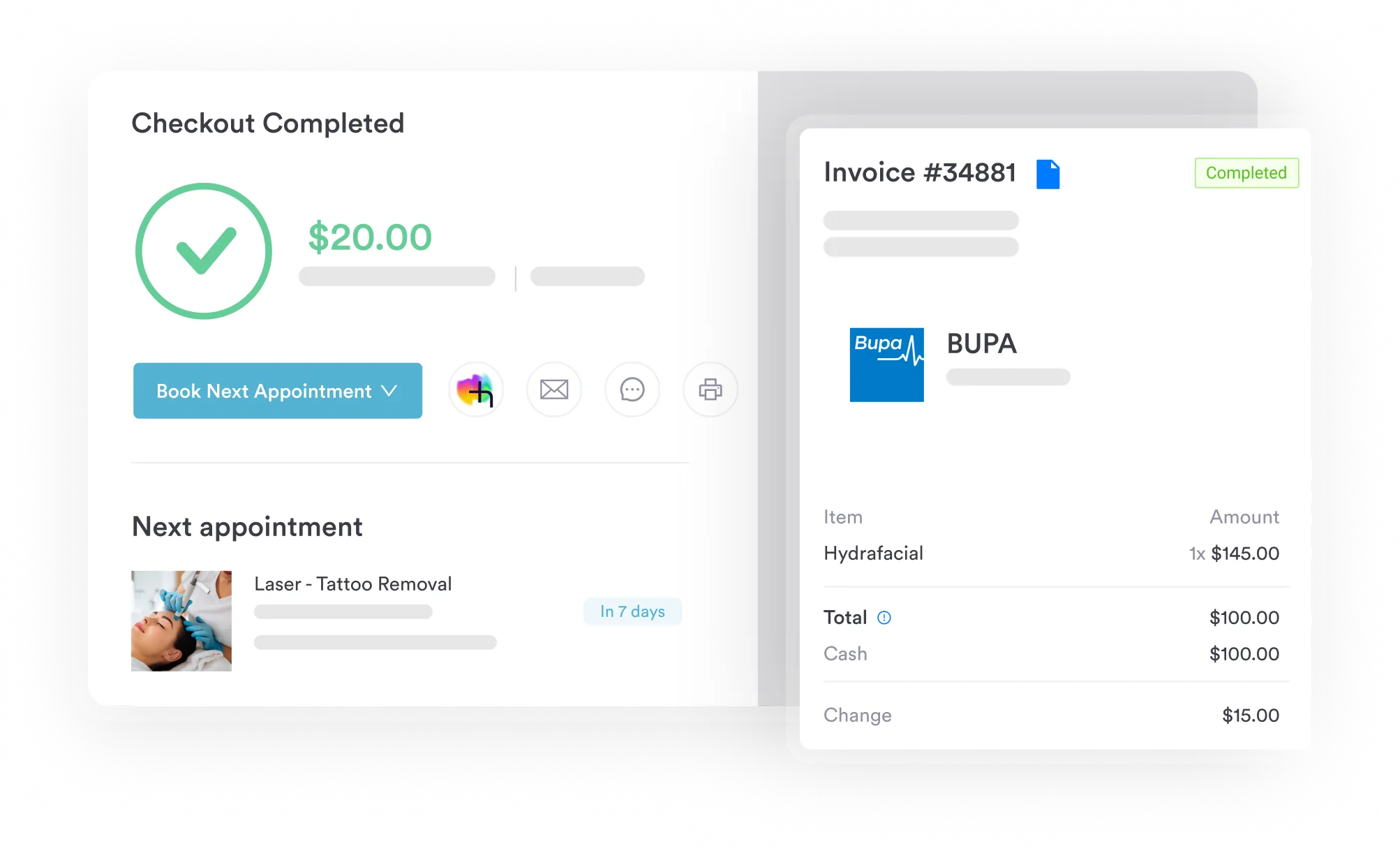
For plastic surgery EMR workflows, Pabau also surfaces claim denial patterns by CPT code. Practices can identify whether 13131 denials cluster around missing documentation, modifier issues, or site group errors, then address the root cause systematically rather than claim by claim.

Pabau embeds CPT code validation, modifier checks, and structured wound documentation in one clinical workflow. See how practices using Pabau catch 13131 billing errors at the point of care, not after a denial.

CPT Code 13131 covers some of the most documentation-sensitive wounds in outpatient surgery: facial lacerations, hand injuries, and neck wounds that demand precise technique and equally precise paperwork. Whether a claim clears or gets denied often comes down to whether the operative note explicitly describes what made the repair complex, not just that it was.
Pabau’s claims management software connects clinical documentation to billing submission in one workflow, so complexity criteria, wound measurements, and modifier selections are captured before the claim goes out. To see how Pabau supports complex repair billing workflows, book a demo with the team.

Need billing rules for debridement performed on its own, not bundled into a repair? CPT 11042 covers subcutaneous tissue debridement billed as a separate procedure.
Handling a wound that reopens after the original repair? CPT 12021 covers superficial wound dehiscence treated with packing.
Repair alone won’t close the defect and a graft is needed instead? CPT 15121 covers split-thickness autograft billing and documentation.
CPT Code 13131 is a complex wound repair code covering wounds on the forehead, cheeks, chin, mouth, neck, axillae, genitalia, hands, and feet measuring 1.1 cm to 2.5 cm. Complex repair means the closure required more than layered suturing — at least one of the following must be performed and documented: scar revision, debridement, extensive undermining, stents, or retention sutures.
Medicare reimbursement for CPT 13131 varies by MAC locality and changes each January with the MPFS update. Use the CMS Physician Fee Schedule lookup tool at cms.gov to retrieve your locality’s current facility and non-facility rates. Non-facility (office) rates are consistently higher than facility rates because the physician payment includes the practice expense component.
Both codes cover complex repair of wounds measuring 1.1 cm to 2.5 cm, but they apply to different anatomical site groups. CPT 13121 covers the scalp, arms, and legs. CPT 13131 covers the forehead, cheeks, chin, mouth, neck, axillae, genitalia, hands, and feet. Selecting the correct site group is essential — billing 13131 for a scalp wound or 13121 for a cheek wound is a site-group error that triggers NCCI edits.
Add-on code 13133 is used with CPT 13131 for each additional 5 cm or less of complex repair at the same site group when the total wound length exceeds 2.5 cm. Do not use 13132 (a primary code) or 13102 or 13122 (add-ons for different site groups). Report 13133 for each additional 5 cm increment beyond the base wound length covered by 13131.
CPT 13131 carries a 10-day global period. Post-operative E&M visits, suture removal, and standard wound care within 10 days of the procedure are bundled into the surgical payment. Separate billing is allowed for unrelated E&M services (modifier 24), unrelated procedures during the global period (modifier 79), and treatment of significant complications requiring a new procedure (modifier 78).
Yes, when a significant and separately identifiable evaluation and management service is performed on the same date as the complex repair. Append modifier 25 to the E&M code to indicate that it is a distinct service beyond the pre-procedure assessment. Without modifier 25, the E&M is typically bundled into the procedure payment and denied. Document the E&M separately with its own clinical rationale.
The operative note must include: the exact anatomical site (not just “face”), the measured wound length in centimeters, explicit documentation of the complexity criteria met (type of debridement, extent of undermining, scar revision technique, or retention suture use), closure method and suture details, and pre-closure wound condition. If complexity criteria are not documented, the claim must be reported at the intermediate repair level. For additional guidance, the AAPC CPT coding resources provide documentation templates and coding guidance for complex repair procedures.



