



CCSD code G5100: Bypass of duodenum billing guide
CCSD code G5100 bills a bypass that leaves the duodenum in place CCSD code G5100...

Last Updated: Oct 16, 2026

CPT Code 13151 describes complex repair of eyelids, nose, ears, and/or lips measuring 1.1 cm to 2.5 cm, requiring more than layered closure.
Complex repair criteria include scar revision, debridement, undermining, or retention sutures – a layered closure alone qualifies as intermediate, not complex.
The most common denial cause: insufficient operative note documentation of wound complexity and measurement methodology.
Pabau’s claims management software links procedure documentation directly to billable CPT codes, reducing manual handoff errors between clinical notes and billing submission.
CPT Code 13151 covers complex repair of wounds on the eyelids, nose, ears, and/or lips measuring 1.1 cm to 2.5 cm.
Complex repair means the closure needs more than layering – techniques like debridement, undermining, scar revision, or retention sutures are what push a wound repair from intermediate into complex.
Most 13151 denials come from incomplete documentation of that complexity, not from choosing the wrong code family.
This guide walks through the AMA descriptor, 2026 Medicare reimbursement rates, applicable modifiers, ICD-10 pairings, NCCI bundling rules, and the documentation details that most often trigger denials.
CPT Code 13151 is maintained by the American Medical Association (AMA) under the integumentary system section of the CPT code set. It applies to complex repair of wounds located on the eyelids, nose, ears, and/or lips measuring 1.1 cm to 2.5 cm.
Surgical and dermatology EMR software platforms that support procedure code capture help practices tie this code to the encounter at the point of care, reducing transcription errors downstream.
Selecting the wrong repair level is the single fastest path to a claim denial on wound closure codes. The AMA CPT guidelines define three repair levels – simple, intermediate, and complex – based on technique, not just wound depth.
The critical distinction for CPT Code 13151: complex repair is not simply a deeper wound. It requires documentation of at least one additional technique beyond layered closure. According to the American College of Emergency Physicians (ACEP), scar revision, debridement, undermining of wound edges, or the use of retention sutures each qualify as complexity-elevating factors.
Practices managing wound repair billing alongside plastic surgery EMR workflows should build complexity checklists directly into their encounter templates – capturing these factors at the point of documentation rather than retrospectively.
Medicare reimbursement for CPT Code 13151 varies by site of service and geographic locality. The Centers for Medicare and Medicaid Services (CMS) updates the Physician Fee Schedule (PFS) annually.
The figures below reflect 2026 national averages and should be verified against the current-year CMS Fee Schedule Look-Up Tool for your specific locality before billing.
Reimbursement rates change annually with the Medicare Physician Fee Schedule update. Practices should treat any published third-party rate figure as an approximation and verify current-year amounts directly through CMS before finalizing fee schedules or patient estimates.
Pabau’s time-saving billing features, including real-time fee schedule integrations, reduce the risk of billing at stale rates.
Modifier selection for CPT Code 13151 depends on the clinical scenario and payer requirements. Incorrect modifier use is one of the top triggers for NCCI-related denials and post-payment audits by the OIG.
Check payer-specific modifier rules before billing -59 to unbundle 13151 from a bundled code. CMS and commercial payers differ on when -59 is accepted versus when modifier XE, XS, XP, or XU is required instead. Some payers now reject -59 on claims where an X modifier would be more specific.
Medical necessity requires a valid ICD-10-CM diagnosis code that supports the complexity of the repair. Linking the wrong diagnosis to CPT Code 13151 – particularly a code that implies a superficial wound – is grounds for denial on medical necessity review.
Always verify ICD-10 crosswalk accuracy against the clinical presentation before submission. The diagnosis must reflect the wound’s true complexity – a medical forms workflow that captures wound characteristics at encounter level makes this crosswalk automatic rather than reconstructed at billing time.
CMS Coverage Article A53001 identifies documentation of wound complexity as the primary basis for medical necessity review of complex repair codes. The operative note must establish each element that elevates the repair from intermediate to complex.
Practices using client record management tools that prompt for these documentation elements within the clinical workflow consistently show lower denial rates than those reconstructing notes from memory after the encounter.
The National Correct Coding Initiative (NCCI) restricts certain code combinations with CPT Code 13151. NCCI edits are updated quarterly by CMS; verify current edit pairs through the CMS NCCI Policy Manual before billing.
The HIPAA-compliant clinical documentation practices that reduce audit risk also support NCCI compliance – documentation that proves each procedure was distinct protects the practice in post-payment review.
CPT Code 13151 carries a 10-day global period under CMS global surgery policy. This means routine post-operative care within 10 days of the procedure is included in the original reimbursement and cannot be billed separately to Medicare.
Subsequent-encounter diagnoses for an unrelated injury sit outside this 10-day package. A fracture nonunion carried under ICD-10 code S72.435M is billed across repeated visits, and each claim needs its own healing-status statement in that visit’s note.
CPT Code 13151 sits within the complex repair code family. Selecting between these codes depends on wound size, anatomical site, and whether multiple wounds are being repaired in different zones. Simple repairs in the same facial zone fall outside this family entirely – 12014 and 12015 cover those wound-length tiers instead.
Key selection rule: wounds in different anatomical zones require separate primary codes, not a combined add-on. A wound on the eyelid (13151) and a wound on the forehead (13131) on the same patient on the same date are billed separately, with modifier -51 on the secondary code.
Within the same zone, a single wound measuring 2.6 cm to 7.5 cm uses the size-tier code (13152 or 13132) in place of the base code, not alongside it. Only wound length beyond 7.5 cm in the same zone adds the true add-on code (13153 or 13133), reported for each additional 5 cm or less.
Document each wound separately when treating multiple sites on the same face. Combining wound measurements across anatomical zones inflates the apparent total length but produces incorrect code selection. Payers audit combined-wound claims in the facial region specifically because post-Mohs reconstructions frequently involve multiple sites.
Most CPT Code 13151 denials are preventable. The AAPC’s CPT code reference and payer LCD policies identify the same recurring failure points. Addressing them systematically cuts denial rates significantly.
Practices that use patient scheduling software integrated with their billing workflow can flag follow-up appointments that fall within the global period, reducing inadvertent same-period billing errors before claim submission.
Complex repair revenue is most often lost between a well-documented clinical encounter and a clean claim. Manual handoff between the operative note and the billing team creates the missing documentation details that trigger medical necessity denials for CPT Code 13151.
Pabau’s claims management software connects procedure documentation directly to billable codes within the same workflow. Clinicians select 13151 at the point of care, and the system carries the code through to claim submission without re-keying.
This eliminates the transcription errors that produce the most common 13151 denial type: the code doesn’t match the documented repair complexity.
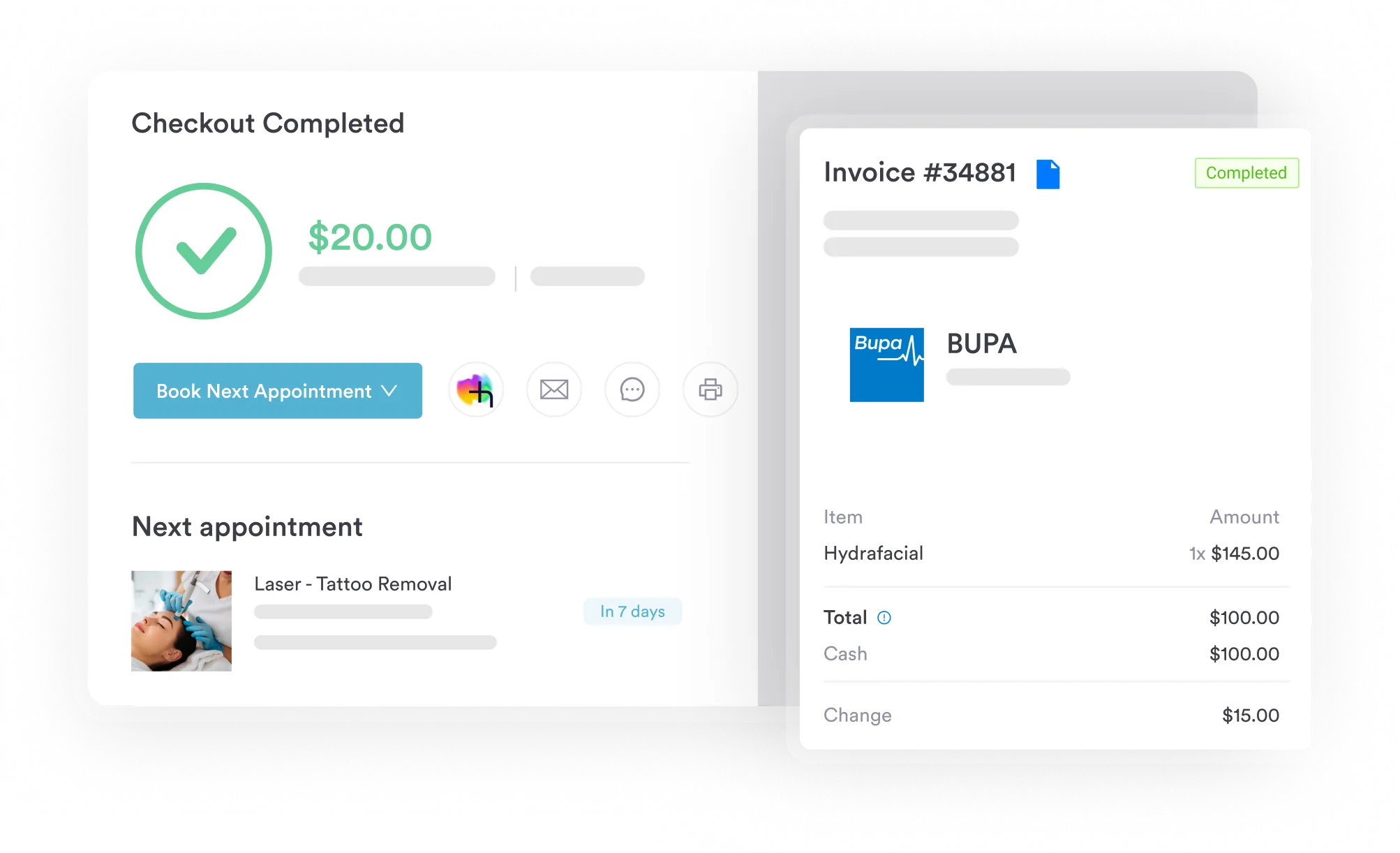
For practices managing surgical and dermatology billing, Pabau’s all-in-one practice management platform also supports practice management software features including audit-ready documentation templates, procedure-level reporting, and integrated fee schedule tracking – reducing the administrative overhead of keeping billing staff current on annual CMS updates.

Pabau links clinical documentation to CPT code capture in one workflow, so your billing team gets complete, accurate claims without chasing the operative note. See how it works for surgical and dermatology practices.

CPT Code 13151 denials are almost always preventable. The code itself is straightforward – complex repair of eyelids, nose, ears, or lips measuring 1.1 cm to 2.5 cm – but the documentation requirements are specific enough that general operative note language consistently falls short.
Digital forms for operative notes let surgical and dermatology practices build complexity checklists directly into their encounter templates, capturing the wound measurement, technique documentation, and ICD-10 crosswalk at the point of care.
The result is cleaner claims, fewer follow-up calls from billing staff, and a defensible audit trail if CMS reviews the account. To see how Pabau handles this for surgical practices, book a demo.

Coding a behavioral syndrome tied to a physical cause? unspecified behavioral syndrome code covers syndromes linked to physiological disturbances, with documentation and crosswalk guidance.
Coding borderline personality disorder accurately? borderline personality disorder code covers a diagnosis that overlaps closely with mood and anxiety codes.
CPT Code 13151 covers complex repair of wounds on the eyelids, nose, ears, and/or lips measuring 1.1 cm to 2.5 cm in length. Complex repair requires more than layered closure – at least one additional technique such as scar revision, debridement, undermining of wound edges, or retention sutures must be performed and documented in the operative note.
Medicare reimbursement for CPT Code 13151 varies by site of service and geographic locality. The 2026 national average is approximately $419 in a non-facility setting and $233 in a facility setting, with a work RVU of approximately 4.23. Verify current-year rates for your specific locality using the CMS Physician Fee Schedule Look-Up Tool before billing, as rates change annually with the Medicare PFS update.
CPT 13151 is the base complex repair code for eyelids, nose, ears, and/or lips, covering wound lengths of 1.1 cm to 2.5 cm. CPT 13152 is not an add-on code – it’s a separate primary code for a single wound measuring 2.6 cm to 7.5 cm in the same zone. The true add-on code is 13153, reported for each additional 5 cm or less beyond 13151 or 13152 in the same anatomical zone. Unlike a primary code, 13153 is exempt from modifier -51.
The operative note must document: the wound length in centimeters, the specific technique that makes the repair complex (debridement, scar revision, undermining, or retention sutures), the exact anatomical site, and a brief statement of medical necessity. A note that says only “complex repair performed” without describing the technique is insufficient for medical necessity review.
CPT Code 13151 carries a 10-day global period under CMS global surgery policy. Routine post-operative care – wound checks, suture removal, and standard dressing changes – is included in the 13151 reimbursement and cannot be billed separately during those 10 days. Unrelated conditions, staged procedures (modifier -58), and return-to-OR complications (modifier -78) may be billed separately with appropriate documentation.
Yes, but only with modifier -25 appended to the E/M service. The evaluation and management service must be a significant, separately identifiable service beyond the pre-procedure assessment – for example, evaluating an unrelated complaint during the same visit. Overuse of modifier -25 with surgical codes is an OIG audit priority, so the E/M documentation must clearly support a separate medical decision-making process.



