CCSD code F3070: Suture of palate billing guide
CCSD code F3070 covers stitching a wound in the palate CCSD code F3070 is the co...

Last Updated: Oct 12, 2026

CPT code 15157 covers each additional 100 sq cm of tissue cultured skin autograft on specialized sites, not each 25 sq cm.
It is an add-on to CPT 15156, so it never appears on a claim without that code above it.
15156 already covers the first 1 to 75 sq cm past the base area, so smaller grafts never reach 15157 at all.
The code carries a ZZZ global period, which makes modifier 51 wrong on every 15157 line.
The operative note has to give a measured area and a site named the way the descriptor names it.
Most denials on CPT code 15157 come down to one number. The code adds each 100 sq cm of tissue cultured skin autograft on the face, hands, feet and other specialized sites. Coders often read it as another 25 sq cm step, copying the base code above it.
That one difference lands on every claim you send. A 60 sq cm graft on the hand never reaches 15157 at all, while a 320 sq cm facial graft needs three units. Get the increment wrong and you either leave money behind or invite a records request.
CPT code 15157 describes tissue cultured skin autograft applied to the face, scalp, eyelids, mouth, neck, ears, orbits, genitalia, hands, feet, and/or multiple digits. The unit is each additional 100 sq cm, or each additional 1% of body area of infants and children, or part thereof.
The code sits in the integumentary chapter of the CPT code set, in the autograft and tissue cultured autograft subsection. Per AMA CPT guidance, it is listed separately in addition to the code for the primary procedure.
A tissue cultured autograft, also called a cultured epidermal autograft, starts as a small skin biopsy from the patient. A laboratory grows those cells for several weeks until the sheets are large enough to cover the wound. Surgeons reach for it when a burn or a chronic wound outruns the donor sites the patient has left.
None of that makes 15157 a procedure in its own right. It only adds area to a graft already reported under CPT 15156. Plastic surgery and dermatology teams meet it mainly on burn reconstruction and large facial defects.
The family splits first by body region, and that split decides which chain your claim runs through. Codes 15150 to 15152 cover the trunk, arms and legs. Codes 15155 to 15157 cover the specialized sites, and they carry higher work RVUs because the surgery is finer and the margins tighter.
Each grouping then runs as a chain. The base code covers the first area, the first add-on covers the next band, and the second add-on covers everything past that. Every add-on attaches to the code directly above it, not to the base code.
Two rows in that table cause most of the trouble. Both 15152 and 15157 attach one step up the chain, to 15151 and 15156, and never to the base code. Both also jump the increment from 75 sq cm to 100 sq cm, which is where unit counts drift.
Work the area in order, starting at the base code and moving outward. The arithmetic only goes wrong when someone starts at 15157 and divides. Two worked cases show the difference.
Case one: A 60 sq cm graft across the dorsum of the hand and two fingers.
That case comes up far more often than the big one below. A specialized site graft has to pass 100 sq cm in total before 15157 earns a line of its own.
Case two: A 320 sq cm graft across the face and neck.
For infants and children, swap area for body surface. Each additional 1% of body area is one unit of 15157. The same round-up rule applies to any part of a percent.
Always round up, never down. A 105 sq cm remainder is two units. Payers accept the round-up because the descriptor says “or part thereof”, but only when the operative note carries the measurement behind it.
15157 only ever bills alongside 15156, because it is an add-on code. It carries a ZZZ global period in the Medicare Physician Fee Schedule, and ZZZ is how CMS marks an add-on. The code has no pre-operative or post-operative window of its own, so it inherits the global period of the procedure it follows.
The AMA parenthetical is narrow. 15157 is reported in conjunction with 15156 only. Pair it with 15155, or with anything in the 15150 series, and the claim fails the edit and comes back denied.
Modifier 51 is the other trap. Add-on codes are exempt from the multiple procedure reduction, so 51 never belongs on a 15157 line. Most clearinghouses reject the claim before the payer ever sees it.
Mixed cases need a second chain. When one session grafts both the trunk and the hand, report each region under its own family. The trunk area runs through 15150 and its add-ons, the hand area through 15155 and its add-ons, and you count the two areas separately.
Only a short list of modifiers belongs on this code, and one of them is a hard no. The table below covers the ones that come up on graft claims.
Payer rules on modifier 59 diverge. Some commercial plans want XS for a separate structure, or XU for an unusual non-overlapping service. That comes up when recipient site preparation under CPT code 15002 runs at the same session. Check the plan’s policy first, because a rejected 59 comes back as a coding problem rather than a clinical one. Claim accuracy is cheaper to build at entry than to repair in an appeal. Denials on this code repeat until someone reads the pattern rather than reworking each claim.
Every 15157 claim needs an ICD-10-CM code that explains why lab-grown skin was the right call. The diagnosis has to match the wound type, the cause and the site named in the operative note. A vague burn code on a facial graft is the fastest route to a records request.
Code to the deepest level the record supports. Burns need the degree, the site, the laterality and the seventh character for the encounter. Chronic ulcers need the stage and the laterality.
Two habits generate most of the denial traffic here. The first is dropping T31 on a large-surface burn, where the guidelines expect it as an additional code. The second is leaving the site vague on a procedure code that is site-specific by definition.
Medicare pays 15157 under the Physician Fee Schedule, and the setting decides which of two rates applies. The facility rate applies in a hospital outpatient department or an ambulatory surgery center. The non-facility rate applies in an office, and it runs higher because the practice carries the overhead.
Most cultured autograft work happens in a hospital or an ASC, so the facility rate covers the bulk of 15157 claims. Still, check the place of service on the claim against where the patient actually was. A defaulted setting is one of the easier findings an auditor can make.
Geography then adjusts the figure again. The Geographic Practice Cost Index moves payment by locality, so the same graft pays differently in San Francisco and in rural Mississippi. Pull current numbers from the CMS Physician Fee Schedule Look-Up Tool before you publish an internal fee schedule.
Other tissue work follows a different payment path. Hospital outpatient supplies usually fold into the OPPS rate. Corneal tissue acquisition does not, so HCPCS code V2785 is paid on a cost basis instead.
Three RVU components drive the number behind that rate. Work RVUs price the surgeon’s effort, practice expense RVUs cover overhead, and malpractice RVUs cover liability. Medicare adds them up, adjusts each one for locality, then multiplies the total by the annual conversion factor.
Add-on codes such as 15157 carry lower work RVUs than the base code. The pre-service and post-service work already sits with 15155, so the add-on prices the extra intraoperative effort alone.
That is exactly why stacking units matters. Miss one 100 sq cm block on a large burn case and you give away a meaningful share of the payment.
Current values live in the CMS relative value files, which CMS republishes through the year. Never carry last year’s figure into this year’s internal fee schedule.
Commercial plans usually price cultured autograft work off the Medicare fee schedule, at somewhere between 100% and 150% of it. Your contract sets the multiplier, and none of it is public data. Your own remittance history on previous 15157 claims is the most reliable source you have.
Prior authorization is the bigger operational issue. Most commercial plans require it for cultured epidermal autograft products before the procedure happens. Each plan writes its own medical policy, and those policies change more often than CMS guidance does.
Local Coverage Determinations sit on the Medicare side only. A MAC’s LCD binds Medicare claims in that jurisdiction, so it will not tell you what a commercial plan approves. Read the plan’s own medical policy instead, and note the version date you worked from.
A missing authorization number is a non-clinical denial. Medical necessity arguments do not fix it, and most plans refuse to backdate. Confirm the number before the patient is scheduled, not after the graft is applied.
Ask your top three commercial payers for their skin substitute and cultured autograft policy in writing, and file the effective date alongside it. Payers revise those policies quietly. A denial that cites a version you have never seen is easier to appeal when you can show which version you worked from.
The claim stands or falls on the operative note. Six things have to be in it before the coder opens the chart.
Vague wound descriptions are the easiest thing for an auditor to act on. “Large defect” supports no unit count at all. A number and a named site do.
Structured clinical records and digital intake forms help here. The surgeon records the measurement at the bedside rather than reconstructing it three weeks later.
The descriptor gets you as far as the claim form. The rest is medical billing, and these seven steps are where a 15157 claim tends to stall.
Step seven is the one that quietly costs money. When a payer pays 15155 and 15156 but drops a unit of 15157, the total still looks broadly right on the remittance. Nobody appeals what nobody notices.
Six errors account for most of the denials on this code. None of them need a policy change to fix.
It takes about a minute per claim, and it catches almost everything above.
Pull your last ten 15157 claims and recount the units straight from the operative notes. Divide the area past the first 100 sq cm by 100, then round any remainder up. If one claim used 25 sq cm blocks, the same error is probably sitting in every claim since that coder learned it.
Most practices run this workflow across three places. The operative note lives in the record system. The unit maths happens in a spreadsheet, or in a coder’s head. Someone keys the claim into a payer portal, and the missing lot number surfaces only when the rejection arrives.
Pabau, an all-in-one practice management system, keeps the note and the claim in one record. Its claims management tools submit your insurance claims and track their status.
They also check the fields each insurer requires before anything goes out, so missing membership and authorization numbers surface while you can still fix them.
The note and the claim also share a record. The square centimeter figure a payer asks about is then one click away, not an archive request away.
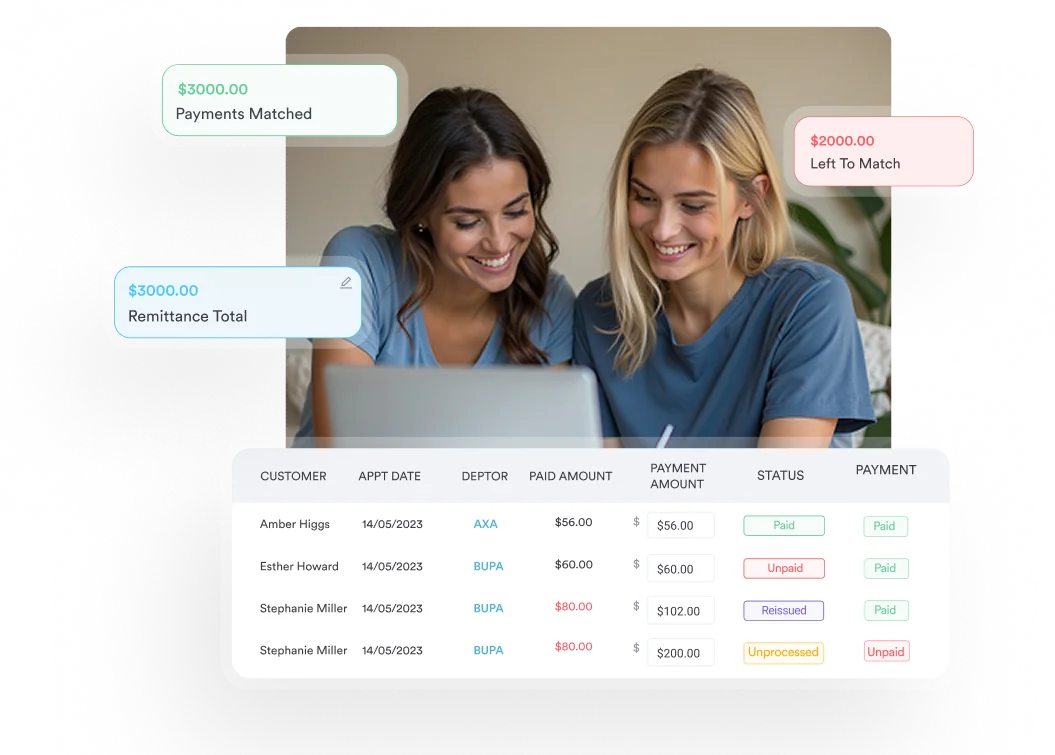
The surgeon talks once and the write-up lands in the record already organized. That leaves the coder far less to reconstruct when the chart reaches them.
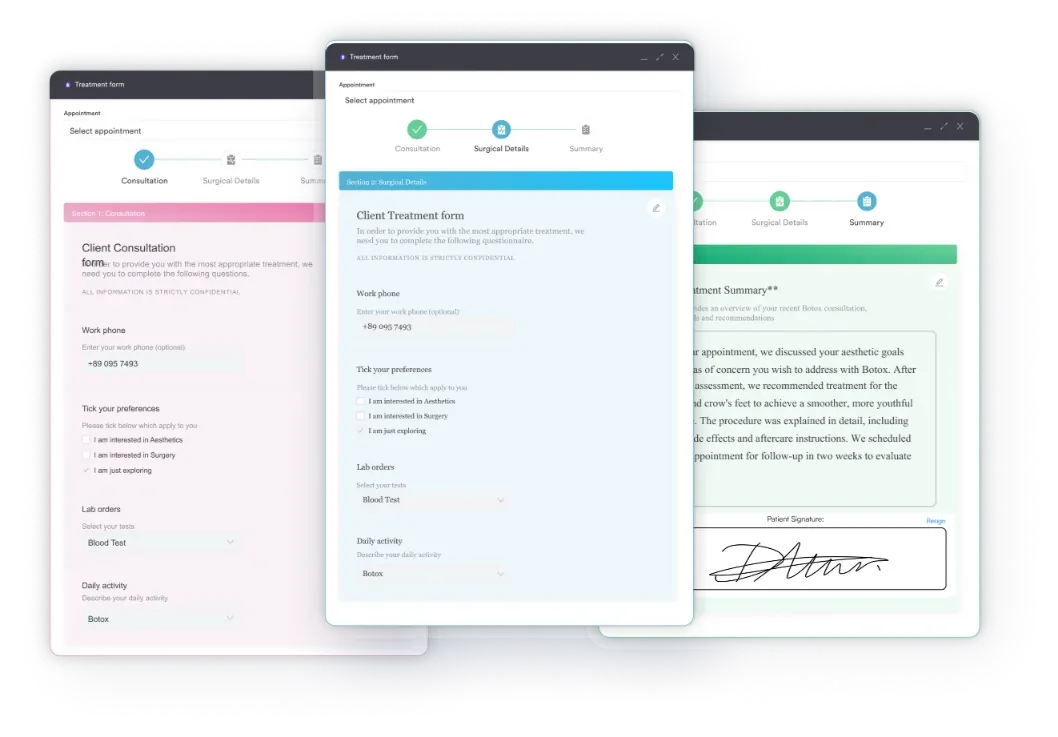

Pabau’s claims management submits your insurance claims and tracks their status. It checks the fields each insurer requires before a claim goes out, so fewer graft claims come back for missing information.

Three facts carry this code. Each unit is 100 sq cm, it attaches to 15156, and it only covers the specialized sites. Everything else about 15157 follows from those three.
The work that protects the claim happens in the operating room, not at the billing desk. Measure the graft while you are standing over it. Name the site the way the descriptor names it. Record the product and the lot number on the day. Reconstruct any of that three weeks later and you are writing an appeal instead.
Unit counts and authorization numbers usually go missing somewhere between the chart and the claim. Book a demo to see how Pabau links surgical documentation to claim submission for plastic surgery and wound care teams.

Billing the harvest as well as the graft? CPT code 15040 covers the skin harvest that produces the cultured sheet, on its own date of service.
Need the base code for the same specialized sites? CPT code 15155 sets out the first 25 sq cm and the rules 15156 and 15157 build on.
Reconstructing a fingertip or a toe instead? CPT code 14350 covers the filleted finger or toe flap and how it bills.
Treating a chronic wound before it ever reaches a graft? HCPCS code G0281 sets out how electrical stimulation for wound care bills.
Coding a conjunctival finding without a specific subtype? ICD-10 code for conjunctival disorder It covers when H11.9 applies to a documented finding that lacks a more specific subcategory.
It is an add-on code for tissue cultured skin autograft on specialized sites. Each unit covers an additional 100 sq cm, or 1% of body area in infants and children.
CPT 15156 is the only valid primary code. The AMA parenthetical names it explicitly, so pairing 15157 with 15155 or the 15150 series will deny.
Count the area past the first 100 sq cm, divide by 100, then round any remainder up. A 320 sq cm facial graft gives three units of 15157.
No. Add-on codes are exempt from the multiple procedure reduction, so modifier 51 never belongs on a 15157 line.
It carries a ZZZ global period. The code has no pre-operative or post-operative window of its own, so it takes the global period of the procedure it follows.
No. F1 to F9 and FA identify fingers only. Use T1 to T9 and TA for toes, which matters because the foot is a 15157 site.