CCSD code F3070: Suture of palate billing guide
CCSD code F3070 covers stitching a wound in the palate CCSD code F3070 is the co...

Last Updated: Oct 12, 2026

CPT code 14350 reports a filleted finger or toe flap, including preparation of the recipient site.
The code is technique-defined, so it sits apart from the size-based adjacent tissue transfer codes 14000 through 14302.
Place of service sets the Medicare rate, and digit modifiers FA to F9 or TA to T9 name the treated digit.
NCCI edits bundle repair codes 12001 to 13160 into 14350 for the same lesion, so modifier 59 needs a documented separate site.
Practice management software like Pabau keeps operative notes, claims, and payment status together in one patient file.
CPT code 14350 reports a filleted finger or toe flap, including preparation of the recipient site. The surgeon fillets a digit, raises its soft tissue as a flap, then moves that tissue to cover a defect close by.
Choosing the code is the easy part. Billing it is not. 14350 is technique-defined, so the square-centimeter rules that govern the rest of the 14000 series never come into play.
Three things decide whether the claim pays on the first pass: place of service, the digit modifier, and how the operative note justifies the flap. Miss any one of them and the claim comes straight back.
14350 is the procedure code for the filleted finger or toe flap, including preparation of the recipient site. It closes out the Adjacent Tissue Transfer or Rearrangement subsection of the AMA CPT code set, which runs from 14000 to 14350.
The descriptor is narrow on purpose. Here the surgeon harvests soft tissue from the digit itself, fillets it into a viable flap, then rotates or advances it over a nearby defect. Preparing the recipient site already sits inside the code, so no separate closure or wound bed code belongs on that claim line.
Three clinical pictures account for most 14350 claims:
What separates 14350 from every other flap code is the harvest site. The donor is the finger or toe itself, not a remote patch of skin somewhere else on the body. Plastic and reconstructive surgery teams report it most, with hand and podiatric surgeons close behind.
Codes 14000 through 14302 are size-defined. You measure the primary defect and the secondary defect, then add them together. Pick the code that matches the total square centimeters and the body area. 14350 ignores all of that.
That one difference causes most of the upcoding and undercoding in this family. A filleted digit flap goes to 14350 whether the defect is tiny or substantial.
Hands and feet have their own size-based options in this family. A qualifying defect of 10.1 to 30 sq cm on the hand or foot goes to 14041. The same measurement on the scalp, arms. Neither applies once the flap is a filleted digit.
14302 is an add-on and cannot stand alone, so it never pairs with 14350.
Medicare builds the allowed amount from relative value units, known as RVUs. Total RVUs get multiplied by the annual conversion factor, then adjusted for your Medicare Administrative Contractor locality. Rates move every January, so pull the current figure from the CMS Physician Fee Schedule before you quote a patient.
Every CPT code carries three RVU values, and each one answers a different question about the work.
Practice expense is the component that moves. It is the reason one procedure pays two different amounts depending on where you perform it.
The POS code on the claim, not the setting in your head, selects the rate Medicare applies.
POS errors rank among the most common reimbursement mistakes on surgical claims. Confirm where the patient was treated before the claim goes out. Geographic adjustment then moves the figure again, so a locality lookup is worth the minute it takes.
For a digit-specific code like 14350, RT and LT do not tell the payer enough. They name a side of the body, not a digit. Medicare and most commercial plans want the HCPCS digit modifiers instead.
Get that modifier right and the payer can see exactly which digit you treated. Here is how the rest of the modifier set behaves on this code.
Modifier policy still varies by contract, so confirm acceptance with each payer before you bill. Writing those rules down where your billers can see them beats rediscovering them one denial at a time.
The diagnosis code tells the payer why a flap was necessary. If it does not point clearly to tissue loss that primary closure could not handle, expect a medical necessity denial.
Laterality runs right through this table. T87.40 leaves the extremity unspecified. On the foot side, L97.519 is the right, L97.529 is the left, and L97.509 is the fallback when the record does not say.
Complication codes split by complication type, not just by site. T87.40 above is specific to infection, and device codes work the same way. An infected peritoneal catheter takes T85.71XA, while ICD-10 code T85.631A covers mechanical leakage of that catheter.
Check that every code is still valid for the current fiscal year before the claim goes out. Where the code family offers a digit specifier, use it rather than defaulting to the unspecified option.
Photograph the defect before the flap is raised, then attach the image to the operative note. When a payer asks why primary closure was not enough, a dated photo settles it faster than any narrative. It also gives the surgeon a reference point if the flap is revised later.
The National Correct Coding Initiative, or NCCI, treats adjacent tissue transfer as the comprehensive service for the lesion it repairs. Repair codes 12001 through 13160 fold into it for the same lesion or injury. That span reaches past simple and intermediate repair into complex repair at 13100.
Three groups of codes cause most of the bundling denials:
CMS refreshes the edit pairs every quarter, so a pairing that cleared in January can fail in July. Chapter 3 of the NCCI policy manual covers integumentary procedures and lists the modifier indicator for every pair.
14350 carries a 90-day global surgery period. Confirm it against the current CMS global surgery indicator file before you rely on it, because global days do get revised.
Across those 90 days, Medicare and most payers fold the following into the single surgical payment:
Plenty of legitimate work sits outside that package. Each type needs its own modifier to get paid:
High-volume surgical practices lose more money in this window than anywhere else on the claim. A short monthly audit of post-operative visits catches the ones that should have carried a 24 or a 79. The CMS global surgery booklet spells out exactly what the package includes.
Because the code is technique-specific, the operative note has to prove the technique. A note that says “flap coverage of the digit” and stops there gives a reviewer nothing to match against 14350.
A complete 14350 operative note names:
Build those fields into a reusable operative note template rather than trusting recall at the end of a long list. A purpose-built plastic surgery EMR can prompt for each one at the point of documentation.
Five quick checks catch most 14350 denials before the claim ever leaves your system.
The same five denial patterns come round again and again. Knowing them in advance beats working a denial queue after the fact.
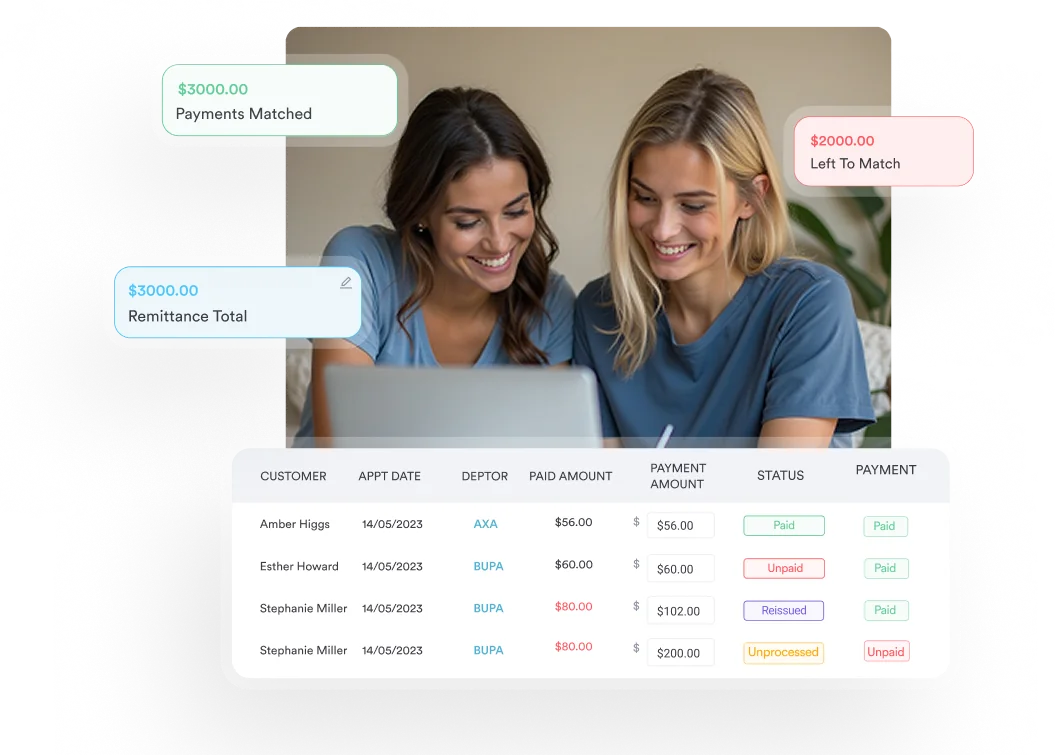
Reconstructive billing usually lives in three places at once. The operative note sits in the clinical system. Payer rules live in a shared document somebody updates when they remember. The remittance sits in a spreadsheet. Nobody sees the whole claim.
Practice management software like Pabau holds those pieces together. Notes, invoices, and claim records attach to the same patient file. A biller working a 14350 line can open the operative note behind it without chasing anyone. Claims management and compliance tools track what has been submitted and keep an audit trail behind it. Risk of complications carries more weight than volume of notes when the visit level is questioned. Missing a provider identifier or a diagnosis code sends a reimbursement claim straight back, so a reimbursement receipt lists both.
The payoff is fewer handoffs. Digital note templates prompt the surgeon for the flap details a 14350 claim depends on. Secure.
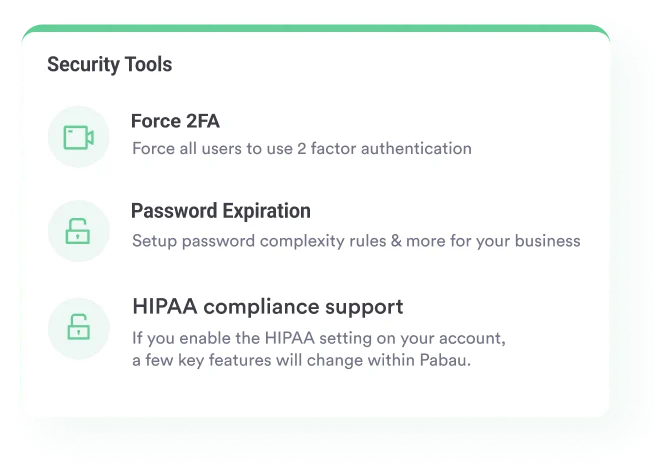

Pabau brings operative notes, invoices, and claim records into a single patient file. Your billing team can see the documentation behind every claim line without chasing it.

14350 rewards precision in three narrow places. Report where the procedure happened, name the digit with the right modifier, and let the operative note explain why a flap was the right call.
Everything else follows from those three. A quarterly NCCI check and a monthly look at post-operative visits keep the remaining money where it belongs. Neither takes long once the habit is set.
The harder part is keeping the note, the claim, and the payment visible to the same people. Book a demo to see how Pabau keeps surgical documentation and billing in one system.

Billing a complete digit amputation instead? 20816 covers replantation coding, the global period, and the modifiers that go with it.
Working on a flap reconstruction claim elsewhere on the body? 19367 walks through documentation and payer rules for flap-based breast reconstruction.
Need the complex repair rules that sit next to this family? 13132 explains how complex repair is measured and when it can be reported.
Coding the excision that created the defect? 11621 sets out lesion measurement, margins, and the closure rules that follow.
Coding a visit for a behavioral health diagnosis? ICD-10 codes for ADHD The F90 series documents ADHD for clinical records, treatment planning, and insurance reimbursement.
The flap work on the donor digit is part of the code. If the donor site needs its own skin graft or local flap to close, CPT treats that as a separately reportable procedure. Document both sites clearly.
Yes, when the surgeon treats more than one digit. Report a separate line for each digit with its own finger or toe modifier. Expect the payer to apply a multiple-procedure reduction to the second line and beyond.
Medicare does not require prior authorization for it. Many commercial plans do ask for it on reconstructive procedures, and the rules differ by contract. Check the plan’s surgical policy before the case is scheduled.
Check the assistant-at-surgery indicator for the code in the CMS fee schedule file. Where one is allowed, the assistant appends modifier 80, 82, or AS depending on their role and credentials.
A toe-to-hand transfer relocates a toe onto the hand and has its own codes in the 26551 to 26556 range. 14350 keeps the flap on its own digit and moves the tissue only a short distance.
Plastic and reconstructive surgeons, hand surgeons, orthopedic surgeons, and podiatric surgeons for toe flaps. Any qualified surgeon may report it when the operative note supports the technique described in the code.