



CCSD code G5100: Bypass of duodenum billing guide
CCSD code G5100 bills a bypass that leaves the duodenum in place CCSD code G5100...

Last Updated: Oct 16, 2026

CPT code 15200 describes a full thickness graft, free, including direct closure of donor site, trunk; 20 sq cm or less
Direct closure of the donor site is included in 15200 and cannot be billed separately – a common claim denial trigger
CPT 15201 is the paired add-on code for each additional 20 sq cm of trunk graft beyond the initial unit
Pabau’s claims management software helps dermatology and plastic surgery practices link operative documentation directly to skin graft billing codes, reducing denial rates
CPT code 15200 describes a full thickness graft, free, including direct closure of donor site, trunk, 20 sq cm or less, per the AMA‘s official descriptor. The graft uses the patient’s own full thickness skin, both epidermis and dermis, harvested from a donor site and placed over a defect on the chest, abdomen, back, or flanks.
This guide covers the CPT 15201 add-on code, 2026 reimbursement rates, modifiers, the ICD-10 crosswalk, and the documentation and denial patterns specific to CPT code 15200.
Three elements determine whether CPT code 15200 is the right code: Graft type (full thickness, not split), anatomical site (trunk only – abdomen, back, chest, flanks), and defect size (at or below 20 sq cm).
Miss any one of these and the claim risks a denial or a downcoded payment. Practices using dermatology EMR software that ties operative notes directly to procedure codes have a structural advantage in catching these mismatches before submission.
A full thickness graft (FTG) harvests both the epidermis and the full dermis from the donor site, unlike a split-thickness graft which takes only a partial dermis. The “free” qualifier means the harvested graft has no blood supply connection to the donor site during transfer.
When the same trunk defect is resurfaced with a split-thickness graft, report 15100 instead of 15200. That code covers the first 100 sq cm of autograft on the trunk, arms, or legs.
The descriptor’s “including direct closure of donor site” clause is critical for billing: That closure is bundled into 15200 and is not separately payable. Autograft is the tissue type – the patient’s own skin.
CPT code 15200 covers the first 20 sq cm of full thickness trunk graft. When a defect exceeds that threshold, CPT 15201 enters the picture. This add-on code – reported once for each additional 20 sq cm – is never billed alone. It requires 15200 as the parent code on the same claim.
The operative report must document the precise measured area of the graft recipient site. Payers routinely deny 15201 units when the note states the area without measurement units or uses approximate language (“approximately palm-sized”). Exact square centimeter measurements – ideally with a diagram – are non-negotiable.
The 15200 series sits within the broader autograft section of the CPT code set. Selecting the wrong code from this family is one of the most frequent coding errors in dermatology and plastic surgery.
The distinctions come down to graft thickness, anatomical site, and defect size. The split-thickness series follows a similar site split:
CPT 15115 and its add-on CPT 15121 cover the same split-thickness graft type on the face, scalp, and other special sites. Confirming which site-and-thickness pair matches the operative note prevents a same-family code mismatch.
The 15271 code is particularly easy to confuse with 15200 when a practice uses skin substitute products. CPT 15271 applies to non-autologous grafts – biological or synthetic substitutes – and has its own reimbursement and medical necessity criteria.
For trunk wounds of 100 sq cm or more. Using CPT code 15200 when a skin substitute was applied (rather than the patient’s own harvested tissue) is an audit risk.
Medicare reimbursement for CPT code 15200 is set annually through the CMS Physician Fee Schedule (MPFS). Specific 2026 dollar amounts vary by geographic locality. Electronic remittance files post payments automatically, and the adjustment codes explain what was reduced and why.
The national average figures below are derived from third-party aggregations of CMS MPFS data and should be verified against the official CMS MPFS look-up tool for your specific payment locality before use in claims or financial projections.
Relative value units (RVUs) drive Medicare payment calculations for CPT code 15200. The FastRVU 2026 lookup tool provides current work, practice expense, and malpractice RVU values by setting and locality.
Modifier selection for CPT code 15200 depends on the clinical scenario: Bilateral procedures, distinct procedural services, or professional/technical component splits. Applying the wrong modifier – or omitting a required one – routinely triggers automatic denials. Choosing the correct E/M level for a related visit involves weighing problems addressed, data reviewed, and risk, which is what MDM documentation covers.
Add-on code CPT 15201 is exempt from modifier -51 by AMA convention. Never append -51 to 15201. Payer modifier rules vary – confirm each payer’s modifier policies before submission, as some commercial plans have restrictions that differ from Medicare guidance.
Linking CPT code 15200 to a supported ICD-10-CM diagnosis code is essential for demonstrating medical necessity. Payers match the diagnosis to the procedure – a trunk full thickness graft supported by a burn code, wound code, or scar contracture code clears this test.
A mismatch (e.g., linking 15200 to a face/scalp diagnosis code) triggers an automatic review. The AAPC CPT-to-ICD-10 crosswalk provides a useful starting reference for common pairings.
Document the specific trunk sub-site, wound depth or defect size, and the clinical reason primary closure was not possible. Vague language (“wound, trunk, NOS”) without supporting context is a denial waiting to happen.
The same rule governs injury codes outside the trunk, where the documented tissue decides the code family. ICD-10 code S65.419A requires a note naming vessel involvement, and a thumb cut without it belongs in the S61 open wound range.
Before submitting a 15200 claim, cross-reference your ICD-10 code against the diagnosis’s trunk-site specificity. A burn code that applies to the hand (T23.x) cannot support CPT 15200 – the trunk code family (T21.x) is required. Run a site-match check on every skin graft claim to eliminate this fast-deny trigger.
Whether it can be separately billed alongside CPT code 15200 is one of the most contested questions in skin graft billing. The answer turns on the NCCI (National Correct Coding Initiative) edits in effect for the claim date and your payer’s policy.
CPT 15003 is the add-on code for each additional 100 sq cm of wound prep beyond 15002’s first 100 sq cm on the trunk, arms, or legs.
CPT 15004 is a separate primary code (with its own add-on, 15005) for wound prep of the face, scalp, eyelids, mouth, neck, ears, orbits, genitalia, hands, feet, or multiple digits, not a same-site add-on to 15002.
Confirm current NCCI edits via the CMS NCCI Policy Manual before billing either prep code alongside CPT code 15200.
The CPT 15200 descriptor explicitly includes “direct closure of donor site.” This is not ambiguous. Reporting a separate closure code for the donor site when CPT code 15200 was used is incorrect unbundling – and a common audit finding in dermatology and plastic surgery practices.
Good operative note discipline at the donor site documentation stage prevents post-payment audits. A note that describes both the harvest site and closure in one paragraph – without a separate section for the donor closure – signals to auditors that the services are bundled, as coded.
Thin documentation is the primary reason CPT code 15200 claims end up in the denial queue. The medical documentation requirements for skin graft procedures are specific – and payers check them systematically. Practices that use digital intake forms linked to their clinical workflow can embed the required data capture fields directly into pre-operative and intraoperative templates, making omissions structurally unlikely.
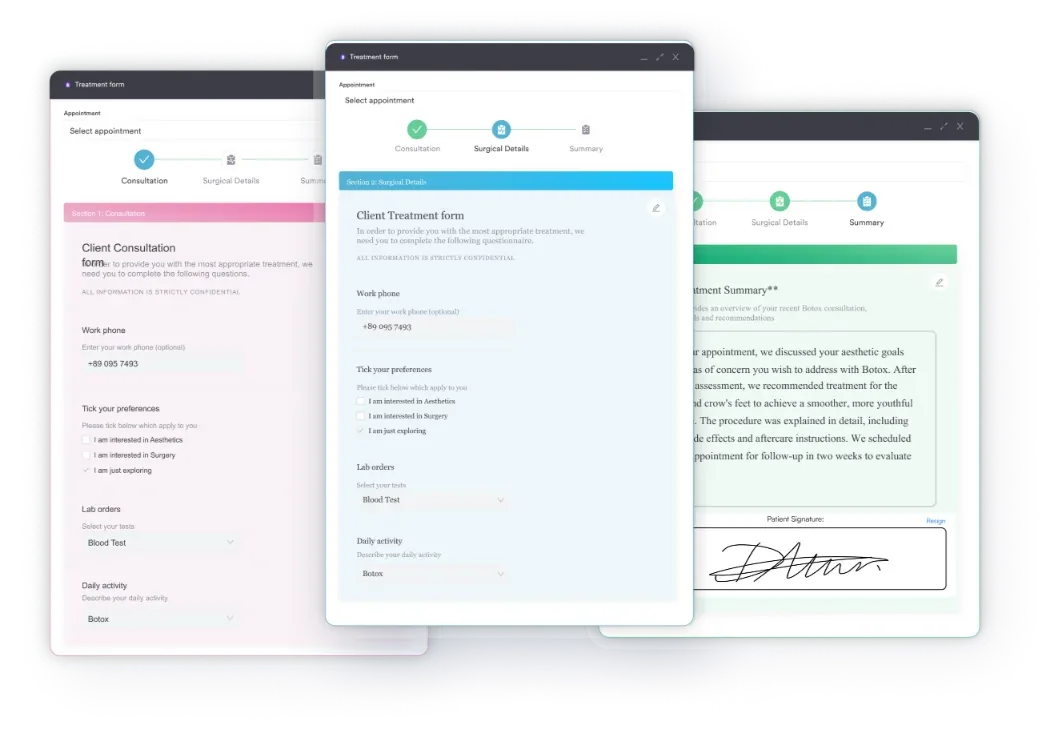
Meeting HIPAA compliance requirements in how this documentation is stored and transmitted is a separate but parallel obligation. Procedure records including photos and operative notes must be secured under HIPAA standards.
CPT code 15200 is generally payable in ambulatory surgical center (ASC) settings, though ASC payment status is confirmed annually through CMS ASC payment indicator files and can change. Verify the current ASC payment indicator for 15200 before scheduling a procedure in an ASC setting solely based on historical data.
The 90-day global period means that routine follow-up wound checks, suture removal, and graft site assessments within 90 days of the procedure are bundled into CPT 15200’s payment. Billing these separately without the correct modifier is a compliance violation, not just a denied claim.
Dermatology and plastic surgery practices billing CPT code 15200 face a documentation-to-billing chain with multiple potential failure points: Incomplete operative notes, missing measurements, improper code pairing, and modifier errors.
Pabau’s claims management software links clinical documentation directly to procedure codes, so what gets submitted matches what was performed.
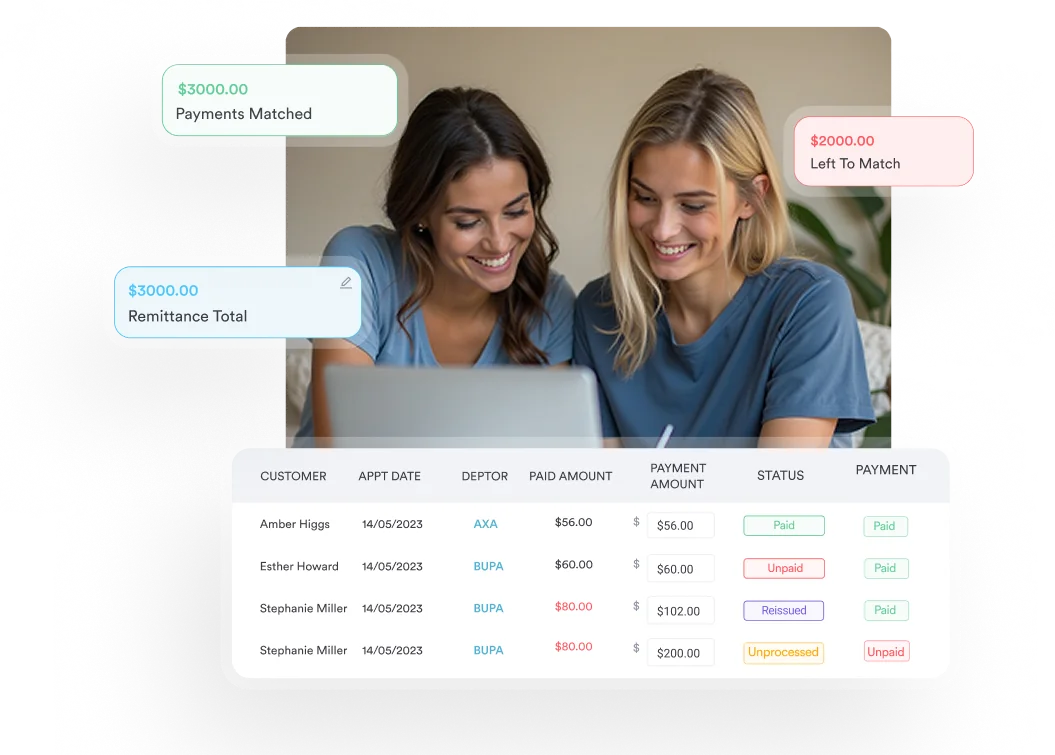
For practices in dermatology and plastic surgery EMR workflows, Pabau supports structured treatment notes that capture the specific fields – graft size, site, technique, and donor site closure method – needed to support 15200 and 15201 claims.
The automated billing workflows help flag incomplete records before claims reach the clearinghouse, catching the missing documentation that generates the denial patterns outlined above.

Pabau helps dermatology and plastic surgery practices link operative notes directly to CPT codes, so nothing gets lost between the OR and the clearinghouse.

Most CPT code 15200 denials trace back to a small set of repeating errors. The top denial triggers for 15200 claims are:
A pre-submission claim scrub that checks for these specific patterns – site-code match, measurement documentation, modifier presence, and ICD-10 linkage – catches the majority of 15200 denials before they occur.
Using clinical record management software that surfaces incomplete documentation flags at the point of note completion (not at claim submission) moves the fix upstream, where it costs far less to correct.
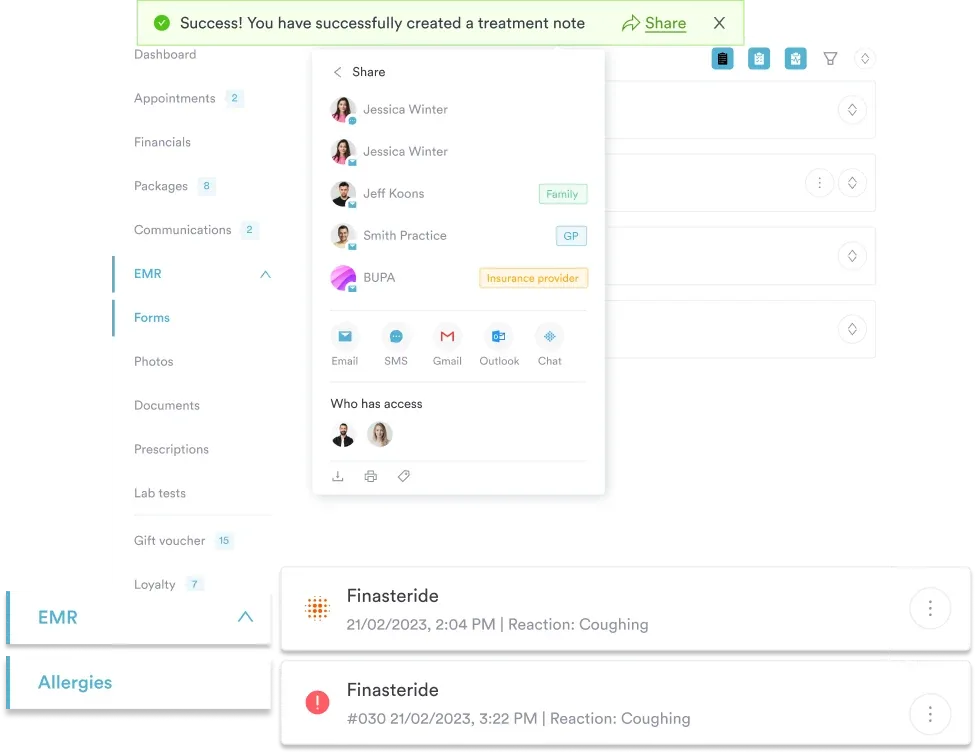
CPT code 15200 carries more billing risk than its straightforward descriptor suggests. The bundled donor site, the 20 sq cm threshold, the trunk-only site restriction, and the NCCI rules around 15002 create multiple claim failure points – each preventable with the right documentation workflow.
Pabau’s claims management tools help dermatology and plastic surgery practices embed those requirements into operative note templates, so the documentation that supports a clean 15200 claim is captured at the point of care. See how Pabau supports skin procedure billing by booking a demo.

Coding a scleral disorder diagnosis? ICD-10 code for scleral disorder It confirms H15.9 is billable within the H15-H22 block covering the sclera and cornea.
Billing for a skin substitute instead of an autograft? CPT 15273 covers skin substitute graft billing thresholds and documentation for larger trunk wounds.
Need the face or scalp equivalent? CPT 15115 covers epidermal autograft billing for non-trunk sites.
CPT code 15200 is a full thickness skin graft, free, including direct closure of the donor site, performed on the trunk (chest, abdomen, back, flanks) for a defect of 20 sq cm or less. The code covers autologous full thickness tissue – both epidermis and full dermis – harvested from the patient and transferred to the recipient wound site. Direct closure of the harvest site is bundled into the code and is not separately billable.
CPT 15200 covers the first 20 sq cm of full thickness trunk graft; CPT 15201 is the add-on code reported for each additional 20 sq cm beyond the initial unit. For a 35 sq cm graft, report 15200 x1 plus 15201 x1. For a 58 sq cm graft, report 15200 x1 plus 15201 x2. The add-on code 15201 is exempt from modifier -51 and cannot be reported without 15200 as the parent code on the same claim.
The most common modifiers for CPT code 15200 are -51 (multiple procedures, when billed alongside other surgical codes), -59 (distinct procedural service, required with prep codes like 15002 when NCCI edits apply), and -LT/-RT (left/right side, for lateralized trunk procedures). Modifier -22 may apply when documented increased complexity justifies higher reimbursement. Verify modifier applicability against current AMA guidelines and individual payer policies before appending.
The most common ICD-10-CM codes paired with CPT code 15200 include T21.x (burns of the trunk, various depths), S30.x-S39.x (open wounds of the abdomen, lower back, and pelvis), L90.5 (scar conditions causing contracture), L89.x (pressure ulcers at trunk-specific stages 3-4), and C43.x or C44.x (skin malignancy requiring wide local excision). The selected ICD-10 code must specify the trunk sub-site and document the medical necessity for full thickness graft rather than primary closure.
CPT 15200 carries a 90-day global surgical period, meaning routine post-operative care within 90 days of the procedure is bundled into the code payment. Billing separate E&M visits for routine graft follow-up within this period requires modifier -24 (unrelated E&M) or modifier -78 (return to OR for related complication). Verify the current global period against the CMS MPFS data file, as global period assignments can change with annual rule updates.
CPT 15002 (surgical preparation of the wound surface) may be separately billed with CPT code 15200 when the operative report documents a distinct wound preparation step performed as a separate surgical service before graft placement, with modifier -59 appended to override the NCCI bundling edit. When wound preparation is incidental to the graft procedure, it is bundled into 15200 and not separately reportable. Current NCCI Policy Manual guidance should be confirmed before billing both codes together.
CPT code 15200 is generally payable in ambulatory surgical center (ASC) settings. ASC payment eligibility is confirmed annually through CMS ASC payment indicator files, and status can change with each year’s CMS final rule. Before scheduling a trunk full thickness graft in an ASC setting, verify the current ASC payment indicator for 15200 in the CMS ASC payment files, as historical payability does not guarantee continued coverage.



