CCSD code F3070: Suture of palate billing guide
CCSD code F3070 covers stitching a wound in the palate CCSD code F3070 is the co...

Last Updated: Oct 12, 2026

CPT code 15040 covers the skin harvest for a tissue-cultured autograft, 100 sq cm or less.
There is no add-on code, so a harvest larger than 100 sq cm is reported as extra units of 15040.
The harvest is billed separately from the graft application, which uses codes 15150 through 15157.
Place of service moves the payment, so an office harvest pays more than the same work in a hospital.
Practice management software like Pabau submits and tracks insurance claims, and checks required insurer fields before you send them.
CPT code 15040 covers a single job. A surgeon harvests skin from the patient so a lab can grow it into a graft. The descriptor caps that harvest at 100 sq cm or less. It does not pay for the culturing, and it does not pay for placing the finished graft.
That narrow scope is where the claims run into trouble. Some coders reach for an add-on code that does not exist. Others fold the harvest into the graft code, the way they would with a split-thickness graft. Both errors are easy to avoid once you see how the code is built.
CPT code 15040 describes the harvest of skin for a tissue-cultured skin autograft, 100 sq cm or less. It sits in the Autografts and Tissue Cultured Autograft subsection of the CPT integumentary chapter. Per AMA CPT guidance, the code stops at the harvest.
The surgeon takes a small piece of the patient’s own skin and sends it to a laboratory. Over the following weeks, the lab expands those cells into a sheet big enough to cover the wound.
Burn centers, plastic surgery teams. It usually follows a full-thickness burn, or a chronic wound that has stopped responding to standard care.
CPT publishes no add-on code for 15040. When the harvest runs past 100 sq cm, you report additional units of 15040 rather than a second code number. Anything written up online as “15041” is not in the CPT code set, and a payer will reject it as invalid.
The other half of the confusion is the split between harvest and application. With a conventional split-thickness graft, taking the donor skin is bundled into the graft code. Tissue-cultured autograft works the other way around. The harvest earns its own code, because on the day you take the skin, the graft does not exist yet.
Application is coded separately, usually weeks later. Codes 15150 through 15152 cover the trunk, arms, and legs. For the face, scalp, eyelids, mouth, neck, ears, orbits, genitalia, hands, feet, and multiple digits, use 15155 through 15157. Those codes start at 25 sq cm, so do not carry the 100 sq cm threshold across from 15040.
A 15040 claim rarely travels alone. The codes below are the ones most likely to sit beside it. Some turn up in the same session, others on the application claim weeks later.
With plastic surgery practice software, graft and flap procedures carry their full documentation trail from consult to closure.
Medicare pays 15040 under the Physician Fee Schedule, and two things move the number. One is where the procedure happened. The other is the Geographic Practice Cost Index, known as GPCI, which adjusts payment by locality.
An office harvest pays the non-facility rate, which is higher because the practice buys the supplies and staffs the room. A harvest in a hospital or ambulatory surgery center pays the facility rate, since the facility bills that overhead itself. Confirm the current locality figure in the CMS fee schedule lookup tool before you quote anyone a number.
The place of service code on the claim carries all of that. Three cover almost every 15040 harvest:
Mismatching the place of service to the actual setting is an audit flag. The code on the claim has to match the location named in the operative report. Pulling it from the scheduled location instead of typing it in removes most of these mismatches.
Relative value units are the raw material of the payment. Medicare multiplies the total RVU by the annual conversion factor, then adjusts for locality. CPT 15040 carries work, practice expense, and malpractice components, and the practice expense side splits between facility and non-facility.
Pull current values from the CMS relative value files, which are republished every January. A figure copied from a blog last year is already out of date, and so is the conversion factor behind it.
Check both the facility and non-facility practice expense RVU when you advise a surgeon who harvests in the office and in the hospital. The difference between the two is large enough to change how a case is scheduled. Coding the wrong place of service is also a common denial trigger.
Modifier choice on 15040 comes down to what else happened in the same session. Get it wrong and the claim bounces, usually as a bundling edit rather than a medical necessity denial. The CMS NCCI edit files tell you which pairs are bundled and whether a modifier can override the edit.
Medical necessity for 15040 rests on the ICD-10 code attached to the claim. Payers want to see why the patient needed skin grown in a lab, rather than a graft taken and placed the same day. Wound size, wound depth, and a shortage of usable donor skin are what carry that argument.
Neuropathy coded alongside a lower-extremity ulcer has its own trap. ICD-10 code G63 carries an Excludes1 for diabetic polyneuropathy, which belongs with E08-E13 and .42. Where the cause is non-diabetic, the note must say so, because coders cannot infer the causal link.
Your MAC’s local coverage determination is the final word here. Two MACs can take different views on the same chronic wound. Read the one that applies to your region before the harvest, not after the denial.
Documentation is where 15040 claims are won or lost. Post-payment audits are common on cultured autograft, because the procedure is expensive and the necessity bar is high. Structured medical forms and a consistent note template cut that exposure before an auditor asks. Practices that review a sample of notes each month catch documentation level drift before a payer does.
The operative report needs every one of the following:
Two of those catch people out. Measuring after the fact from a photograph does not hold up under review. Neither does “small area harvested”, which gives the payer nothing to price. Write the number down in the room.
Some teams build these fields straight into the note template in their skin clinic software. Nobody then has to remember them at the end of a long list.
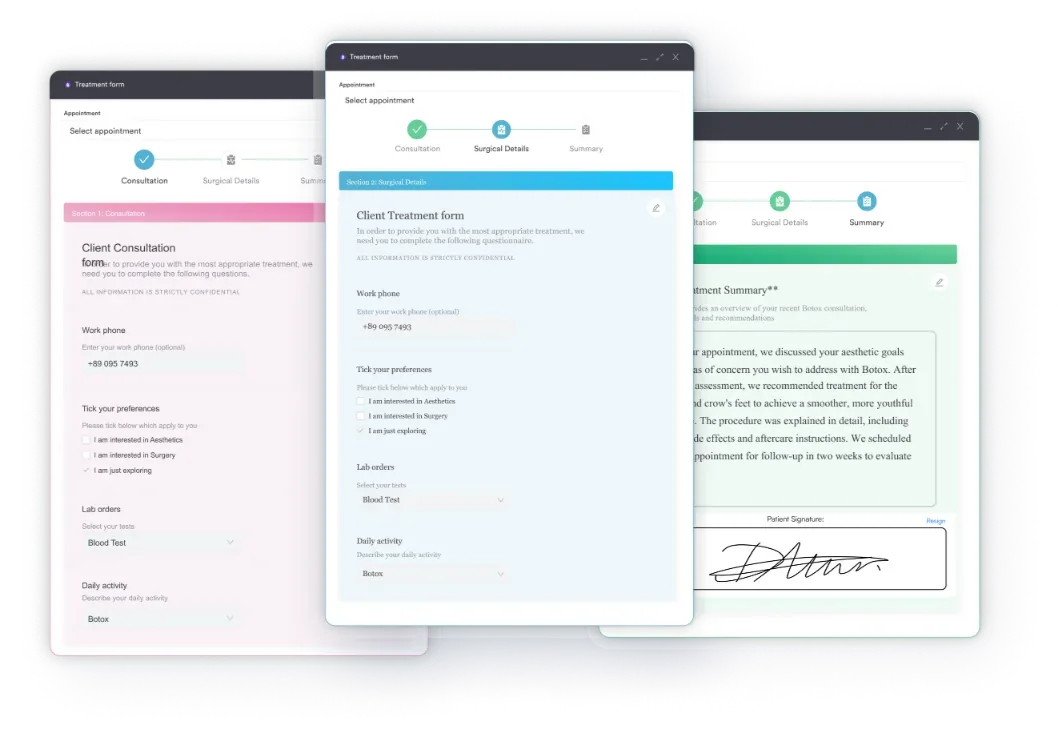
Most coding references stop at the descriptor. Here is what actually happens between the harvest and the money landing:
Step six is the one that surprises people. The harvest and the application are different encounters, so they never share a claim, and each needs its own documentation. If the patient’s coverage changes in between, the application claim can deny while the harvest claim paid without a murmur. Patient coverage can change between the referral and the procedure, so eligibility verification belongs close to the date of service.
Five errors account for most of the denials on this code. None of them are hard to prevent.
It takes about a minute per claim, and it catches almost everything above.
Audit your 15040 claims once a quarter and filter for CO-50 and CO-16 denials. CO-50 points at a diagnosis that did not convince the payer. CO-16 usually points at a missing harvest measurement. Between them they cover most of what is fixable without an appeal.
Most practices run this workflow across three places. The operative note lives in the record system. Codes live in a spreadsheet, or in a biller’s head. The claim gets keyed into a payer portal. Nobody spots the missing authorization number until the rejection arrives three weeks later.
Pabau, an all-in-one practice management system, keeps the record and the claim in one place. Its claims management tools submit your insurance claims and track their status, and they check the fields each insurer requires before anything is sent. Missing membership numbers and authorization codes surface while you can still fix them.
Because the note and the claim share a record, the sq cm figure a payer asks about is one click away.
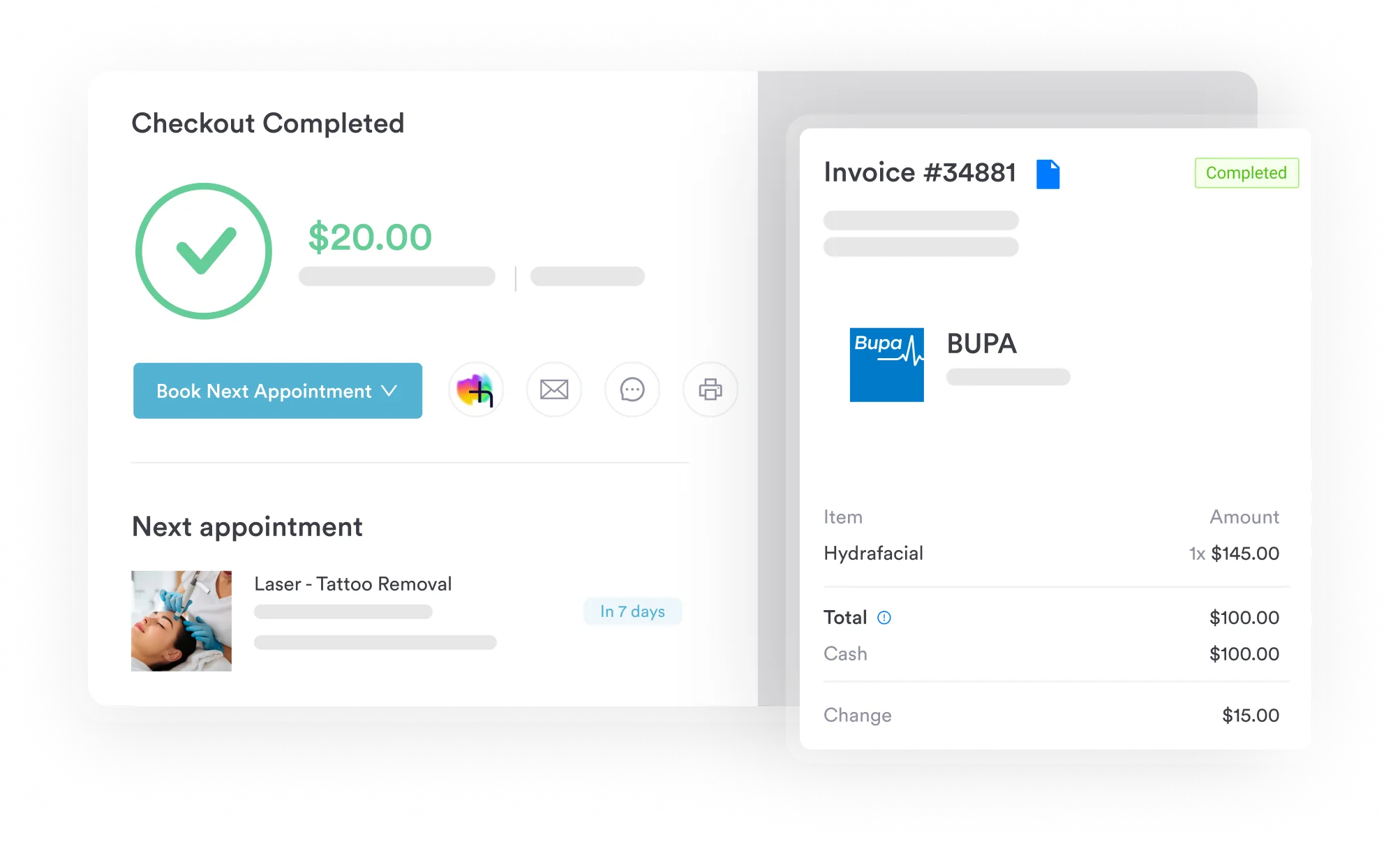
The surgeon talks once, and the write-up lands in the patient record already organized. That leaves the coder far less to reconstruct when the chart reaches them.
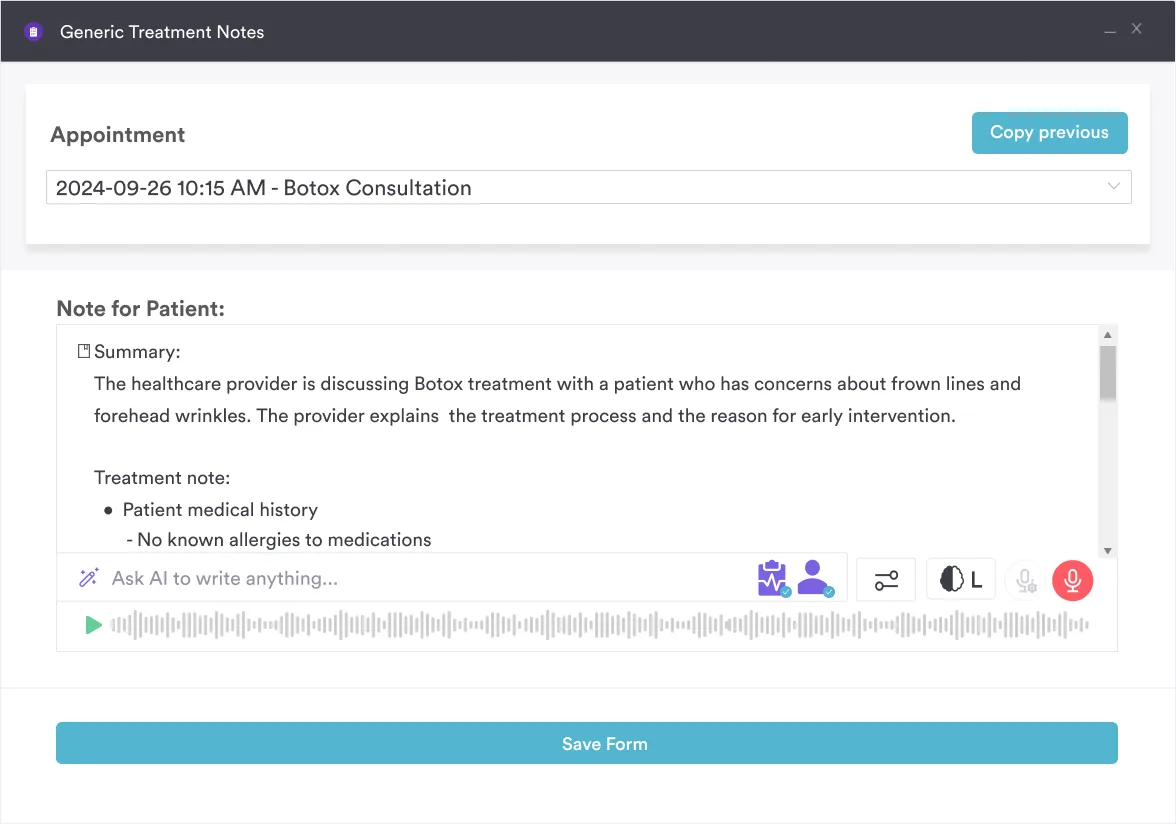

Pabau’s claims management submits your insurance claims and tracks their status. It also checks the fields each insurer requires before a claim goes out, so fewer come back for missing information.

The code itself is simple. One harvest, 100 sq cm or less, extra units if you take more. What makes 15040 awkward is everything around it, and almost all of that is settled in the operating room rather than in the billing office.
Measure the donor site while you are standing over it. Name the lab. Pick the diagnosis that explains why lab-grown skin was the right call. Do those three things on the day, and the claim looks after itself. Reconstruct them three weeks later and you are writing an appeal instead.
Claim status and payer field checks often end up living in someone’s inbox. Book a demo to see how Pabau handles submission and tracking for wound care and plastic surgery teams.

Documenting a movement disorder tied to another diagnosis? ICD-10 code G26 guide It covers the mandatory Code First rule that sequences the underlying disease ahead of G26 on claims.
Closing a defect with local tissue instead? 14041 walks through adjacent tissue transfer coding and the defect size thresholds that decide it.
Billing the debridement before the graft? 11042 explains how depth and surface area change the code you report.
Working on a digit salvage case? 14350 sets out when a filleted finger or toe flap is reportable, and what the note must show.
Coding flap reconstruction as well? 19367 covers breast reconstruction with a flap, including the documentation payers look for.
Almost never. The lab needs weeks to grow the graft, so the application happens on a later date of service. That makes it a separate claim, with its own note and its own authorization if the payer requires one.
No. The code is for an autograft, meaning the patient’s own skin. Application of a manufactured substitute or an allograft is coded in the 15271 to 15278 range instead.
Many commercial payers require it for cultured autograft. Check the medical policy before the harvest, because a request filed after the fact is rarely approved. Medicare Advantage plans often set their own rules here.
Not the practice. CPT 15040 pays the surgeon for the harvest only. The laboratory that expands the cells bills separately, under its own arrangement with the payer or the hospital.
Report 15040 again for the new date of service. The note has to stand on its own, explaining why the first graft did not take and why a second harvest was necessary.