



CCSD code G5100: Bypass of duodenum billing guide
CCSD code G5100 bills a bypass that leaves the duodenum in place CCSD code G5100...

Last Updated: Oct 16, 2026

CPT code 14060 describes adjacent tissue transfer or rearrangement for eyelids, nose, ears, and/or lips when the defect is 10 sq cm or less.
The 2026 national average Medicare payment is roughly $772 non-facility and $573 facility. Check your own locality rate in the CMS fee schedule lookup tool.
CPT 14060 carries a 90-day global surgical period, so routine post-op visits inside that window cannot be billed separately.
Trunk defects of the same size route to CPT 14000, and scalp, arm, or leg defects route to CPT 14020. Billing 14060 for those sites is a common denial driver.
Practice management software like Pabau keeps the operative note, defect measurement, and diagnosis on one client record, then pre-fills the claim from it.
CPT code 14060 is the billing code for adjacent tissue transfer or rearrangement on eyelids, nose, ears, and/or lips. It applies when the defect measures 10 sq cm or less. It sits within the integumentary system section of the AMA’s CPT code set, specifically the 14000-14350 Adjacent Tissue Transfer or Rearrangement subsection.
Plastic surgeons, oculoplastic surgeons, facial plastic surgeons, and dermatologists use it most frequently, especially following Mohs micrographic surgery on the face.
The official AMA descriptor reads: “Adjacent tissue transfer or rearrangement, eyelids, nose, ears and/or lips; defect 10 sq cm or less.” Code selection turns on two facts, the anatomical site and the defect size, and both must be met.
A reconstruction of identical size on the trunk routes to 14000. On the scalp, arms, or legs it routes to 14020. Codes 14040 and 14041 cover the forehead, cheeks, chin, mouth, neck, axillae, genitalia, hands, and feet. Miss the site or the size and the claim will likely deny.
Common techniques billed under CPT code 14060 include rhomboid flaps, Z-plasties, rotation flaps, and advancement flaps. The code applies regardless of which local flap technique the surgeon uses, provided the defect meets the anatomical site and size thresholds.
CPT code 14060 covers reconstructive procedures that arise in three main clinical settings. Understanding the clinical triggers helps billing staff confirm medical necessity documentation before claim submission.
Practices specializing in dermatology billing workflows should note that the defect size measurement in 14060 refers to the primary defect only. The secondary defect created when harvesting the flap is not added to the measurement. This is a common source of coding confusion that leads to upcoding to 14061 when 14060 is the right code.
Relative Value Units (RVUs) determine how Medicare calculates reimbursement for CPT code 14060. The total RVU is the sum of work (wRVU), practice expense (PE RVU), and malpractice (MP RVU). The figures below come from the 2026 CMS final rule. Verify them against the CMS relative value files or a maintained RVU lookup tool.
RVU values are updated annually with each CMS Medicare Physician Fee Schedule final rule. Facility and non-facility rates differ because of where the overhead sits. Office-based procedures carry practice overhead in the PE RVU. Hospital-based procedures shift that overhead onto the facility’s own payment.
Medicare pays for CPT code 14060 under the Medicare Physician Fee Schedule (MPFS). Reimbursement is calculated by multiplying total RVUs by the conversion factor and then applying a Geographic Practice Cost Index (GPCI) adjustment for the provider’s locality. National average figures are a useful benchmark, though payment varies by MAC jurisdiction.
These figures use the 2026 RVU totals and the final conversion factor of $33.4009. Practices paid as qualifying APM participants use the higher $33.5675 factor instead.
Geographic adjustment moves the number in both directions, so a national average is only a starting point. Verify your own rate in the CMS fee schedule lookup tool before you use it in planning or contract negotiations.
Commercial payers usually set their CPT code 14060 rate as a percentage of the Medicare allowable. That percentage runs from 100% to 130% or higher depending on the contract. Verify each contracted rate individually.
CPT code 14060 carries a 90-day global surgical period under CMS policy. The payment covers pre-operative services one day before surgery and the procedure itself. It also covers all routine post-operative care for 90 days after the procedure date. Billing separately for routine follow-up inside that window results in denials.
What is included in the global package for CPT 14060:
What can be billed separately during the global period:
Track global period end dates at the time of claim submission. For CPT code 14060, add 90 days to the procedure date. A related service billed at day 91 or later needs no special modifier. Global period rules no longer reach it.
Correct modifier use is essential for CPT code 14060 claims. Missing or incorrect modifiers are among the top denial drivers for integumentary reconstruction codes. The table below summarizes the modifiers most commonly applied, though payer-specific rules may vary. Verify modifier requirements against each MAC’s local coverage determinations (LCDs).
For bilateral eyelid or ear procedures, some commercial payers accept modifier -50 on one line item. Others require two separate lines with -RT and -LT. Confirm the preferred format with each payer before submitting, because the wrong bilateral approach delays payment.
Claims for CPT code 14060 must be supported by an operative report that documents the elements payers use to confirm medical necessity and code selection. Missing or vague documentation is the most common reason these claims face post-payment audit or recoupment requests.
Required operative note elements:
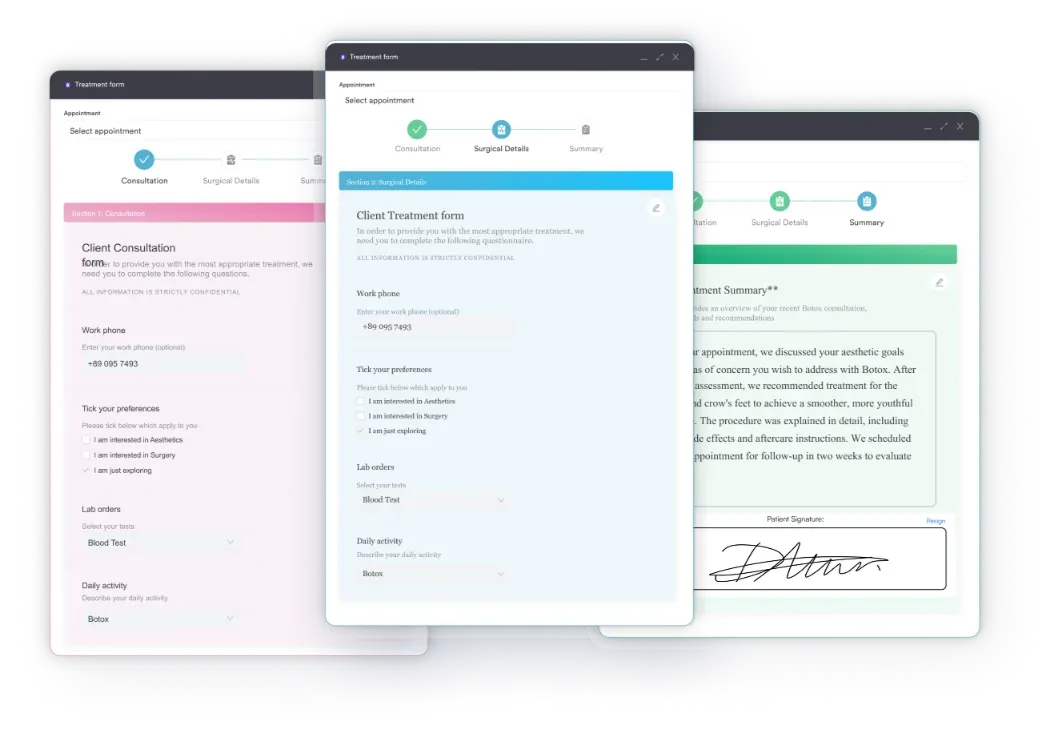
Practices using digital intake forms can pre-populate these fields so no element is missed before the note is signed. Structured operative documentation also improves audit readiness and supports HIPAA-compliant record keeping across the practice.
Billing errors on CPT code 14060 fall into predictable patterns. Catching them before submission prevents the denial codes that follow, and keeps rework off the billing team’s desk.
Selecting the correct code from the adjacent tissue transfer family requires matching both the anatomical site and defect size. The comparison table below covers the codes most frequently considered alongside CPT code 14060.
The 14060 versus 14061 distinction is the one audits question most often. If the primary defect exceeds 10 sq cm, use 14061. Document the measurement in the operative note and confirm it before you pick the code.
Skin grafts are a separate decision. When the repair moves a free graft rather than adjacent tissue, the correct family is 15260 and not the 14000 series.
Medicare covers CPT code 14060 when the procedure is medically necessary and reconstructive in nature. Coverage depends on the distinction between reconstructive and cosmetic intent.
Reconstructive: Procedures performed to restore function or correct a deformity caused by disease, trauma, or surgery (including cancer excision) are covered. Post-Mohs reconstruction on the eyelid or nose typically meets this standard.
Cosmetic: Procedures performed to improve appearance without an underlying functional impairment or disease-related defect are excluded from Medicare coverage and most commercial plans. Documentation must distinguish the reconstructive intent clearly.
Key coverage considerations for billing staff:
Coverage screening works better at the point of scheduling than at the point of billing. Practices running plastic surgery practice management workflows can flag every 14060 booking for a preauthorization check before the patient arrives. That leaves time to gather the pathology report and the medical necessity narrative.
Integumentary reconstruction codes carry a higher denial risk than most office procedures. The site restriction, the defect-size threshold, the modifier rules, and the 90-day global period each create a point where a claim can fail. Most of those failures trace back to something the operative note never captured.
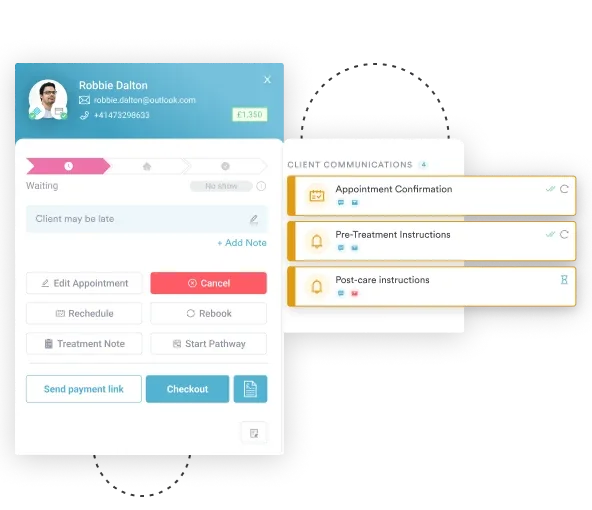
Practice management software like Pabau keeps the operative note, the defect measurement, the diagnosis, and the laterality on one client record. Pabau’s claims management software then pulls those stored details into a pre-filled claim, so nobody re-keys them at billing time. Validation checks run before it goes out, and the send button stays disabled while a required detail is missing.
For US practices, the Claim.MD integration submits that claim electronically, runs real-time eligibility checks, tracks its status, and posts ERA remittances. Code and modifier selection stays with your coder. Pabau’s job is the record behind the code, which is what a clean claim depends on.
Automated workflows can trigger a documentation reminder the moment a 14060 procedure is booked, so the note is complete before the claim is built. Linking that note to the client record means the defect measurement reviewed at audit is the same one the surgeon wrote.
Run a quarterly audit of CPT code 14060 claims by pulling all submissions in the 14000-14350 range. Sort by site (facial vs. non-facial) and defect size. Any 14060 claim with a non-facial site or a measurement over 10 sq cm needs review. Correct it before the timely filing deadline passes.

Pabau stores the operative note, defect measurement, and diagnosis on one client record, then pre-fills and submits the claim through Claim.MD. Your team stops re-keying details and stops chasing missing documentation.

The judgment worth carrying out of this article is that 14060 is decided long before the claim is built. Site and defect size are settled in the operating room and recorded in the note. Everything downstream, from modifier choice to the appeal you may have to write, rests on what that note says.
So the practical move is to fix the documentation template rather than the claim form. Prompt for site, primary defect measurement, technique, and laterality every time, and the site-and-size denials stop appearing. Denial management then becomes a small queue rather than a standing job.
Pabau is built for surgical specialties where that kind of billing detail decides the month’s revenue. Book a demo to see how Pabau ties operative documentation to claim submission for reconstruction codes.

Need the sibling code for scalp, arm, and leg repairs? CPT code 14020 covers adjacent tissue transfer at those sites for defects of 10 sq cm or less.
Closing a facial wound without a flap? CPT code 12051 sets out the intermediate repair rules for the face, ears, eyelids, nose, and lips.
Billing the Mohs excision as well as the reconstruction? CPT code 17311 explains the first-stage head and neck Mohs code and its bundling edits.
Grafting rather than rearranging tissue? CPT code 15150 covers tissue cultured skin autografts and how the graft area is measured.
Preauthorization slowing your reconstructive schedule? Prior authorization software shows how practices track approvals without falling back on a spreadsheet.
CPT code 14060 is used for adjacent tissue transfer or rearrangement on eyelids, nose, ears, and/or lips. It applies when the primary defect measures 10 sq cm or less. Practices most commonly bill it after Mohs micrographic surgery for skin cancer on the face. The code also applies after traumatic injury to these structures, or after excision of a lesion that leaves a defect too complex for linear closure.
CPT 14060 and CPT 14061 cover the same anatomical sites, so the only difference is defect size. Use 14060 when the primary defect is 10 sq cm or less. Use 14061 when it measures 10.1 to 30 sq cm. The measurement is the primary defect after excision, not the total tissue mobilized during flap creation.
CPT code 14060 has a 90-day global surgical period. Routine post-operative visits for normal healing in that window are included in the code’s payment. They cannot be billed separately. Unrelated procedures during the window require modifier -79, and return-to-OR complications require modifier -78.
For 2026, CPT code 14060 carries 9.00 work RVUs, a non-facility total of 23.11 RVUs, and a facility total of 17.17 RVUs. Multiplying the total by the 2026 conversion factor of $33.4009 gives roughly $772 non-facility and $573 facility. Verify exact values in the CMS Physician Fee Schedule lookup tool, since annual rulemaking adjusts these figures.



