



HCPCS code E0198: Water pressure pad billing guide
HCPCS code E0198 is a water pad for a standard mattress HCPCS code E0198 is the ...

Last Updated: Oct 13, 2026

CPT code 13132 covers complex repair of the forehead, cheeks, chin, mouth, neck, axillae, genitalia, hands, and/or feet for wounds measuring 2.6 cm to 7.5 cm
Complex repair requires more than layered closure – undermining, debridement, stents, or retention sutures must be documented
CPT code 13132 carries a 10-day (010) global period, not the 90-day window used for major surgical procedures
Practice management software like Pabau helps plastic surgery and dermatology practices reduce denials by linking procedure codes, modifiers, and documentation in one workflow
CPT code 13132 is the billable code for complex repair of the forehead, cheeks, chin, mouth, neck, axillae, genitalia, hands, and/or feet, covering wounds measuring 2.6 cm to 7.5 cm. It sits just 0.1 cm above CPT code 13131: The top of the 13131 range (2.5 cm) falls one-tenth of a centimeter below where 13132 begins, and most claim rejections in this family trace back to measurement documentation that doesn’t clearly justify which code applies.
For practices billing reconstructive surgery after Mohs, trauma lacerations, or post-excision closures, getting this distinction right affects the bottom line.
This reference covers everything billers and coders at plastic surgery and dermatology practices need: The official code description, modifiers, 2025/2026 Medicare reimbursement rates, global period rules, documentation requirements, related codes, and the most common denial triggers.
CPT code 13132 is defined by the American Medical Association (AMA), which owns and publishes the CPT code set, as: Repair, complex, forehead, cheeks, chin, mouth, neck, axillae, genitalia, hands and/or feet; 2.6 cm to 7.5 cm. Complex repair itself is defined as wound closure requiring more than layered closure techniques.
Specifically, the repair must involve one or more of the following: Extensive undermining, debridement, scar revision, use of stents, or retention sutures. Layered closure alone – even on one of these anatomical sites – does not meet the threshold.
A simple two-layer dermal-epidermal closure on a 3 cm cheek laceration should be billed as intermediate repair (CPT 12052), not 13132. The same complexity test applies across the intermediate repair family.
The anatomical sites covered by CPT code 13132 include:
Complex repairs to the scalp, arms. The anatomical site determines the code family, not just the wound size.
Complex repairs to the eyelids, nose, ears, and/or lips in the same size range fall under CPT 13152, a separate family entirely. Its add-on code, CPT 13153, applies once that repair exceeds 7.5 cm.
Do not confuse CPT 13132 with the 13151-13153 family. That series covers complex repair of the eyelids, nose, ears, and/or lips specifically: 13151 (1.1-2.5 cm), 13152 (2.6-7.5 cm), and add-on code 13153 (each additional 5 cm or less). Different anatomy, different codes – billing 13132 for a nasal or lip repair, or vice versa, is a site-mismatch error that will not survive payer review.
Use this quick-reference table before billing. It captures the key attributes coders check most often.
The three codes in this family address the same anatomical sites – forehead, cheeks, chin, mouth, neck, axillae, genitalia, hands, and/or feet – and require the same level of repair complexity. Size is the only variable that separates them, and size measurement errors are the primary audit trigger across all three.
Medicare reimbursement figures above are approximate national averages for 2025/2026. Actual rates vary by geographic location (GPCI adjustment) and payer. Verify current figures using the CMS fee schedule lookup before submitting claims.
When billing for multiple complex repairs at these sites performed at the same session, add the lengths together before selecting the primary code. A 2 cm cheek repair plus a 1.5 cm hand repair totals 3.5 cm, which falls under CPT code 13132, not two separate units of 13131.
CPT 13133 is reported in addition to CPT code 13132 when the total repair length exceeds 7.5 cm. It is billed per each additional 5 cm or part thereof beyond the 7.5 cm already captured by the primary code.
The unit calculation works as follows: A 13 cm repair would be billed as 13132 (covering the first 7.5 cm) plus two units of 13133 (covering the remaining 5.5 cm, which rounds up to two 5 cm increments). Getting the unit count wrong on 13133 is a common audit trigger flagged by CMS NCCI policy.
Modifier selection is where billing errors cluster on this code. Each modifier has a specific use case – applying the wrong one triggers National Correct Coding Initiative (NCCI) edits. For dermatology EMR software users billing multiple repair sites in one session, the modifier decision is rarely straightforward.
Check your payer’s Local Coverage Determination (LCD) before defaulting to Modifier 59. Many commercial payers now require one of the X-modifier subset codes (XE, XS, XP, or XU) instead of 59. Submitting 59 when a payer expects XS will trigger an automatic denial on first pass.
Medicare reimbursement for CPT code 13132 differs between facility and non-facility settings. Non-facility rates are higher because the practice incurs overhead costs not reimbursed through a separate facility fee. Rates also vary by geographic location through the Geographic Practice Cost Index (GPCI) adjustment applied to each MAC jurisdiction. Practices in Australia bill the equivalent service through MBS item numbers, which carry their own descriptors and eligibility rules.
RVU figures above are approximate and sourced from published fee schedule data. Verify exact values for your MAC jurisdiction using the FastRVU RVU lookup or the CMS MPFS lookup. Private payer rates are contractual and typically differ from Medicare – consult your payer contract for specific rates. Do not bill a specific rate to patients based on Medicare estimates alone.
CPT code 13132 carries a 010 global surgical period – a 10-day window under the Medicare Physician Fee Schedule (MPFS), the standard designation for a minor surgical procedure. All routine post-operative care related to the repair is bundled into the procedure’s reimbursement during this window.
Billing a standard follow-up visit for a wound check within the 10-day period – without a modifier – will result in claim denial for the E&M service. Time-based and complexity-based selection can point at different E/M codes, so the documented medical decision making decides which applies.
What is included in the 10-day global period:
What can be billed separately:
For practices managing high volumes of post-Mohs reconstruction, tracking the 10-day global period for each patient is operationally important. It’s easy to assume every repair code carries the 90-day major-surgery global period, but many complex repair codes, including 13132, are classified as minor procedures with a much shorter window.
Missed global period flags are one of the more common reasons medical spa compliance audits surface billing irregularities.
Inadequate documentation is the single most common reason CPT code 13132 claims are denied or downgraded to intermediate repair. The operative note must justify both the complexity of the technique and the measured wound length.
Required documentation elements:
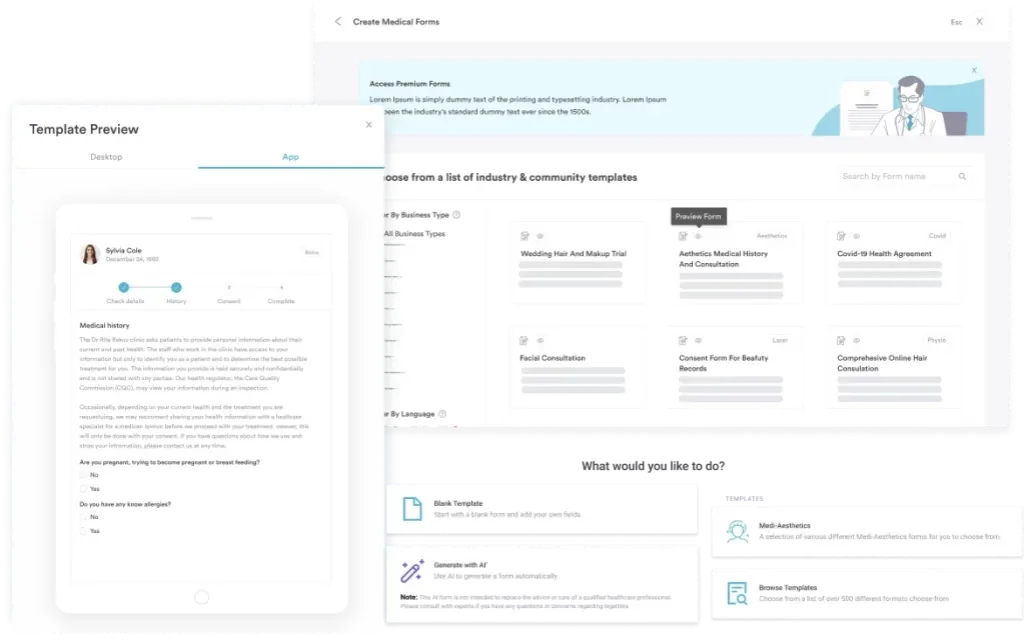
Practices using digital documentation forms can build structured operative note templates that prompt providers to capture all required elements before the note is finalized. Paired with HIPAA-compliant documentation practices, this reduces the chance of missing a field that triggers a denial downstream.
The ICD-10-CM diagnosis code must support medical necessity for complex repair and match the anatomical site actually billed. Using a non-specific or mismatched diagnosis code is a denial trigger even when the procedure code and documentation are correct.
The same diagnosis-matching principle applies to other complex repair codes.
Use the AAPC CPT-to-ICD-10 crosswalk to verify that your diagnosis code is accepted by payers for CPT code 13132. Diagnosis codes that are too non-specific (e.g. L98.9 – disorder of skin, unspecified) without supporting documentation will trigger medical necessity denials.
The same specificity rule governs complication codes outside this family. ICD-10 code T86.899 applies only when the note omits the complication type, and payers treat that choice as missing documentation.
Claims for CPT code 13132 are denied or downgraded more often than most surgical repair codes because of the documentation-intensity of the complex repair criteria. These are the denial patterns practices see most often.

Pabau’s claims management software helps plastic surgery and dermatology practices link CPT codes, modifiers, and clinical documentation in one workflow – so 13132 claims go out complete the first time.

Claim denials for complex wound repair typically trace back to one of two causes: Incomplete operative note documentation or a CPT/modifier combination that doesn’t survive payer scrutiny. Both are workflow problems as much as clinical ones.
Practice management software like Pabau’s claims management software connects procedure code entry, modifier selection, and clinical documentation into a single submission workflow. For plastic surgery practice management teams billing high volumes of post-Mohs reconstruction and traumatic laceration repairs, this means the claim is built alongside the note rather than assembled separately hours or days later.
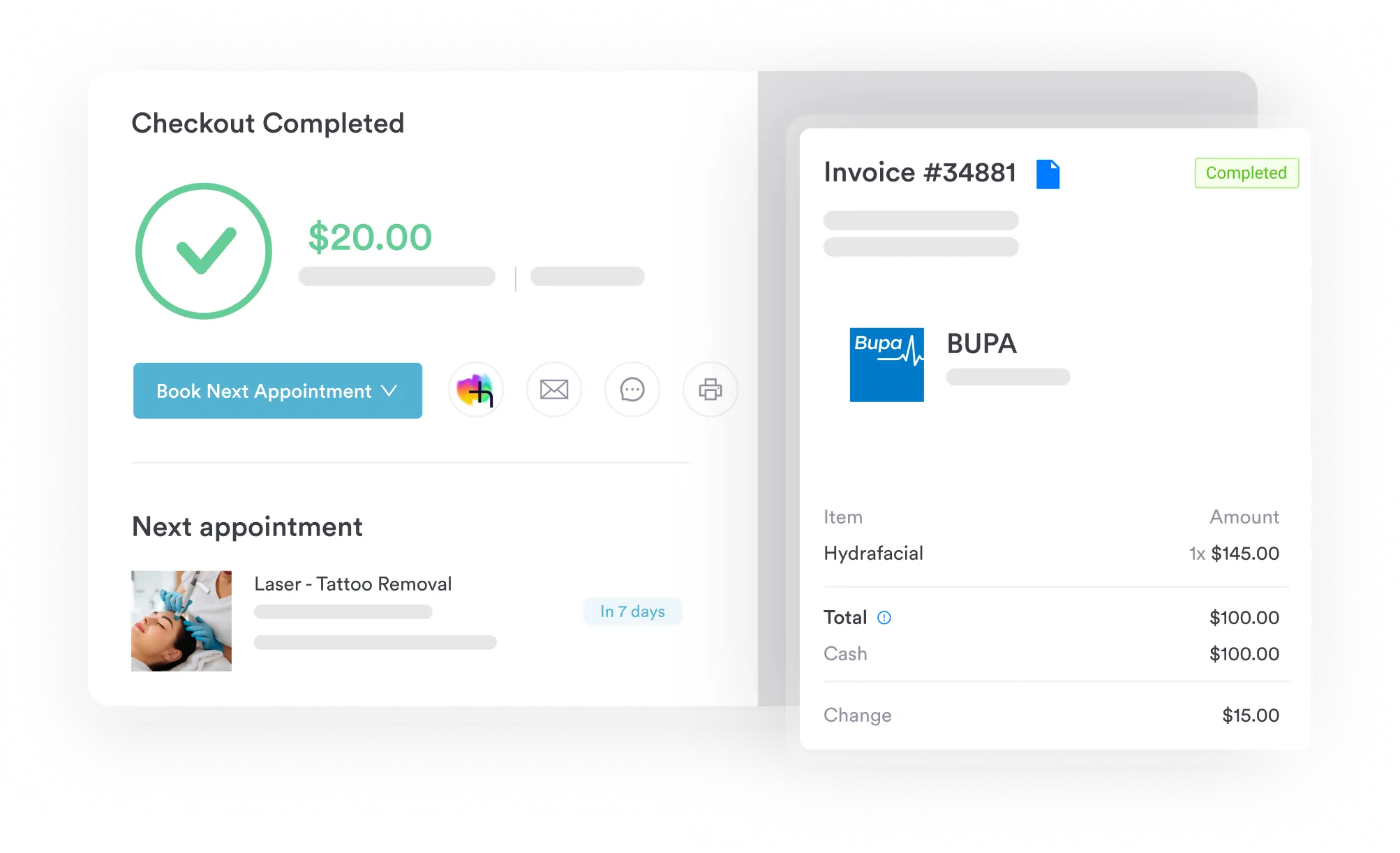
Built-in documentation templates for surgical procedures prompt providers to record wound measurements, technique details, and anatomical site before the note is finalized. The result is a claim that arrives at the payer already carrying the documentation the reviewer needs. Practices with structured billing workflows built on plastic surgery billing software consistently see lower first-pass denial rates on complex repair codes.
For practices evaluating how to strengthen their revenue cycle, the practice management software features that matter most for complex repair billing are: Structured operative note templates, automated modifier prompts, and real-time claim scrubbing before submission. Pabau covers all three. Review the full medical practice management software landscape to see how platforms compare on these criteria.
CPT code 13132 is one of the higher-value surgical repair codes for the forehead, cheeks, chin, mouth, neck, axillae, genitalia, hands, and feet, but its documentation requirements are strict. The difference between a clean claim and a denial often comes down to three things:
For plastic surgery and dermatology practices billing this code at volume, the right workflow infrastructure reduces the back-and-forth with payers considerably. Practice management software like Pabau integrates operative documentation with CPT code selection and modifier logic so claims are built correctly from the start. To see how it works in a practice like yours, book a demo.

List Item #1
List Item #2
CPT code 13132 is used to bill complex repair of wounds on the forehead, cheeks, chin, mouth, neck, axillae, genitalia, hands, and/or feet measuring 2.6 cm to 7.5 cm. Complex repair requires more than layered closure, including techniques such as extensive undermining, debridement, retention sutures, or scar revision. It is commonly used by plastic surgeons, dermatologists, and emergency physicians following trauma, Mohs surgery, or tumor excision.
CPT 13131 covers complex repair of the same anatomical sites – forehead, cheeks, chin, mouth, neck, axillae, genitalia, hands, and/or feet – for wounds measuring 1.1 cm to 2.5 cm, while CPT code 13132 covers the 2.6 cm to 7.5 cm size range. The two ranges sit just 0.1 cm apart, so accurate measurement matters. Both require the same complexity of technique; wound length is the only differentiating factor. When multiple wounds at the same session are combined, add the individual lengths before selecting between the two codes.
The 2025/2026 Medicare national average for CPT code 13132 is approximately $430-$450 in a non-facility (office) setting and $200-$260 in a facility setting. Rates vary by MAC jurisdiction through GPCI adjustments. Verify current rates for your location using the CMS Medicare Physician Fee Schedule lookup tool before billing.
CPT code 13132 has a 10-day (010) global surgical period under the Medicare Physician Fee Schedule – the standard window for a minor surgical procedure, not the 90-day period used for major surgery. Routine post-operative care, wound checks, and suture removal are bundled into this 10-day period and cannot be billed separately. An unrelated E&M visit on day 11 or later falls entirely outside the global period; an unrelated E&M visit within the 10 days requires Modifier 24, and an unrelated procedure requires Modifier 79.
Yes. CPT 13133 is the add-on code for each additional 5 cm or part thereof when the total repair length exceeds 7.5 cm. It must always be listed alongside CPT code 13132 as the primary procedure. Do not append Modifier 51 to 13133, as add-on codes are exempt from the multiple-procedure reduction. Units must be calculated from the total measured repair length beyond 7.5 cm.
The operative note must include the exact wound measurement in centimeters, the specific anatomical site, the technique justifying complex repair (undermining, debridement, retention sutures, or stents), the wound etiology, and a medical necessity narrative. Layered closure alone does not qualify as complex repair regardless of wound size.
Common ICD-10-CM codes paired with CPT code 13132 include S01.81XA (laceration of the forehead) and S01.419A (laceration of the cheek) for traumatic injuries, C44.319 or C44.329 for post-Mohs skin cancer repair of the cheek or chin, L57.0 (actinic keratosis) for post-excision closures, and S61.419A (hand laceration) or S11.91XA (neck laceration) for repairs at those sites. Use the most specific diagnosis code that matches the clinical scenario, and confirm the site is one this code family actually covers – not the scalp (CPT 13121) or the eyelids, nose, ears, and lips (CPT 13152).



