HCPCS code J3471: Hyaluronidase ovine injection billing guide
HCPCS code J3471: Descriptor, code type, and quick-reference data HCPCS code J34...

Last Updated: Oct 14, 2026

CPT code 11981 covers insertion of any drug-delivery implant — bioresorbable, biodegradable, or non-biodegradable — following the AMA’s January 1, 2022 descriptor revision; older guidance limiting it to non-biodegradable devices only is outdated.
Bill HCPCS J7307 alongside 11981 for the etonogestrel (Nexplanon) implant supply; payer rules on bundling vary and require verification.
Use ICD-10 Z30.017 for the contraceptive implant encounter; modifier 25 enables same-day E/M billing where payers allow it.
11982 and 11983 were not revised and remain non-biodegradable-specific; removal of a bioresorbable or biodegradable implant is reported with unlisted code 17999, not 11982.
Medicare has no dedicated contraceptive benefit, so coverage of Nexplanon and J7307 under traditional Medicare isn’t standard and should be verified per beneficiary with the MAC.
Pabau’s claims management software helps OB/GYN and primary care practices capture charges, attach modifiers, and track 11981 claims through to adjudication.
CPT code 11981 is the AMA’s billing code for insertion of a drug-delivery implant — bioresorbable, biodegradable, or non-biodegradable — under the descriptor the AMA revised effective January 1, 2022. The earlier descriptor covered non-biodegradable devices only; the update folded in dissolving implant types, most often billed for Nexplanon, testosterone pellets, and naltrexone implants.
Correct billing depends on pairing 11981 with the right supply code, ICD-10 diagnosis, and modifier, and on documenting the device lot number at insertion. This guide covers the official descriptor, companion codes, ICD-10 pairings, modifier rules, reimbursement benchmarks, and the billing errors that most often trigger denials.
Practices using claims management software that integrates charge capture with documentation see fewer of these errors, because the billing context (modifier, supply code, diagnosis) is built into the workflow rather than added as an afterthought. The sections below walk through every component of a correct 11981 claim.
CPT code 11981 is the American Medical Association‘s code for the insertion of a drug-delivery implant. Effective January 1, 2022, the AMA revised the official descriptor to: Insertion, drug-delivery implant (i.e., bioresorbable, biodegradable, non-biodegradable).
The code now covers any subdermal or intramuscular implant that remains in place and releases medication over time, regardless of whether it’s designed to dissolve (bioresorbable or biodegradable) or to stay in place until it’s manually removed (non-biodegradable).
Under the pre-2022 descriptor, 11981 was limited to non-biodegradable devices only — older references that still describe it that way are outdated.
The code is device-agnostic by AMA definition. Nexplanon (etonogestrel 68 mg) is the most commonly inserted non-biodegradable device billed under 11981, alongside testosterone pellets and naltrexone implants.
Bioresorbable and biodegradable drug-eluting implants — used in areas like pain management, oncology, and orthopedics — are also billed under 11981 for insertion, since the 2022 descriptor update folded them into the same code.
Practices that treat reproductive health, addiction medicine, pain management, or hormone replacement may bill 11981 for more than one device type.
One important asymmetry: Only 11981 (insertion) was revised. Its companion removal codes, 11982 and 11983, were not updated and remain non-biodegradable-specific. The AMA added a parenthetical instruction that removal of a bioresorbable or biodegradable implant should be reported with unlisted code 17999, since 11982 only describes removal of a non-biodegradable device.
Key facts at a glance:
The 119xx series covers the lifecycle of a drug-delivery implant. Since 2022, 11981 covers insertion of any implant type, while 11982 and 11983 remain limited to non-biodegradable devices. Choosing the wrong code in the series is one of the most common billing errors in this code family.
A common mistake is billing 11981 and 11982 on the same date when a swap procedure was performed. The correct code is 11983, which bundles both services. Billing 11981 + 11982 together risks an NCCI edit rejection.
For a bioresorbable or biodegradable implant, there is no direct removal code — report removal with unlisted code 17999, supported by clear documentation of the work performed.
Practices that see patients for sexual health services alongside contraceptive implant management benefit from workflows that connect procedure documentation to charge selection.
HCPCS J7307 is the supply code for the etonogestrel 68 mg implant (Nexplanon), as published in the CMS HCPCS code set. Its descriptor reads: Etonogestrel (contraceptive) implant system, including implant and supplies. When billing for Nexplanon insertion under CPT 11981, J7307 covers the device cost separately from the procedure.
Payer rules on J7307 bundling are not uniform. Commercial payers may require separate billing of J7307 alongside 11981. Medicaid family planning programs often cover J7307 at no cost share.
Medicare has no dedicated contraceptive or family-planning benefit, and the ACA’s no-cost-share preventive contraceptive mandate applies to commercial and ACA-Medicaid plans, not traditional Medicare — so coverage of Nexplanon and J7307 under Medicare isn’t standard.
Verify coverage per beneficiary with the Medicare Administrative Contractor (MAC) before billing, and confirm the payer’s fee schedule and billing guidance for every claim.
Using prescription management software that records device lot numbers and expiry dates at the point of administration feeds directly into what payers need to see in documentation when J7307 is submitted.
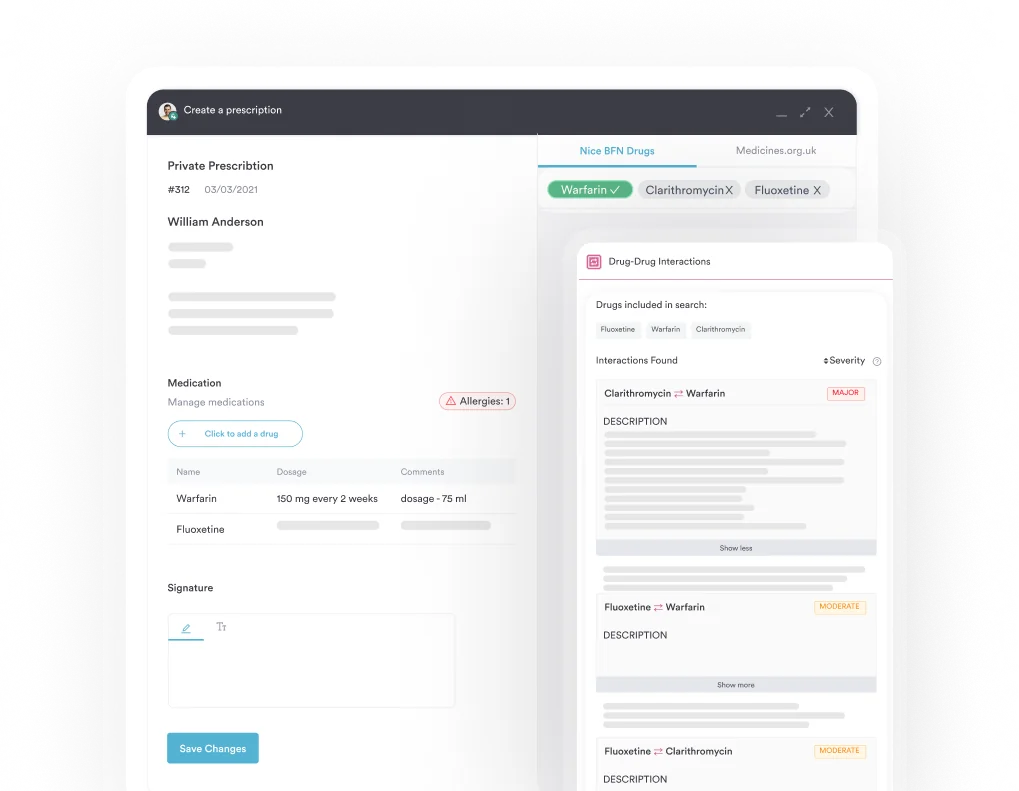
Dermatology practices bill these codes daily, and a dermatology EMR keeps body maps, photos, and pathology results together.
Medical necessity for CPT 11981 must be supported by a diagnosis code that reflects the clinical reason for the implant. The following ICD-10-CM codes are commonly paired with 11981 in OB/GYN and primary care billing. Verify against your payer’s Local Coverage Determination (LCD) before using any code as your primary diagnosis claim.
Z30.017 is the go-to primary diagnosis for most Nexplanon insertions. Using Z30.46 (surveillance) instead of Z30.017 (initial implant encounter) on a new insertion claim is a frequent coding error that triggers denials. Verify the correct code in the CDC/NCHS ICD-10-CM tool for the current fiscal year before finalizing claims, as codes are updated annually.
Some ICD-10 codes cannot hold the primary slot at all. ICD-10 code N08 is a manifestation code, so claims that list it first are rejected and the underlying systemic disease is sequenced ahead of it.
For related contraceptive coding in other specialties.
Document the specific clinical reason for the implant in the encounter note before selecting the ICD-10 code. If the implant is for menstrual suppression, the diagnosis code is different from a standard contraceptive encounter. Payer audits increasingly cross-check the stated diagnosis against the procedure narrative.
Missing or incomplete documentation is the primary reason CPT 11981 claims fail post-payment audit. The note needs to do more than confirm that an implant was inserted: It must establish medical necessity, capture the device, and support any modifier or supply code billed on the same claim.
A complete 11981 encounter note includes all of the following:
Using digital intake forms that capture device lot numbers and patient consent at the point of care eliminates the post-visit scramble to reconstruct documentation. Linking those forms to the patient record means the billing team sees a complete note before submitting the claim.
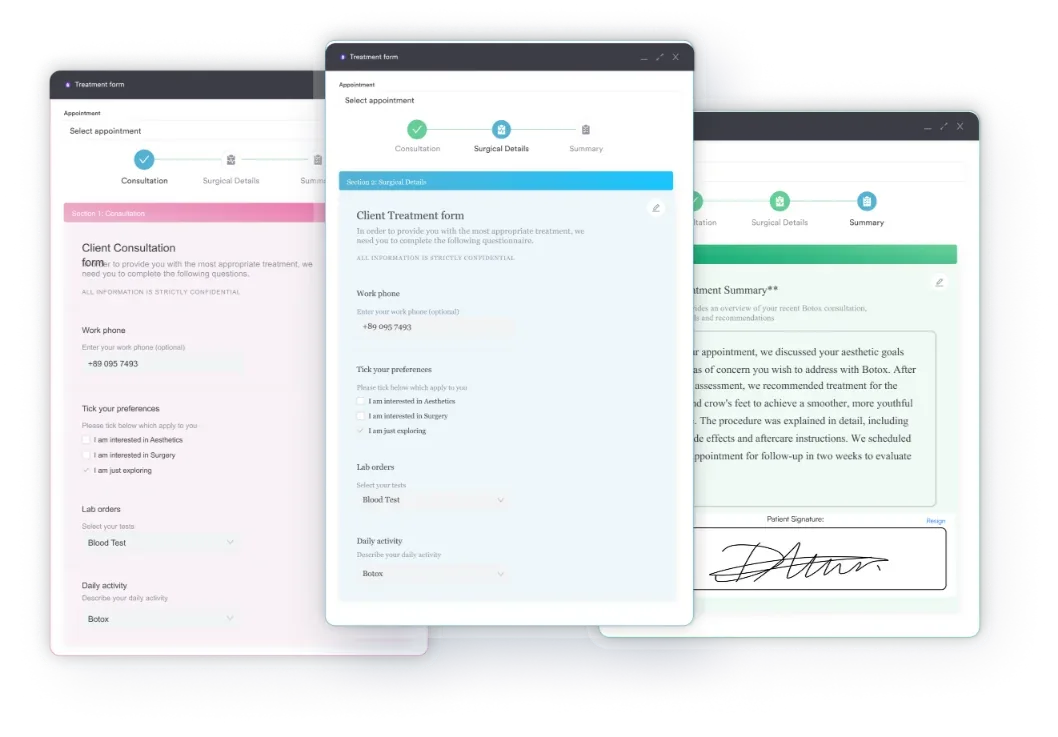
Practices also need to consider HIPAA-compliant documentation practices when storing device records and consent forms, particularly in multi-provider environments where records are accessed across locations.
CPT 11981 billing guidelines center on three questions: Is a same-day E/M separately billable? Which modifiers apply? Are there NCCI bundling edits to watch for? The answers are payer-dependent, but the framework below covers the standard approach.
When a physician performs a separately identifiable evaluation and management service on the same date as the 11981 insertion (for example, a new patient visit followed by immediate implant placement), modifier 25 appended to the E/M code signals that the visit was distinct from the procedure.
Most commercial payers accept modifier 25 in this context. Medicare accepts it subject to medical necessity documentation. Always verify with the specific payer before assuming coverage.
The National Correct Coding Initiative (NCCI) edits govern whether two codes can be billed together on the same claim. If 11981 is billed alongside a code that the NCCI bundles with it, modifier 59 (distinct procedural service) may be used to override the edit, provided the services were genuinely separate and documented as such.
Review current NCCI edit tables before applying modifier 59.
CPT 11981 carries a 0-day global period under the CMS Physician Fee Schedule (verify in the current-year PFS; global indicators can change). A 0-day global means the procedure and any immediate post-service care on the day of surgery are included in the fee; a follow-up visit the next day is billable separately.
Bill with Place of Service 11 (office) for in-office insertions or POS 22 (outpatient hospital) for facility-based procedures. Rates differ between settings.
For broader context on CPT billing guidelines across procedure types, practices benefit from a consistent modifier framework rather than applying modifiers case-by-case without a policy in place.

Pabau connects clinical documentation, charge capture, and claims submission in one platform. See how OB/GYN and primary care practices eliminate the documentation errors that cause 11981 rejections.

Reimbursement for CPT 11981 varies by payer, setting, and geographic locality. The figures below are approximate 2026 national base rates; actual payment in your area can differ meaningfully because Medicare adjusts payment using a locality-specific Geographic Practice Cost Index. Self-pay patients submitting to their own insurer need the code and the charge on one patient receipt template.
Always confirm the exact, locality-adjusted rate using the CMS PFS Look-Up Tool before quoting reimbursement to your billing team. Note that this rate reflects 11981’s general, device-agnostic use rather than a Medicare contraceptive-preventive benefit, since Medicare has none.
Prior authorization requirements for CPT 11981 vary significantly by payer and plan. Some commercial payers require prior auth for the device (J7307) but not the procedure. Others require auth for both.
Some commercial and ACA-Medicaid plans exempt contraceptive implants from prior auth requirements under the ACA’s preventive services mandate; this mandate does not extend to traditional Medicare. Confirm authorization requirements before scheduling the insertion, not after.
Understanding how practice management software supports billing across multiple payers helps practices build consistent pre-authorization workflows that prevent last-minute denials.
Most 11981 denials are preventable. The pattern across OB/GYN and primary care practices is consistent: A small set of errors accounts for the majority of rejections, and each one has a straightforward fix. A clean claim rate below the practice benchmark usually points at one recurring coding or eligibility error.
The AAPC CPT code reference is a useful cross-check tool for coders verifying the correct 119xx code before submission.
Run a monthly denial report filtered by CPT 11981. If more than 5% of 11981 claims are denied, audit the top denial reason code first. A single repeatable error — a missing modifier, wrong ICD-10 code, or absent J7307 — is often behind the bulk of them, and fixing it in the workflow drops the denial rate significantly.
CPT code 11981 is a straightforward code with a predictable set of billing requirements. The complications come from the details: Choosing J7307 vs. omitting it, applying modifier 25 correctly, selecting Z30.017 over Z30.46, and confirming prior auth before the appointment rather than after.
Practices that build those checks into their pre-submission workflow rather than relying on manual review after the fact see consistently lower denial rates for this code.
Pabau’s practice management software connects clinical documentation, charge capture, and claims submission so the billing context for 11981 is assembled during the encounter, not reconstructed later. Book a demo to see how OB/GYN and primary care teams use Pabau to close the documentation errors that drive claim rejections.

Coding a niacin deficiency diagnosis? ICD-10 code E52 coding guide covers pellagra, the niacin deficiency marked by the classic dermatitis, diarrhea, and dementia presentation.
Billing a related OB/GYN diagnosis? ICD-10 code E28.9 often comes up in ovarian dysfunction workups that precede a contraceptive implant discussion.
Coding a different integumentary procedure? CPT code 11308 covers shaving a single epidermal or dermal lesion over 2.0 cm.
Working through another HCPCS billing guide? HCPCS code H0019 outlines documentation requirements for behavioral health residential billing.
Need a documentation template for coverage checks? Dental insurance verification form standardizes how your team confirms benefits before scheduling care.
CPT code 11981 is the AMA billing code for insertion of a drug-delivery implant — bioresorbable, biodegradable, or non-biodegradable, per the descriptor revised effective January 1, 2022. The most commonly billed device is Nexplanon (etonogestrel, non-biodegradable). It covers the insertion procedure only; the device supply is billed separately under HCPCS J7307 for etonogestrel implants.
No, not anymore. Effective January 1, 2022, the AMA revised the CPT 11981 descriptor to cover bioresorbable, biodegradable, and non-biodegradable drug-delivery implants. Any source that still describes 11981 as non-biodegradable-only is citing the retired pre-2022 descriptor.
11981 covers insertion of any drug-delivery implant — bioresorbable, biodegradable, or non-biodegradable — since the 2022 descriptor update. 11982 covers removal without reinsertion, and 11983 covers removal with reinsertion (swap) in a single encounter; both remain non-biodegradable-specific. Do not bill 11981 and 11982 together for a same-day non-biodegradable swap procedure; use 11983 instead. Removal of a bioresorbable or biodegradable implant is reported with unlisted code 17999.
Z30.46 (encounter for surveillance of implantable subdermal contraceptive) is the primary ICD-10-CM code for Nexplanon removal encounters billed under CPT 11982. For insertion encounters under 11981, use Z30.017 (encounter for initial prescription of implantable subdermal contraceptive).
CPT 11981 is payable under the Medicare Physician Fee Schedule as a general procedure code, but Medicare has no dedicated contraceptive or family-planning benefit. The ACA’s no-cost-share preventive contraceptive mandate applies to commercial and ACA-Medicaid plans, not traditional Medicare, so coverage of the Nexplanon implant and its J7307 supply code isn’t standard and should be verified per beneficiary with the Medicare Administrative Contractor (MAC) before billing. Dual-eligible beneficiaries generally need a Medicare denial on file before Medicaid will pay.
Yes, in most cases, provided the E/M service was a separately identifiable visit with distinct medical decision-making. Append modifier 25 to the E/M code. Payer acceptance of same-day E/M with 11981 varies, so confirm with each payer before billing.
HCPCS J7307 (etonogestrel 68 mg implant system) is the supply code billed alongside CPT 11981 for Nexplanon insertions. Bill J7307 x1 on the same claim as 11981 unless your payer specifies a different submission process.