

HCPCS code E0198: Water pressure pad billing guide
HCPCS code E0198 is a water pad for a standard mattress HCPCS code E0198 is the ...

Last Updated: Oct 13, 2026
H0019 is the HCPCS Level II code for behavioral health; long-term residential (non-medical, non-acute care in a residential treatment program where stay is typically longer than 30 days), without room and board, per diem.
Let Pabau's smart automation suggest the right codes, reduce claim denials, and keep your practice compliant—effortlessly.
Automate repetitive tasks and focus on what matters most—your patients.
Reduce coding errors and ensure compliance with the latest regulations.
Clean claims, fewer denials, and faster reimbursements.
Powerful insights and reporting to help your practice thrive.
HIPAA compliant SOC 2 certified GDPR-compliant Trusted by 4,000+ clinics worldwide

HCPCS code H0019 covers behavioral health long-term residential treatment without room and board, billed per diem for stays typically exceeding 30 days
H0019 differs from H0018 in program length, not services included: H0018 covers short-term residential stays, while H0019 applies once a stay is expected to exceed 30 days
Medicaid is the primary payer for H0019 services; Medicare generally does not cover this code, and reimbursement rates vary significantly by state
Pabau’s claims management software helps behavioral health programs track per-diem billing, apply correct modifiers, and reduce H0019 claim denials
The table below summarizes the key attributes of HCPCS code H0019 as maintained by the Centers for Medicare and Medicaid Services (CMS).
H0019 applies to residential programs providing non-medical, non-acute substance use disorder or behavioral health treatment over an extended stay. The code is not for short-term detox or intensive outpatient services, which typically fall under H0018 instead. It specifically describes a level of care where a client lives on-site and receives structured treatment for a stay expected to exceed 30 days.
Room and board is excluded from the per-diem rate and billed separately. Programs treating co-occurring conditions often support daily documentation with structured clinical tools.
Eligible provider types and qualifying scenarios include:
The 30-day threshold is a guideline in the official description, not a rigid payer cutoff. Some Medicaid programs will reimburse H0019 for stays under 30 days if documentation clearly supports the long-term residential service type. Verify with each state plan before claiming the threshold as absolute.
Coders working with residential addiction treatment billing frequently search for all three codes together. The distinctions matter because submitting H0019 when H0018 applies (or vice versa) is one of the most common audit triggers in residential SUD billing. The comparison below, cross-referenced with AAPC‘s HCPCS Level II code reference, clarifies where each code applies.
The deciding factor between H0018 and H0019 is program length, not room and board — both codes exclude accommodation costs. H0018 applies to short-term residential stays, while H0019 applies once the stay is expected to exceed 30 days.
If a long-term program also bundles room and board into its per-diem fee, T2048 is the code that reflects that service instead of H0019. When a patient steps down from long-term residential care to an intensive outpatient program, the correct code is H0015, which excludes residential bed days.
Submitting H0019 correctly requires understanding how per-diem billing works in practice. One billing unit equals one calendar day. A 45-day residential stay generates 45 units on the claim. Unlike hourly codes, there is no overlap between days, and the admission and discharge day counting rules vary by state Medicaid program.
Core billing requirements for H0019 include:
Claims management software that supports per-diem HCPCS billing reduces manual unit calculation errors and helps flag missing prior-auth documentation before submission. Explore features that save time for behavioral health practices managing high-volume residential caseloads.
Verify your state Medicaid program’s admission and discharge day counting rule before submitting your first H0019 claim. Some states pay for both the admission and discharge day; others pay for one or neither. A single policy misread across a 30-day census can mean dozens of denied units.
Modifiers communicate additional clinical or administrative context to the payer. H0019 is not typically modified for the service itself, but several modifiers affect payment or convey required information under Medicaid managed care plans.
State-specific modifiers (U1-U9) are not universal. A modifier required in California may not exist in Texas. Always consult your state Medicaid provider manual or fee schedule before applying these. Modifier errors are a leading cause of H0019 denials that appear legitimate until audited.
Documentation failures account for a large share of H0019 recoupments during Medicaid audits. The record must justify both the service billed and each day of residential stay. A claim that passes initial adjudication can still be recouped months later if documentation does not support medical necessity upon review.
Required documentation for each H0019 billing period typically includes:
SUD treatment records are subject to stricter confidentiality requirements under 42 CFR Part 2, which governs the release of substance use disorder patient records. Unlike standard HIPAA-covered records, 42 CFR Part 2 records generally require specific written patient consent before being disclosed to payers or third parties for billing purposes.
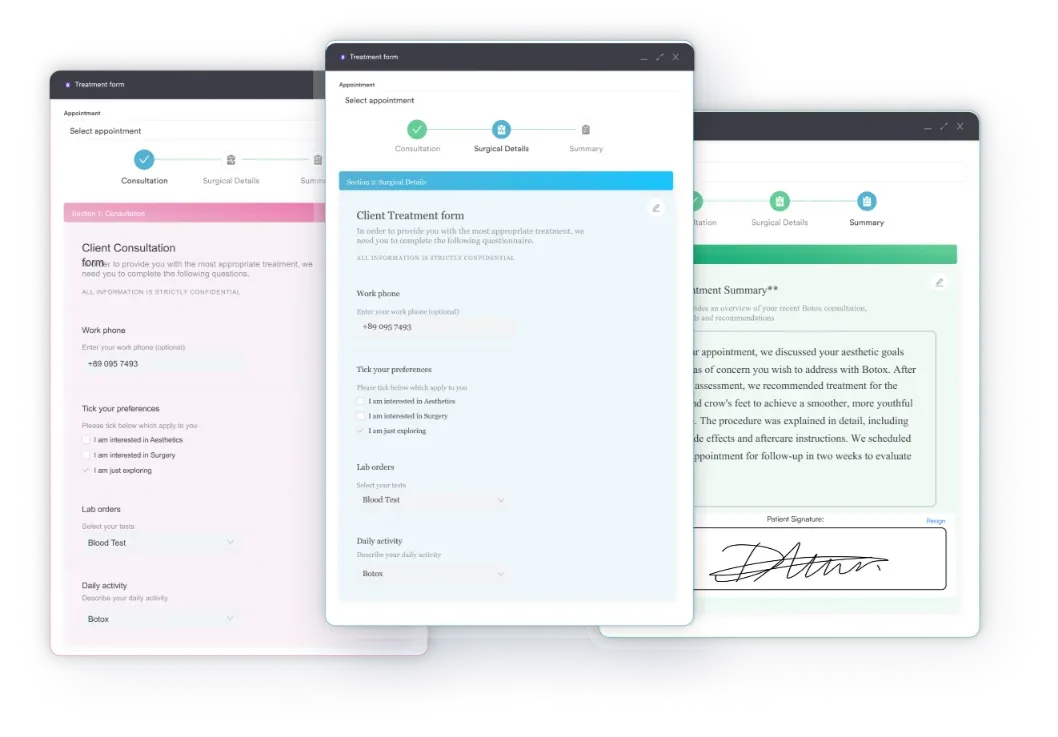
Programs must ensure their consent forms and billing workflows comply with both HIPAA compliance requirements for medical offices and 42 CFR Part 2’s additional restrictions. Using digital consent forms that capture the required 42 CFR Part 2 authorization language at admission reduces the risk of non-compliant claim submissions.
Maintaining airtight documentation also requires patient data security tools built for SUD programs that protect sensitive records while keeping them accessible for billing review. Consult compliance management tools built for healthcare to manage audit-ready documentation workflows.
If your system lacks HIPAA and 42 CFR Part 2 controls, consider whether your software meets the requirements outlined in guidance on HIPAA-compliant practice software.
Medicare generally does not cover HCPCS H-series behavioral health residential codes, including H0019. Coverage under traditional Medicare Part A and Part B does not extend to non-medical, non-acute residential SUD treatment of this type.
Verify current coverage status via the CMS fee schedule lookup before concluding that a specific beneficiary’s plan excludes the code.
Medicaid is the dominant payer for H0019. Per-diem reimbursement rates vary substantially by state. Factors that affect the rate include:
To find current rates for your state, consult your state Medicaid provider manual directly or use the PGM lookup tool for a general HCPCS billing reference. Do not rely on third-party rate databases as primary sources for billing decisions; state rates update annually and sometimes mid-year.
Every H0019 claim requires at least one ICD-10-CM diagnosis code that justifies the residential behavioral health service. Payers match the diagnosis to the service type. Submitting H0019 without an appropriate SUD or behavioral health diagnosis code is a fast path to denial.
The table below lists the ICD-10-CM code categories most frequently paired with H0019, based on standard residential SUD program populations. Two of the most common, F10.20 and F11.20, have their own detailed coding guides if you need the full clinical and billing picture beyond what’s summarized here.
Select the most specific code available for the client’s documented diagnosis. Unspecified codes (e.g. F19.9) are appropriate only when the record does not support a more specific classification. Payers increasingly flag unspecified SUD codes as insufficient for residential-level billing.
Coders working in residential SUD billing encounter several codes alongside H0019. Understanding the distinctions prevents miscoding and supports accurate crosswalks when payers request alternative coding. This is particularly relevant when managing billing across multiple program types within a psychiatry practice management or behavioral health organization.
Residential SUD billing generates denials in predictable patterns.
The billing errors most likely to cause H0019 denials or recoupments are:
Billing teams that catch these errors pre-submission rather than post-denial save significant rework.

Pabau supports HCPCS Level II billing, per-diem claim submission, and Medicaid workflow management for behavioral health programs. Reduce H0019 denials with integrated prior-auth tracking, digital consent forms, and claims management built for multi-payer environments.

HCPCS code H0019 is specific and unambiguous: long-term, non-medical, non-acute behavioral health residential treatment, without room and board, billed per diem. Getting every element right — the correct code choice between H0018, H0019, and T2048, daily documentation, and state-specific modifiers — is the difference between a clean claim and a denial cycle.
Pabau’s claims management software helps behavioral health programs manage per-diem HCPCS billing, track prior authorizations, and maintain documentation standards that hold up under Medicaid audit. To see how Pabau handles residential behavioral health billing workflows, book a demo.

Coding a different endocrine gland finding? Endocrine gland neoplasm coding guide This guide covers the code for a benign neoplasm in an endocrine gland with no dedicated subcode.
Coding a benign lymph node finding? Benign lymph node coding guide This guide covers the billable code for a benign lymph node neoplasm, used only once pathology confirms the diagnosis.
Coding a brain mass of unclear behavior? Brain neoplasm coding guide This guide covers the code for a brain mass that pathology or imaging cannot classify as malignant, benign, or in-situ.
HCPCS code H0019 is a billing code that describes behavioral health long-term residential treatment provided in a non-medical, non-acute setting where the client’s stay typically exceeds 30 days. Room and board is excluded and billed separately. It is primarily used by residential substance use disorder treatment programs billing Medicaid.
H0017 applies to hospital-based residential behavioral health programs and excludes room and board from the per-diem rate. H0018 covers short-term, non-medical residential treatment, also without room and board. H0019 covers the same non-medical residential care for long-term stays typically exceeding 30 days, and it excludes room and board as well. Programs that bundle room and board into a long-term per-diem rate use T2048 instead.
H0019 is billed per diem. One billing unit equals one calendar day of residential stay. A 45-day program generates 45 units. Do not bill by hour or by individual service session; the per-diem rate is intended to cover all services provided within the residential program day.
Medicare generally does not cover HCPCS H-series behavioral health residential codes, including H0019. Coverage for this code is primarily through state Medicaid programs. Verify current Medicare coverage status with CMS for specific beneficiary plan types, as Medicare Advantage plans may have different coverage rules.
The most common modifiers for H0019 include HF (substance abuse program), HH (co-occurring mental health and SUD program), SA (nurse practitioner rendering service in collaboration with physician), and state-specific modifiers U1 through U9. Modifier requirements vary by state Medicaid plan; always consult your state provider manual before submitting.
H0019 claims require admission criteria documentation (typically aligned with ASAM Level 3.1 or 3.5), a current individualized treatment plan, daily progress notes for each billed day, ongoing medical necessity justification for continued residential placement, and prior authorization records when required by the payer. SUD records are additionally subject to 42 CFR Part 2 confidentiality requirements beyond standard HIPAA rules.



