ICD-10 Code S42.444P: Medial epicondyle fracture, right humerus
ICD-10 Code S42.444P: full descriptor and code validity ICD-10 Code S42.444P car...

Last Updated: Oct 13, 2026
Billable Code Specific Code
N08 is the billable ICD-10-CM code for glomerular disorders in diseases classified elsewhere.
Coders working with renal and nephrology billing will encounter N08 frequently, particularly when amyloidosis or multiple myeloma is driving the glomerular involvement. It's often coded alongside kidney failure codes like N19, since the systemic disease, the glomerular manifestation, and the degree of kidney failure are usually documented and billed together.
Let Pabau's smart automation suggest the right codes, reduce claim denials, and keep your practice compliant—effortlessly.
Automate repetitive tasks and focus on what matters most—your patients.
Reduce coding errors and ensure compliance with the latest regulations.
Clean claims, fewer denials, and faster reimbursements.
Powerful insights and reporting to help your practice thrive.
HIPAA compliant SOC 2 certified GDPR-compliant Trusted by 4,000+ clinics worldwide

ICD-10 Code N08 identifies glomerular disorders that occur as a manifestation of another classified systemic disease, such as amyloidosis, multiple myeloma, or sickle-cell disease
N08 is a billable ICD-10-CM code valid for HIPAA-covered transactions from October 1, 2025 through September 30, 2026
N08 is a manifestation code and can never be sequenced as the principal diagnosis; the etiology code for the underlying systemic disease always comes first
Pabau’s claims management software helps clinicians document etiology-manifestation pairs accurately, reducing N08 claim denials before submission
ICD-10 Code N08 describes glomerular disorders in diseases classified elsewhere. It is a billable, specific ICD-10-CM diagnosis code valid for reimbursement in all HIPAA-covered transactions. The 2026 edition of ICD-10-CM N08 became effective on October 1, 2025, and remains valid through September 30, 2026.
The code sits at the end of the N00-N08 glomerular diseases block. Unlike N00 through N07, which identify primary glomerular diseases directly, N08 is reserved exclusively for glomerular damage that occurs as a consequence of another classified condition. The kidneys are not the origin of the disease; they are a target organ of a systemic process coded elsewhere.
Glomerular injury can result from systemic conditions that attack the kidneys secondarily. ICD-10 Code N08 captures this secondary nephropathy: the glomerulus is damaged not by a primary renal disease, but by a systemic condition coded under a different chapter.
The clinical presentation often includes proteinuria, hematuria, and declining glomerular filtration rate. These findings point to the underlying disease rather than a standalone kidney condition.
The range of underlying conditions is broad. Clinicians and coders working with nephrology, rheumatology, endocrinology, and oncology encounters will encounter this code regularly. See how structured medical forms at each encounter capture the systemic disease link required to support N08 coding.
The most common underlying diseases paired with ICD-10 Code N08 are amyloidosis, multiple myeloma, gout, sickle-cell disease, and congenital syphilis. Each requires its own etiology code sequenced before N08.
Diabetes, lupus, and Goodpasture syndrome are common sources of confusion here. Each has its own combination code that already captures the renal manifestation directly, so none of them are ever paired with N08 — see the excludes note below. The table below maps the genuine N08 partners to their ICD-10-CM etiology code family.
Amyloidosis is one of the more frequent pairings with ICD-10 Code N08 in clinical practice. Renal amyloidosis, coded to the appropriate E85.- subcategory, is paired with N08 when biopsy-confirmed amyloid deposition is the documented glomerular manifestation. Verify the exact amyloidosis subtype before selecting the etiology code.
The etiology-manifestation convention governs how ICD-10 Code N08 is sequenced. Section I of the ICD-10-CM Official Guidelines for Coding and Reporting establishes this convention: the underlying disease (etiology) is sequenced first, and the manifestation code follows as an additional code.
Other body systems follow the same pairing convention. ICD-10 code I41 covers myocarditis caused by a disease classified elsewhere, and it follows its etiology code the same way.
Inside the genitourinary chapter, a second organ carries its own manifestation code. N33 covers bladder disorders caused by a disease classified elsewhere, and it is reported at three characters behind the etiology code.
N08 is printed in italics in the ICD-10-CM tabular list and enclosed in brackets after the underlying disease code. That formatting signals it can never be used as a principal diagnosis.
The WHO ICD-10 browser and the CDC/NCHS ICD-10-CM web tool both confirm N08’s manifestation status. Coders should use these official tools to verify code applicability before submission, especially when uncertain about an etiology pairing.
Follow these steps for every N08 encounter:
The N08 tabular entry carries an “Includes” note and applies to glomerular disorders occurring in the context of conditions classified elsewhere in ICD-10-CM. Coders should be aware of the following:
Review HIPAA compliance requirements when submitting N08 claims. Practice management software like Pabau offers HIPAA compliance guidance to help electronic transactions represent codes correctly under the ICD-10-CM standard. Out-of-network practices hand reimbursement to the patient, and the superbill format is what makes that possible.
Pelvic health practices manage many of these diagnoses in software built for pelvic health.
Coding N08 correctly depends entirely on what the physician documents. Without the right elements in the clinical note, coders cannot support the diagnosis or the etiology-manifestation pairing. Incomplete documentation is the second most common cause of N08 claim denials, after sequencing errors.
Consider using paperless clinical documentation systems that prompt clinicians to capture the systemic disease and its renal complication in a structured format at each encounter. This reduces the back-and-forth between coders and clinicians for clarification queries.
The physician note must include three elements to support ICD-10 Code N08:
See how structured digital intake forms can be configured to prompt clinicians for this documentation at the point of care, before the note reaches the coding team.
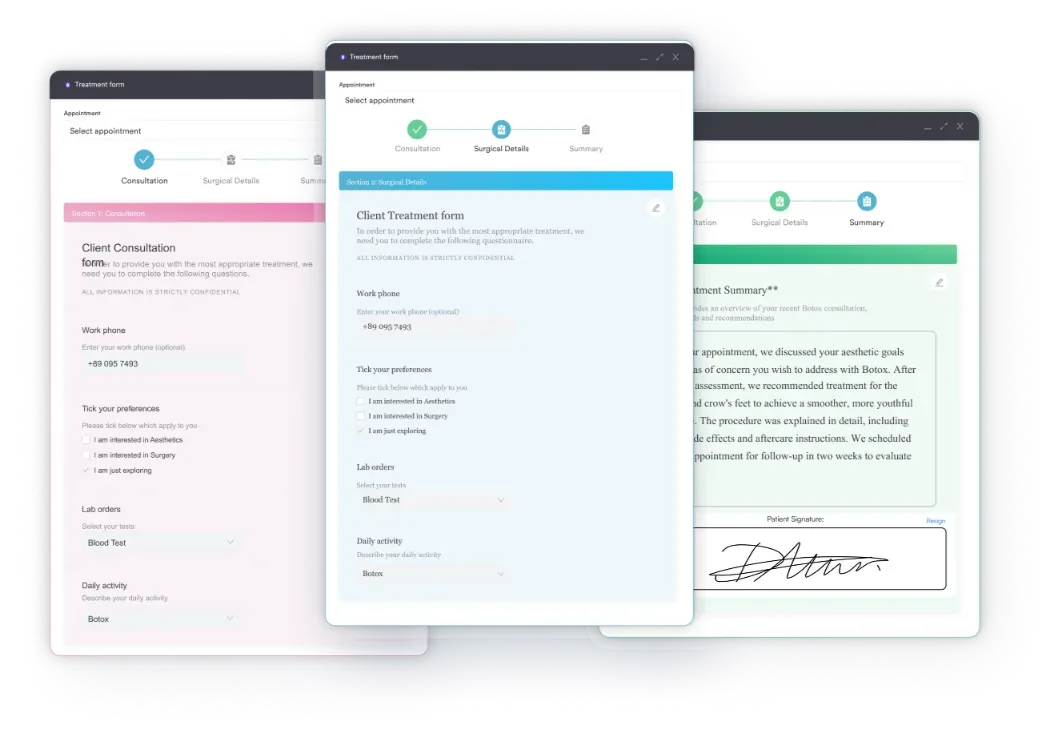
Track documentation query rates by provider using time-saving practice features. Persistent query patterns signal a training opportunity for the clinical team on N08 documentation standards.

Pabau’s claims management tools help renal and nephrology practices document etiology-manifestation pairs accurately, so ICD-10 Code N08 claims submit correctly the first time.

ICD-10 Code N08 is the last code in the N00-N08 glomerular diseases block. Selecting the right code depends on whether the glomerular disease is primary (its own condition) or secondary (a manifestation of something else). The table below summarizes the full code range. Consult the AAPC ICD-10-CM code lookup for the most current code descriptions and instructional notes.
N00 through N07 describe glomerular diseases that originate in the kidney. They’re coded directly, with the glomerular condition as the principal diagnosis. ICD-10 Code N08 is the structural opposite: the kidney is the secondary site, and the disease originates elsewhere.
A patient with primary membranous nephropathy gets a code from N03 or N04. A patient with membranous nephropathy caused by amyloidosis gets N08, preceded by the amyloidosis etiology code. Isolated protein loss with a documented minor glomerular lesion lands on ICD-10 code N06.0, not N08.
This distinction matters for DRG assignment, clinical research, and quality reporting. Using N08 where N04 applies (or vice versa) misrepresents the patient’s disease mechanism and can affect payment accuracy. Rheumatology coders handle this same primary-versus-secondary distinction with codes like M34.2, so the discipline carries across specialties.
ICD-10 Code N08 maps to MS-DRG groups within the broader renal failure category: MS-DRG 682 (Renal Failure with MCC), MS-DRG 683 (Renal Failure with CC), or MS-DRG 684 (Renal Failure without CC/MCC), depending on the principal diagnosis and documented complications.
Because N08 is always an additional code, the MS-DRG assignment is driven primarily by the etiology code and any major complication or comorbidity (MCC/CC) designations.
N08 itself carries a complication/comorbidity (CC) designation in the CMS MS-DRG Definitions Manual. Its presence as an additional diagnosis can increase the DRG weight and reimbursement for an inpatient encounter, so failing to code N08 when it’s documented and supported leaves that CC impact on the table.
Verify specific DRG assignments against the current CMS ICD-10 coding resources, as MS-DRG groupings are updated annually with each ICD-10-CM edition. Codes like M35.3 go through the same CC/MCC classification system, so the sequencing habits that protect N08 reimbursement transfer directly.
The documentation workflow drives most N08 coding failures. The coder knows the sequencing rule, but the physician note often skips the explicit causal linkage, so the code cannot be supported. Structured clinical documentation built into practice management software fixes this at the point of care rather than at the claims desk.
Pabau’s claims management software helps nephrology, internal medicine. Structured note templates prompt clinicians for the systemic disease, the glomerular complication, and the explicit linkage statement, so the coding team receives notes that already contain the three elements N08 requires.
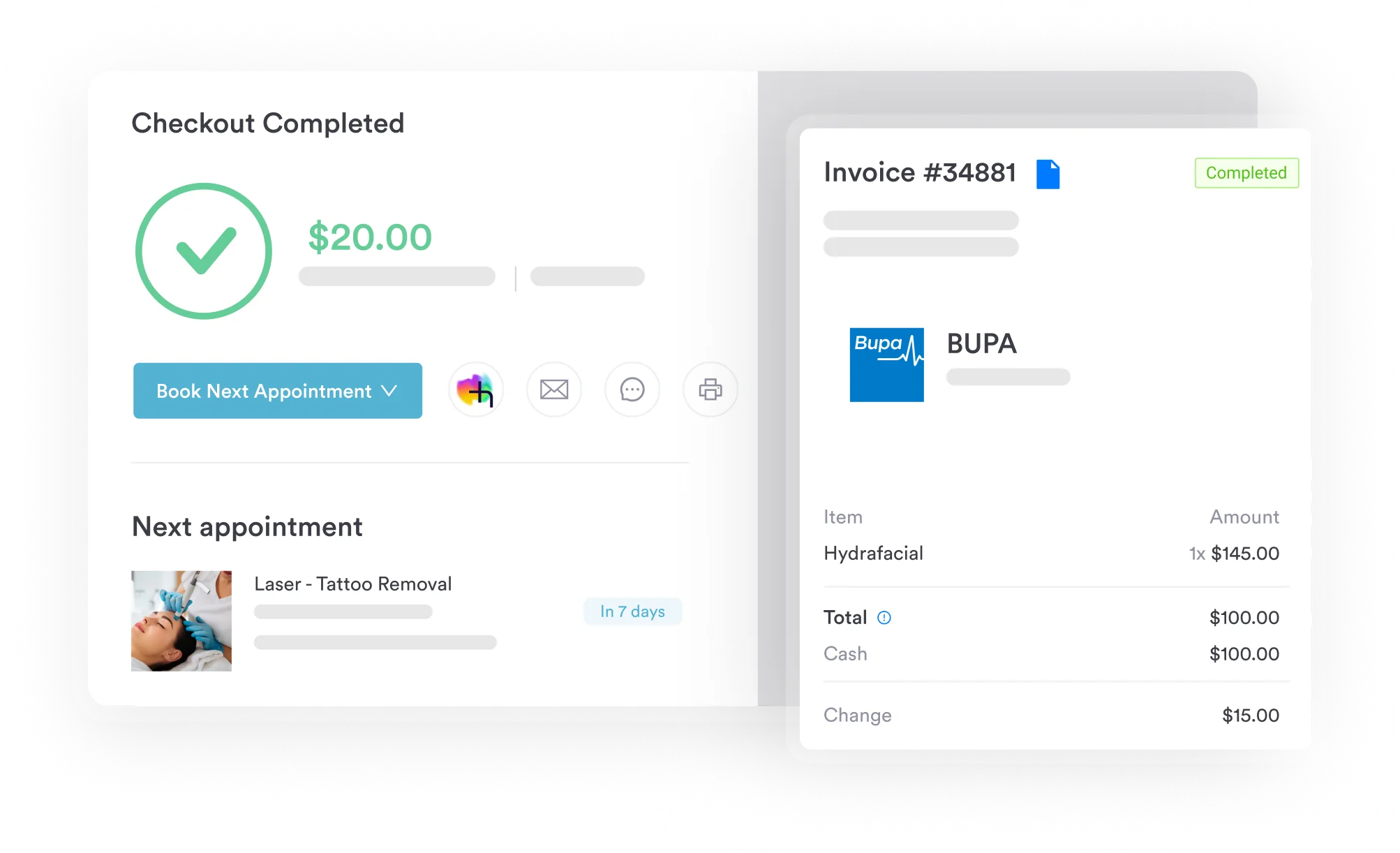
Several practical benefits follow from this workflow approach:
Clinicians concerned about patient data security can configure Pabau’s access controls so only authorized clinical and billing staff interact with sensitive renal diagnosis records.
ICD-10 Code N08 is straightforward once the manifestation convention is understood: the systemic disease drives the code sequence, and N08 follows as the documented renal manifestation. The code is billable, carries a CC designation for inpatient encounters, and is valid for the 2026 fiscal year. The risk is in the documentation, not the code itself.
Pabau’s structured clinical documentation and claims management tools help nephrology, rheumatology, and internal medicine practices capture the etiology-manifestation pairs that N08 requires, before claims reach the payer. To see how this works across a multi-specialty practice.

Coding a foot sprain without picking the wrong code? Tarsal ligament sprain code guide It separates foot sprain coding from the more commonly searched ankle sprain codes.
Want a faster way to structure claims? The Chiropractic billing cheat sheet shows how a structured billing reference reduces denials for any specialty.
Coding a nerve injury at the ankle? S94.20XA nerve injury code covers deep peroneal nerve injury at the ankle and foot for an initial encounter.
ICD-10 Code N08 is used to document glomerular disorders that occur as a manifestation of an underlying systemic disease classified elsewhere in ICD-10-CM, such as amyloidosis, multiple myeloma, or sickle-cell disease. It identifies that the kidney damage is secondary to a systemic condition, not a primary renal disease. The code is always paired with an etiology code for the underlying condition, which is sequenced first.
Yes, N08 is a billable and specific ICD-10-CM diagnosis code valid for reimbursement in all HIPAA-covered transactions. The 2026 edition became effective October 1, 2025, and is valid through September 30, 2026. It cannot be billed as a standalone or principal diagnosis; it requires an etiology code sequenced before it.
No. N08 is a manifestation code by convention, which means it can never appear as the sole or principal diagnosis on a claim. The ICD-10-CM etiology-manifestation convention requires the underlying systemic disease code to be listed first. A claim submitted with N08 as the only diagnosis or as the principal diagnosis will be rejected by payers.
Sequence the etiology code first, then add N08 as an additional diagnosis. For example, renal amyloidosis, coded to the appropriate E85.- subcategory, is listed as the principal diagnosis, followed by N08 as an additional code documenting the glomerular manifestation. The physician note must explicitly state the causal relationship between the systemic disease and the glomerular disorder.
The physician note must include three elements: the confirmed underlying systemic disease with sufficient specificity to assign the etiology code, clinical evidence of glomerular involvement (proteinuria, biopsy findings, or declining eGFR attributed to glomerular damage), and an explicit statement linking the systemic disease to the glomerular disorder. Without all three, the code cannot be supported on audit or payer review.
ICD-10 Code N08 carries a complication/comorbidity (CC) designation in the CMS MS-DRG Definitions Manual. As an additional code, it influences the DRG assignment based on the principal diagnosis. Its CC status means it can increase the DRG weight and reimbursement for inpatient encounters where it is accurately documented and coded. Verify the specific MS-DRG grouping against the current CMS definitions manual, as assignments are updated annually.