



CCSD code G5100: Bypass of duodenum billing guide
CCSD code G5100 bills a bypass that leaves the duodenum in place CCSD code G5100...

Last Updated: Oct 16, 2026

CPT Code 11960 covers insertion of tissue expander(s) for other than breast, including subsequent expansion. It sits in the Integumentary System section of the AMA CPT codebook.
The code bundles the initial placement and all subsequent expansion visits within the global period. Billing separately for expansion sessions during that window triggers denials.
Modifier -50 applies for bilateral procedures, modifier -22 supports increased complexity, and modifiers -RT and -LT apply when only one side is treated. Incorrect modifier use is the leading cause of 11960 claim denials.
Structured treatment notes in Pabau, an all-in-one practice management platform, keep expansion records and prior authorization details tied to the patient chart for faster pre-submission checks.
CPT Code 11960 is a billable code for the surgical insertion of tissue expander(s) at any site other than the breast, including every expansion session performed during the 90-day global period.
Plastic surgeons, reconstructive surgeons, burn specialists, and oculoplastic surgeons report it most often for scalp, facial, orbital, trunk, and extremity reconstruction.
This guide covers the official descriptor, RVU and Medicare payment data, ICD-10 pairings, and the modifier and documentation rules that keep 11960 claims accurate from insertion through the final expansion visit.
CPT Code 11960 describes the insertion of tissue expander(s) for areas other than the breast, including subsequent expansion. The American Medical Association (AMA), which maintains the CPT code set, places this code in the Introduction or Removal Procedures subsection of the Integumentary System section.
Incorrect code selection between 11960 and its breast-specific counterpart (CPT 19357) is one of the most common errors in reconstructive surgery billing.
The full official AMA descriptor is: Insertion of tissue expander(s) for other than breast, including subsequent expansion. This single code covers both the surgical placement of the device and all expansion sessions performed during the global period.
Reconstructive surgeons, plastic surgeons, burn specialists, and oculoplastic surgeons use this code across a range of non-breast reconstruction scenarios. Practices using plastic surgery EMR software with integrated coding support can reduce selection errors before a claim is ever submitted.
Medical necessity documentation is the first line of defense against denials for CPT Code 11960. Payers require clear clinical justification linking the diagnosis to the procedure. The most commonly accepted indications, drawn from Medicare Local Coverage Determinations and standard payer policies, include:
Documentation must name the specific anatomical site, clinical diagnosis, and the reason tissue expansion was selected over alternative reconstruction approaches. Vague notes citing only “reconstruction” without specifying the defect or prior treatment history are a common denial trigger.
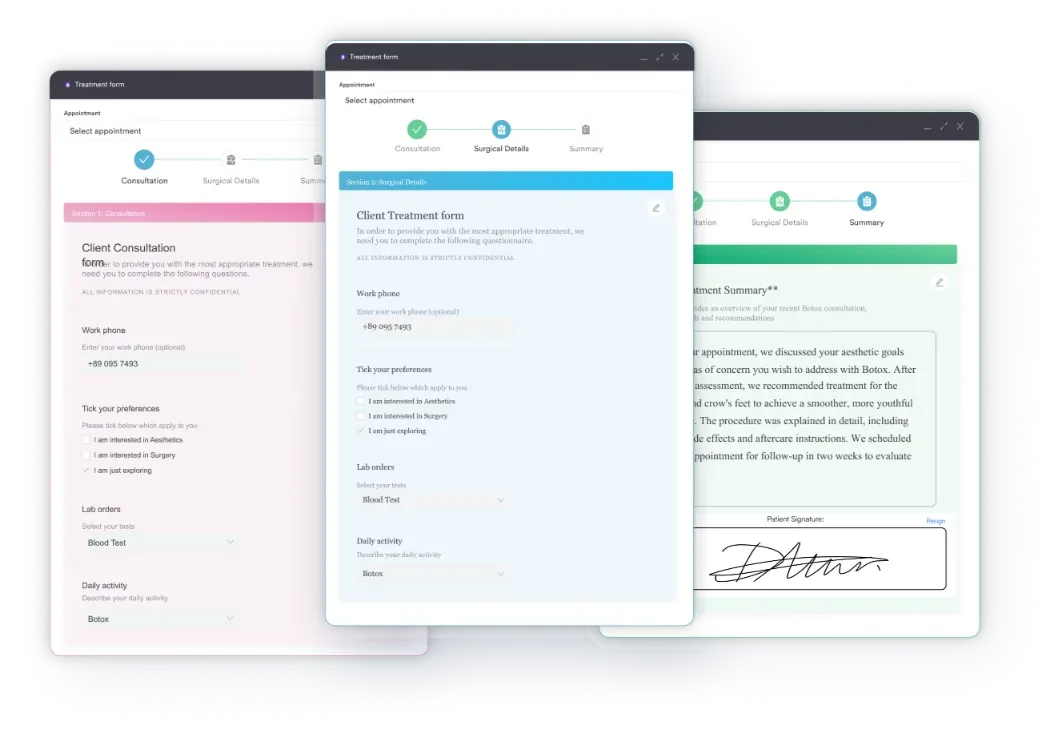
Connecting these requirements to structured digital intake forms and templated clinical notes reduces documentation inconsistencies across providers.
The 90-day global period is the central billing rule that coders get wrong most often with CPT Code 11960. The code bundles the expander insertion and all subsequent expansion sessions within that window into a single billable episode.
Billing an expansion visit as a separate E/M or as a distinct procedure during the global period results in automatic denial under CMS global surgery rules.
Coders should confirm laterality, expander size, and expansion volume against the operative report before every claim goes out. Practices using skin clinic software with structured note templates can standardize this documentation across the care team. See 15002 for another integumentary code where the same global period documentation rules apply.
Modifier selection for CPT Code 11960 directly affects reimbursement. The wrong modifier, or a missing one, is one of the fastest routes to a partial payment or outright denial. Below are the modifiers most commonly applied to this code.
Always verify modifier applicability against current CMS Physician Fee Schedule data and NCCI edits before submission. Payer-specific rules may differ from Medicare defaults.
CPT Code 11960 reimbursement rates differ between facility and non-facility settings. Facility rates apply when the procedure is performed in a hospital or ambulatory surgery center. Non-facility rates apply in a physician’s office or other outpatient setting. The non-facility rate is typically higher because the practice expense RVUs account for supplies and staff the surgeon provides in-office. A payer reviewing this code looks for the reasoning in the note, not only the conclusion, so the documentation level matters. Practices that age their receivables weekly catch claims approaching a filing limit while an appeal is still possible.
Use the FastRVU lookup tool for current work, practice expense, and malpractice RVU values by code and locality. Private payer rates vary significantly and are negotiated separately from Medicare fee schedule amounts.
The figures above are approximate; always verify against the current CMS Physician Fee Schedule for your geographic locality before billing.
Run CPT 11960 through your payer contracts annually. Private payer rates for reconstructive integumentary procedures can diverge 30-60% from Medicare fee schedule amounts, and outdated contract data leads to systematic underbilling across your reconstructive surgery caseload.
Pairing CPT Code 11960 with the correct ICD-10-CM diagnosis code is a medical necessity requirement, not a formality. As with 11981, each claim needs a diagnosis code that directly supports the clinical indication for the procedure performed. The table below covers the most frequently paired codes for CPT 11960.
Always code to the highest level of specificity available in ICD-10-CM. For burn sequelae, use the site-specific T20-T32 injury code with the seventh character S.
Selecting between CPT Code 11960 and adjacent codes is where many reconstructive surgery billers make errors. The key distinction is anatomical site: whether the procedure involves breast tissue or not. Review 15272 for a related integumentary procedure code and L65.8 for a related diagnosis code when building a complete reconstructive surgery coding workflow.
Unit rules separate 11960 from the grafting codes further down the section. CPT code 15150 bills by measured graft area, with add-on codes covering the portion past the first 25 sq cm. CPT 11960 stays a single unit however many expansion visits follow.

Pabau keeps treatment notes, expansion records, and billing details in one patient record, and validates claim fields before submission, so your team catches missing documentation before a claim stalls.

Denial prevention for CPT Code 11960 follows a clear pattern once you understand the most common failure points below. Claims reviewers see the same errors repeat across practices billing reconstructive integumentary procedures.
Reconstructive surgery billing demands more than a code lookup. Practices managing CPT Code 11960 cases need to track global periods, document expansion volumes at each visit, manage prior authorization records, and catch modifier errors before submission.
Structured treatment notes in practice management software like Pabau keep the operative report, expansion volumes, and prior authorization records tied to the same patient chart, so staff can confirm a case is complete before it goes to billing.
Pabau’s claims management software then validates claim fields against payer requirements and tracks status through submission.
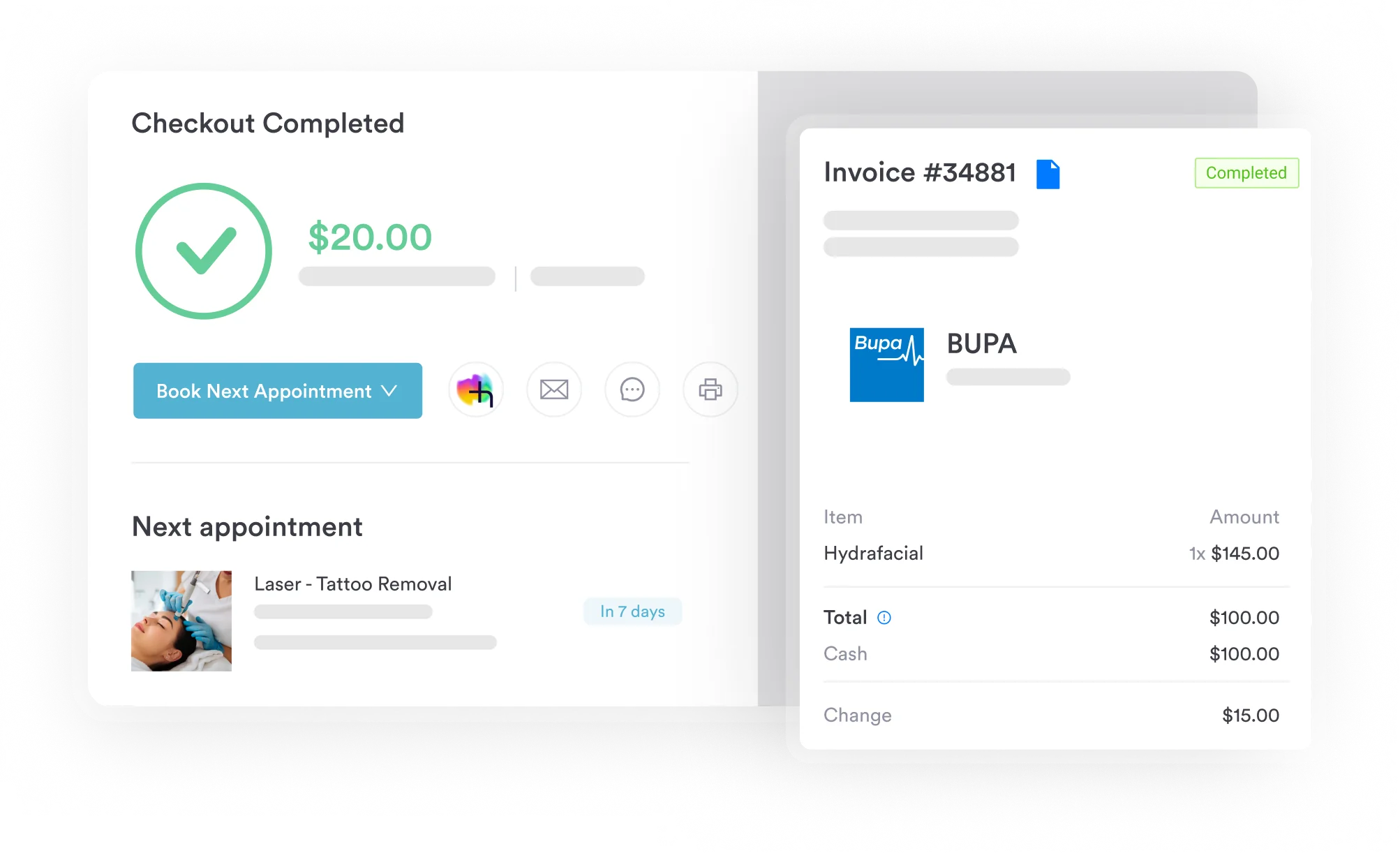
Claim status tracking shows billing managers exactly where a submission is stalling, whether that’s a rejected field, a missing prior authorization, or a claim still sitting with the payer.
Practices focused on plastic surgery practice management get the most value when treatment notes, expansion records, and billing sit in the same system instead of split across tools. The AAPC’s CPT code database remains a reliable external reference for crosswalking 11960 with related codes.
Set a global period tracker alert in your practice management system for every 11960 case. When expansion visits appear on the schedule within 90 days of the insertion date, the system should auto-flag them as global-period services so billing staff don’t accidentally submit a separate charge and trigger a denial.
CPT Code 11960 is a high-complexity surgical code where small documentation and modifier errors translate directly into denied or underpaid claims. The 90-day global period rule catches practices off guard more than any other single issue, followed closely by incorrect site code selection and missing prior authorization records.
Practices running reconstructive surgery caseloads benefit from embedding CPT 11960 coding rules into their clinical and billing workflows rather than relying on coder memory at claim submission.
Pabau keeps documentation, coding details, and claim status in one place.
Book a demo to see how Pabau streamlines your workflows, simplifies billing, and helps your practice stay organized from consultation to claim submission.

Coding a facial fracture that needs reconstructive follow-up? S02.642A is the diagnosis code for a closed nasal bone fracture, often paired with craniofacial reconstruction billing.
Billing for orbital or eyelid reconstruction? S01.322S covers the sequela of an open eyelid wound, a common diagnosis behind oculoplastic tissue expansion.
Need the E/M code for a new patient reconstructive consult? 99204 covers a moderate to high complexity new patient office visit.
CPT Code 11960 covers the surgical insertion of tissue expander(s) for anatomical sites other than the breast, including all subsequent expansion sessions performed during the 90-day global period. The code applies to reconstructive procedures on the scalp, face, trunk, extremities, and orbital socket, among other non-breast sites.
Yes. The descriptor explicitly states “including subsequent expansion,” meaning all expansion visits within the 90-day global period are bundled into the initial insertion code. Billing separate procedure or E/M codes for expansion visits during this window will result in denial under CMS global surgery rules.
CPT 19357 is used exclusively for breast tissue expander insertion in breast reconstruction cases. CPT 11960 applies to all other anatomical sites. Using 11960 for a breast expander or 19357 for a non-breast expander is a code selection error and a common denial trigger in reconstructive surgery billing.
Medicare reimbursement for CPT Code 11960 varies by geographic locality and place of service. Non-facility rates typically range approximately $785-$930 and facility rates approximately $500-$605, based on current RVU values applied to the CMS conversion factor. Always verify the exact rate for your locality using the CMS Physician Fee Schedule lookup tool before billing.
The most commonly applied modifiers are -50 (bilateral procedure), -51 (multiple procedures), -22 (increased complexity with supporting documentation), -RT/-LT (right or left side laterality), and -59 (distinct procedural service to override NCCI bundling). Verify current NCCI edits and payer-specific modifier requirements before submission.
Commonly paired ICD-10-CM codes include L90.5 (scar conditions and fibrosis of skin), T20.00XS (burn sequela of the head, face, or neck, reported with an L-code for the residual scar), L66.10 (cicatricial alopecia for scalp expansion), and Q11.1 (other anophthalmos for orbital socket expansion). Always code to the highest specificity available and confirm that the diagnosis directly supports medical necessity for tissue expansion.



