CPT code 21011: Excision of soft tissue tumor of the face
CPT code 21011: Official descriptor and procedure overview CPT code 21011, as pu...

Last Updated: Oct 8, 2026

CPT code 11970 covers replacement of a tissue expander with a permanent implant, the second stage of implant-based reconstruction.
The code sits in the integumentary section of CPT, not the breast subsection, so its descriptor names no body site.
Bill 11970 and 19357 on separate dates, and add modifier 58 when the exchange falls inside a prior global period.
Z42.1 leads the diagnosis pointer on most claims, with Z85.3 or a C50 code confirming the oncologic history.
Practice management software like Pabau keeps operative notes and claims in one record, so missing details surface before you send.
A tissue expander exchange should be one of the easier claims a reconstructive practice files. Yet CPT code 11970 gets denied more often than its complexity suggests, and the reason is rarely medical.
Most rejections trace back to sequencing. The payer’s file shows no expander on record, so the exchange reads like a first-time implant placement. It bounces before anyone even checks the operative note.
Getting the code right starts with knowing exactly what it covers and where it sits in the CPT structure. From there, a clean claim just needs the right details before it goes out the door.
Official AMA descriptor: “Replacement of tissue expander with permanent implant.” The code sits in the Introduction or Removal Procedures on the Integumentary System subsection of the CPT code set, not the 19000-series breast codes. Its neighbors in that subsection are skin and soft-tissue codes such as 11950 and 11960.
By default it is unilateral, so it is reported once per breast. Bill it only when the expander is swapped for a saline or silicone implant in its own operative session.
Two-stage reconstruction is the most common implant-based approach after mastectomy. The surgeon places an expander at the time of the mastectomy.
Then comes the exchange. The expander comes out, the permanent implant goes in, and the practice bills 11970 as a new encounter. Putting 11970 and 19357 on the same date of service reads as a bundling error and draws a National Correct Coding Initiative (NCCI) edit.
11970 bills as its own encounter and needs no parent code to reach a claim. Add-on codes are the opposite: CPT code 90838 is only reportable alongside a same-day evaluation and management service.
The classic misassignment is 19342 in place of 11970. Both describe an implant going in on a day other than the mastectomy, so the difference sits in what came out.
11970 needs an expander in place. 19342 covers a first implant placed later, or one implant swapped for another. No expander in the history, no 11970.
One more code sits at the far end of the pathway. Reach for 19380 when the reconstruction was finished long ago and the patient is back for a revision.
Skin and reconstructive procedures generate detailed claims, so comparing the best plastic surgery software is worth the time.
After code selection, modifiers are the next thing to get 11970 rejected or underpaid. Each one carries its own documentation burden.
On modifier 50: bilateral reconstruction claims get read more closely than most. Confirm the payer accepts 50 on 11970, since plenty want two lines with LT and RT instead. Then check that no active NCCI edit pairs 11970 with another breast code from the same session.
Before you send a bilateral 11970 claim, read the payer’s bilateral payment policy. Some pay 150% of the single-procedure rate, others handle it line by line. Document bilateral intent in the preoperative note as well, because the operative note on its own often reads as two unilateral procedures.
Medicare pays 11970 under the Physician Fee Schedule, with one rate for facility settings and a higher one for the office. Geographic Practice Cost Index (GPCI) values then move the number by locality. Pull your own figures from the CMS fee schedule lookup rather than a round number from a blog.
Two more numbers matter before you quote a rate internally. The implant reaches the claim through the facility or a HCPCS L-code, never the surgeon’s fee. And 11970 opens its own global period, so check the global days field for the current year while you are in the lookup.
Z42.1 is the primary diagnosis on most 11970 claims, because it names the encounter as reconstruction after mastectomy. Payers match that pointer against their coverage policy, and a mismatch is the quickest route to an automatic denial.
The pairing rule: lead with Z42.1, then add the code that proves the surgical history. Z85.3 does that job for a completed cancer episode. A claim that carries the cancer code alone tells the payer reconstruction may not be the point of the visit yet.
Thin documentation is what turns a paid 11970 claim into a post-payment audit two years later. Reviewers look for a short list of specifics, and they look for them in the note itself.
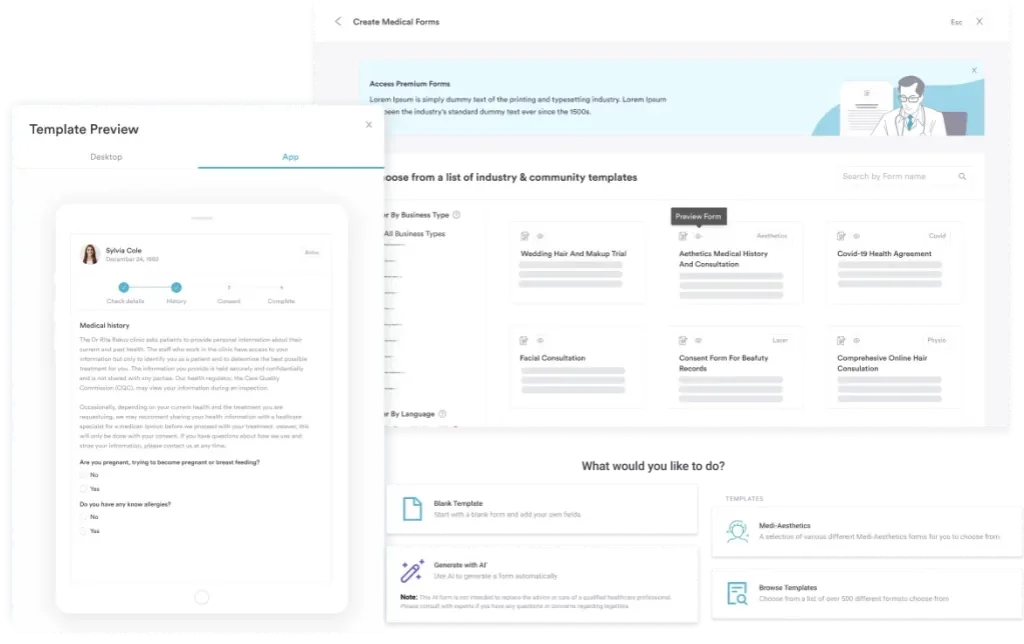
Free-text dictation is where most of these details go missing. Practice management software like Pabau lets you build the operative note as structured digital forms. Laterality and implant details become fields on the form, so nobody has to remember to dictate them.
The Women’s Health and Cancer Rights Act (WHCRA) is federal law, not a payer preference. Group health plans that cover mastectomy generally have to cover reconstruction too, and that includes the expander-to-implant exchange billed under 11970.
Records are the practical obstacle here. When another surgeon placed the expander, the mastectomy note may sit with a breast surgery group or a women’s health practice. Request it early, not once the claim is already on appeal.
A clean 11970 claim is mostly a handoff. Here is the route it takes in a practice that gets paid the first time.
A patient has both expanders exchanged in a single session. Payer A wants one line, 11970-50, priced under its bilateral policy. Payer B rejects that line and asks for two, 11970-LT and 11970-RT.
Same operation, same note, two claim forms. Guess wrong and the line bounces back as an invalid modifier, which means someone rebuilds and resubmits it. Keep the bilateral preference for your top five payers written down somewhere the billing team can see it.
Knowing the descriptor keeps a claim clean. Knowing the denial patterns is what recovers revenue, so here are the ones that repeat.
Run a 90-day denial report on 11970 before your next batch goes out. Group the results by reason code, because CO-4, CO-97, and CO-50 account for most reconstruction revenue loss and each one has a different fix. Sort the pile once and you stop treating a modifier problem as a medical necessity problem.
In most practices, reconstruction billing lives in three places. The note sits in the chart, the authorization sits in an email, and the claim sits in a spreadsheet. Every handoff between them is a chance for the prior stage date or the laterality modifier to fall out.
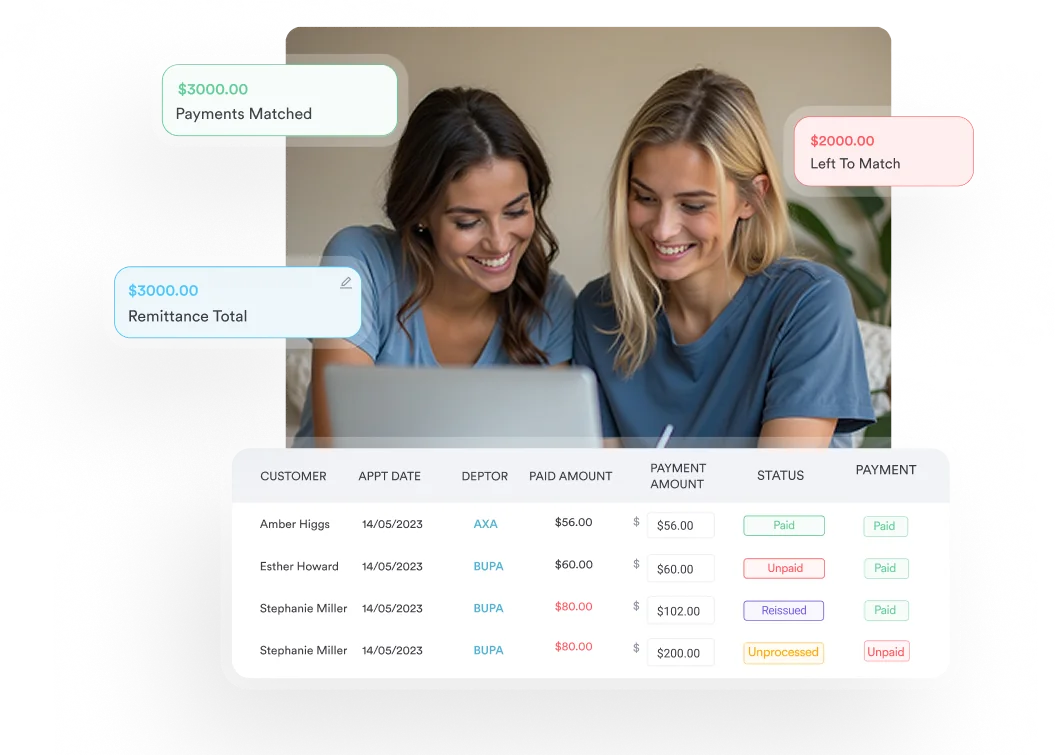
Pabau keeps all three in one patient record. Structured forms capture the exchange details at the point of care, and the biller works from the finished note instead of a scanned PDF. Pabau’s claims management then checks that required submission fields are complete before the claim can go out. A status dashboard shows where each one stands. Coding sits in the middle of the revenue cycle, between registration and payment posting.
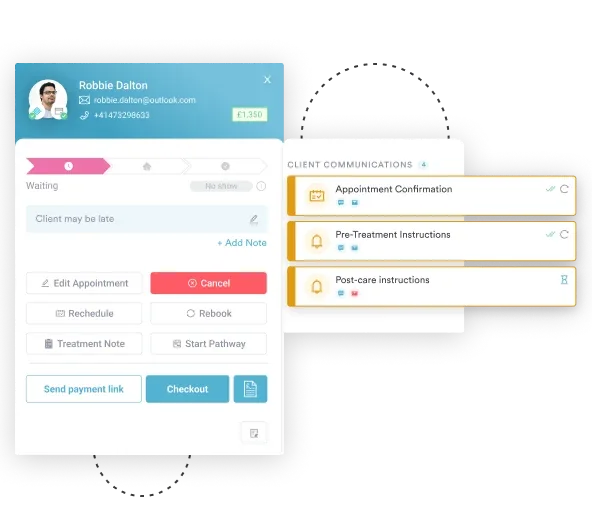
The same record handles the patient side of the exchange. Automated messages confirm the date and send pre-op instructions, which keeps the front desk off the phone during a two-stage plan that runs for months. For practices running high reconstruction volumes.

Pabau holds the operative note, the authorization, and the claim in the same patient record. Required submission fields are checked before you send, and a status dashboard tracks every claim from submitted to paid.

Nearly every 11970 denial is decided before the claim is built. The expander history either sits in the note or it doesn’t. Laterality is either documented or assumed.
So pull your last ten exchange claims. Check the primary diagnosis, the laterality modifier, and the date of the prior stage. Whatever pattern shows up there is the one costing you money, and it is usually one fix rather than six.
Keeping notes and claims in one place removes most of the guesswork on a procedure that spans two operations and several months. Book a demo to see how Pabau connects the operative note to the claim before it leaves your practice.

Need the code for the mastectomy that starts the pathway? CPT 19302 covers partial mastectomy with axillary lymphadenectomy, including its documentation requirements.
Billing the secondary history code on your claims? ICD-10 Z85.3 explains when personal history of breast cancer belongs on the claim.
Coding a diagnostic breast procedure before reconstruction? CPT 19084 walks through breast biopsy with device placement and the pairings payers expect.
Working on ablation rather than excision? CPT 19105 covers cryoablation of a fibroadenoma, including how it is reported per lesion.
Billing nipple-areola pigmentation after reconstruction? CPT 11920 covers tattooing for color defects, another code from the same integumentary subsection.
No. The descriptor covers replacement of a tissue expander with a permanent implant, and it names no body site. Most claims do follow a mastectomy, but the code also fits an expander exchange elsewhere on the body. That is why it sits in the integumentary section rather than the breast subsection.
CPT 11971 covers removal of a tissue expander without insertion of an implant. Report it when infection, exposure, or a patient’s decision ends the reconstruction at that point. Keep 11970 for sessions where a permanent implant goes in.
CPT sets no waiting period. Surgeons usually operate a few weeks to a few months after the final fill, once the tissue settles. What payers want is a note confirming that expansion is complete and the patient is cleared for the implant.
Yes. The removal is part of the code, so do not add 11971 for the same breast. Minor capsule work needed to seat the implant is generally treated the same way. Document a larger capsulectomy and check it against payer policy.