



CCSD code G5100: Bypass of duodenum billing guide
CCSD code G5100 bills a bypass that leaves the duodenum in place CCSD code G5100...

Last Updated: Oct 16, 2026

CPT Code 11442 describes excision of a benign lesion including margins on the face, ears, eyelids, nose, lips, or mucous membrane, with an excised diameter of 1.1 to 2.0 cm.
Measurement includes the lesion and the excised margins — billing only the lesion diameter is the most common coding error with this code.
Simple closure is bundled into CPT 11442 and cannot be separately billed. Complex repairs use a distinct closure code, unbundled with modifier 59.
Recording excised diameter, anatomical site, and lesion type in structured clinical documentation at the point of care gives billing teams complete data before a claim is submitted.
CPT Code 11442 is the procedure code for excision of a benign lesion, including margins, on the face, ears, eyelids, nose, lips, or mucous membrane, where the excised diameter measures 1.1 to 2.0 centimeters. It sits in the middle of the 11440-11446 family.
The most common coding error is measuring the visible lesion instead of the excised specimen. This guide covers the code definition, reimbursement rates, RVUs, modifiers, ICD-10-CM pairings, and documentation requirements for CPT 11442.
Coders who miss the margin measurement consistently under-code or over-code CPT 11442 by one or two tiers. Understanding this code’s boundary conditions prevents both denial risk and audit exposure.
The American Medical Association (AMA) defines CPT Code 11442 as excision of other benign lesion including margins, on the face, ears, eyelids, nose, lips, or mucous membrane, with an excised diameter of 1.1 to 2.0 centimeters.
The code is maintained under the Surgery section of the CPT code book and applies to dermatology, plastic surgery, oculoplastic, and general surgery encounters where a facial or perioral benign growth is removed surgically.
The excised diameter is not the visible lesion size. It is the greatest diameter of the excised specimen, measured after removal and including the margin of surrounding normal tissue taken with it. Document this measurement in the operative note using the surgical specimen, not a pre-operative clinical estimate.
The 11440-11446 series covers benign lesion excision on the face, ears, eyelids, nose, lips, and mucous membranes, differentiated exclusively by excised diameter. Choosing the wrong tier by even a millimeter — without supporting documentation — is a common audit trigger.
Note that 11445 does not exist in the series. The family jumps from 11444 to 11446, and coders searching sequentially for the next code should expect that skip. Cross-referencing the full code hierarchy against other code families.
CPT 11442 and CPT 11422 both describe excision of a benign lesion with an excised diameter of 1.1 to 2.0 cm. The difference is anatomical site only, not size. Selecting the wrong code between these two is one of the most frequent facial-lesion billing errors.
If a lesion sits at the jawline or on the neck, the anatomical distinction matters. The neck falls under the 11420-11426 series (11422 for the 1.1-2.0 cm range), while the face, including the chin and perioral region, falls under 11440-11446. When documentation is ambiguous about the site, query the provider before submitting the claim.
Our roundup of software for plastic surgery practices shows how documentation, photos, and billing fit together.
Medicare sets payment rates for CPT 11442 annually through the Medicare Physician Fee Schedule (MPFS), maintained by the Centers for Medicare and Medicaid Services (CMS). Rates vary by geographic locality, setting (facility vs. non-facility), and the annual conversion factor. The figures below reflect national averages — verify current rates using the CMS MPFS lookup tool for your locality.
Use the FastRVU lookup tool to verify the most current RVU values and geographic adjustment factors for your state and locality before finalizing billing for this code.
RVU values are updated annually through CMS rulemaking. The estimates above are approximate. Always verify against the current CMS MPFS data file for the applicable fiscal year. The difference between non-facility and facility practice expense RVUs reflects the shift of overhead costs to the hospital or ASC in facility settings.
Book a demo to see how Pabau, practice management software with built-in clinical documentation, captures the excised diameter and anatomical site directly in the clinical note at the point of care — cutting out the manual chart lookup that slows claim submission.
Applying the wrong modifier, or omitting one when required, is the second most common reason for 11442 claim denials. Each modifier below serves a specific purpose. Using them interchangeably triggers NCCI edits or reduces reimbursement inappropriately.
Modifier 59 warrants particular attention. Use it only when the clinical documentation clearly supports a distinct anatomical site or separate encounter, not as a blanket tool to bypass bundling edits. Misuse of modifier 59 is one of the top compliance risks flagged by Medicare Administrative Contractors (MACs) in dermatology and plastic surgery audits.

Pabau’s clinical documentation tools capture the excised diameter, anatomical site, and selected modifier directly in the clinical record at the point of care, so your billing team has complete data before submission.

Every CPT 11442 claim requires a supporting ICD-10-CM diagnosis code that establishes medical necessity. Payers, including Medicare under Local Coverage Determinations (LCDs), review the paired diagnosis code to determine whether removal of the lesion was clinically indicated. The ICD-10-CM codes used with CPT Code 11442 must accurately reflect the documented lesion type and anatomical location. Auditors read the note before the code, so the documentation level has to support what was submitted. Patients paying up front and claiming later need a superbill, which itemizes the service, the code and the charge.
Use CrossCoder’s crosswalk tool to verify that your selected ICD-10-CM code is accepted by your payer’s LCD before submitting. Not all benign lesion codes are covered under all payer LCDs, particularly when cosmetic motivation is documented in the patient chart. For a searchable reference, the AAPC Codify platform provides crosswalk lookups alongside payer policy summaries.
Some ICD-10 chapters also restrict which chart a diagnosis may appear on. ICD-10 code P22.0 is reported from the newborn’s own record, never the mother’s, with Z38 holding the principal diagnosis slot for that birth admission.
Inadequate documentation is the leading reason payers downcode or deny 11442 claims on post-payment audit. The operative note must contain enough specificity that an auditor, reading only that record, can independently confirm the code selection was correct.
Using digital intake forms and structured clinical notes at the point of care gives your billing team the evidence they need before the claim leaves the practice.
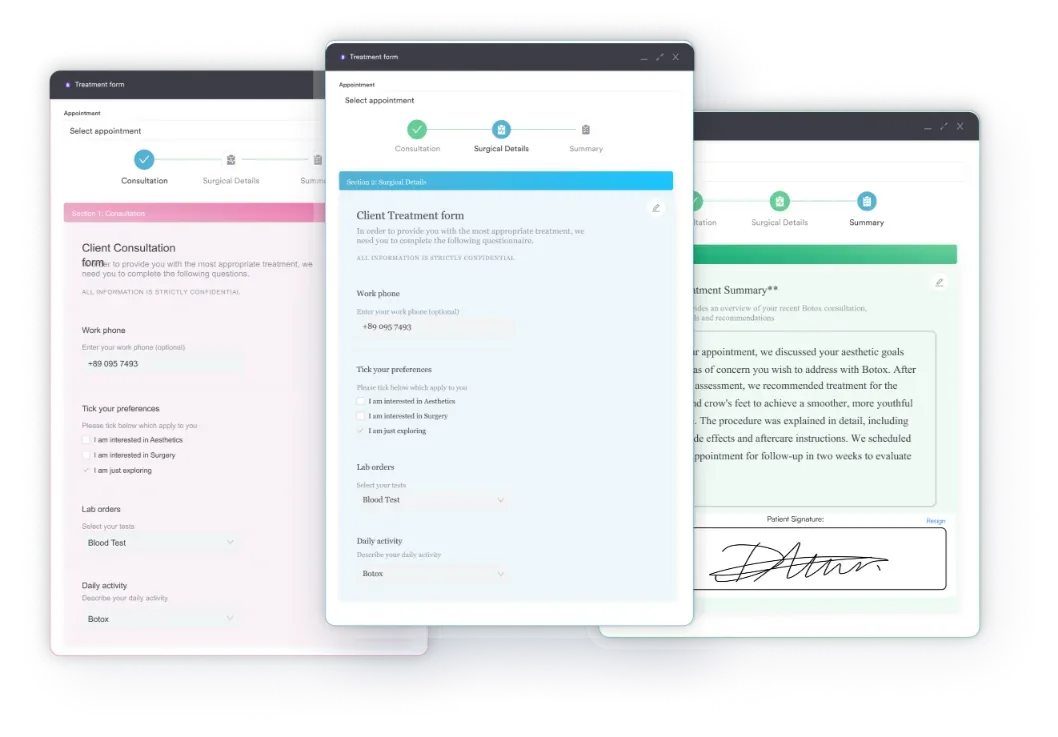
Maintaining structured patient records that capture all six elements above prevents the retroactive documentation requests that delay payment.
Practices managing multiple providers who perform benign lesion excisions can apply the same standards to broader medical documentation workflows.
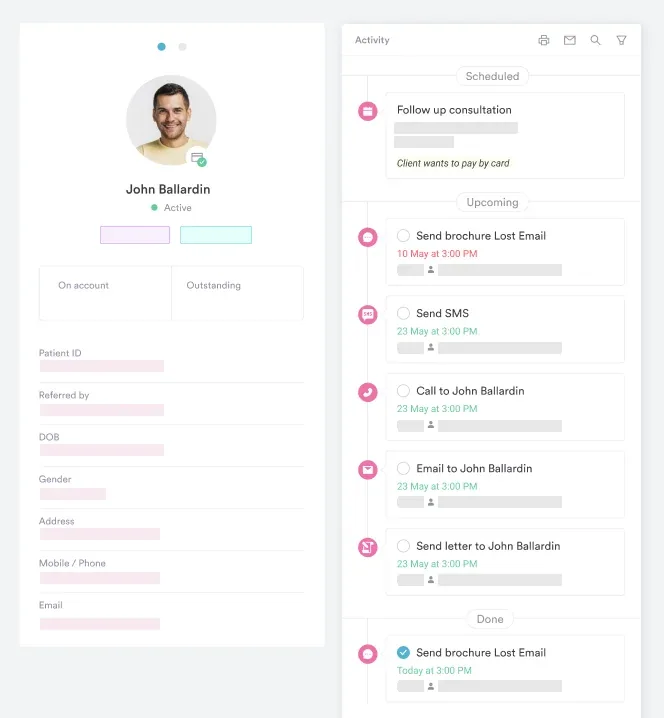
The National Correct Coding Initiative (NCCI) governs which codes can be billed together with CPT 11442. Violating NCCI edits leads to automatic claim denial or post-payment recoupment. Knowing which codes are bundled prevents the most expensive billing errors.
Practices managing high volumes of benign lesion excisions benefit from standardized billing protocols that flag when a repair code is added to an excision claim. Pabau’s automated workflow tools can be configured as a custom rule to flag those same encounters for review before submission, rather than relying on staff to catch the pairing manually.
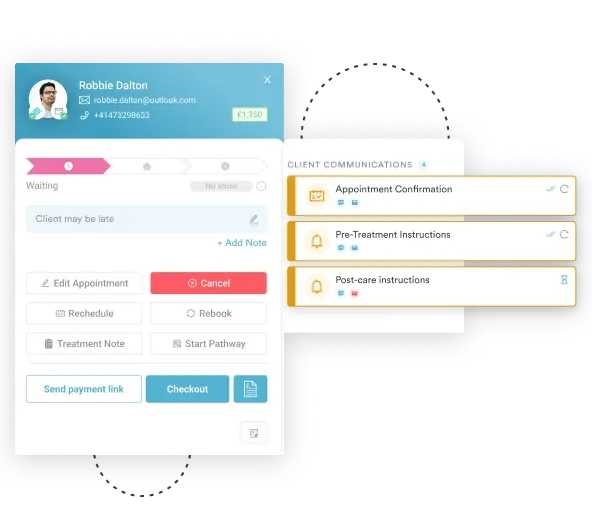
Billing teams that handle benign lesion excisions regularly encounter the same handful of errors. Each one is preventable with clear protocols at the clinical documentation stage, before the claim is coded.
Maintaining a code-specific checklist for each high-volume procedure reduces error rates by creating a forced review step before submission.
Dermatology and plastic surgery practices billing CPT 11442 regularly face the same operational bottleneck: clinical documentation is captured on paper or in disconnected systems, then manually transcribed into the billing platform. Every manual transfer step introduces the risk of a misrecorded diameter or an unlinked pathology result.
Pabau’s clinical documentation tools capture the excised diameter, anatomical site, lesion type, and applicable modifier directly in the clinical record at the time of the procedure, so the data flows through to the claim without manual re-entry. For skin clinics and dermatology practices managing multiple providers and locations, this reduces the transcription errors that trigger audits.
The practice management workflows built into Pabau also support pre-submission claim scrubbing, flagging encounters where the clinical documentation may not support the billed code. Book a demo to see how this works for benign lesion excision billing specifically.

Coding a pancreatic neck tumor? ICD-10 code C25.7 guide covers the code for malignant neoplasm of other parts of the pancreas, including the neck.
Coding a thymus malignancy? ICD-10 code C37 guide covers thymoma and thymic carcinoma, plus the Excludes note for thymic carcinoid tumors.
Coding a primary pleural malignancy? ICD-10 code C38.4 guide explains why this code excludes pleural mesothelioma, which carries its own code, C45.0.
CPT Code 11442 is straightforward when the excised diameter measurement is correctly captured — but that single step is where most billing errors originate. Practices that build the measurement protocol into the operative documentation workflow, before the claim reaches the biller, avoid the denial cycle that costs both time and revenue.
Pabau’s clinical documentation tools connect the operative record directly to the billing queue, so excised diameter, anatomical site, ICD-10-CM pairing, and modifier selection are all visible before submission. See how it works for your dermatology or skin practice with a demo from the team.
CPT Code 11442 is the procedure code for excision of a benign lesion including margins on the face, ears, eyelids, nose, lips, or mucous membrane, where the excised diameter is 1.1 to 2.0 centimeters. It is part of the 11440-11446 code family, which covers benign lesion excision on facial and perioral anatomical sites, differentiated by excised specimen size.
Medicare reimbursement for CPT 11442 varies by geographic locality and setting. In a non-facility (office) setting, the national average is approximately $185-$205 (around $194). In a facility (hospital or ASC) setting, it is approximately $120-$145 (around $132). Verify the current rate for your locality using the CMS Medicare Physician Fee Schedule lookup tool, as rates are updated annually.
All three codes describe excision of a benign lesion on the face, ears, eyelids, nose, lips, or mucous membrane, but differ by excised diameter: 11440 covers 0.5 cm or less, 11441 covers 0.6 to 1.0 cm, and 11442 covers 1.1 to 2.0 cm. The diameter is measured from the excised specimen including margins, not from the visible lesion alone.
Simple closure is bundled into CPT 11442 and cannot be separately billed. A separate closure code (such as 12011-12021) is only billable when the repair is complex, involving layered closure, undermining, or flap/graft technique. When a complex repair is separately billed, modifier 59 should be appended and the operative note must document the complexity.
CPT 11442 and 11422 cover the same excised diameter (1.1 to 2.0 cm) but differ by anatomical site. CPT 11442 applies to the face, ears, eyelids, nose, lips, and mucous membrane. CPT 11422 applies to the scalp, neck, hands, feet, and genitalia. Selecting between them depends solely on where the lesion is located, not its size.
Commonly used modifiers for CPT 11442 include: modifier 51 for multiple procedures at the same encounter, modifier 59 to unbundle a separately identifiable service when documentation supports it, modifier 25 for a significant E/M service on the same day, and LT/RT for bilateral lesions on paired structures such as eyelids or ears. Modifier 58 applies when a staged related procedure occurs during the global period.



