HCPCS code E0198: Water pressure pad billing guide
HCPCS code E0198 is a water pad for a standard mattress HCPCS code E0198 is the ...

Last Updated: Oct 13, 2026

CPT Code 11471 covers excision of skin and subcutaneous tissue for hidradenitis suppurativa in the perianal, perineal, or umbilical region, with complex repair.
It is the complex-repair counterpart to CPT 11470 (same sites, simple or intermediate repair), and one of six codes in the hidradenitis excision family alongside 11450/11451 (axillary) and 11462/11463 (inguinal).
Per CPT Assistant guidance (August 2016), report 11470/11471 only once per body area, regardless of how many individual sinus tracts or lesions were excised in that region — a rule that trips up more claims than the repair-type distinction itself.
Pabau’s claims management software links CPT codes to diagnosis codes and flags modifier requirements before claims are submitted.
CPT Code 11471 covers excision of skin and subcutaneous tissue for hidradenitis suppurativa in the perianal, perineal, or umbilical region, with complex repair. It’s the complex-repair counterpart to CPT 11470, which covers the same sites with simple or intermediate closure.
The distinction that trips up more claims than repair type is reporting frequency. CPT Assistant guidance from August 2016 states that 11470 and 11471 are billed once per body area, no matter how many sinus tracts or lesions were excised within it.
Practices that report a unit for every lesion removed are overbilling — one of the easier patterns for a payer audit to catch.
This reference covers the complete CPT Code 11471 billing picture: official descriptor, anatomic scope, how it differs from the other codes in the hidradenitis family, applicable modifiers, ICD-10-CM crosswalk, Medicare reimbursement and RVU components, the global surgery period, documentation requirements, and the billing errors that trigger the most denials.
CPT Code 11471 is maintained by the American Medical Association (AMA). The official descriptor is: Excision of skin and subcutaneous tissue for hidradenitis, perianal, perineal, or umbilical; with complex repair.
In clinical practice, CPT 11471 applies when a patient with hidradenitis suppurativa (HS) needs surgical excision of affected skin and subcutaneous tissue in the perianal, perineal, or umbilical region, and the wound requires complex repair to close.
Examples include extensive undermining, retention sutures, scar revision, or a flap closure, rather than a straightforward layered closure.
Coders working in dermatology EMR software environments need to confirm the repair type documented in the operative note before selecting between 11470 and 11471.
Complex repair is the non-negotiable qualifier. If the operative note describes only simple or intermediate closure, CPT 11471 does not apply regardless of how extensive the excision was — the correct code is 11470.
CPT 11471 is indicated when a patient with hidradenitis suppurativa has failed conservative management and requires surgical excision in the perianal, perineal, or umbilical region, with a wound complex enough to need more than simple or intermediate closure.
HS affects roughly 1% (0.99%) of the population worldwide, according to a JAMA Dermatology study, and surgical candidacy typically involves Hurley Stage II or III disease where medical therapy (antibiotics, biologics, hormonal agents) no longer controls symptoms.
CPT 11471 is one of six codes in the hidradenitis excision family, grouped in pairs by anatomic site and repair type. The other sites — axillary and inguinal — use different code pairs entirely, even though the clinical picture (chronic HS unresponsive to conservative treatment) is the same.
Axillary and inguinal hidradenitis excisions are unilateral procedures — a bilateral excision may be reported with modifier 50 or laterality modifiers, depending on the payer.
Perianal, perineal, and umbilical sites are treated differently: they are billed once per body area regardless of how many individual lesions or sinus tracts were excised within that area, per CPT Assistant guidance (August 2016).
The only difference between CPT 11470 and 11471 is the type of wound repair performed. Both codes cover the identical anatomic sites (perianal, perineal, or umbilical) and the identical underlying procedure: excision of skin and subcutaneous tissue affected by hidradenitis.
Lesion size and diameter play no part in selecting between them. That measurement-based logic applies to the separate benign lesion excision code range, CPT 11400 through CPT 11446.
Complex repair, by CPT definition, involves more than a layered closure. Think extensive undermining, placement of retention sutures, scar revision, or a flap, rather than a straightforward suture closure.
If the operative note only documents a layered or simple closure, reporting 11471 is upcoding. If the note documents genuine complex repair technique but the claim is submitted as 11470, that’s a revenue loss.
Before selecting between 11470 and 11471, check the closure description in the operative note, not the extent of the excision. A large excision closed with simple sutures is still 11470. A smaller excision requiring a flap or extensive undermining to close is 11471. Flag any note that says only ‘wound closed’ or ‘closure performed’ for an addendum specifying the repair technique before billing.
Medicare reimbursement for CPT Code 11471 is calculated using the Resource-Based Relative Value Scale (RBRVS) methodology and set annually through the CMS Physician Fee Schedule (PFS). Use the CMS Physician Fee Schedule lookup tool to confirm current-year, locality-specific rates — national averages are reference points only and vary by Medicare Administrative Contractor (MAC) jurisdiction. Batch submissions group many claims into one claim file, and one malformed record can hold up the batch. Under current evaluation and management rules, the counted elements changed but the need to show reasoning did not.
As a major surgical procedure with a 90-day global period and complex wound closure, CPT 11471 carries meaningfully higher reimbursement than a simple benign lesion excision. This reflects the additional physician work in both the excision and the repair. Verify exact amounts against the current CMS PFS before submitting claims.
Medicare coverage generally requires documented medical necessity — typically Hurley Stage II or III disease unresponsive to conservative treatment — rather than a purely elective removal.
Ambulatory Surgical Center (ASC) billing follows a separate CMS ASC payment system. Confirm the current ASC payment status indicator for CPT 11471 in the CMS ASC payment file before billing in that setting, since it determines whether a separate facility payment applies.

Pabau’s claims management tools help dermatology, colorectal, and general surgery practices link CPT codes to diagnosis codes, validate modifiers before submission, and track denial patterns. See how it works for your practice.

Relative Value Units (RVUs) determine Medicare reimbursement under the RBRVS. CPT 11471 carries three RVU components, and because it combines an excision with a complex repair, its work RVU sits noticeably higher than a simple excision-and-closure code.
The FastRVU lookup tool and the CMS Physician Fee Schedule search provide current-year values by code and locality.
Total RVU = wRVU + PE RVU + MP RVU, multiplied by the CMS conversion factor (CF) and adjusted by the Geographic Practice Cost Index (GPCI) for the practice’s locality. The conversion factor and RVU values change annually. Confirm current-year figures on cms.gov before calculating expected payments.
CPT 11471 carries a 90-day global surgery period, consistent with its classification as a major surgical procedure rather than a minor office excision. During this period, routine follow-up care related to the procedure is bundled into the original payment.
Billing a separate E/M visit for a routine wound check within 90 days post-excision will result in a denial, unless a modifier documents a distinct, unrelated problem or a planned staged procedure.
Confirm the global days assigned to CPT 11471 annually via the CMS Physician Fee Schedule database, as global period designations can change with rule updates.
Modifiers document specific clinical circumstances that affect how a claim is processed. Applying the wrong modifier, or omitting a required one, is a leading cause of CPT 11471 claim denials.
Laterality modifiers (-LT / -RT) generally do not apply to CPT 11471, unlike the axillary and inguinal codes in the same family. The perianal, perineal, and umbilical sites are treated as a single body area rather than paired lateral structures.
CPT Assistant guidance instructs reporting the code only once per body area, regardless of how many lesions or tracts were excised within it. Confirm with the payer before appending modifier 50 for this code.
A valid ICD-10-CM diagnosis code paired with CPT 11471 is required for claim adjudication, and the diagnosis must support medical necessity for the excision. The primary code for hidradenitis suppurativa is L73.2.
Payers with Local Coverage Determinations (LCDs) for hidradenitis excision specify covered diagnosis codes by MAC jurisdiction. Always verify the applicable LCD before billing, and use a reliable CPT-to-ICD-10 crosswalk resource to confirm current pairings.
Do not use ICD-10-CM codes beyond L73.2 and directly linked hidradenitis or complication codes without confirming their applicability against current CMS guidance. Some MACs exclude purely cosmetic indications from coverage. Document Hurley stage, treatment history, and symptoms (pain, drainage, functional impairment) clearly in the note.
Most CPT 11471 claim denials trace back to incomplete documentation rather than a coding error. The operative note is the controlling document. Auditors compare the note against the billed code on three dimensions: site, repair type, and reporting frequency.
Using digital intake forms and structured clinical templates helps practices capture this data consistently at the point of care, reducing the risk of after-the-fact reconstruction.

The documentation requirements for proper CPT 11471 billing align with AAPC and AHIMA guidance on surgical procedure notes. Practices that maintain records digitally benefit from structured medical forms that prompt for each required data element. Ensuring HIPAA compliance also requires that these records are stored and transmitted securely.
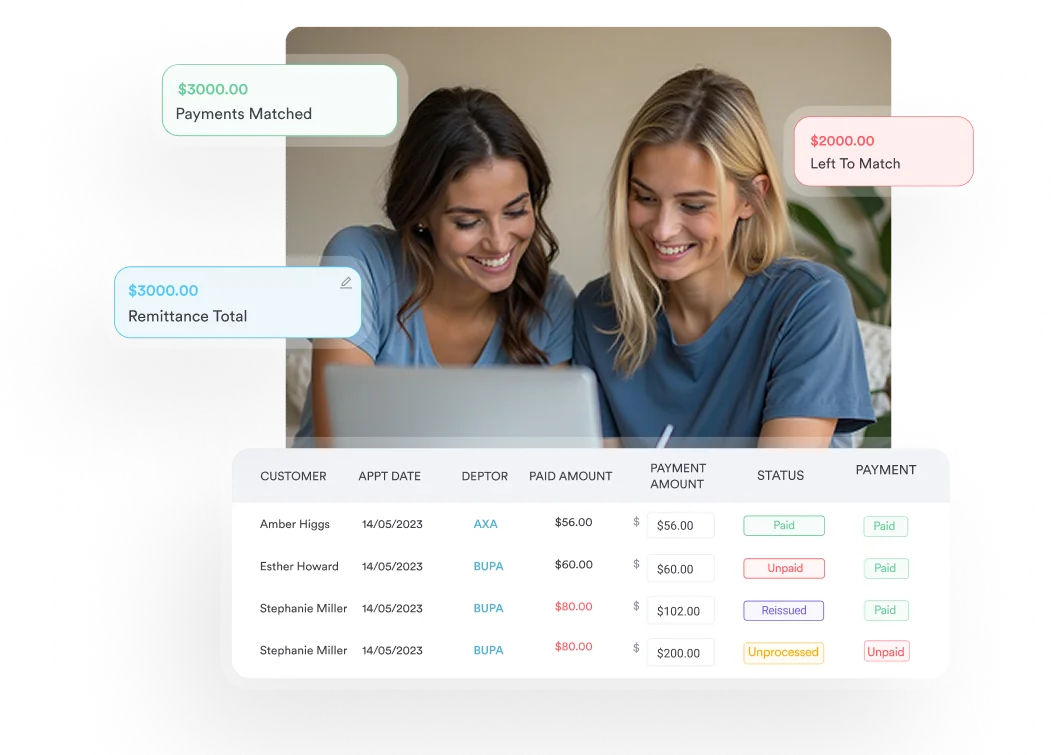
Claim denials for CPT 11471 cluster around a small set of repeatable mistakes. Most are preventable with a pre-submission review process. Pabau’s claims management software flags many of these at the point of billing, before the claim leaves the practice.
Run a monthly internal audit on all CPT 11471 claims: pull the operative notes for 10 randomly selected claims and verify that each note explicitly documents anatomic site, complex closure technique, clinical indication (Hurley stage and treatment history), and that the code was reported only once per body area. This 30-minute review catches the patterns that generate denials before they accumulate.
CPT Code 11471 is part of a family of hidradenitis excision codes differentiated by anatomic site and repair complexity. Selecting the wrong code from this group is a common error, particularly when treating patients with HS at multiple sites in the same session.
Practices billing across the hidradenitis family often also handle axillary excisions under CPT 11450.
Plastic surgery and reconstructive practices treating hidradenitis suppurativa alongside other reconstructive procedures can also explore plastic surgery EMR solutions built for multi-specialty surgical coding environments.
Dermatology practices handling HS excisions alongside skin cancer removal in the same session may also need CPT 17314 for Mohs micrographic surgery billing.
Most CPT 11471 denials are preventable. Missing documentation, repair-type mismatches, and over-reporting units for the same body area are the most common causes, and a well-configured billing workflow catches them before the claim reaches the payer.
This is where practice management software like Pabau makes a measurable difference for dermatology, colorectal, and general surgery practices.
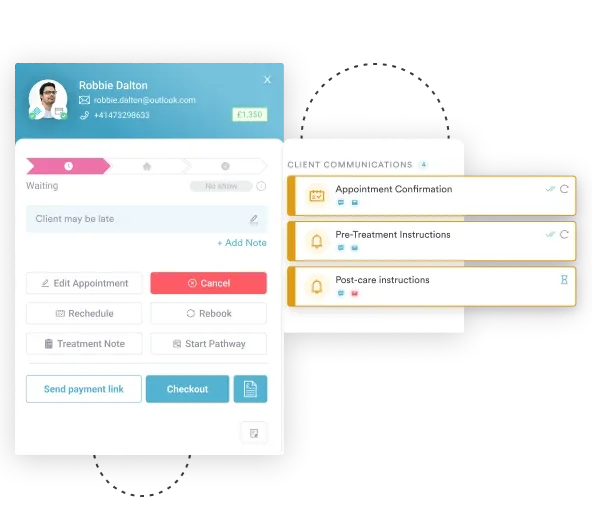
Pabau’s automated workflows can also trigger a documentation completeness check before a claim batch is released, catching missing repair-type detail or unsigned operative notes before they become denials.
For practices managing high volumes of hidradenitis excisions across multiple locations.
CPT Code 11471 is straightforward in concept but routinely denied in practice because of three recurring problems: vague repair-type documentation, over-reporting units for the same body area, and mismatched ICD-10 codes. Each one is preventable with a consistent pre-submission workflow.
Pabau’s claims management and structured documentation tools give dermatology, colorectal, and general surgery teams the pre-submission checks they need to keep CPT 11471 claims clean. To see how it works in a live practice workflow, book a demo.

CPT Code 11471 covers excision of skin and subcutaneous tissue for hidradenitis suppurativa in the perianal, perineal, or umbilical region, with complex repair. It is the complex-repair counterpart to CPT 11470, which covers the same sites with simple or intermediate repair.
Both codes cover the same anatomic sites (perianal, perineal, or umbilical) and the same underlying procedure. The only difference is repair type: 11470 applies when the wound is closed with simple or intermediate repair, while 11471 applies when complex repair (extensive undermining, retention sutures, scar revision, or a flap) is required. Per CPT Assistant guidance, report either code only once per body area, regardless of the number of lesions or tracts excised.
The primary ICD-10-CM code paired with CPT 11471 is L73.2 (Hidradenitis suppurativa). Secondary codes such as K60.2 (anal fistula, unspecified), L02.91 (cutaneous abscess, unspecified), or L03.90 (cellulitis, unspecified) may be added when those complications are documented in the operative report.
CPT Code 11471 has a 90-day global surgery period, consistent with its classification as a major surgical procedure. Routine post-op wound checks, dressing changes, and follow-up visits related to the excision are bundled into the original payment for 90 days. A planned staged closure or debridement during this period is reported with modifier -58; an unplanned return to the OR for a complication uses modifier -78.
CPT 11471 is one of six codes in the hidradenitis excision family, grouped by anatomic site and repair type: 11450/11451 (axillary, simple/intermediate or complex repair), 11462/11463 (inguinal, simple/intermediate or complex repair), and 11470/11471 (perianal, perineal, or umbilical, simple/intermediate or complex repair).
Yes, Medicare covers CPT Code 11471 when the excision is medically necessary, typically requiring documented Hurley Stage II or III hidradenitis suppurativa that has failed conservative treatment (antibiotics, biologics, or incision and drainage). Coverage requirements vary by MAC; check the applicable LCD for your jurisdiction before billing.
Commonly used modifiers include -22 (substantially greater work than usual), -58 (staged or related procedure during the global period), -59 or the X-modifiers (distinct procedural service), -78 (unplanned return to the OR for a complication), and -79 (unrelated procedure during the global period). Laterality modifiers -LT/-RT generally do not apply, since the perianal, perineal, and umbilical sites are treated as a single body area rather than paired lateral structures.