



HCPCS code E0198: Water pressure pad billing guide
HCPCS code E0198 is a water pad for a standard mattress HCPCS code E0198 is the ...

Last Updated: Oct 13, 2026

CPT Code 11444 describes excision of a benign skin lesion from the face, ears, eyelids, nose, lips, or mucous membrane with an excised diameter of 3.1 to 4.0 cm, including margins.
Excised diameter equals the lesion’s greatest clinical diameter plus twice the narrowest margin needed for complete excision, measured and documented by the surgeon before excision. Coding from the post-excision specimen or pathology report, which shrink after skin tension releases and formalin fixation, is the most common cause of undercoding in the 114xx family.
Medicare covers CPT 11444 when medical necessity is documented per the applicable Local Coverage Determination (LCD); facility and non-facility reimbursement rates differ.
Pabau’s claims management software helps skin and dermatology practices attach the correct modifiers, link supporting ICD-10 codes, and reduce claim denials for benign lesion excision procedures.
CPT Code 11444 covers excision of a benign skin lesion, including margins, from the face, ears, eyelids, nose, lips, or mucous membrane, with a final excised diameter of 3.1 to 4.0 cm. Claims for this code are denied more often than for most other integumentary procedures, and the reason is rarely the procedure itself.
The usual cause is a documentation problem: a missing pre-excision measurement, an excised diameter calculated from the shrunken post-excision specimen instead of the surgeon’s pre-excision clinical measurement, or a modifier applied without a supporting operative note.
According to the American Medical Association (AMA), which maintains the CPT code set, CPT Code 11444 reads: Excision, other benign lesion including margins, except skin tag (unless listed elsewhere), face, ears, eyelids, nose, lips, mucous membrane; excised diameter 3.1 to 4.0 cm.
Three elements determine whether this code applies. First, the lesion must be benign. Second, the anatomical site must fall within the listed locations: face, ears, eyelids, nose, lips, or mucous membrane. Third, the excised diameter must fall between 3.1 and 4.0 cm. All three conditions must be true.
The excised diameter is the lesion’s greatest clinical diameter plus the margin of normal tissue required on each side, measured and documented by the surgeon before the incision is made.
If the lesion sits on the scalp, trunk, or extremities, a different code family applies, and if the excised diameter is 2.1 to 3.0 cm, the correct code is CPT 11443 instead. For dermatology EMR software integrations, this distinction must be captured at the point of documentation, not reconstructed later.
The phrase “including margins” is clinically significant. It means the final diameter includes the margin of normal tissue removed around the lesion, not just the visible lesion boundary. Coders and clinicians must ensure the operative note records the lesion’s greatest clinical diameter and the margin width on each side before the incision is made.
This pre-excision clinical measurement is the only defensible basis for code selection, not the post-excision specimen or the pathology report. Once skin tension is released and the tissue is fixed in formalin, the specimen shrinks and no longer reflects the true excised diameter.
Medicare reimbursement for CPT 11444 varies by geographic payment locality and by place of service. The CMS Physician Fee Schedule lookup tool provides the authoritative, locality-specific dollar rates.
The table below compares how non-facility and facility rates relate to each other rather than listing exact dollar amounts, since those vary by Medicare Administrative Contractor (MAC) jurisdiction and change annually.
Because facility rates exclude practice expense costs, which the facility bears directly, physician reimbursement at a hospital outpatient department is lower than in an office setting.
For practices billing CPT Code 11444 mostly from an office location, the non-facility rate applies and yields a higher Medicare allowable. Verify the current locality-specific rate before submitting claims, since rates update annually.
The Medicare payment amount is calculated by multiplying the total RVUs by the annual conversion factor and any geographic adjustment. Work, practice expense, and malpractice RVU values for CPT Code 11444 vary by locality and are published in CMS’s annual RVU files.
Medicare covers CPT Code 11444 when the procedure meets medical necessity criteria defined by the applicable Local Coverage Determination (LCD). For Novitas Solutions jurisdictions, the applicable policy is LCD L34938 (Removal of Benign Skin Lesions) together with its companion Billing and Coding Article A57113.
Other MACs maintain their own jurisdiction-specific LCD and Article pairs, for example LCD L35498 with Article A57482.
Not all benign lesion excisions qualify. Cosmetic removals of asymptomatic lesions with no functional impairment are generally excluded.
Medical necessity for CPT 11444 is typically supported when documentation establishes one or more of the following:
The operative note must connect the clinical indication to the decision to excise. A note that records the procedure without a documented reason is the second most common cause of Medicare denial for this code.
Check the applicable LCD and its companion Billing and Coding Article for your MAC before submitting. Novitas jurisdictions use LCD L34938 with Article A57113; other MACs maintain their own LCD/Article pairs (e.g., L35498/A57482) for benign lesion removal. Cross-reference the covered ICD-10 codes listed in the policy against your diagnosis before billing CPT 11444.
An EMR built around plastic surgery workflows keeps lesion sizes, margins, and photos tied to each procedure code.
Modifier selection for CPT Code 11444 follows standard integumentary surgery rules. The table below covers the most commonly applied modifiers. Incorrect modifier use, particularly misapplying modifier -51 or -59, is a frequent audit flag for benign lesion excision claims.
Modifier -25 is particularly scrutinized for skin lesion excision claims. Payers require that the E&M note contain a separate, identifiable clinical decision-making process distinct from the surgical service. Simply including a pre-operative assessment in the operative note does not satisfy this requirement. Choosing a level means weighing problems addressed, data reviewed and risk, all covered under MDM documentation.
A denied CPT 11444 claim almost always traces back to a specific documentation problem. Payers auditing benign lesion excision codes check for a consistent set of elements across the pre-operative assessment, operative note, and pathology report.
Using digital intake forms and structured operative templates helps practices capture all required data at the point of care, reducing the need for post-claim documentation requests. Good medical documentation workflows make this systematic rather than dependent on individual clinician habits.
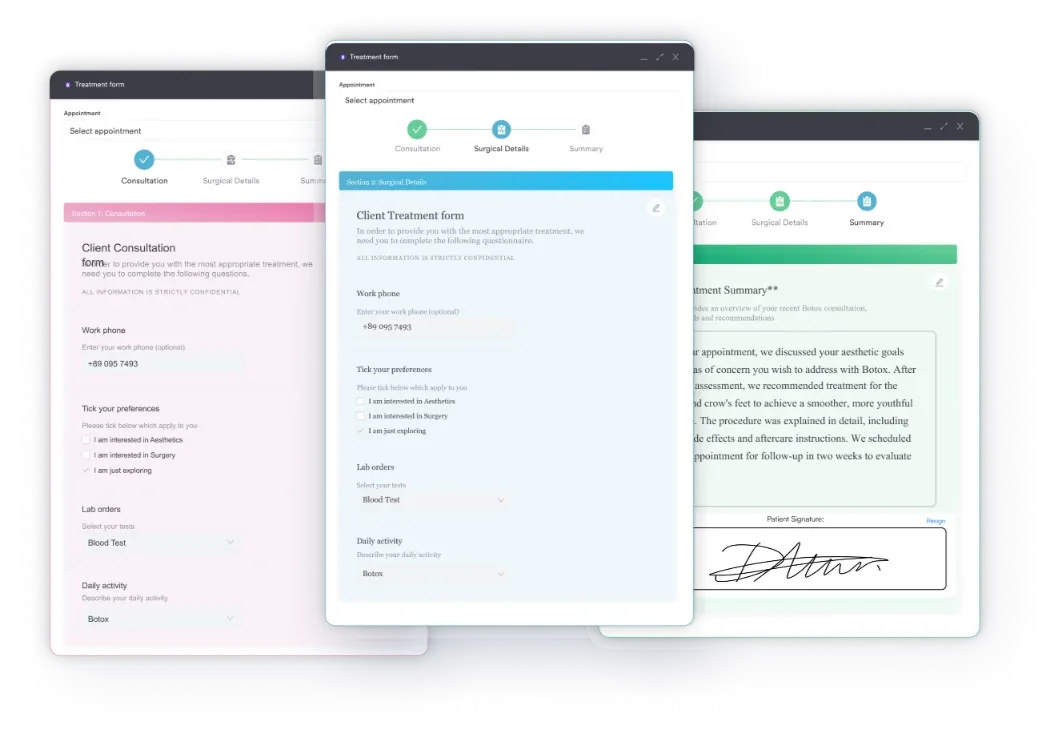
For mole mapping workflows, pre- and post-excision photographs can also support the clinical record, particularly when the lesion’s size or appearance justifies excision over observation.

Pabau helps skin clinics and dermatology practices capture excision measurements, attach pathology records, and apply the right modifiers before claims go out. See how structured documentation workflows reduce denials for benign lesion excision codes.

The ICD-10 diagnosis code must support medical necessity for the excision. The most commonly paired codes for CPT 11444 come from the benign neoplasm and skin cyst categories. Payers cross-reference the diagnosis code against their LCD-covered code list before adjudicating the claim.
Always verify the selected ICD-10 code appears on the covered diagnosis list for your payer’s applicable LCD. Using a code not included in the LCD policy requires a written medical necessity explanation or an advance beneficiary notice (ABN) for Medicare patients.
The ICD-10-CM code lookup from CMS is the primary reference for confirming code validity and effective dates.
CPT Code 11444 belongs to a family of codes covering benign lesion excision from the face, ears, eyelids, nose, lips, and mucous membrane. Code selection depends entirely on the excised diameter, measured and documented by the surgeon before excision as the lesion’s clinical diameter plus margins.
The AAPC Codify CPT lookup lists the full code hierarchy for this section.
The diameter thresholds are absolute. A pre-excision clinical measurement (lesion diameter plus margins) of 3.05 cm codes to 11443, not 11444, and a measurement of 4.1 cm codes to 11446. This pre-excision figure, documented by the surgeon before the incision is made, is the sole determinant of correct code selection, not the post-excision specimen or the pathology report.
The most common mis-coding pattern in this family is coding from the post-excision specimen or the pathology report instead of the pre-excision clinical measurement.
For example, a clinician documents a lesion measuring 3.5 cm and plans margins of 3 mm on each side: excised diameter = 3.5 cm + (2 x 0.3 cm) = 4.1 cm, which correctly bills as CPT 11446.
If the coder instead uses the fixed pathology specimen, which has shrunk to 3.6 cm or smaller after formalin fixation, the claim risks being undercoded to 11444.
The correct approach is to measure the lesion’s greatest clinical diameter and the planned margin width before excision, then calculate the excised diameter as lesion diameter plus twice the margin. Use that pre-excision figure, not the specimen or pathology measurement, as the basis for CPT code selection.
Claim denials and audit findings for CPT Code 11444 follow predictable patterns. Most arise from three categories: wrong diameter measurement, missing medical necessity documentation, and incorrect modifier application. Reviewing these before submitting claims saves rework time and protects revenue.
Skin clinics and dermatology practices billing CPT Code 11444 frequently face the same set of problems:
Each of these problems is preventable with the right workflow infrastructure. Practices using claims management software built for clinical environments can configure structured fields that prompt clinicians to record pre-excision clinical measurements, select from pre-approved diagnosis code lists, and flag missing operative note elements before a claim is generated.
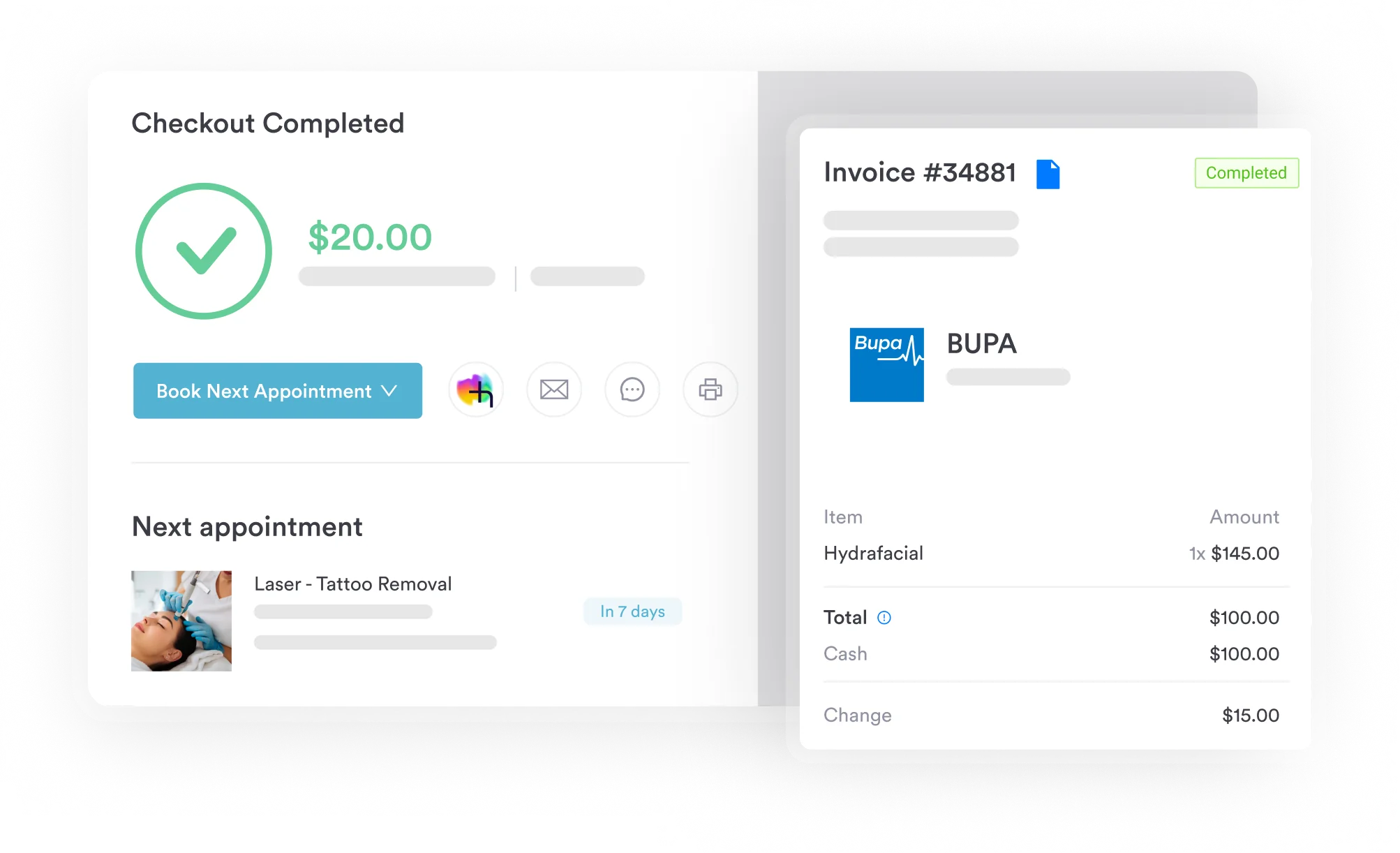
For skin clinic software integrations, this means the billing workflow begins at the clinical note, not at the front desk. When the excised diameter field is a required input in the procedure record, the code selection logic can be pre-configured to surface the correct code from the 114xx family based on that measurement. Front-desk data entry and back-office coding both feed cash collection, so errors compound downstream.
Practices such as London Face & Skin use this kind of scrub to keep facial excision claims moving without manual rework.
Practices working toward structured documentation can also reference broader practice management software capabilities to understand how claim scrubbing, modifier logic, and fee schedule maintenance integrate into a unified billing workflow.
CPT Code 11444 is straightforward in its descriptor but frequently misapplied in practice. The diameter threshold, 3.1 to 4.0 cm, calculated as the lesion’s clinical diameter plus margins and measured before excision, is the single most audited element. Coding from a shrunken post-excision specimen is the most common way practices undercode this procedure.
Pair a correctly documented pre-excision measurement with a clear medical necessity indication and the correct ICD-10 code, and most denial and undercoding risk is eliminated before the claim leaves the practice.
Pabau’s claims management software helps skin clinics build these checks directly into their documentation and billing workflows. To see how it works for benign lesion excision billing, book a demo.

Looking up a congenital cardiac anomaly code? Q20.0 covers common truncus, including documentation and billing notes.
Billing for peritoneal dialysis supplies? A4724 covers the dialysate solution used during treatment.
Coding a post-epidural complication? O89.2 covers headache due to spinal and epidural anesthesia.
Coding a soft tissue trunk tumor? ICD-10 code C49.6 guide identifies a confirmed malignant neoplasm of the trunk when the specific sub-site cannot be determined.
CPT Code 11444 is excision of a benign skin lesion, including margins, from the face, ears, eyelids, nose, lips, or mucous membrane, where the excised diameter is 3.1 to 4.0 cm. All three elements, including benign character, covered anatomical site, and excised diameter within the stated range, must be present for this code to apply.
The excised diameter is the lesion’s greatest clinical diameter plus twice the narrowest margin of normal tissue required for complete excision, measured and documented by the surgeon before the incision is made – not measured from the post-excision specimen or the pathology report. This pre-excision clinical measurement is the required basis for code selection across the entire 114xx benign lesion excision family, because the specimen shrinks once skin tension is released and shrinks further during formalin fixation, which can understate the true excised diameter.
Medicare reimbursement for CPT 11444 varies by geographic payment locality and place of service. Non-facility rates (office setting) are higher than facility rates (hospital outpatient or ASC). Use the CMS Physician Fee Schedule lookup tool to retrieve the current 2026 rate for your MAC jurisdiction.
Applicable modifiers include -25 (for a separately identifiable E&M service on the same date, subject to payer policy), -51 (multiple procedures), -59 (distinct procedural service), -LT/-RT (laterality for bilateral sites such as ears or eyelids), and -22 (unusual procedural services requiring significantly greater work). Modifier justification must be documented in the medical record.
All three codes cover excision of benign lesions from the same anatomical sites (face, ears, eyelids, nose, lips, mucous membrane) but differ by excised diameter: CPT 11442 covers 1.1 to 2.0 cm, CPT 11443 covers 2.1 to 3.0 cm, CPT 11444 covers 3.1 to 4.0 cm, and CPT 11446 covers excised diameters over 4.0 cm. Code selection is based on the pre-excision clinical measurement (lesion diameter plus margins), documented by the surgeon before excision, not on the post-excision specimen or pathology report.
Pathology submission requirements depend on the applicable Local Coverage Determination (LCD) for your Medicare Administrative Contractor. Many MACs require histopathological confirmation of the benign diagnosis to support medical necessity, particularly when the clinical indication is symptom-based rather than diagnostic. Review LCD L34938 and its Billing and Coding Article A57113 (Novitas), or your jurisdiction’s equivalent LCD/Article pair, before assuming pathology is optional.



