ICD-10 Code Y76.0: Diagnostic obstetric and gynecological devices
ICD-10 Code Y76.0: Definition and billable status ICD-10 Code Y76.0 is a valid, ...

Last Updated: Oct 23, 2026
Billable Code Specific Code
P22.0 is the billable ICD-10-CM code for respiratory distress syndrome of newborn.
According to the CMS ICD-10 codes page, ICD-10-CM is the mandated diagnosis coding standard for all HIPAA-covered transactions in the United States. P22.0 falls within Chapter 16, certain conditions originating in the perinatal period (P00-P96). Its correct use is central to accurate NICU reimbursement and quality reporting.
Let Pabau's smart automation suggest the right codes, reduce claim denials, and keep your practice compliant—effortlessly.
Automate repetitive tasks and focus on what matters most—your patients.
Reduce coding errors and ensure compliance with the latest regulations.
Clean claims, fewer denials, and faster reimbursements.
Powerful insights and reporting to help your practice thrive.
HIPAA compliant SOC 2 certified GDPR-compliant Trusted by 4,000+ clinics worldwide

ICD-10 Code P22.0 is the billable ICD-10-CM diagnosis code for respiratory distress syndrome of newborn (RDS), effective October 1, 2025 through September 30, 2026.
Inclusion terms include hyaline membrane disease, IRDS, cardiorespiratory distress syndrome of newborn, and pulmonary hypoperfusion syndrome, all of which map to P22.0.
P22.0 covers surfactant-deficient RDS in premature infants, not the transient tachypnea reported under P22.1 in near-term infants. Physician documentation, not symptoms alone, determines which code applies.
Structured clinical documentation captured at the point of care is what makes P22.0 coding accurate, not claims software. Pabau’s claims management tools then validate the claim’s insurer-submission fields and track its status through to payment.
ICD-10 Code P22.0 is a valid, specific, billable ICD-10-CM diagnosis code for respiratory distress syndrome of newborn. It may be used in all HIPAA-covered transactions from October 1, 2025 through September 30, 2026 (FY2026).
The code sits within the P22 subcategory (Respiratory distress of newborn). That subcategory belongs to the P19-P29 block (Respiratory and cardiovascular disorders specific to the perinatal period).
The ICD-10-CM tabular list recognizes several clinical terms as inclusion terms for P22.0. When a physician documents any of these diagnoses, the correct code is P22.0, not P22.9.
Billers and coders who are unfamiliar with these synonyms sometimes query whether a separate code exists for hyaline membrane disease. It does not. Hyaline membrane disease is an inclusion term of P22.0.
The WHO ICD-10 browser confirms these same inclusion terms within the international ICD-10 classification. Note that the US ICD-10-CM version (maintained by the NCHS) and the WHO international ICD-10 version share the P22.0 code structure.
Details may still differ between the two. Always code from the current ICD-10-CM tabular list for US billing purposes.
Respiratory distress syndrome (RDS) of the newborn results primarily from surfactant deficiency, which reduces alveolar surface tension and causes progressive alveolar collapse.
Surfactant production ramps up in the final weeks of gestation, so premature infants, particularly those born before 32 weeks, carry the highest risk.
Accurate coding for these patients matters beyond reimbursement. P22.0 populates NICU quality metrics, severity scores, and public health surveillance datasets that track neonatal outcomes nationally.
Coding P22.0 correctly also affects newborn hospital care billed under 99460, since DRG assignment and hospital reimbursement both depend on diagnosis specificity. The clinical signs that coders should look for in the physician’s documentation include:
Coders do not make clinical determinations. The physician or neonatologist must document the diagnosis of RDS. Coders select P22.0 when that documentation is present and supported by the clinical indicators above. If clinical indicators are present but the physician has not confirmed the diagnosis, query before coding.
Strong documentation is the difference between a clean P22.0 claim and a denial or audit finding. The medical record must support the diagnosis before P22.0 is assigned.
Using digital documentation forms that capture neonatal assessment data at the point of care lowers the risk of missing elements. That matters most when the coder reviews the record days later.

Per the ICD-10-CM Official Guidelines for Coding and Reporting, the attending physician’s diagnosis drives code selection. Nursing notes and ancillary results support but do not independently establish a diagnosis.
When documentation is ambiguous, the coder should initiate a HIPAA-compliant clinical documentation query rather than code an assumption.
Practices switching EHR systems mid-year should confirm these fields migrate with the record, so nothing gets left behind in the old platform.
This is the most consequential code selection decision in the P22 category. P22.0 (RDS) and P22.1 (transient tachypnea of newborn, TTN) present with overlapping symptoms. They are distinct diagnoses, though, with different pathophysiology, patient populations, and clinical courses.
Assigning the wrong code when documentation supports the right one is a common audit finding. The AAPC ICD-10-CM code lookup lists both as sibling codes under P22, making the side-by-side distinction clear.
Key rule: the physician’s documented diagnosis determines the code. If the chart states “RDS” and the infant is premature, code P22.0. If the chart states “TTN” and the infant is near-term with a self-limiting course, code P22.1. Coders must not reclassify based on their own clinical interpretation of symptoms.
The full P22 subcategory covers four codes. When the physician’s documentation specifies the type of respiratory distress, always select the most specific code. P22.9 should only be assigned when the type cannot be determined from the available documentation, not as a default to avoid querying.
Additional codes in the P00-P96 range often apply alongside P22.0 in complex NICU cases, such as P53 for a newborn for a newborn with a bleeding disorder.
Excludes notes control which codes may or may not be assigned together, and misreading Excludes1 versus Excludes2 has direct claim denial consequences. P22.0 itself carries no Excludes1 note.
That restriction applies only at the P22.8 and P22.9 level. Two codes do carry Excludes2 notes under P22.0, meaning coders may still report them together when the record documents each diagnosis independently.
Respiratory failure of newborn (P28.5) and respiratory arrest of newborn (P28.81) both carry Excludes2 notes under P22.0. An Excludes2 note means the excluded condition is not part of P22.0. Coders may still code it separately when the record documents each diagnosis on its own.
If a newborn with RDS later develops respiratory failure or has a respiratory arrest event, P22.0 can be reported alongside P28.5 or P28.81. Each diagnosis just needs independent support in the record.
Four errors account for the majority of P22 coding problems seen in NICU audits. Understanding each one reduces denial rates and keeps P22.0 claims accurate across the full perinatal range.
Running a regular medical chart audit catches these patterns before they compound.
Run a monthly P22 audit pull: extract all claims where P22.9 was assigned and cross-reference against the corresponding medical records. If documentation contains the terms RDS, IRDS, hyaline membrane disease, or any other P22.0 inclusion term, the claim may be undercoded. Correcting these retroactively through a rebilling process can recover significant reimbursement that would otherwise be permanently forfeited.
The documentation chain from clinician notes to claim submission is where P22.0 coding errors happen. Pabau, practice management software used by medical and aesthetic practices, connects structured clinical records directly to the billing workflow with its claims management software. Critical documentation is not lost in the handoff from bedside to biller. Practices billing in Australia check the current MBS descriptor before submitting, because descriptors are revised on a schedule. Revenue cycle management reporting separates claims that were denied from claims nobody submitted.
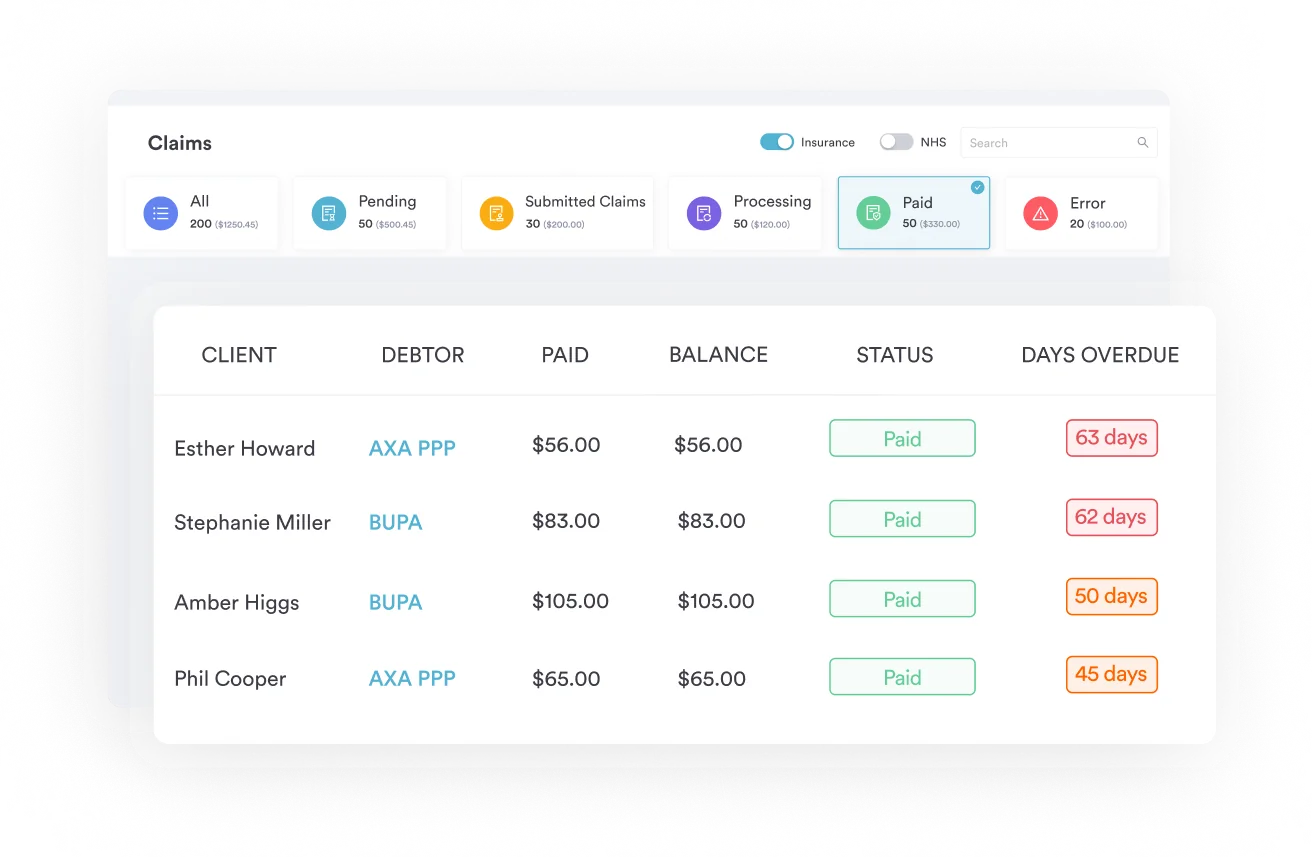
For NICU and pediatric teams, Pabau’s structured patient record system captures neonatal assessment data at the point of care.
That includes gestational age, respiratory rate, physician diagnosis statements, and treatment decisions. When a coder reviews the record, every element needed to support P22.0 is already in one place. Nothing is scattered across nursing notes, radiology reports, and physician orders.
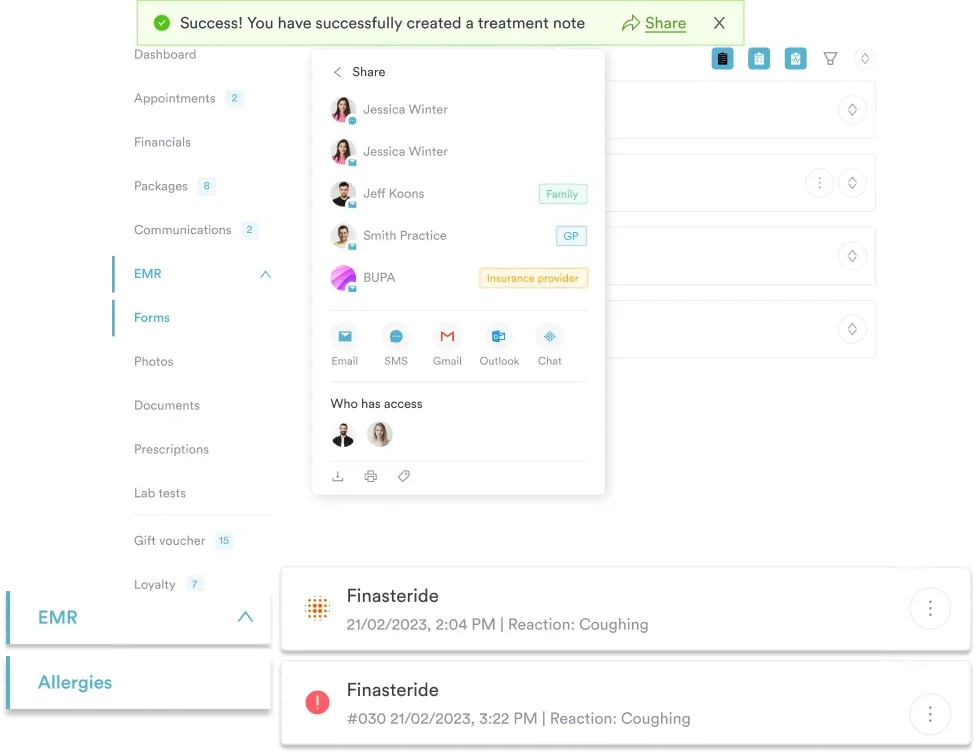
Maintaining patient data security in clinical settings is equally critical for NICU records, which contain sensitive perinatal data. Pabau’s platform is built with clinical compliance workflows designed to meet HIPAA requirements, so documentation stored in Pabau is protected and audit-ready from day one.
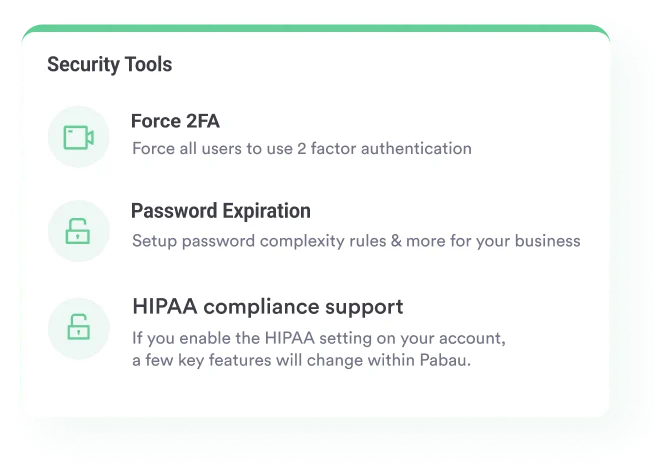
Teams that struggle with P22.0 vs P22.9 coding accuracy can also use Pabau’s compliance management tools. These build documentation checklists into clinical workflows, prompting clinicians to record the diagnosis label and supporting findings before discharge.
The result is a record that coders can code with confidence, not one that needs a query on every NICU encounter.
Most P22.0 documentation originates in the hospital NICU. The same discharge summary often needs to reach whichever outpatient practice sees the baby next.
Pabau supports that handoff for the OB/GYN practices handling the mother’s postpartum follow-up. It does the same for the general practices picking up the infant’s pediatric care. Either way, the RDS diagnosis and its supporting notes arrive intact, not retyped from a discharge letter.

Pabau connects structured NICU documentation, claims management, and audit-ready records in one platform, so coders spend less time on paperwork.

Getting P22.0 right comes down to one habit: read the chart before defaulting to P22.9. When documentation names RDS, IRDS, hyaline membrane disease, or another recognized term, P22.0 is the code the claim needs, not the unspecified fallback.
The same habit protects the record on the other side of the P22.0/P22.1 line. A physician’s stated diagnosis, not a coder’s read of the symptoms, decides which code goes on the claim. Query early when the chart is ambiguous, and treat a monthly audit of P22.9 claims as routine rather than optional.
Both habits catch undercoding before it turns into lost reimbursement. Book a demo to see how Pabau helps NICU and pediatric teams keep documentation audit-ready from admission through discharge.

Coding a postpartum infection too? O85 walks through documentation and billing for puerperal sepsis.
Need the code for a stalled labor? O62.0 covers primary inadequate contractions during delivery.
Anesthesia reaction on the maternal chart? O74.4 explains coding a toxic reaction to local anesthesia given during labor.
Billing a genetic amplification test? Mdm2 gene test billing guide covers CCSD code 0037G, billed to UK private insurers for molecular testing.
Billing MRD genomic sequencing? MRD sequencing billing guide covers CCSD code 0040G, used by pathology labs billing UK private insurers for blood cancer testing.
No. P22.0, like every code in the P00-P96 perinatal chapter, belongs on the newborn’s own record only. Any complication the mother experienced during that same admission, such as O87.9, gets its own code from the maternal chapters. That code stays separate from the baby’s chart.
The birth code from category Z38 comes first, as the principal diagnosis for that admission. P22.0 then follows as a secondary diagnosis, reported once the record documents RDS as a clinically significant condition.
Both P28.5 (respiratory failure of newborn) and P28.81 (respiratory arrest of newborn) carry Excludes2 notes under P22.0, not Excludes1. That means coders may report either alongside P22.0 when the chart documents each diagnosis independently. P22.0 itself carries no Excludes1 note. That restriction applies only at the P22.8 and P22.9 level.
Yes. ICD-9-CM code 769, respiratory distress syndrome in newborn, crosswalks directly to today’s P22.0. One difference carried over from that transition: ICD-9 tracked transient tachypnea separately, under code 770.6, the predecessor of today’s P22.1.
Yes. Every newborn in a multiple birth has a separate record, with its own Z38 birth code and its own diagnosis codes. One twin’s RDS diagnosis and P22.0 code never carries over to a sibling’s chart.