



CCSD code G5100: Bypass of duodenum billing guide
CCSD code G5100 bills a bypass that leaves the duodenum in place CCSD code G5100...

Last Updated: Oct 16, 2026

CPT Code 10081 describes incision and drainage of a pilonidal cyst, complicated – the more involved counterpart to CPT 10080 (simple I&D)
The ‘complicated’ designation requires documentation of sinus tract involvement, marsupialization, or a wound larger and more complex than straightforward drainage
ICD-10-CM codes L05.01 (with abscess) and L05.91 (without abscess) are the primary diagnosis codes that support medical necessity for CPT 10081
Practice management software like Pabau helps practices structure clinical documentation, link ICD-10 codes to CPT codes, and flag missing diagnosis codes at the point of care, preventing downcoding and upcoding errors before a claim is ever coded
CPT Code 10081 describes the incision and drainage of a pilonidal cyst, complicated. It sits in the Integumentary System section of the AMA CPT code set, under Incision and Drainage Procedures on Skin, Subcutaneous and Accessory Structures.
The operative word is “complicated” – this is what separates 10081 from its simpler sibling.
A pilonidal cyst forms at the top of the cleft of the buttocks, near the coccyx. It often contains hair and skin debris, and can become acutely infected. When drainage is required, the correct CPT code depends entirely on how complex the procedure turns out to be.
Practices offering dermatology and skin clinic services that include minor surgical procedures need a reliable way to distinguish and document the two levels correctly before billing.
Both CPT 10080 and CPT Code 10081 cover incision and drainage of a pilonidal cyst. The distinction is complexity – and the documentation that supports it.
Choosing the wrong code in either direction creates risk: downcoding 10081 to 10080 leaves reimbursement on the table, while upcoding 10080 to 10081 without proper documentation exposes the practice to Office of Inspector General (OIG) audit scrutiny.
The CMS Coverage Article 56766 and AMA CPT guidance both align on what elevates a pilonidal cyst I&D to the “complicated” level. The operative note must document at least one of the following clinical factors:
If none of these factors are documented, the procedure does not meet the threshold for CPT Code 10081. Bill CPT 10080 instead. The complexity lives in the note, not in the surgeon’s memory of how hard the case felt.
The CMS Medicare Coverage Database article for I&D procedures sets clear documentation expectations. Without adequate notes, payers can downcode CPT Code 10081 to 10080 on audit – or deny the claim entirely. Practices using digital clinical documentation tools can build structured templates that prompt clinicians to capture every required data point at the time of service.
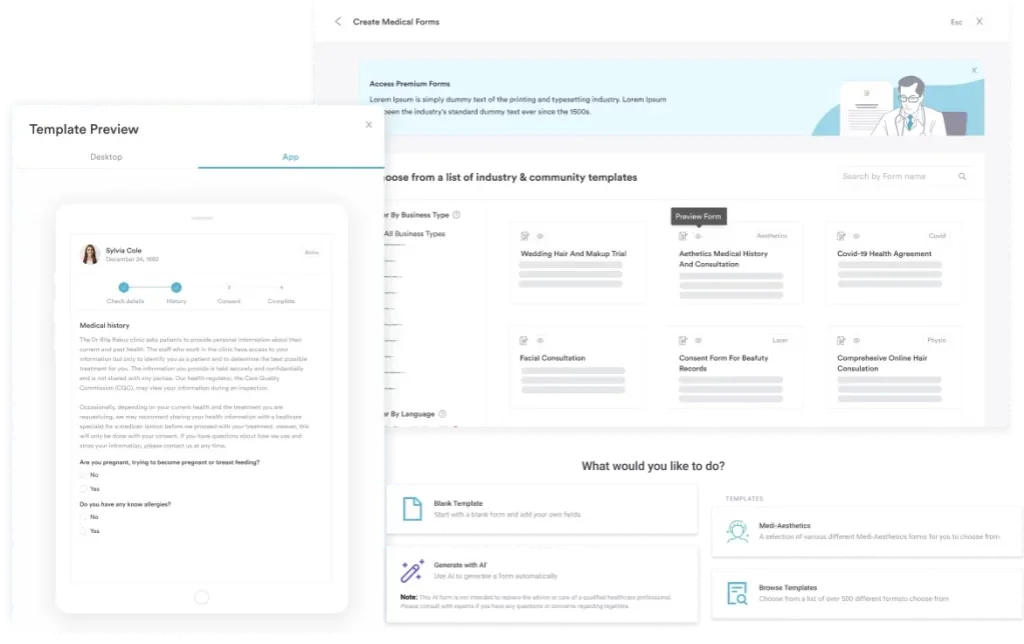
Your operative or clinical note for CPT Code 10081 must include all of the following to support HIPAA-compliant documentation practices and medical necessity:
Documentation requirements follow the same logic across CPT code families. A vague description like “incised and drained pilonidal cyst” without complexity language will trigger a downcode review.
Build a pilonidal cyst I&D template in your EHR or clinical documentation system that includes a complexity checklist as a mandatory field. When a clinician marks ‘sinus tract present’ or ‘marsupialization performed,’ that data point automatically supports 10081 and appears in the operative note – closing off the most common cause of downcodes.
Our roundup of software for plastic surgery practices shows how documentation, photos, and billing fit together.
Selecting the right ICD-10-CM diagnosis code establishes medical necessity for every CPT Code 10081 claim. The L05 category covers pilonidal cyst and sinus, and the code selection turns on whether an abscess is present.
Conflating L05.01 and L05.91 is a common billing error that payers catch on automated edits. The same specificity requirement applies across ICD-10-CM more broadly.
L05.01 is the most common pairing with CPT Code 10081 because the “complicated” designation typically coincides with active infection. However, a complicated I&D can also occur in a cyst without abscess – for example, when sinus tract dissection is required.
The same principle that applies to ICD-10 code L80 holds here: always code to the highest level of specificity the clinical documentation supports. Use the AAPC Codify CPT lookup to confirm the accepted ICD-10 crosswalk for each payer, as some local coverage determinations (LCDs) restrict which diagnosis codes are covered.
Medicare reimbursement for CPT Code 10081 varies by facility setting and geographic locality. The national average figures below are drawn from the CMS Medicare Physician Fee Schedule (MPFS). Verify current rates directly via the CMS fee schedule tool before billing, as rates adjust annually with each MPFS final rule.
CY2026 introduced two separate conversion factors. The figures below use the non-qualifying participant (non-QP) conversion factor of $33.4009, which applies to most practices billing under the standard fee schedule. These are national averages assuming a GPCI of 1.0 – your local payment amount will differ based on the Geographic Practice Cost Index (GPCI) for your locality.
Use the FastRVU lookup tool to calculate location-adjusted payment amounts for your specific MAC locality. The non-facility rate applies when the procedure is performed in an office (POS 11). The facility rate applies at outpatient hospital settings and ASCs, where the facility bills its own costs separately.
Always verify the RVU values in effect for the date of service, since CMS can modify RVUs mid-year through correction notices.
CPT Code 10081 carries a 10-day global period under the CMS Medicare Physician Fee Schedule global surgery policy. Understanding what this includes – and when modifiers can unbundle it – is essential for practices that see patients back for wound checks or related E&M visits after the procedure.
During the 10-day global period, routine post-operative wound checks are bundled into the 10081 payment. You cannot bill a separate E&M code for a standard follow-up visit within those 10 days unless a specific modifier applies. The following modifiers can unbundle services from the global period:
Modifier 25 is the most frequently used – and most frequently audited. CMS criteria require that the E&M service be medically necessary, separately identifiable, and above and beyond the usual pre-service evaluation associated with the procedure.
A vague note that doesn’t distinguish the E&M from the procedural decision won’t survive an OIG audit. That same scrutiny extends to modifier use across other procedure codes.
CPT Code 10081 is one of five codes that address pilonidal disease across increasing levels of surgical complexity. Knowing when to stay with I&D and when to upgrade to an excision code is a judgment call that must be reflected in the operative note.
Recurrent or complex cases often move from primary care into general or plastic surgery practices, where excision offers a more definitive fix than repeated drainage.
The upgrade from CPT Code 10081 (I&D) to CPT 11771 or 11772 (excision) occurs when complete removal of the cyst and sinus epithelium is performed, rather than drainage alone. I&D codes are appropriate for acute management. Excision codes are appropriate for definitive treatment.
Billing an excision code when only drainage was performed – or vice versa – is a coding error regardless of how the surgeon describes it verbally. The procedure must match the code, and the documentation must match the procedure.
Cysts at other anatomical sites belong to their own code families. A ganglion cyst arising from a joint capsule or tendon sheath is aspirated or injected under CPT 20612, not drained under a pilonidal code.

Pabau helps dermatology and minor surgery practices structure clinical documentation, link the correct ICD-10 codes, and apply modifiers accurately – closing off the shortfalls that trigger downcodes. See how Pabau’s documentation tools support accurate pilonidal cyst billing.

Auditors flagging CPT Code 10081 claims look for a predictable set of mistakes. Most are preventable with the right documentation habits and billing workflow. The errors below represent the patterns most likely to trigger a payer edit or OIG audit flag.
Practices that build structured clinical documentation templates into their EHR can catch common CPT Code 10081 errors – like a missing diagnosis code or the wrong POS – before the claim ever leaves the practice.
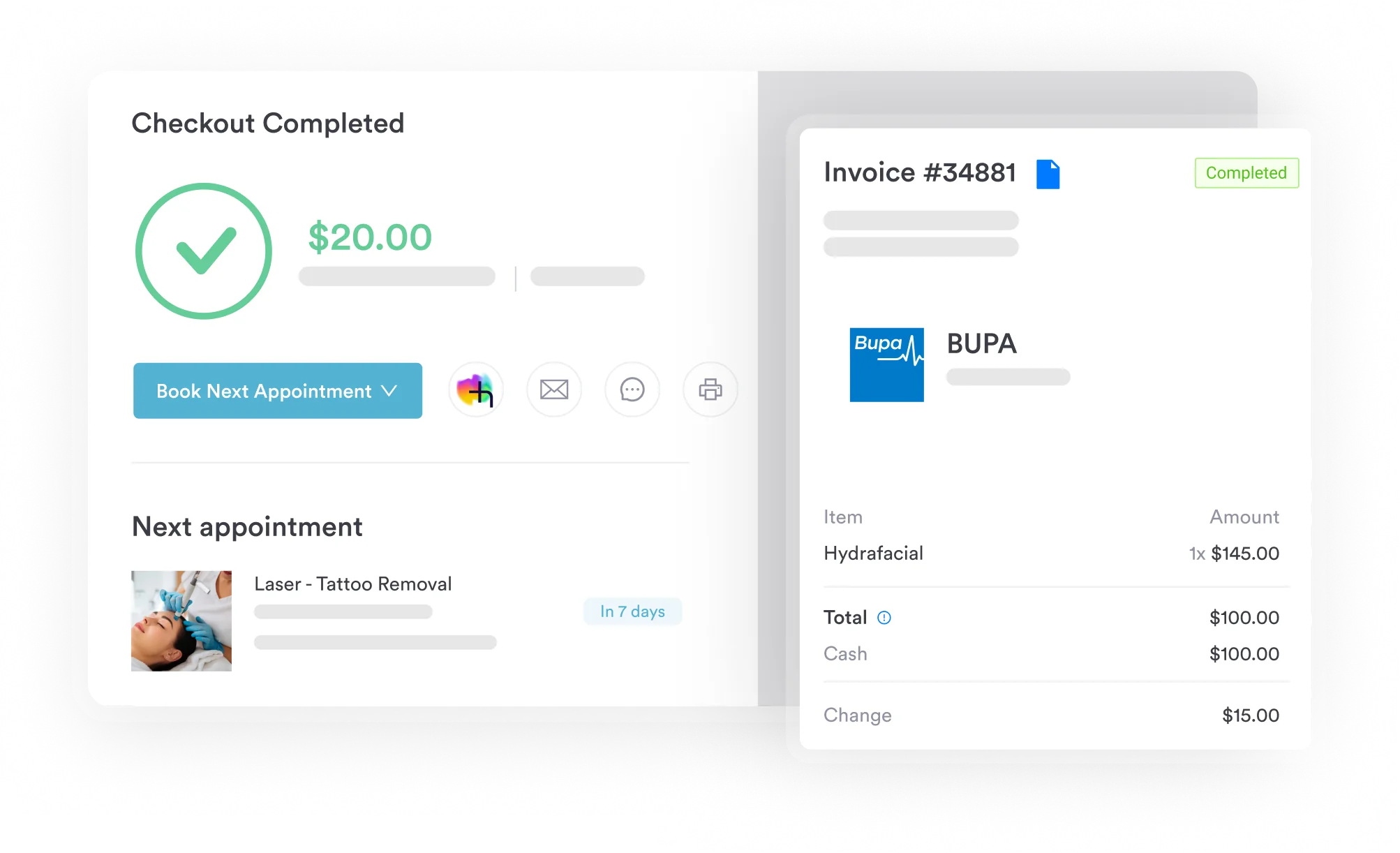
Most CPT Code 10081 billing errors start in the documentation phase, not the billing phase. By the time a coder sees the claim, the operative note is already written – and if it doesn’t capture complexity, no billing tool can fix it. Pabau addresses this upstream.
Pabau’s patient record management system lets practices build structured clinical note templates for specific procedures. For a pilonidal cyst I&D, that means a template that prompts the clinician to document sinus tract presence, marsupialization, wound size, and complexity classification at the point of care. The note that supports CPT Code 10081 gets written correctly the first time. A payer reviewing this code looks for the reasoning in the note, not only the conclusion, so the documentation level matters. Every payer sets its own timely filing window, and a correctly coded claim still fails once that window closes.
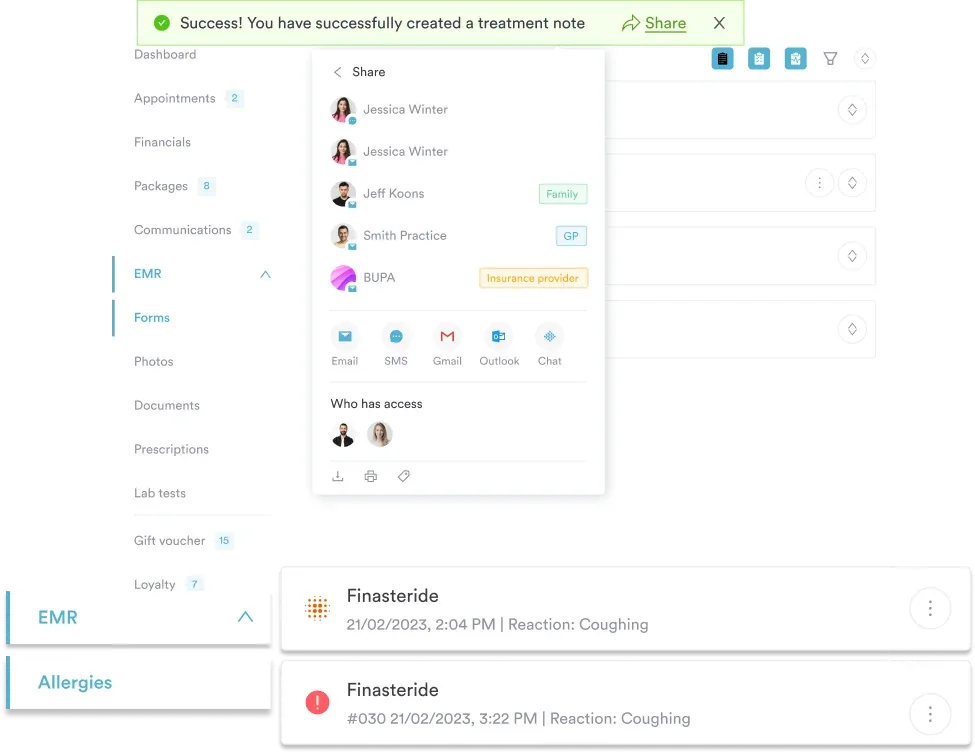
Because documentation and coding live in the same record, Pabau links diagnosis codes to procedures and flags mismatches before a claim is coded – a missing ICD-10 pairing, or a wound description that doesn’t support the complexity level billed.
Catching these issues at the point of care, rather than after the fact, is what prevents downcoding on procedures like CPT Code 10081, where the difference between simple and complicated is worth real money per claim.
CPT Code 10081 rewards practices that document correctly and penalizes those that don’t. The difference between a reimbursable complicated I&D and a downcoded simple one is always in the operative note, not in how the procedure felt in the room.
Sinus tract involvement, marsupialization, and multiple loculations need to be written down explicitly, with the correct ICD-10-CM code (L05.01 or L05.91) attached, the right modifier applied if a same-day E&M was provided, and the POS code matching where the procedure actually took place.
Pabau’s structured documentation tools help dermatology and minor surgery practices capture the complexity data that supports CPT Code 10081 at the point of care, before the claim is ever coded. To see how Pabau handles integumentary billing workflows, book a demo with our team.

Billing a bifocal prescription lens? HCPCS code S0506 billing guide covers the bifocal prescription lens code, billed per lens and limited to safety, athletic, or sunglass frames.
Need a reference for pilonidal cyst excision codes? CPT codes 11770-11772 cover the excision code family for pilonidal cyst and sinus, from simple to complex reconstruction.
Billing an annual gyn exam? HCPCS code S0613 billing guide covers the annual gynecological exam and clinical breast exam billed without a pelvic evaluation.
CPT Code 10081 is the billing code for incision and drainage of a pilonidal cyst, complicated. It is used when the I&D procedure involves sinus tract involvement, marsupialization, a larger wound, or other factors that make the case more complex than a straightforward drainage, which is coded as CPT 10080.
CPT 10080 is for simple pilonidal cyst I&D, while CPT Code 10081 is for complicated I&D. The distinction rests on documented complexity: sinus tract involvement, marsupialization, multiple loculations, or significant debridement all support 10081. Without explicit documentation of these factors, only 10080 can be billed.
The primary ICD-10-CM codes paired with CPT Code 10081 are L05.01 (pilonidal cyst with abscess) and L05.91 (pilonidal cyst without abscess). L05.02 and L05.92 apply when a sinus rather than a cyst is the primary finding. Select based on whether an abscess is documented in the clinical note.
Modifier 25 applies when a significant, separately identifiable E&M service is performed on the same day as CPT Code 10081. By contrast, modifier 24 applies to an unrelated E&M during the 10-day global period. Modifier 79 covers an unrelated surgical procedure during the global period. All three require specific documentation to survive payer or audit review.



