



HCPCS code E0198: Water pressure pad billing guide
HCPCS code E0198 is a water pad for a standard mattress HCPCS code E0198 is the ...

Last Updated: Oct 13, 2026

CPT Code 11000 covers debridement of extensive eczematous or infected skin for the initial 10% of body surface area (BSA).
Add-on code 11001 is reported for each additional 10% BSA or part thereof, and cannot be billed without a primary 11000.
Missing BSA documentation and incorrect modifier usage are the two most common denial triggers for CPT 11000 claims.
Pabau’s claims management software automates code validation and documentation prompts to reduce debridement claim denials.
CPT Code 11000 is the American Medical Association’s designated code for debridement of extensive eczematous or infected skin, covering the initial 10% of body surface area. The official descriptor reads: Debridement of extensive eczematous or infected skin; up to 10% of body surface area.
In clinical practice, 11000 applies when a provider removes devitalized, infected, or eczematous tissue from a broad surface area, typically through washing, scrubbing, or mechanical removal.
The code is not used for simple wound cleaning, acute wound debridement, or debridement involving subcutaneous tissue or deeper structures. Those procedures map to other codes in the 11042-11047 family (by tissue depth) or 97597-97598 (for skin-only debridement, which replaced the now-deleted CPT 11040/11041).
The 10% BSA threshold is not a clinical estimate. Payers, including Medicare under LCD L34032 and its companion Billing and Coding Article (A56459), expect documented measurement or a recognized calculation method in the medical record. Claims submitted without this are routinely flagged for additional documentation requests.
CPT 11001 is the designated add-on code for CPT Code 11000. It cannot be billed as a standalone code, and it cannot be reported without a primary 11000 on the same claim.
The billing logic works in 10% increments. Code 11000 covers the first 10% of BSA. Each unit of 11001 covers an additional 10% or any portion of that increment. So a patient with 25% BSA involved would be billed as 11000 (first 10%) plus two units of 11001 (11-20% and 21-25%).
Medicare and most commercial payers apply a medically unlikely edit (MUE) to the number of 11001 units reportable per encounter. Submitting more units than the MUE allows without documentation of medical necessity generates an automatic denial.
Verify the current MUE value with your CMS Physician Fee Schedule lookup before filing high-unit claims.
Correct code selection depends on the tissue depth involved. CPT Code 11000 applies only to skin-level debridement of eczematous or infected skin. Procedures reaching subcutaneous tissue, muscle, or fascia are billed instead under 11046.
A key distinction: 11042-11044 are measured in square centimetres and apply to wound debridement by tissue depth. CPT Code 11000 is measured in percentage of body surface area and applies specifically to eczematous or diffusely infected skin.
Mixing these families on the same claim without a modifier explaining separate anatomical sites is a common unbundling trigger.
Modifiers clarify billing circumstances that the base code alone does not capture. For CPT Code 11000, four modifiers appear most frequently in clean claims. Verify applicability against current National Correct Coding Initiative (NCCI) edits before submitting, as MAC-level policies can vary.
Claims for CPT Code 11000 require a supported ICD-10 diagnosis code. Medicare’s LCD L34032 and its associated Billing and Coding Article (A56459) specify covered indications. Submitting a diagnosis code that does not appear on the covered list is a medical necessity denial waiting to happen.
Always cross-reference your diagnosis selection against the current version of LCD L34032 and its Billing and Coding Article (A56459) via the AAPC Codify CPT lookup or directly through the CMS Medicare Coverage Database. LCD versions update, and a diagnosis that was covered in a prior fiscal year may have been removed or restricted.
Practices performing these procedures often chart them in a plastic surgery EMR with before-and-after photos attached.
Medicare reimbursement for CPT Code 11000 is calculated using the Resource-Based Relative Value Scale (RBRVS) and varies by geographic payment locality and facility status. The national average non-facility rate is typically in the range of $40-$60 per encounter, though this figure shifts annually with the Physician Fee Schedule update.
For verified current-year rates, use the FastRVU RVU lookup, which pulls directly from CMS data. Never rely on a published rate without confirming the fiscal year and your MAC’s locality adjustment factor.
Run a reimbursement check before scheduling each debridement encounter. If your payer contract is set at 110% of Medicare, knowing the current Medicare rate for CPT Code 11000 in your locality tells you exactly what you will collect before the patient arrives.
Insufficient documentation is the underlying cause of most CPT Code 11000 denials, even when the code selection itself is correct. Structured wound care documentation in your medical record system protects against both initial denials and post-payment audits. Every claim for CPT Code 11000 should be backed by a note that addresses all of the following elements.
Using digital clinical forms with pre-built wound assessment fields reduces missing documentation by structuring the note around the exact elements payers check. A free-text note that says “debridement performed” without BSA documentation will not survive an audit or additional documentation request.
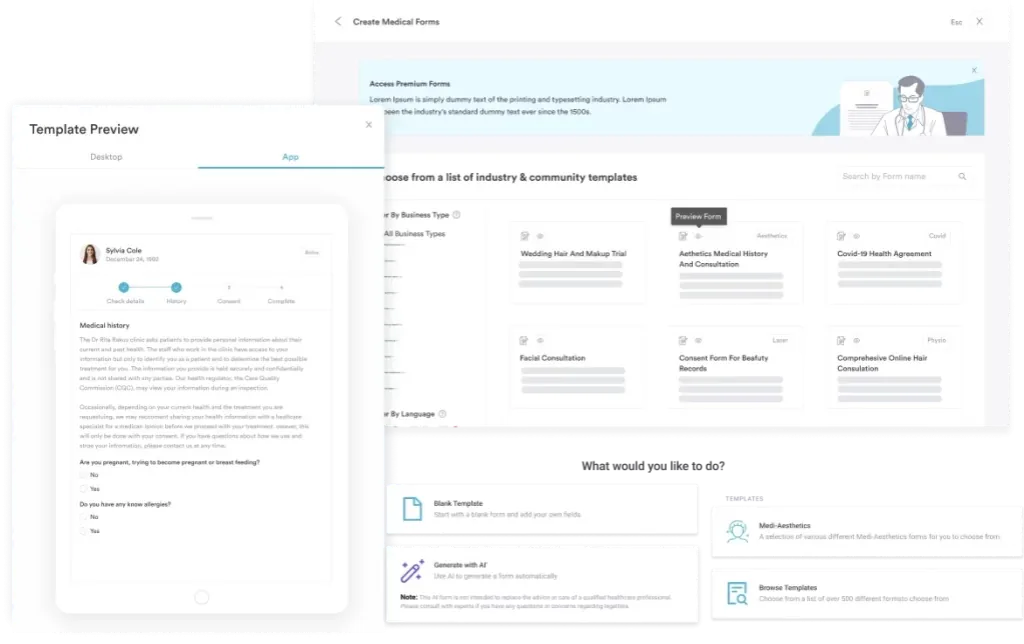

Pabau’s claims management tools support accurate CPT Code 11000 billing with built-in documentation prompts, code validation, and denial tracking. See how practices reduce rework on wound care claims.

CPT Code 11000 generates a predictable set of denial patterns. Most practices see the same errors recurring across claims. Using claims management software that flags these patterns before submission cuts the rework cycle significantly.
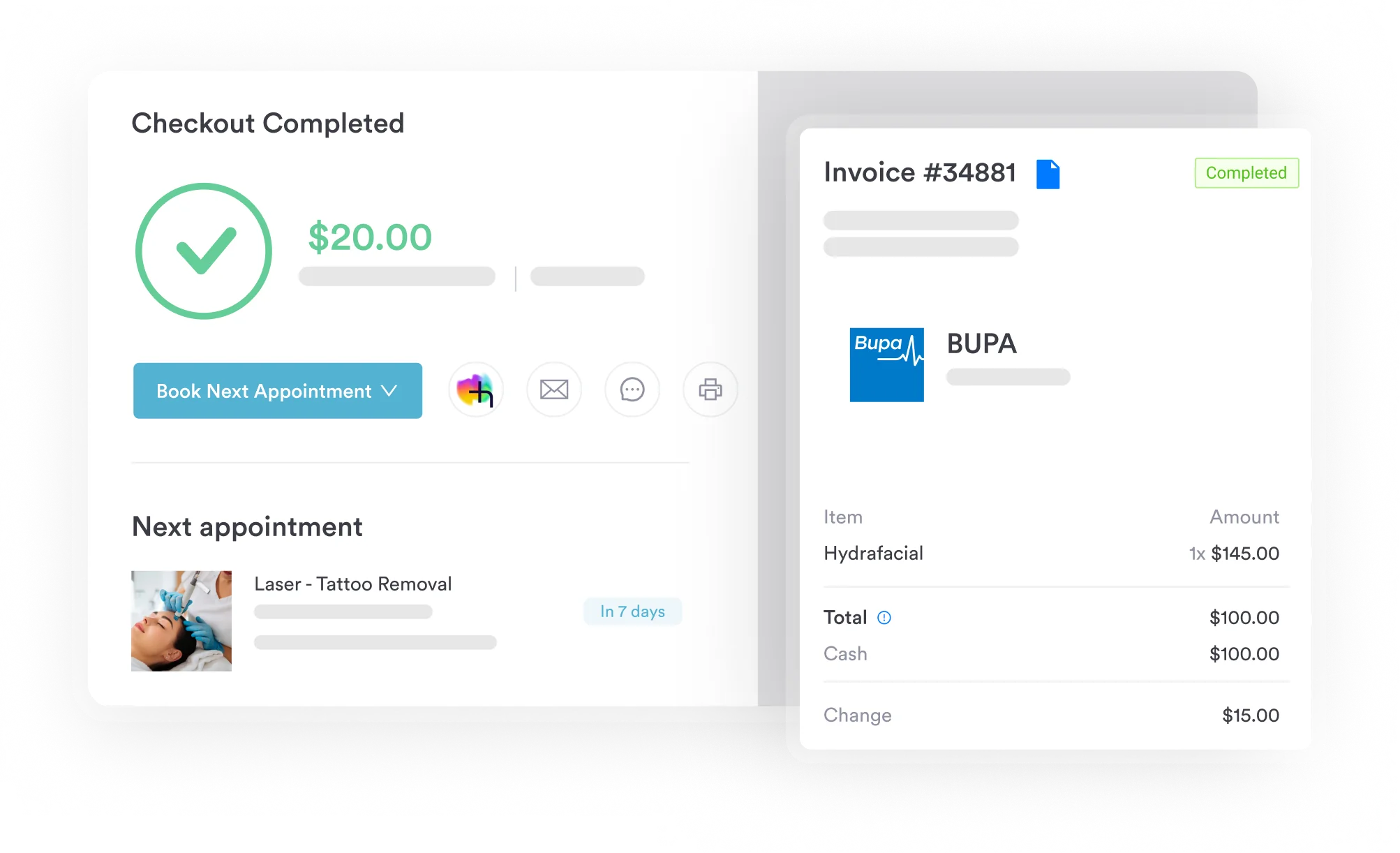
Debridement coding sits in a category payers watch carefully. The combination of high billing frequency, BSA-based unit reporting, and the ease of documentation error makes these claims attractive audit targets for Recovery Audit Contractors (RACs) and Medicare Administrative Contractors (MACs).
Reviewing medical practice compliance strategies relevant to skin and wound care settings can help practices build the internal controls that reduce audit exposure. For HIPAA compliance for practices that handle wound care records, documentation integrity is a dual obligation under both payer and federal requirements.
A prospective internal audit, reviewing a sample of debridement claims monthly for documentation completeness, is more cost-effective than responding to a payer-initiated audit. AAPC’s coding guidelines for the 11000 code family provide a useful benchmark for what constitutes compliant documentation.
Every denial in the table above has a software-preventable root cause. Missing documentation, missing modifiers, and incorrect code pairings generate most CPT Code 11000 rejections, and all of it happens before the claim is ever submitted. This is especially common for solo and small skin clinic software users billing debridement without a dedicated coder on staff.
Pabau’s claims management software for dermatology and wound care practices includes pre-submission validation rules that flag missing BSA documentation, add-on code sequencing errors, and diagnosis mismatches before the claim leaves the practice. Coders spend time reviewing edge cases, not correcting the same entry errors on every claim. That matters when a practice bills debridement codes across multiple providers and sites. The clearinghouse validates structure before the payer validates content, which is why an electronic claim can fail twice. Downcoding is as common as upcoding, and both trace back to how the decision-making level was recorded.
The automated billing workflows in Pabau also reduce the manual steps between clinical documentation and claim submission. When a provider completes a wound care note with BSA entered in a structured field, that data flows directly into the billing module without rekey.
The approach connects to broader EHR integration workflows that dermatology and wound care settings rely on for accurate coding at scale.
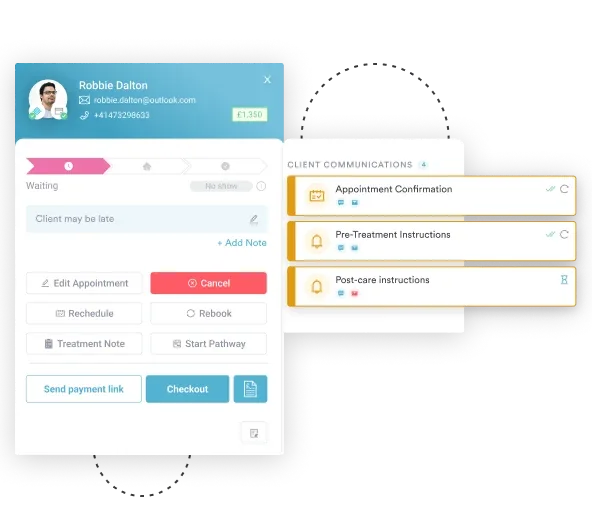
For practices already managing complex wound care caseloads. Pabau’s dermatology EMR software is built for exactly this use case, with configurable documentation templates aligned to the elements payers check.
Build a CPT Code 11000 pre-submission checklist into your billing workflow: BSA percentage documented, diagnosis code on the LCD L34032 / A56459 covered list, 11001 units match BSA calculation, and modifier applied if billing alongside an E/M. Running this check before submission costs two minutes and prevents a denial cycle that costs twenty.
CPT Code 11000 claims fail at higher rates than they should, almost always because of preventable documentation and coding errors rather than genuinely non-covered services. Every dermatology and wound care biller needs to control four pressure points:
Pabau’s claims management software gives practices a structured way to catch these errors before they become denials. If your team is spending more time on debridement claim rework than on new patient documentation, book a demo to see how Pabau handles wound care billing workflows end to end.

Also billing a skin biopsy at the same visit? 11102 is the code for a tangential skin biopsy, often billed alongside debridement in dermatology encounters.
Supplying dressings as part of the encounter? A4461 covers the surgical dressing holder billed alongside wound care supplies.
Debriding during an inpatient stay? 99221 is the initial hospital care code often paired with 11000 under modifier 25.
CPT Code 11000 is used to bill for debridement of extensive eczematous or infected skin covering the initial 10% of body surface area. It applies specifically to skin-level debridement and does not cover procedures reaching subcutaneous tissue, muscle, or bone, which require the 11042-11044 code family instead.
CPT 11000 is the primary code covering the first 10% of body surface area. CPT 11001 is the add-on code for each additional 10% BSA or part thereof, and cannot be billed without a primary 11000 on the same claim. A patient with 25% BSA involvement would require 11000 plus two units of 11001.
The most commonly used modifiers with CPT Code 11000 are modifier 25 (for a separately identifiable E/M on the same day, applied to the E/M code), modifier 59 or X-modifiers (for distinct procedural services), and RT/LT laterality modifiers. Verify current NCCI edits and MAC-specific policies before submitting, as requirements vary by payer.
Body surface area for CPT Code 11000 billing is commonly estimated using the Rule of Nines, which assigns percentages to body regions (head/neck: 9%, each arm: 9%, each leg: 18%, trunk anterior/posterior: 18% each, perineum: 1%). The Lund-Browder chart is an alternative for pediatric patients. Whichever method is used, the calculation and result must be documented in the medical record.
The most frequent denial reasons are missing BSA documentation, a diagnosis code not covered under the Billing and Coding Article associated with LCD L34032 (A56459), unbundling edits when billed alongside 11042-11044 without an appropriate modifier, and submitting 11001 as a standalone code without the primary 11000. Bilateral billing without site-specific documentation is another common trigger with certain commercial payers.
Commonly paired ICD-10 codes include L20.9 (atopic dermatitis, unspecified), L30.9 (dermatitis, unspecified), and L08.9 (local infection of skin and subcutaneous tissue, unspecified). Pressure ulcer codes (L89.x) and non-pressure chronic ulcer codes (L98.4x) may also apply depending on MAC jurisdiction. Always verify against the current Billing and Coding Article (A56459) associated with LCD L34032 before submitting.



