



CCSD code G5100: Bypass of duodenum billing guide
CCSD code G5100 bills a bypass that leaves the duodenum in place CCSD code G5100...

Last Updated: Oct 16, 2026

CPT code 01999 is the unlisted anesthesia procedure code used when no specific AMA CPT anesthesia code accurately describes the service performed.
Claims require documentation of a comparable specific CPT code so payers can assess medical necessity and establish a payment rate.
Modifier selection (AA, AD, QK, QX, QY, QZ) depends on whether a physician anesthesiologist or CRNA performed the service, and errors here are a top denial driver.
Pabau’s claims management software keeps anesthesia billing documentation and claim status in one place, so missing fields surface before an unlisted-code claim goes out.
CPT code 01999 is the unlisted anesthesia procedure code you report when no other code in the 00100-01999 range describes the anesthesia service performed. The American Medical Association maintains the CPT code set, and its official descriptor for 01999 is short: unlisted anesthesia procedure(s).
The code carries no base unit value of its own. Payers set the payment rate by reviewing the comparable specific code you document alongside it. Get that comparable code right, and the claim pays.
That brevity is intentional. CPT code 01999 is a catch-all for anesthesia services that fall outside the specific codes in the 00100-01999 anesthesia section.
Reimbursement is determined entirely by payer review against the comparable code you document. That makes documentation the single most critical variable in whether the claim pays.
CPT code 01999 applies when a provider delivers an anesthesia service and no other code in the 00100-01999 range accurately describes it.
This happens less often than coders assume. Before defaulting to 01999, search the full anesthesia section carefully. The AAPC Codify CPT lookup is a practical starting point for verifying whether a specific code exists.
Legitimate use cases for 01999 tend to fall into three categories.
A comparable code is required in every case. The comparable code is the specific anesthesia CPT code that most closely resembles the service actually performed. Payers use it to set the base unit value and evaluate medical necessity.
Without it, the claim will almost certainly deny. For surgical specialty practices, documenting this comparison clearly in the operative note is a non-negotiable step before submission.
Anesthesia billing uses a unit-based model that differs from standard CPT fee-for-service. Understanding this calculation is essential for pricing 01999 claims correctly, since the code has no inherent base unit value of its own.
The standard formula, as defined by CMS anesthesia billing guidelines, is:
The example above uses 7 base units from the comparable code. If the comparable code carries different base units, that figure changes accordingly. Verify the comparable code’s base unit value via the FastRVU 2026 RVU lookup before submission.
Qualifying circumstances (QC) are add-on codes reported alongside the primary anesthesia code when specific conditions increase the complexity or risk of anesthesia delivery. They each carry additional units and may be reported with CPT code 01999 when clinically appropriate.
Reporting these without proper documentation invites denial, so the clinical justification must be explicit in the anesthesia record.
Medicare and most commercial payers recognize these add-on codes. Verify that the anesthesia record explicitly documents the qualifying circumstance before reporting any QC code alongside 01999.
Anesthesia modifiers tell payers who performed the service and under what level of supervision. For CPT code 01999, modifier selection is not optional. Submitting without a modifier, or selecting the wrong one, is one of the most common denial triggers for unlisted anesthesia codes.
The QK/QX pair must be reported together: QK on the anesthesiologist’s claim and QX on the CRNA’s claim for the same case. Submitting only one without the other is a common error that triggers NCCI edit denials. Verify the applicable state scope-of-practice rules before using QZ, as not all states permit independent CRNA billing. Choosing a level means weighing problems addressed, data reviewed and risk, which is what MDM documentation covers.
Track which modifier each provider in your group uses for CPT code 01999 cases at the time of service, not during billing. Reconstructing supervision status from memory after the fact introduces compliance risk. A quick field in your anesthesia record template removes the ambiguity.
CPT code 01999 has no fixed reimbursement rate in the CMS annual fee schedule. Payers determine payment by reviewing the comparable specific code the provider documents, then applying that code’s base unit value to the anesthesia unit formula.
The 2026 Medicare anesthesia conversion factor is published annually in the Physician Fee Schedule final rule, and rates update every January.
Commercial payers vary significantly. Some apply their own conversion factor to the base units from the comparable code. Others require pre-authorization before paying any unlisted anesthesia code.
A practice billing 01999 regularly should maintain a payer-specific grid showing each payer’s comparable code acceptance criteria and conversion factor.
Medicare Part B covers anesthesia services under its own payment methodology. For CPT code 01999, Medicare applies the same base unit + time unit formula, using the base units from the identified comparable code.
The CMS National Correct Coding Initiative (NCCI) Policy Manual Chapter 2 covers CPT codes 00000-01999 and governs bundling rules. Always check the NCCI edits before adding qualifying circumstance codes or secondary procedures to the same claim.
Medicaid coverage for unlisted anesthesia codes varies by state. Many state Medicaid programs require prior authorization for any code in the unlisted category.
Do not assume national coverage rules apply to Medicaid claims. Verify with the specific state program’s fee schedule and policy documentation before submitting 01999 to Medicaid.
Insufficient documentation is the leading cause of CPT code 01999 denials. Payers cannot price or approve an unlisted procedure claim without specific supporting records. The documentation package for 01999 goes beyond the standard anesthesia record.
Using digital intake and consent forms that capture the procedure details at the point of care reduces the risk of missing components at billing time.
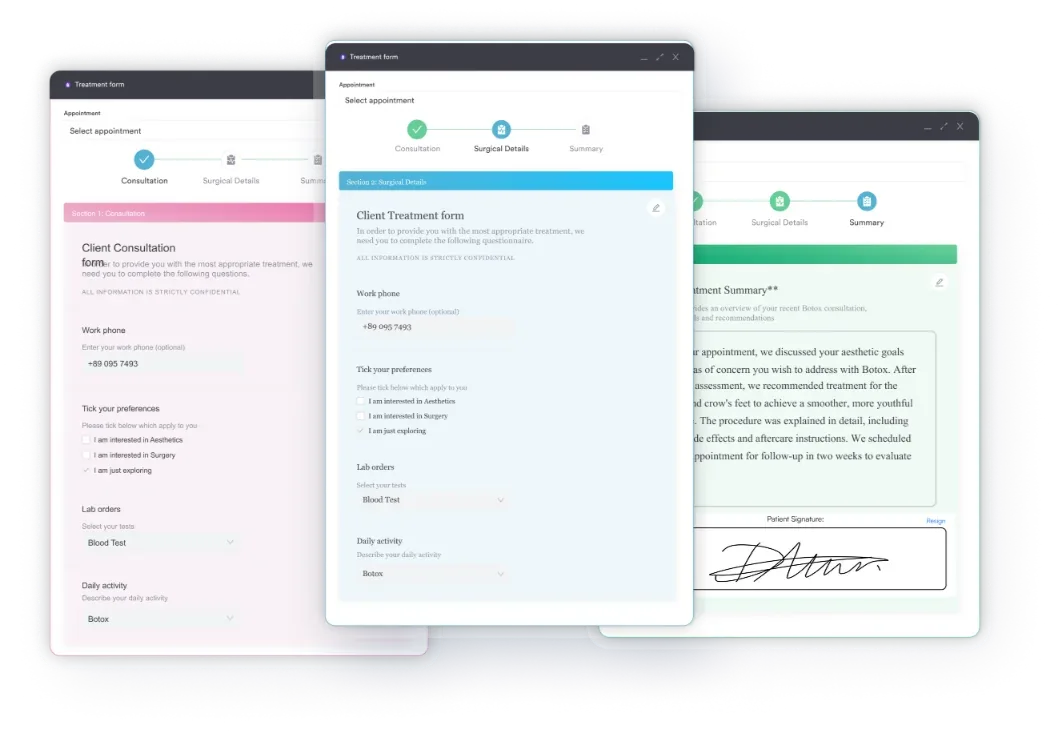
Practice management software like Pabau now includes AI-powered clinical documentation that helps anesthesia teams capture structured, complete notes during or right after the procedure. That reduces the risk of missing documentation that leads to denials.
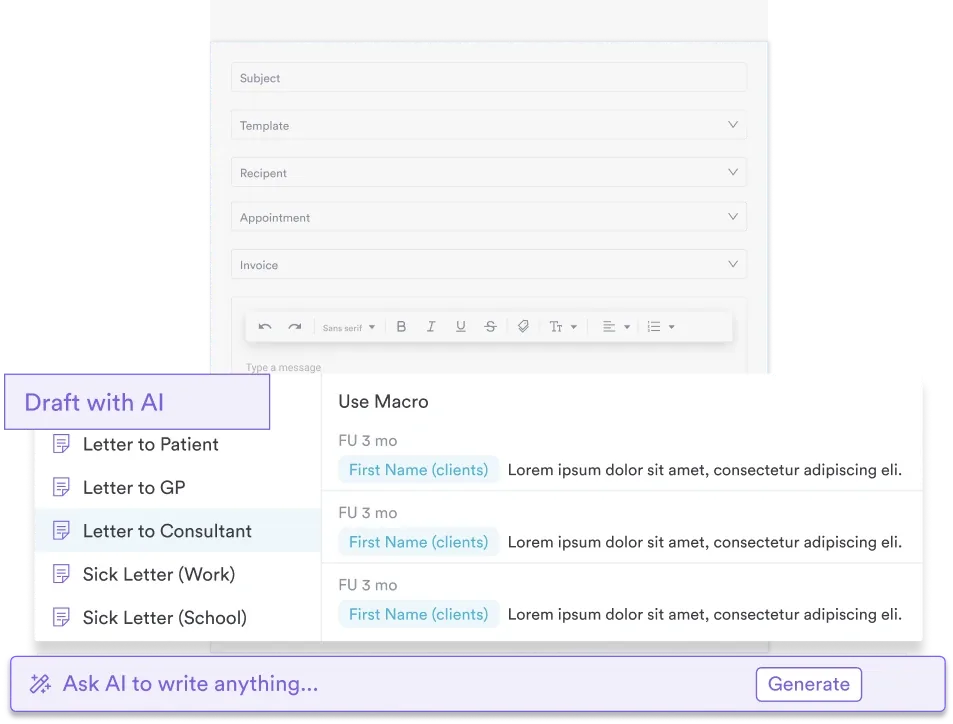

Pabau’s claims management software validates required fields before a claim can be sent, so incomplete submissions get caught early. Digital forms and AI-powered documentation tools help anesthesia billing teams capture complete records at the point of care, keeping documentation and claims together in one place.

CPT code 01999 claims have a higher denial rate than specific anesthesia codes because every element of the claim requires active preparation. The errors below account for the majority of rejections and audits.
Maintaining solid clinical record management from the point of care through billing submission reduces most of these errors at the source. Good medical practice compliance practices also mean building a pre-submission checklist into every unlisted code workflow.
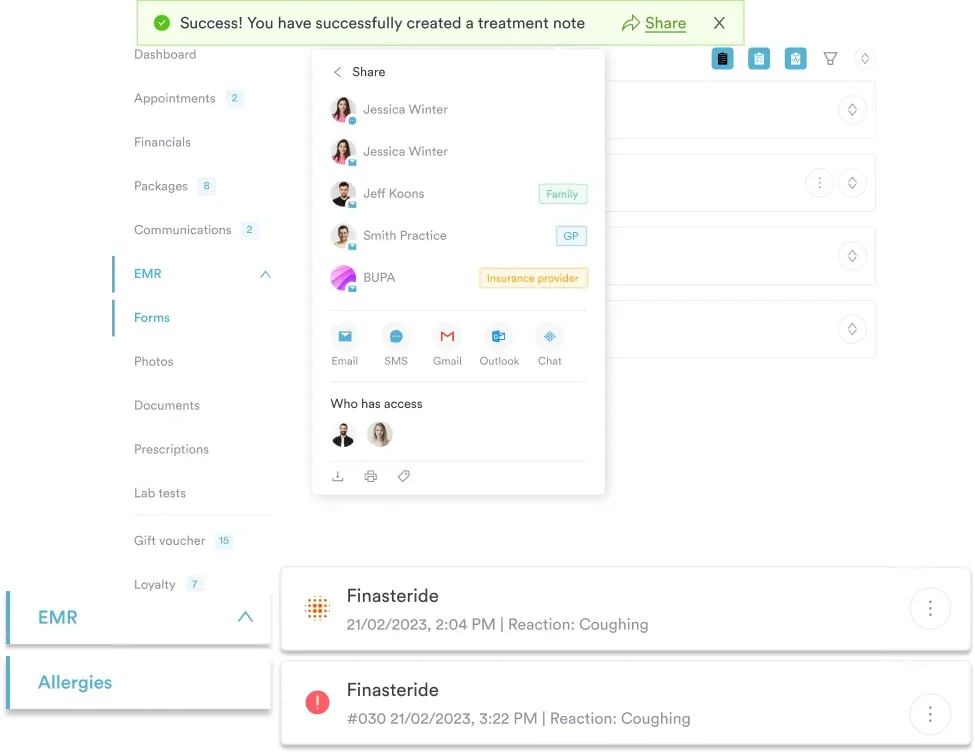
Before submitting CPT code 01999, verify that no specific anesthesia code covers the procedure. Unlisted codes attract greater payer scrutiny and require more documentation than any specific code. The comparison below covers common scenarios where coders may consider 01999 versus a specific alternative.
Documentation principles for CPT code 01999 carry over to other billing categories outside anesthesia. Practices that also bill wellness services may find coaching CPT codes useful for understanding how that separate code family is documented and reimbursed. In the surgery section, 53899 plays the same role for unlisted procedures on the urinary system.
Complex procedure combinations show up often in OB/GYN and fertility care.
The documentation burden for CPT code 01999 is higher than for any other code in the anesthesia section. Practice management software cannot replace clinical judgment, but it can catch the missing pieces that cause unlisted code claims to arrive at the payer incomplete.
Pabau’s claims management software validates the fields a claim needs before it can be submitted, and gates the send step until those requirements are met. That keeps an incomplete unlisted-code claim from reaching the payer by accident.
A status dashboard then tracks where each claim sits in review, so the billing team can follow up before it ages into a denial.
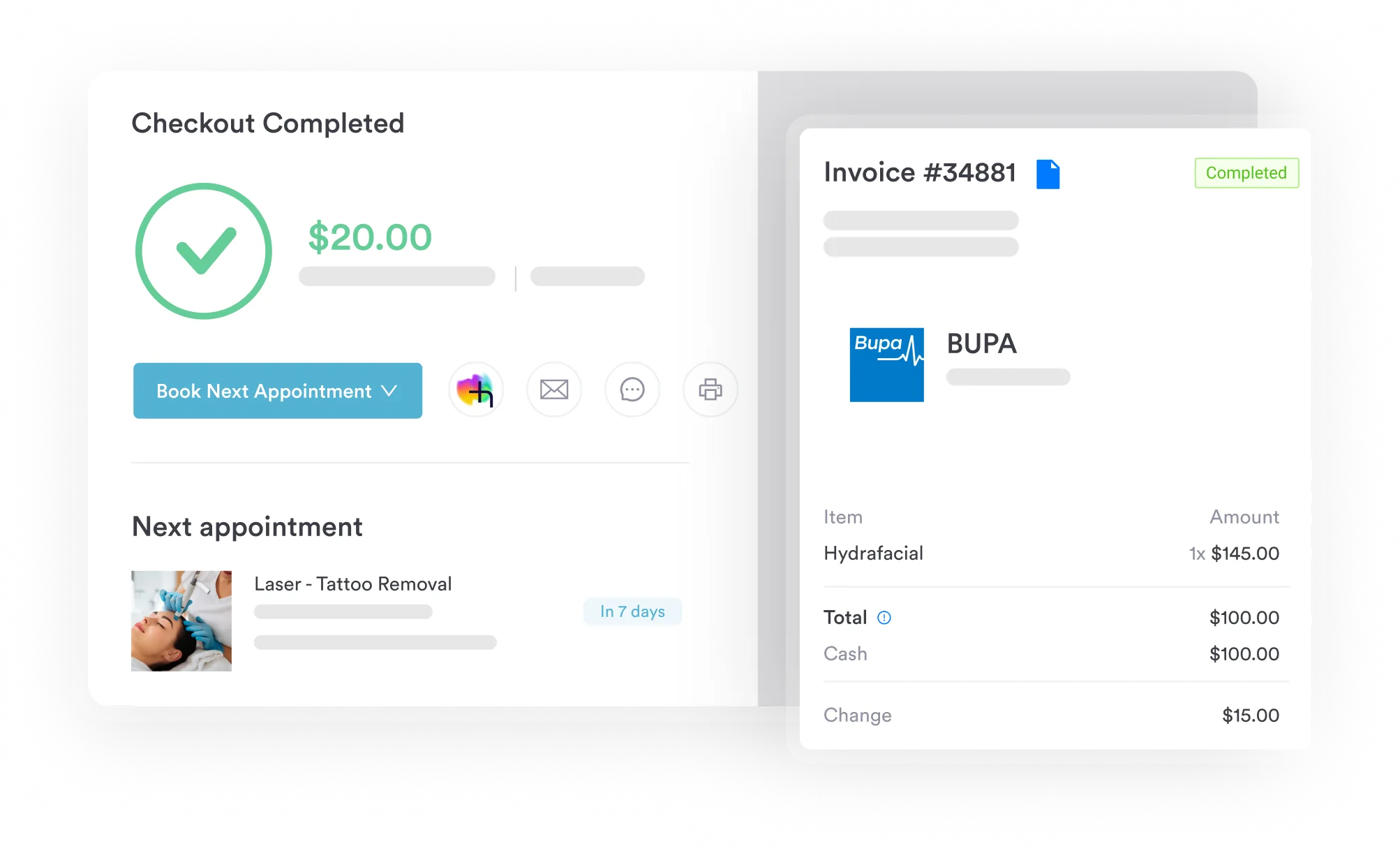
Practices using practice management software across multiple specialty lines can standardize unlisted-code documentation protocols for every provider. That consistency reduces the variation behind inconsistent reimbursement outcomes.
Pabau’s claims management software validates required fields, gates claim submission until they’re complete, and tracks status until payment, while digital forms and AI-powered documentation keep supporting records organized from the start.
CPT code 01999 is the anesthesia section’s last resort, and payers treat it that way. The comparable code, modifier, and documentation package are not optional add-ons: they are the claim. Get any of them wrong and the denial is predictable.
Pabau’s claims management software helps anesthesia billing teams build these requirements directly into the submission workflow, so nothing leaves the practice undocumented. To see how it fits your billing process, book a demo.

Curious how a specific anesthesia code compares? CPT code 01992 shows what documentation looks like when a specific code, not an unlisted one, applies.
Billing for supplies alongside a procedure? HCPCS code A4725 walks through dialysate solution billing and Medicare’s fee schedule rules.
Working with respiratory or airway equipment claims? HCPCS code A4608 covers the billing requirements for transtracheal oxygen catheters.
Need a specific-code example outside anesthesia? CPT code 15792 breaks down dermabrasion billing, reimbursement, and documentation.
Coding a related gynecologic diagnosis? ICD-10 code N83.8 explains billing for other noninflammatory disorders of the ovary.
Anesthesia and surgical services are typically billed as separate claim lines tied to the same encounter. An unlisted anesthesia code doesn’t replace or bundle with the surgical code, and each service still needs its own supporting documentation.
Most payers accept an appeal with additional documentation, such as a stronger medical necessity letter or a clearer comparable code rationale. Tracking denial reasons by payer usually reveals which single document was missing, so you can add it before the next submission.
It can, when no specific anesthesia code covers the sedation performed. The same documentation standard still applies: a comparable code, a complete anesthesia record, and a clear rationale for why no listed code fits the service.
Yes. The diagnosis code must support the medical necessity of the anesthesia service itself, not only the procedure it accompanies. Payers reviewing an unlisted anesthesia claim check that the ICD-10 code and the comparable code line up.
No. Anesthesia codes, including 01999, don’t carry a global surgical period the way many surgical CPT codes do. Payment covers the anesthesia service itself, not any related follow-up care.



