



CCSD code G5100: Bypass of duodenum billing guide
CCSD code G5100 bills a bypass that leaves the duodenum in place CCSD code G5100...

Last Updated: Oct 16, 2026

CPT Code 00402 describes anesthesia for reconstructive procedures on the breast, such as reduction or augmentation mammoplasty and muscle flap reconstruction.
The code carries 5 anesthesia base units, and total payment equals (base units + time units) multiplied by the conversion factor.
Common billing errors include omitting required modifiers (AA, QK, QX) and confusing 00402 with the radical breast procedure codes 00404 and 00406.
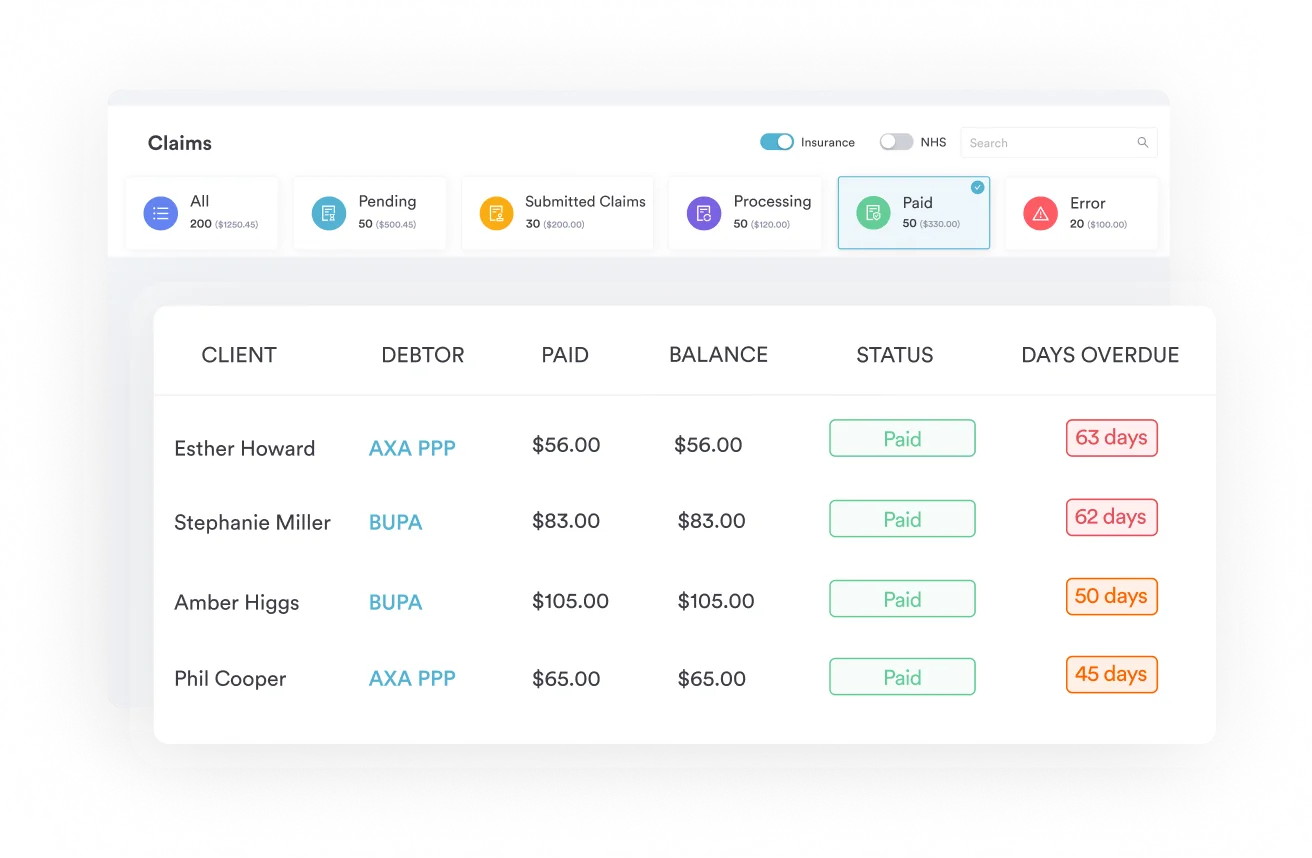
Pabau’s claims management software supports anesthesia billing workflows, helping practices track CPT codes, modifiers, and documentation requirements.
CPT Code 00402 is the anesthesia code for reconstructive procedures on the breast, such as reduction or augmentation mammoplasty and muscle flap reconstruction. It carries a base unit value of 5, sits within the thorax/breast anesthesia code family (00400-00406), and is billed using anesthesia’s time-based payment formula rather than a flat fee.
This reference covers the official code description, billing formula, applicable modifiers, 2026 Medicare reimbursement context, qualifying circumstance add-on codes, and the documentation pitfalls that create audit exposure.
CPT Code 00402 is the AMA-maintained anesthesia code for reconstructive procedures on the breast, such as reduction or augmentation mammoplasty and muscle flap reconstruction. It sits within the thorax (chest wall and shoulder girdle) anesthesia code range and falls within the broader anesthesia section of the CPT code set, which covers codes 00100 through 01999.
Although 00402 sits in the CPT range labeled for the integumentary system on the extremities, anterior trunk, and perineum, its specific descriptor is narrower: it applies only to reconstructive breast procedures, such as reduction mammoplasty, augmentation mammoplasty, and muscle flap reconstruction (for example, latissimus dorsi or TRAM flap).
It does not apply to general skin or soft-tissue procedures on the extremities, anterior trunk, or perineum, which use 00400 when no other code applies, or to radical or modified radical breast procedures such as mastectomy, which use 00404 or 00406 instead. Surgeries on the back, head, or neck use different anesthesia codes, such as 00300.
Anesthesia reimbursement does not work like a standard procedure code. Instead of a flat RVU, payment is calculated using a formula that combines a fixed base unit value with time-based units. For 00402 (reconstructive breast procedures), the base unit value is 5, as confirmed by AAPC’s CPT code reference and FindACode’s published base unit table.
The standard anesthesia billing formula, used by CMS and commercial payers, is:
Total Units = Base Units + Time Units
Payment = Total Units x Anesthesia Conversion Factor
Time units are typically counted in 15-minute increments: each 15 minutes of anesthesia time equals one time unit. A 45-minute procedure would add 3 time units. For a patient under 00402 at 45 minutes, total units = 5 (base) + 3 (time) = 8. Multiply by the applicable conversion factor to arrive at the payment amount.
The CMS anesthesia conversion factor is updated annually. Because geographic locality adjustments also apply, the final reimbursement varies by provider location. Always confirm the current-year conversion factor via the FastRVU RVU lookup tool or the CMS Physician Fee Schedule before billing.
Anesthesia modifiers define who provided the anesthesia service and under what supervision arrangement. Every 00402 claim requires at least one anesthesia modifier. Submitting without one is a common denial trigger. Modifier selection depends on whether an anesthesiologist personally performed the service, supervised a CRNA, or co-managed care with a CRNA.
Monitored anesthesia care (MAC) billing under 00402 follows its own documentation requirements per CMS MAC policy (Article A57361). MAC cannot be billed simply because the patient preferred it. Medical necessity must be documented in the anesthesia record. Conflating MAC with general anesthesia billing is a documented audit trigger.
Audit your modifier mix before submitting 00402 claims in bulk. If AA and QK appear on claims for the same anesthesiologist on the same date, verify that the concurrent case count actually supports QK. CMS reviewers flag providers whose modifier patterns do not align with their reported case volume.
Anesthesia reimbursement under Medicare is not a flat fee. CMS publishes an annual anesthesia conversion factor, and localities apply geographic practice cost index (GPCI) adjustments on top of that. Two practices billing the identical 00402 claim for a 30-minute procedure can receive different payments based solely on their location.
For 2026, the CMS anesthesia conversion factor should be confirmed against the official CMS Physician Fee Schedule before billing, as rates change each January 1. Geographic adjustments mean that a provider in a high-cost urban area will receive more per unit than a provider in a rural area billing the same code. Always verify the current-year locality-adjusted rate for your MAC region.
Commercial payer rates for 00402 typically exceed Medicare rates, though they vary significantly by contract. Some payers carve out anesthesia billing to specialty RCM vendors, which introduces additional modifier and documentation requirements. Confirm each payer’s specific conversion factor and time-unit conventions before submitting.
Practices that manage billing in-house benefit from tracking these payer-by-payer variations in a structured way, which is where claims management software earns its keep.

Pabau’s claims management tools help surgical and procedural practices track CPT codes, modifiers, and payer-specific billing rules in one place. See how it works for your team.

Medical necessity for 00402 is established by pairing the anesthesia code with the appropriate ICD-10-CM diagnosis code from the reconstructive breast procedure being supported. The diagnosis code should reflect the condition requiring the procedure, not the anesthesia itself. Below are commonly reported ICD-10 codes alongside 00402, grouped by procedure category.
This table reflects commonly accepted pairings, not an exhaustive list. Verify medical necessity for each specific case and confirm payer crosswalk requirements. Using an ICD-10 code that does not align with the documented reconstructive procedure is a common denial driver. Good medical forms help capture the right diagnostic information before the procedure rather than reconstructing it at billing time.
00402 sits within the thorax/breast anesthesia code family (00400-00406). Selecting the wrong code from this group accounts for a material share of anesthesia coding errors, particularly when a reconstructive breast procedure is coded as a radical or modified radical procedure (00404 or 00406), or vice versa. For a broader overview of other procedural CPT codes, see the related reference pages.
Other frequently billed anesthesia codes include 00932 for penile procedures and 01710 for upper-arm soft-tissue procedures, each carrying its own base unit value.
Practices specializing in reconstructive and cosmetic breast procedures, including those supporting plastic surgery practice management or running med spa software, need a reliable process for distinguishing 00402 from the radical and modified radical breast codes (00404, 00406) at point-of-documentation rather than at billing reconciliation.
Qualifying circumstance codes are add-on codes that may be reported in addition to 00402 when specific patient or procedural conditions exist. These codes carry their own base unit values and must be supported by documentation that confirms the qualifying condition was present and clinically relevant.
Payer policies on qualifying circumstance codes vary. Some commercial payers do not reimburse for 99100 or 99116 without prior authorization or explicit policy language. Confirm per-payer eligibility before billing. Overstating these add-on codes in the absence of documentation is an overpayment risk and an audit flag.
Anesthesia claims are audited more frequently than most procedure types because the time-based formula and modifier requirements create multiple points of failure. These are the errors that appear most often in anesthesia billing reviews.
Good HIPAA compliance practices intersect directly with anesthesia billing: the anesthesia record, operative note, and claim must tell a consistent story. When documentation lives in disconnected systems, reconstructing that consistency at audit time becomes expensive. A HIPAA compliance checklist for your billing team can help catch missing documentation before a payer review does.
Build a pre-submission checklist for 00402 claims: verify modifier, confirm anesthesia start and stop times in the record, cross-check the anatomical site against the operative note, and confirm the ICD-10 code matches the documented procedure indication. A five-minute pre-submission review catches the errors that take days to correct in appeals.
Billing accuracy for codes like 00402 depends on documentation quality, not just coding knowledge. When the anesthesia record, operative note, and claim data exist in separate systems, discrepancies compound silently until a denial or audit surfaces them.
Pabau’s claims management software gives surgical and procedural practices a single location for tracking CPT codes, modifier assignments, and the supporting documentation that payers expect. Rather than reconciling records after the fact, the workflow connects intake, clinical notes, and billing before the claim goes out.
Practices focused on simplifying practice management find that this connected approach reduces the back-and-forth with billing teams on missing modifier data.
For practices that handle surgical referrals or multi-provider anesthesia arrangements. The practice management features that matter most for anesthesia billing are those that keep what the clinician documented in sync with what the biller submits.
Practices handling large patient volumes also benefit from thinking through their broader patient data security tools alongside billing workflows, since claim data and PHI often move through the same systems.
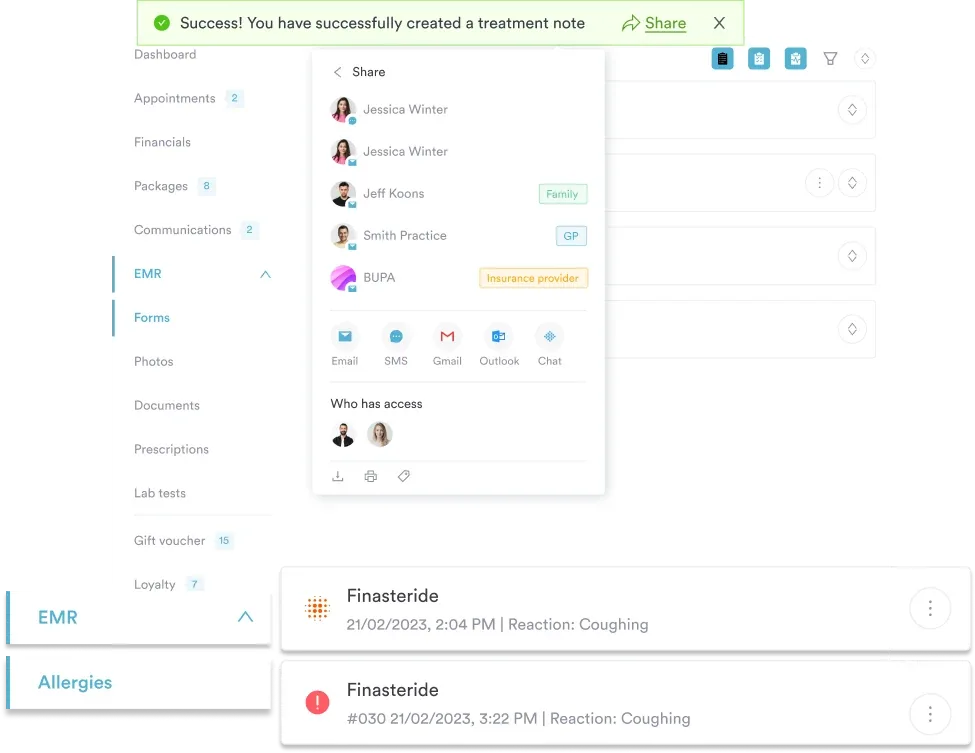
For practices that also use digital forms to capture pre-procedure intake, the documentation chain that supports 00402 medical necessity can be completed before the patient enters the OR rather than reconstructed afterward. The HIPAA compliance requirements that govern anesthesia records apply to digital intake data as well, so an integrated system reduces the compliance surface area compared to managing paper forms separately.

CPT Code 00402 is a five-base-unit anesthesia code for reconstructive breast procedures, with a billing formula, modifier set, and documentation requirements that differ fundamentally from standard procedure billing. The most costly errors, confusing 00402 with the radical breast procedure codes (00404, 00406), modifier omission, and anesthesia time miscalculation, are preventable with a structured pre-submission review process. Downcoding is as common as upcoding, and both trace back to how the decision-making level was recorded.
Practices that connect clinical documentation to billing workflows keep what the anesthesiologist recorded and what the claim reflects in sync. If your team wants to see how Pabau handles this end-to-end, book a demo and we can walk through the claims and documentation workflow together.

Billing anesthesia for a different procedure type? CPT Code 01924 covers base units and modifiers for anesthesia during arterial interventional radiology.
Coding a joint procedure instead? CPT Code 20605 breaks down billing for intermediate joint arthrocentesis.
Need a reference for a minor surgical procedure? CPT Code 10081 covers incision and drainage of a complicated pilonidal cyst.
CPT Code 00402 is an anesthesia code used to bill anesthesia services for reconstructive procedures on the breast, such as reduction mammoplasty, augmentation mammoplasty, and muscle flap reconstruction. It carries a base unit value of 5 and sits within the thorax (chest wall and shoulder girdle) anesthesia code family (00400-00406).
CPT 00402 has 5 anesthesia base units. Total payment is calculated as (5 base units + time units) multiplied by the applicable anesthesia conversion factor, which CMS updates annually and adjusts by geographic locality.
CPT 00400 is the not-otherwise-specified code for integumentary procedures on the extremities, anterior trunk, and perineum, and carries 3 base units. CPT 00402 is specific to reconstructive procedures on the breast (e.g., reduction or augmentation mammoplasty, muscle flaps) and carries 5 base units. Use 00400 for general integumentary procedures outside the breast, and 00402 only when the procedure is a breast reconstruction.
00402, 00404, and 00406 all fall within the same breast anesthesia code family, but they describe different procedure types. 00402 covers reconstructive procedures on the breast, such as reduction or augmentation mammoplasty and muscle flap reconstruction (5 base units). 00404 covers radical or modified radical procedures on the breast, such as mastectomy (5 base units). 00406 covers radical or modified radical breast procedures with internal mammary node dissection, a higher-complexity procedure (13 base units). Billing the wrong one of these three codes is a common cause of denied or down-coded anesthesia claims.
Yes, but MAC billing requires documented medical necessity per CMS MAC policy (Article A57361). When MAC is provided for a procedure covered by 00402, modifier G8 or G9 is appended to indicate the MAC circumstance. Patient preference alone does not satisfy medical necessity for MAC; the clinical indication must be documented in the anesthesia record.
Four add-on codes may be reported with 00402 when the qualifying condition is documented: 99100 for patients under 1 year or 70 years and older (+5 base units), 99116 for total body hypothermia (+5 units), 99135 for controlled hypotension (+5 units), and 99140 for emergency conditions (+5 units). Payer policies vary; confirm per-payer eligibility before billing any of these add-ons.
Commonly paired ICD-10 codes include Z42.1 (encounter for breast reconstruction following mastectomy), Z90.11/Z90.12/Z90.13 (acquired absence of breast and nipple, unilateral or bilateral), N62 (hypertrophy of breast) for reduction mammoplasty, and C50.911 when reconstruction is performed at the time of mastectomy for breast cancer. The diagnosis code should reflect the condition requiring the reconstructive procedure, not the anesthesia service itself.



