



CCSD code G5100: Bypass of duodenum billing guide
CCSD code G5100 bills a bypass that leaves the duodenum in place CCSD code G5100...

Last Updated: Oct 16, 2026

CPT Code 01924 describes anesthesia for therapeutic interventional radiological procedures involving the arterial system, not otherwise specified.
The code carries 5 base units; total reimbursement is calculated as (Base Units + Time Units) multiplied by the Medicare conversion factor, which varies by locality.
Modifiers AA, QZ, QK, QX, and QY are the most commonly applied; choosing the wrong modifier is the leading cause of claim denial for this code.
Practice management software like Pabau can keep pre-anesthesia evaluation notes, anesthesia records, and consent forms organized and attached to the patient file to support clean claims.
CPT Code 01924 reports anesthesia for a therapeutic interventional radiological procedure involving the arterial system, used when no more specific anesthesia code applies. It carries 5 base units and is billed by anesthesiologists (modifier AA) or CRNAs (QZ, QK, QX) for arterial interventions such as embolization, angioplasty, and stenting performed in an interventional radiology suite.
This reference covers the complete billing picture for CPT Code 01924: official description, 5 base units, all applicable modifiers, Medicare reimbursement rates, ICD-10 crosswalk, billing guidelines, and how it compares to adjacent radiological anesthesia codes. Revenue cycle staff, anesthesiologists, and CRNAs will find the documentation and sequencing details most useful.
Official short description: Anesthesia for therapeutic interventional radiological procedures involving the arterial system; not otherwise specified.
CPT Code 01924 is reported when an anesthesia provider administers anesthesia during a therapeutic (not diagnostic) interventional radiology procedure that targets the arterial system. The “not otherwise specified” qualifier is critical: it means no other, more specific anesthesia code in the interventional radiology section covers the procedure being performed. According to the American Medical Association’s CPT code set, the code falls within the Anesthesia for Radiological Procedures section of the CPT codebook, which groups together codes 01916 through 01942.
Clinically, CPT Code 01924 applies to arterial interventions such as embolization, arterial stenting, angioplasty, and other therapeutic procedures performed in an interventional radiology suite where anesthesia is required and no narrower code captures the situation. The code does NOT apply to diagnostic-only imaging; the procedure must be therapeutic in nature.
CPT Code 01924 carries a base unit value of 5. Base units represent the intrinsic complexity and risk of the anesthesia service, independent of how long the procedure takes. They are assigned by the American Society of Anesthesiologists (ASA) and incorporated into the CMS Physician Fee Schedule.
Time units are added on top of the base units. Medicare calculates one time unit for every 15 minutes of anesthesia, counting from the point of induction to emergence. For a 90-minute procedure, that is 6 time units (90 / 15 = 6).
The reimbursement formula:
This conversion factor varies by geographic locality and changes annually. The illustrative $22 figure above is for orientation purposes only. Anesthesia is not priced using RVUs or the standard Medicare Physician Fee Schedule the way most other CPT services are — reimbursement is (base units + time units) multiplied by the locality-adjusted Anesthesia Conversion Factor. Always verify both the base unit value and the current anesthesia conversion factor for your MAC locality directly from the CMS Anesthesia fee schedule or your MAC’s published rates before submitting a claim. Auditors read the note before the code, so the documentation level has to support what was submitted.
Modifier selection for CPT Code 01924 depends on the provider type and supervision arrangement. Getting this wrong is the single most common cause of denial for anesthesia claims at interventional radiology facilities.
QK and QX always appear as a pair: the anesthesiologist bills QK and each medically directed CRNA bills QX. Billing QK without the corresponding CRNA QX claim, or vice versa, will trigger a payer edit. The same pairing requirement applies regardless of procedure type. Verify specific modifier applicability against current CMS guidance before submission, as rules for concurrent anesthesia direction can be updated through transmittals.
Comparing practice management systems for medical teams is worth the effort before anesthesia time-unit billing becomes a spreadsheet job.
Medicare reimbursement for CPT Code 01924 follows the standard anesthesia payment methodology: total anesthesia units (base + time) multiplied by the locality-adjusted anesthesia conversion factor. Rates vary significantly by MAC region, so the figures below are illustrative ranges, not definitive payment amounts.
These estimates assume a national average anesthesia conversion factor. High-cost localities (Manhattan, San Francisco, Alaska) will pay meaningfully more. Rural MAC localities may pay less. Always confirm current rates using the official CMS Physician Fee Schedule lookup before coding a claim. Geographic Practice Cost Index (GPCI) adjustments apply to both the work and practice expense components of the fee schedule.
Run a locality-adjusted estimate before each billing cycle by pulling the current anesthesia conversion factor from the CMS Physician Fee Schedule lookup for your specific MAC. A $2 difference in conversion factor on 100 monthly CPT 01924 claims adds up to a meaningful annual revenue variance.
Clean claims for CPT Code 01924 require more than the correct code and modifier. Payers expect specific documentation and sequencing before approving payment.
Proper anesthesia documentation also means attaching the completed digital intake and documentation forms to the patient record before claim submission. Missing pre-anesthesia evaluation notes are among the most cited deficiencies in OIG anesthesia billing audits. Using structured medical documentation forms built around anesthesia evaluation criteria reduces this risk significantly.

For anesthesia billing guidelines, the AAPC CPT code reference remains the industry’s primary coding authority alongside the AMA codebook. Cross-reference both when an edge case arises.
CPT Code 01924 requires a supporting ICD-10-CM diagnosis code to establish medical necessity. The diagnosis should reflect the underlying condition driving the therapeutic arterial intervention, not the anesthesia service itself. The table below lists the most commonly paired diagnosis codes, based on standard ICD-10 crosswalk guidance for interventional radiology anesthesia. ICD-10-CM codes update annually; verify current validity against the CDC/NCHS ICD-10-CM web tool before submitting claims for the current fiscal year.
The diagnosis code should reflect the patient’s clinical condition documented in the medical record, not the procedural approach. When the underlying condition spans multiple arterial territories, code the primary site first and add secondary codes as appropriate under ICD-10-CM sequencing rules. Defaulting to an unspecified code such as B49 or F90.9 when a more specific code is available is a common audit finding, and the same discipline applies to the arterial diagnoses above.
Anesthesia claims for interventional radiology carry a higher audit risk than many other specialties because the modifier rules, concurrent care requirements, and therapeutic-vs-diagnostic distinction create multiple failure points. The table below maps the most frequently cited errors to specific prevention steps.
The Office of Inspector General (OIG) has historically included anesthesia modifier misuse in its work plan. Practices billing CPT Code 01924 regularly should conduct at least an annual internal audit of modifier pairs and concurrent care documentation to catch systematic errors before a payer audit does.
CPT Code 01924 sits within the Anesthesia for Radiological Procedures section alongside several closely related codes. Selecting the wrong adjacent code is a common error; the table below clarifies when each applies.
The primary selection rule: use CPT Code 01924 only when the procedure is (a) therapeutic, (b) arterial, and (c) has no more specific code in the radiology anesthesia section. The same logic, choosing the most specific code before defaulting to an NOS code.
Manual anesthesia billing workflows for CPT Code 01924 carry compounding error risk. Time unit miscalculation, modifier oversight, and missing documentation notes often happen when coders are pulling data from separate anesthesia records, operative reports, and payer portals without a unified system.
Pabau’s claims management software keeps anesthesia documentation in one workflow instead of scattered across separate systems. Pre-anesthesia evaluation notes, anesthesia records, and consent or intake forms attach directly to the patient’s file, so coders can confirm the supervision arrangement, procedure timing, and medical necessity are documented before a claim goes out.
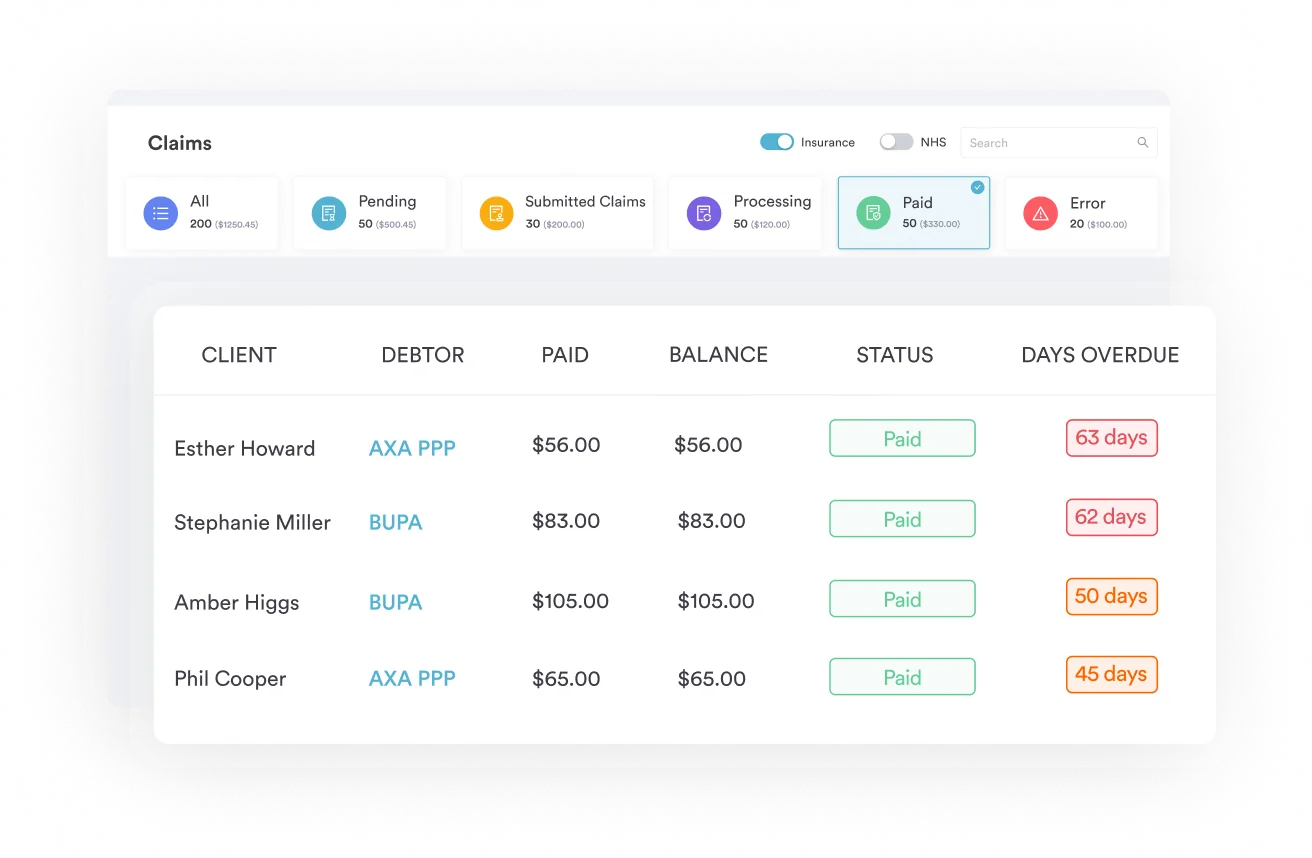
For anesthesia practices managing CPT billing documentation alongside clinical notes. Reviewing comparable CPT billing documentation requirements across specialty billing workflows reduces this risk further.

Practice management software like Pabau can keep pre-anesthesia evaluation notes, anesthesia records, and consent forms organized and attached to each patient file ahead of claim submission. See how it fits into the CPT Code 01924 billing workflow.

Build a pre-submission checklist for every CPT 01924 claim: (1) confirm therapeutic procedure documented by the IR physician, (2) verify anesthesia start/stop times are consistent across all records, (3) confirm modifier pair matches the supervision arrangement that day, (4) attach pre-anesthesia evaluation note. A four-point gate review catches the most common denial triggers before the claim leaves the practice.
CPT Code 01924 covers a specific and consequential billing scenario: anesthesia for therapeutic arterial interventional radiology where no narrower code applies. Five base units, five core modifiers, and an annual Medicare conversion factor combine into a payment formula that is straightforward in principle but prone to error in execution.
Getting CPT Code 01924 right means confirming the procedure is therapeutic, pairing the correct modifier to the supervision arrangement, documenting anesthesia time precisely, and attaching medical necessity to every claim. Practices that keep this documentation organized with purpose-built practice management tools reduce denial rates and lower audit risk, whether the setting is a hospital-based interventional radiology suite, a general practice coordinating referrals for IR procedures.

Billing lincomycin and unsure why it denied? Lincomycin HCl billing guide explains why most denials trace to the NDC, not the J-code itself.
Billing meperidine and unsure which wastage modifier applies? Meperidine hydrochloride billing guide explains how to divide the dose and choose between the JW and JZ modifiers.
Billing a biologic infusion for Crohn’s or colitis care? J2327 risankizumab billing guide covers dosing units, modifiers, and coverage for this IL-23 inhibitor infusion.
CPT Code 01924 is used to report anesthesia services for therapeutic interventional radiological procedures involving the arterial system, not otherwise specified. It applies when an anesthesia provider administers anesthesia during a therapeutic arterial IR procedure (such as embolization, angioplasty, or stenting) and no more specific anesthesia code in the CPT codebook captures the case.
CPT Code 01924 has 5 base units. Total anesthesia units for reimbursement are calculated by adding time units (one per 15 minutes of anesthesia) to the 5 base units, then multiplying by the locality-adjusted Medicare anesthesia conversion factor.
The most commonly applied modifiers are AA (anesthesiologist personally performing the service), QZ (CRNA without medical direction), QK (anesthesiologist medically directing 2-4 CRNAs), QX (CRNA medically directed by an anesthesiologist), and QY (anesthesiologist directing a single CRNA). The correct modifier depends on the specific supervision arrangement for each case.
CPT 01922 covers anesthesia for noninvasive imaging or radiation therapy (7 base units). In contrast, CPT 01924 covers therapeutic interventional radiology involving the arterial system, NOS (5 base units). CPT 01926 covers higher-complexity cases involving intracranial, intracardiac, or aortic procedures (8 base units). Always use the most specific code; 01924 applies only when the procedure is therapeutic, arterial, and no narrower code fits.



