



CCSD code G5100: Bypass of duodenum billing guide
CCSD code G5100 bills a bypass that leaves the duodenum in place CCSD code G5100...

Last Updated: Oct 16, 2026

CPT code 20605 describes arthrocentesis (aspiration and/or injection) of an intermediate joint or bursa without ultrasound guidance.
Covered sites include the wrist, elbow, ankle, acromioclavicular joint, temporomandibular joint, and olecranon bursa.
Use CPT 20606 instead when ultrasound imaging guidance is employed during the procedure – billing 20605 with ultrasound is a common audit trigger.
Pabau’s practice management software embeds procedure note templates and structured documentation checks to support accurate, audit-ready CPT 20605 record-keeping.
Arthrocentesis claims are among the most audit-prone procedures in outpatient musculoskeletal billing. The distinction between intermediate and large joints, the presence or absence of ultrasound guidance, and bilateral modifier rules all create decision points where coding errors concentrate.
Practice management software like Pabau is built to reduce those errors at the point of documentation, through structured procedure note templates and audit-ready record-keeping, rather than after the denial arrives.
This guide covers the complete billing picture for CPT code 20605: covered anatomy, modifiers, 2026 Medicare reimbursement, supporting ICD-10 codes, and the documentation requirements your notes must meet.
Incorrect code selection between the 20600-20611 arthrocentesis family is one of the most common reasons for claim rejections in practices that perform joint injections. Understanding exactly what CPT code 20605 requires, and when to use an adjacent code instead, protects both reimbursement and compliance.
CPT code 20605, as maintained by the American Medical Association (AMA), describes arthrocentesis, aspiration and/or injection of an intermediate joint or bursa without ultrasound guidance.
The parenthetical examples in the AMA descriptor include the temporomandibular joint, acromioclavicular joint, wrist, elbow, ankle, and olecranon bursa. The code covers the mechanical procedure regardless of whether the clinician aspirates fluid, injects a therapeutic agent, or both during the same encounter.
The key phrase is “without ultrasound guidance.” Imaging guidance changes the code entirely. If real-time ultrasound is used to visualize needle placement, CPT 20606 applies to intermediate joints, not 20605. Payers enforce this distinction directly, and billing the wrong code creates an audit-triggering documentation mismatch.
The AMA classifies joints by size for arthrocentesis coding purposes. Intermediate joints sit between the small joint category (CPT 20600) and the large joint category (CPT 20610). The covered anatomical sites for CPT code 20605 are listed below.
Misclassifying joint size is one of the most frequent coding errors in arthrocentesis billing. The glenohumeral (shoulder) joint, knee, and hip are large joints billed under CPT 20610 or 20611. Finger and toe joints are small joints billed under CPT 20600.
The hip moves out of that family when contrast is injected for diagnostic arthrography. That injection is reported with 27093 when no anesthesia is given, not 20610 or 20611.
Practices performing sports medicine procedures across multiple joint categories benefit from a workflow that enforces code selection at the point of charting.
Modifier selection for CPT code 20605 affects both reimbursement and audit risk. The table below covers the modifiers most relevant to arthrocentesis billing in outpatient and office settings.
Modifier rules are payer-specific. Medicare’s bilateral modifier policy for CPT code 20605 may differ from commercial payer policies. Always confirm billing rules with each payer before appending modifier 50.
For modifier 25 specifically: it belongs on the evaluation and management (E/M) code, not on the 20605 claim line. Placing modifier 25 on the procedure code is a common error that triggers payment delays. Practices processing high volumes of injection claims should review their HIPAA compliance procedures for medical offices to ensure documentation supports modifier usage.
Audit your last 90 days of CPT 20605 claims. Filter for any claim submitted without a LT or RT modifier on a paired joint. Missing laterality is a payer edit trigger that delays payment without generating an outright denial, making it easy to miss in routine billing reviews.
CMS reimburses CPT code 20605 at different rates depending on where the service is performed. Non-facility settings (physician offices) carry a higher rate because the practice absorbs overhead costs directly. Facility settings (hospital outpatient, ambulatory surgery centers) pay less because the facility bills separately for its own expenses.
According to the CMS Physician Fee Schedule lookup tool, the 2026 national approximate rates for CPT 20605 are as follows. Always verify current rates using the CMS tool before submitting claims, as annual updates and geographic adjustments apply.
Geographic adjustments via CMS Geographic Practice Cost Indices (GPCI) mean that rates in high-cost localities (such as Manhattan or San Francisco) will exceed national averages, while rural localities may pay less.
Use the FastRVU 2026 RVU lookup tool to calculate locality-specific reimbursement using the three RVU components: work RVU, practice expense RVU, and malpractice RVU. The work RVU for CPT code 20605 reflects the clinical effort involved in an intermediate joint aspiration or injection without imaging assistance.
The difference between CPT 20605 and CPT 20606 is a single clinical decision: whether real-time ultrasound imaging is used to guide needle placement. Both codes cover arthrocentesis of an intermediate joint or bursa. The imaging modality is the only distinguishing factor.
Billing 20605 despite ultrasound being used is a documentation-to-code mismatch. If the procedure note mentions ultrasound guidance but the claim shows 20605, that discrepancy is an audit trigger.
The reverse error (billing 20606 without documented ultrasound use) also creates compliance exposure. Practices offering physical therapy and musculoskeletal services that have added ultrasound-guided procedures should review their code selection workflows carefully.
CPT code 20605 sits in the middle of a six-code arthrocentesis family. Selecting the correct code requires knowing both the joint size and whether ultrasound guidance was used. The complete family is compared below.
Sacroiliac joint injections are not part of this family. They are billed under CPT 27096 when imaging guidance is used, or CPT 20552 or 76942 without imaging, not under 20610.
Practices that also bill CPT 01710 for elbow procedures will recognize the same joint-size classification logic that applies across CPT musculoskeletal coding. The AAPC Codify CPT lookup tool includes instructional notes that clarify which anatomical sites belong in each arthrocentesis tier when classification is in doubt.

Pabau links clinical documentation to your billing workflow, so the joint site, agent injected, and modifier selection in your procedure note carries straight through to accurate, audit-ready records without rekeying.

According to CMS coverage guidance, medical necessity for CPT code 20605 must be supported by a documented diagnosis. Coverage for arthrocentesis and joint injection codes is set at the Medicare Administrative Contractor (MAC) level, so check your own MAC’s Local Coverage Determination or Billing and Coding Article for the specific article number that applies in your jurisdiction. The clearinghouse validates structure before the payer validates content, which is why an electronic claim can fail twice. Claim accuracy is cheaper to build at entry than to repair in an appeal.
The diagnoses below represent commonly accepted medical necessity indicators across MAC jurisdictions, though local policies may include additional requirements or restrictions.
Site-specific ICD-10 codes strengthen medical necessity documentation. Using an unspecified code (the “9” extension) when a specific site is known and documented weakens the claim, giving some payers grounds to question necessity. Your procedure note should always identify the anatomical site, and the ICD-10 code should reflect that site.
Related bone conditions can also support medical necessity:
CMS and most commercial payers require that the procedure note for CPT code 20605 contain specific clinical information. Missing even one required element can result in a denial on audit, even if the procedure itself was medically appropriate.
A compliant procedure note for CPT 20605 should include all of the following:
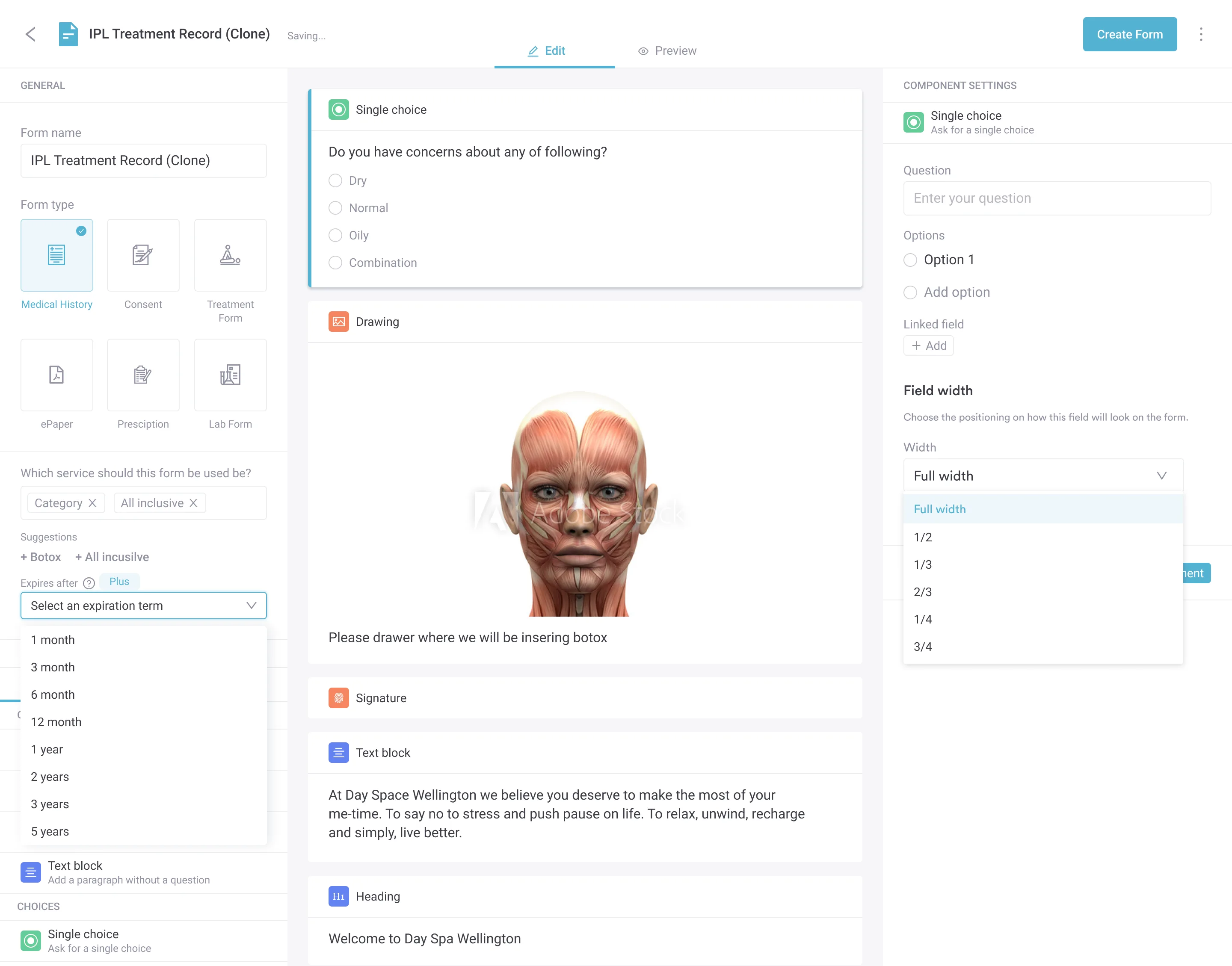
Practices using digital intake and procedure forms can embed these required fields as structured data captures, making it harder to submit a claim with an incomplete note. The key advantage of structured documentation over free-text notes is that required fields can be enforced at the time of charting rather than discovered missing during a payer audit.
The same code-to-documentation matching principle applies outside orthopedics:
The most consistent billing errors in arthrocentesis claims follow a predictable pattern. Recognizing them in advance is faster than correcting denials after submission.
Practices that have recently added ultrasound capabilities to their injection workflow are at particularly high risk of the first error above. Code selection should be a checklist item at the point of billing review, not an assumption carried over from pre-ultrasound workflows.
Teams managing musculoskeletal and injection coding may also benefit from reviewing physical therapy billing guidance, which applies similar units-and-modifiers logic to a related code set.
Run a targeted query on all 20605 claims submitted in the last six months. Flag any where the procedure note contains the word ‘ultrasound’ or ‘sonographic.’ Those claims need a secondary review to confirm code selection was correct before a payer audit finds them first.
Reference guides describe what the code requires. The compliance challenge is ensuring that every clinician captures those requirements in every note, every time. That is where practice management software changes the outcome.
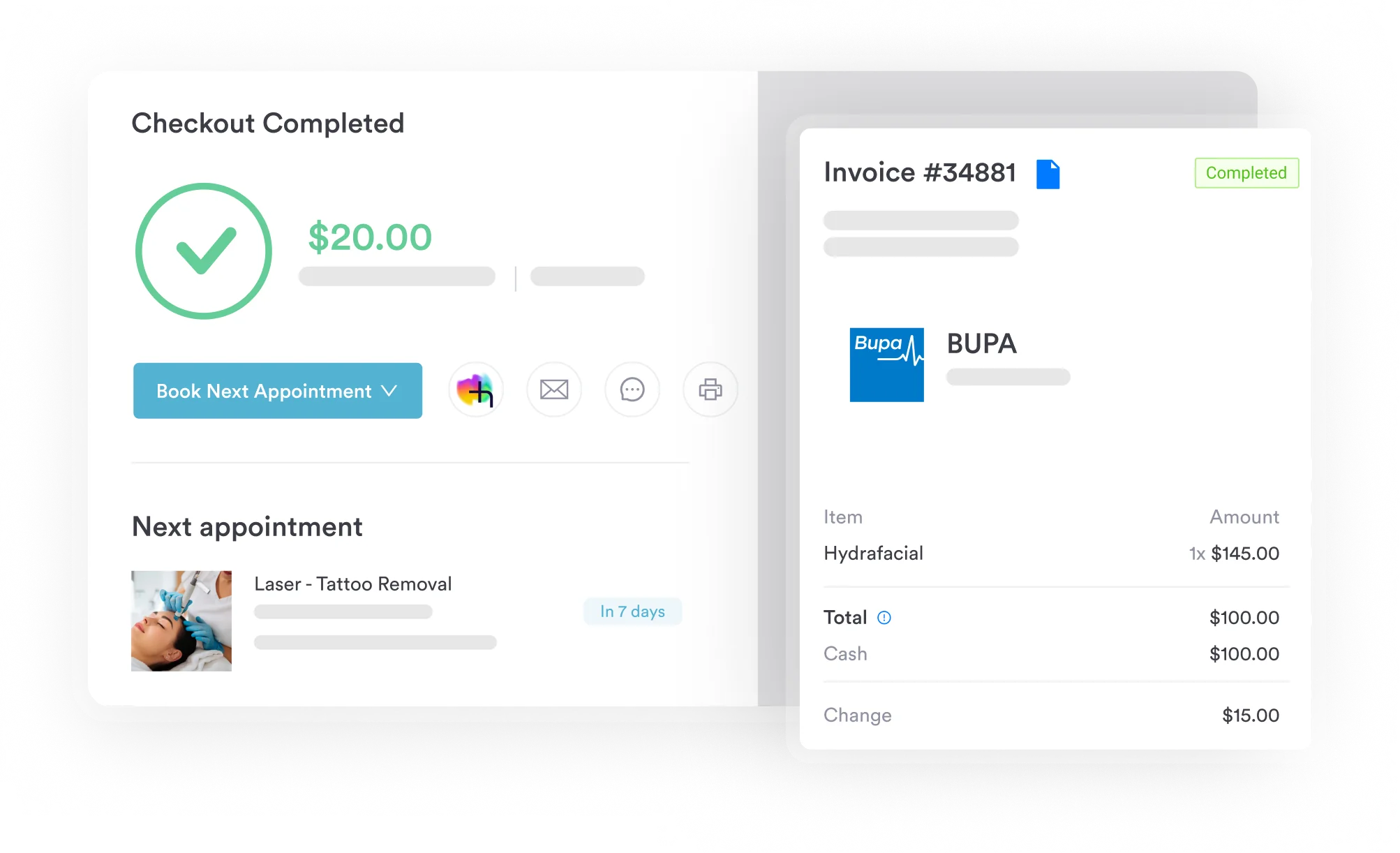
For CPT code 20605 specifically, Pabau supports three areas that matter most to accurate billing:
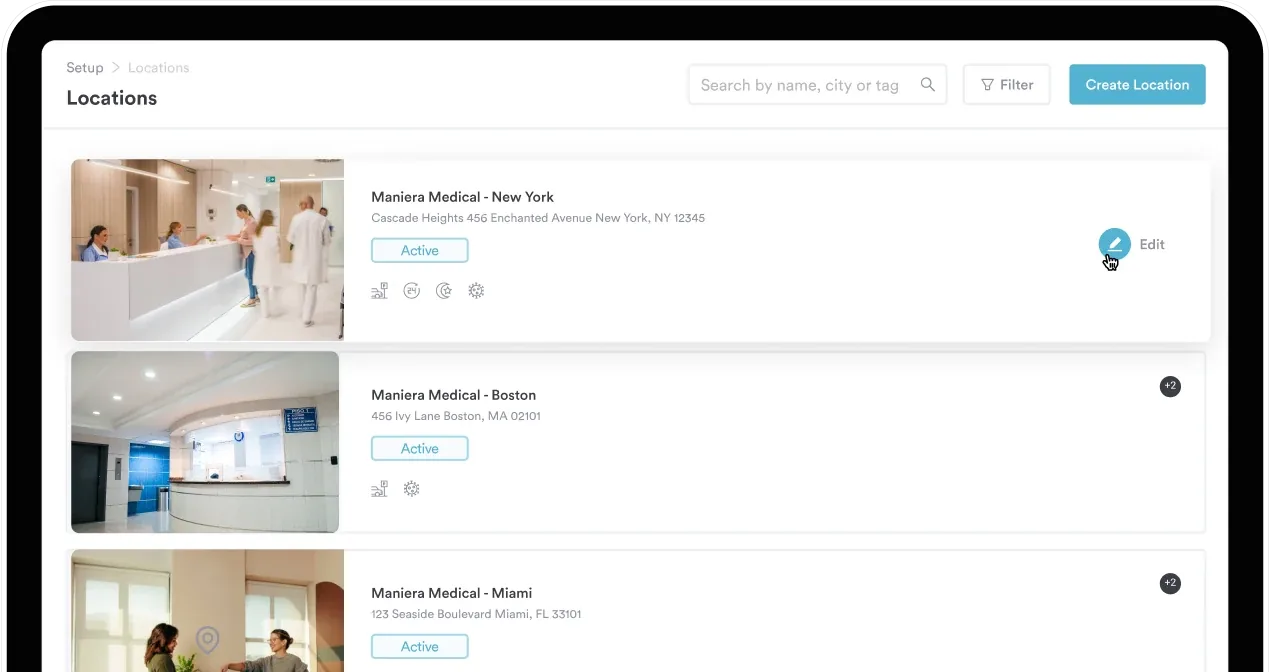
Practices managing multi-location injection services will find Pabau’s multi-location management features particularly useful for maintaining consistent documentation standards across sites. The same matched-documentation standard applies to CPT 23350, the shoulder arthrography injection code, and to every other musculoskeletal procedure billed alongside it.
CPT code 20605 has a narrow but clearly defined scope. The covered joints, the absence of ultrasound guidance, and the documentation requirements are specific, and errors at any of those points create audit exposure or denied claims. Getting this right is a workflow problem as much as a knowledge problem.
Pabau’s procedure note templates embed those requirements at the point of charting, so accurate, audit-ready documentation is the path of least resistance rather than an afterthought. To see how Pabau supports arthrocentesis and injection procedure documentation in practice, book a demo with the team.

Coding thoracic disc degeneration claims? ICD-10 code M51.34 covers why payers flag claims lacking a clear link to imaging findings.
Coding a cervical dorsopathy that doesn’t fit a category? ICD-10 code M53.82 covers the choice coders and clinicians face when a neck condition is unclear.
Handling a range of CPT procedure codes? CPT 97162 covers physical therapy evaluation billing, using the same documentation-to-code matching standard that applies to musculoskeletal practices.
CPT code 20605 is the procedure code for arthrocentesis, aspiration and/or injection of an intermediate joint or bursa without ultrasound guidance. Covered sites include the wrist, elbow, ankle, acromioclavicular joint, temporomandibular joint, and olecranon bursa. The code applies whether the clinician aspirates fluid, injects a therapeutic agent, or performs both during the same visit.
CPT 20606 is used when real-time ultrasound imaging guides needle placement during an intermediate joint arthrocentesis. CPT 20605 applies when no ultrasound guidance is used. The joint size and anatomical sites are identical; the imaging modality is the only distinction. Billing 20605 when ultrasound was documented creates an audit-triggering mismatch.
The most commonly applicable modifiers are LT and RT (laterality for paired joints), modifier 50 (bilateral procedure, subject to payer-specific bilateral rules), modifier 25 (significant E/M on same day, appended to the E/M code, not 20605), and modifier 59 (distinct procedural service when a bundling edit applies). Modifier rules vary by payer; always verify with each payer before appending.
A compliant note must include the specific joint or bursa treated, the clinical indication, confirmation that ultrasound was not used, the agent injected (drug name, concentration, volume) or volume aspirated, documented patient consent, and post-procedure status. Missing any of these elements weakens medical necessity documentation and may result in denial on audit.



